

Kirjailija
John O'Connell
Kirjat ja teokset yhdessä paikassa: 15 kirjaa, julkaisuja vuosilta 2000-2027, suosituimpien joukossa Bowies Bücher. Vertaile teosten hintoja ja tarkista saatavuus suomalaisista kirjakaupoista.
Mukana myös kirjoitusasut: John O' Connell
15 kirjaa
Kirjojen julkaisuhaarukka 2000-2027.
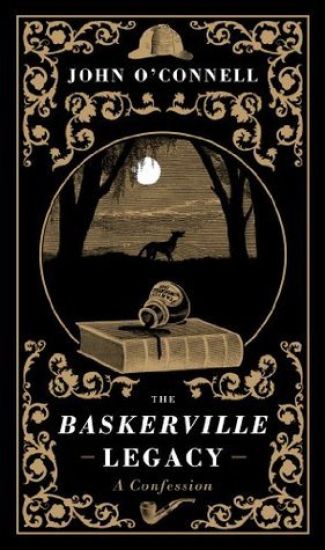
When a young journalist, Bertram Fletcher Robinson, meets his writer hero Arthur Conan Doyle on a troop ship coming back from South Africa, he is delighted - especially when the creator of Sherlock Holmes suggests they collaborate on a 'real creeper' of a story.

Beacon Hill was supposed to be a new kind of school. Founded by the philosopher Bertrand Russell and his wife Dora in 1927, the couple saw it as the epitome of their humanitarian values: there were to be no titles, no compulsory lessons and no discipline. Praised by artistic parents as a haven for liberalism, and vilified in the press as a communist fantasy, by 1943 Beacon Hill had closed - leaving behind a string of scandals and rumours of bizarre teachers, unwashed children and an attempted pet sacrifice. What had gone wrong? John O'Connell reveals the salacious history of Beacon Hill, and the tumultuous breakdown of the Russells' marriage, illuminating one of the most curious stories of interwar Britain - one filled with gossip, scandal, open marriages and ramshackle ideals.
In Simply, Little Poems, John O'Connell celebrates, in lucid and finely wrought language, the wonder and beauty in everyday things. Simply, Little Poems is a book to be treasured and shared.
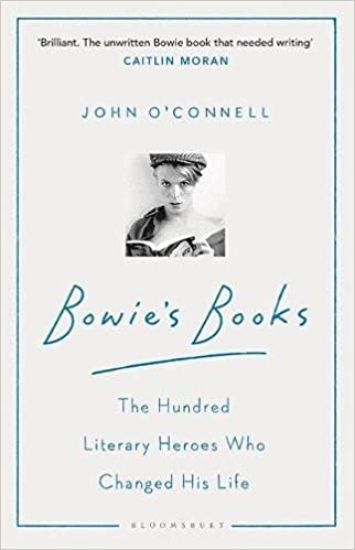
Three years before he died, David Bowie made a list of the one hundred books that had transformed his life - a list that formed something akin to an autobiography. From Madame Bovary to A Clockwork Orange, the Iliad to the Beano, these were the publications that had fuelled his creativity and shaped who he was. In Bowie's Books, John O'Connell explores this list in the form of one hundred short essays, each offering a perspective on the man, performer and creator that is Bowie, his work as an artist and the era that he lived in. Brilliantly illustrated throughout and the perfect gift for Bowie fans and book lovers, Bowie's Books is much more than a list of books you should read in your lifetime: it is a unique insight into one of the greatest minds of our times, and an indispensable part of the legacy that Bowie left behind.


The cruise missile-also referred to as a guided missile-is a widely employed tactical and strategic weapon, capable of striking ground or ship targets with conventional or nuclear warheads.Before the development of ballistic missiles for attacking an enemy's homeland the U.S. and Soviet strategic arsenals had land-attack cruise missiles to deliver nuclear warheads. Subsequently, the U.S. and Soviet Navies as well as other fleets developed tactical anti-ship and anti-submarine cruise missiles.Much of this book addresses the U.S. Navy's Regulus missile program-the world's first submarine weapon for attacking an enemy homeland with a nuclear warhead-and the similar Soviet Navy's cruise missile efforts. Prior to Regulus a few of the world's submarines had deck guns that were employed for assaulting coastal targets; indeed, the British built a class of submarine monitors with large-caliber guns for attacking coastal targets.After the Regulus more advanced cruise missiles and ballistic missiles were sent to sea in submarines to attack an enemy's cities and military-industrial installations. Certain U.S. and Soviet/Russian land-launched, nuclear-armed cruise missiles also are examined in this book in the context of their being competitive with sea-based missiles for their roles and for resources. Also, at times the technology of one service's missiles was considered for use by another service. The U.S. Navy's rapid and successful development of the Polaris Submarine-Launched Ballistic Missile (SLBM) and budgetary constraints caused the cancellation of advanced submarine-launched cruise missiles-the Regulus II as well as the follow-on Rigel and Triton. Submarines armed with the Regulus I missile continued on patrols in the North Pacific until mid-1964, when they were replaced on the 'deterrent' role by Polaris missile submarines. The Soviet Navy continued the development and deployment of anti-ship cruise missiles, which retained some land-attack capabilities. Following the retirement of Regulus in 1964 strategic cruise missile development in the U.S. Navy experienced doldrums.In the 1970s development of U.S. Navy land-attack cruise missiles resumed with the Tomahawk, initially designed as "theater" land-attack weapon with a nuclear warhead. Significantly, the Tomahawk was designed from the outset of the program to be launched from standard, 21-inch (533-mm) submarine torpedo tubes. While the Tomahawk was developed specifically for naval use from surface ships and submarines, subsequently a land-launched version was developed as a theatre nuclear weapon named Gryphon for the U.S. Air Force as a counter to Soviet theater nuclear weapons in Eastern Europe. (The Tomahawk also was suitable for aircraft launch, although neither the U.S. Air Force nor Navy adopted that concept.) Subsequent Tomahawk variants with conventional warheads were developed for the land-attack and anti-ship missile roles. Sea-based Tomahawk missiles with conventional warheads-launched from surface ships and submarines-were employed extensively and very effectively in the Gulf War (1991) and in several subsequent conflicts and crises. The Soviet Navy's cruise missile programs have a similar development history and that effort has produced several land-attack weapons.
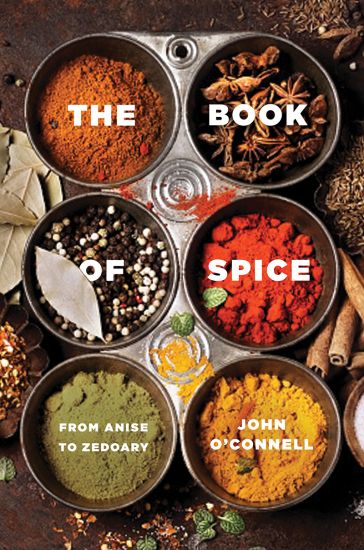
At once familiar and exotic, spices are rare things, comforting us in favorite dishes while evoking far-flung countries, Arabian souks, colonial conquests and vast fortunes. A tasty compendium of the world's favorite flavors, The Book of Spice: From Anise to Zedoary combines history with insights into art, religion, medicine, science, and is richly seasoned with anecdotes and recipes.Discover why Cleopatra bathed in saffron and mare's milk, why wormwood-laced absinthe caused eighteenth century drinkers to hallucinate, and how cloves harvested in remote Indonesian islands found their way into a kitchen in ancient Syria. Almost every kitchen contains a bottle of cloves or a stick of cinnamon, and almost every dish needs a pinch of something. The Book of Spice is culinary history at its most appetizing.

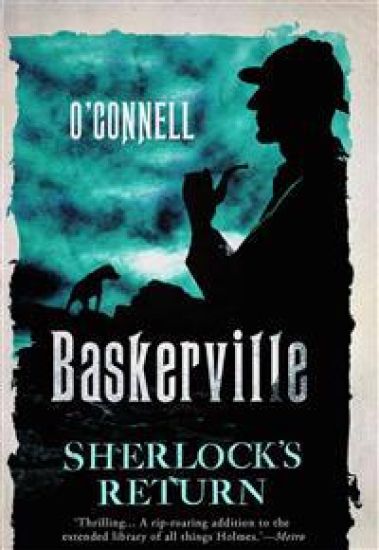
Based on true events in the life of Sir Arthur Conan Doyle, this darkly thrilling tale of friendship, rivalry, and ambition tells the backstory of how one of the world's most celebrated mysteries came to be written. Dartmoor, 1900. Two friends are roaming the moors: Arthur Conan Doyle - the most famous novelist of his age - who has recently killed off his most popular creation, Sherlock Holmes; and Bertram Fletcher Robinson - Holmes aficionado and editor of the Daily Express. They are researching a detective novel, a collaboration starring a new hero, set in the eerie stillness of ancient West Country moorland, and featuring a monstrous dog. They already have a title... London, 1902. The Hound of the Baskervilles is published, featuring Sherlock Holmes back from the dead. Conan Doyle and Fletcher Robinson have not spoken for two years and the book is credited to just one author. It will become one of the most famous stories ever written. But who really wrote it? And what really happened on those moors, to drive the two friends apart?
Handwritten is a celebration of letter-writing in all its guises
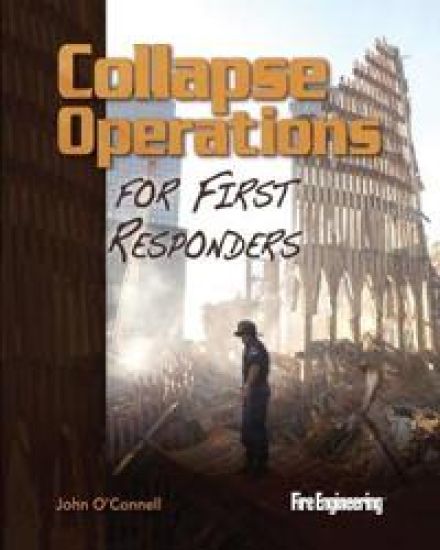
Collapse Operations for First Responders discusses in detail the common warning signs of structural collapse and what to do when they are encountered, providing a practical, hands-on approach to operating safely and effectively in collapse rescue situations. Discussion is chiefly directed toward one of the most common types of structures around the country, wood and brick-and-joist (ordinary-constructed) buildings, known as URM (unreinforced masonry) construction. Various types of shoring and cribbing techniques vital to collapse rescue operations, as well as void size-up, safety at collapse operations, tools used in voids, and void procedures are explored. Collapse Operations for First Responders is a must-have resource for firefighters, officers, chiefs, and technical rescue response personnel.
Pamphlets On British Taxation (1800)
Richard Hilditch; John O'Connell; Charles Babbage
KESSINGER PUBLISHING, LLC
2010
pokkari
Mastering Your Organization's Processes
John O'Connell; Jon Pyke; Roger Whitehead
Cambridge University Press
2006
sidottu
Understanding and improving your organization's business processes is vital in today's economy. Using non-technical language, this book describes the importance of these processes and the internal and external forces that shape them. It then explains the kinds of computer software available for improving and managing business processes in a flexible way. Detailed case studies illustrate that successful process management depends on attention to the human, organizational and financial factors involved, as well as the strategic implications. Finally, the book gives even-handed guidance on what to look for in Business Process Management software and discusses current technical trends. With many clear diagrams and footnotes throughout, a glossary of terms and suggestions on further reading, the book enables the non-specialist reader to take a broad and informed view of business processes, free from technical imperatives. Ideal for non-technical managers, this book will also appeal to MBA and business studies students.
The Properties of Gases and Liquids 5E
Bruce Poling; John Prausnitz; John O'Connell
McGraw-Hill Professional
2000
sidottu
Publisher's Note: Products purchased from Third Party sellers are not guaranteed by the publisher for quality, authenticity, or access to any online entitlements included with the product. Updating their hefty reference approximately every decade since 1958, chemical engineers Poling (U. of Toledo), John M. Prausnitz (U. of California-Berkeley), and John P. O'Connell (U. of Virginia) describe and critically review various estimation procedures for a limited number of properties of gases and liquids. Among those properties are critical and other pure component properties; pressure-volume- temperature relationships and thermodynamic properties of pure components and mixtures; vapor pressures and phase-change enthalpies; standard enthalpies of formation; standard Gibbs energy of formation; heat capacity; surface tension; viscosity; thermal conductivity; diffusion coefficients; and phase equilibria. They compare most of the estimated properties to experimental findings to indicate reliability, and illustrate most methods with examples.