Kirjojen hintavertailu. Mukana 12 151 517 kirjaa ja 12 kauppaa.

Kirjailija

John P. Kaminski

Kirjat ja teokset yhdessä paikassa: 4 kirjaa, julkaisuja vuosilta 1988-2014, suosituimpien joukossa George Clinton. Vertaile teosten hintoja ja tarkista saatavuus suomalaisista kirjakaupoista.

4 kirjaa

Kirjojen julkaisuhaarukka 1988-2014.

The Great Virginia Triumvirate

The Great Virginia Triumvirate

John P. Kaminski

University of Virginia Press
2014
nidottu
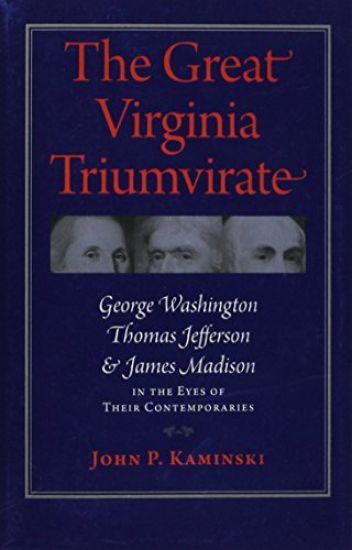
As the largest, oldest, and wealthiest of the original thirteen colonies, Virginia played a central role in the fight for independence and as a state in the new republic. This importance is reflected in the number of Virginians who filled key national leadership positions. Three remarkable Virginians stand out in their service to the new nation: George Washington as commander in chief during the Revolutionary War, Thomas Jefferson as the philosophic voice of the country, and James Madison as the chief architect of the nation’s new constitutional system. In The Great Virginia Triumvirate, John Kaminski presents a series of biographical portraits that bring these three men remarkably to life for the modern reader. The passage of time, coupled with the veneration so often surrounding historical figures, has obscured the subtleties and complexities of the founding fathers’ characters. To cut through this fog of myth, Kaminski relies on the words of the three Virginians themselves, sharing with us a trio of eloquent, and often candid, voices. (Jefferson once told John Adams that he had not written a history of his times because that history was to be found in his correspondence, where he could be especially direct and honest.) Kaminski also turns to the people who personally knew the three great Virginians—their friends, family, acquaintances, and enemies. Through their public and private writings, as well as the observations of their contemporaries, the subjects’ distinctive qualities as individuals can be glimpsed with depth and immediacy. Taken from letters, speeches, diaries, and memoirs, the quotations and vignettes included here shed light on the actual person behind each public image. George Washington offering a bowl of hot tea at night to a guest at Mount Vernon who has a cold; Thomas Jefferson extending condolences to John Adams on the death of his wife, Abigail; and James Madison bequeathing the silver-hilted walking cane, left him by Jefferson, in turn to the third president’s grandson, Thomas Jefferson Randolph—such moments reveal personality and character in a way that no official act ever could. ""Much is known to one which is not known to the other,"" Jefferson wrote, ""and no one knows everything."" The cumulative effect of many voices, however, can create a portrait of invaluable insight.
The Papers of George Washington: Revolutionary War Series

The Papers of George Washington: Revolutionary War Series

John P. Kaminski

University of Virginia Press
2010
sidottu
As the largest, oldest, and wealthiest of the original thirteen colonies, Virginia played a central role in the fight for independence and as a state in the new republic. This importance is reflected in the number of Virginians who filled key national leadership positions. Three remarkable Virginians stand out in their service to the new nation: George Washington as commander in chief during the Revolutionary War, Thomas Jefferson as the philosophic voice of the country, and James Madison as the chief architect of the nation's new constitutional system. In ""The Great Virginia Triumvirate"", John Kaminski presents a series of biographical portraits that bring these three men remarkably to life for the modern reader. The passage of time, coupled with the veneration so often surrounding historical figures, has obscured the subtleties and complexities of the founding fathers' characters. To cut through this fog of myth, Kaminski relies on the words of the three Virginians themselves, sharing with us a trio of eloquent, and often candid, voices. (Jefferson once told John Adams that he had not written a history of his times because that history was to be found in his correspondence, where he could be especially direct and honest.) Kaminski also turns to the people who personally knew the three great Virginians - their friends, family, acquaintances, and enemies. Through their public and private writings, as well as the observations of their contemporaries, the subjects' distinctive qualities as individuals can be glimpsed with depth and immediacy. Taken from letters, speeches, diaries, and memoirs, the quotations and vignettes included here shed light on the actual person behind each public image. George Washington offering a bowl of hot tea at night to a guest at Mount Vernon who has a cold; Thomas Jefferson extending condolences to John Adams on the death of his wife, Abigail; and James Madison bequeathing the silver-hilted walking cane, left him by Jefferson, in turn to the third president's grandson, Thomas Jefferson Randolph - such moments reveal personality and character in a way that no official act ever could. 'Much is known to one which is not known to the other', Jefferson wrote, 'and no one knows everything.' The cumulative effect of many voices, however, can create a portrait of invaluable insight.
George Clinton

George Clinton

John P. Kaminski

Rowman Littlefield
1993
nidottu
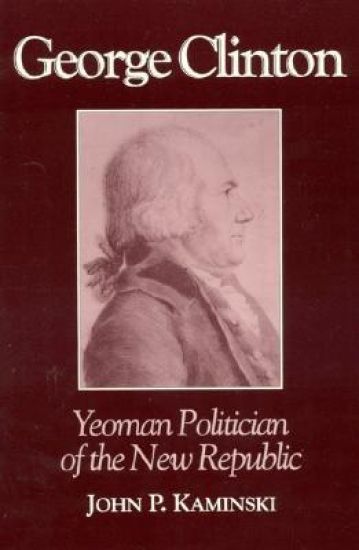
From an upstart Ulster County militia officer to 'Pharaoh of New York' and vice president under both Jefferson and Madison, George Clinton cast a political shadow over the young republic for almost forty years. As outspoken supporter of the patriot cause, antifederalism, and later of Republican politics, he dominated the imbroglio of New York politics until his death in 1812. The first biography of this pivotal figure in over half a century, George Clinton analyzes the public career of this leader who, because of the destruction of his papers, has remained largely lost to history. In addition to exploring the complexities of Clinton's life, Kaminski clarifies the often arcane issues of Confederation politics. His mastery of detail, his broad knowledge of the period, and his sensitivity to the subtleties of politics on state and national levels enable him to redefine Clinton and his age. George Clinton describes how politics worked from county to Congress and how Clinton worked from behind the scenes to dominate New York. In a revelatory new interpretation, Kaminski describes how Clinton, the leading Antifederalist in the coutnry, allowed the New York State Convention to ratify the Constitution in pursuit of his ambition to become Washington's first vice president and ultimately, his successor. With this book Clinton is given his rightful place in American historiography alongside Patrick Henry, Alexander Hamilton, and Samuel Adams.
Ratification of the Constitution by the States

Ratification of the Constitution by the States

John P. Kaminski

Rowman Littlefield
1988
sidottu
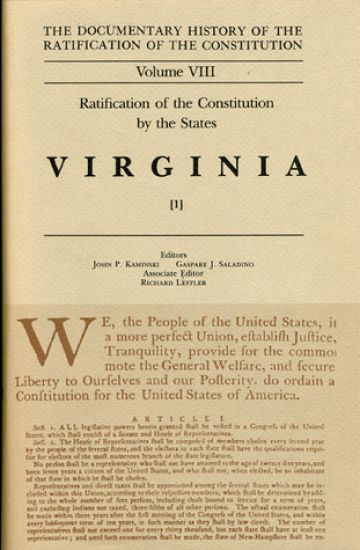
Virginia provided American with much of its intellectual and political leadership throughout the Revolutionary era. That leadership, however, was sorely divided over the fate of the Constitution, and the debate that ensued over it marked the climax of the struggle for ratification. What occurred in Virginia was to loom large in the history of the new nation. This first Virginia volume contains the private and public record of the debate as captured in letters, newspapers, and the debates in the Convention. This documentary series is a research tool of remarkable power, an unrivaled reference work for historical and legal scholars, librarians, and students of the Constitution. The volumes are encyclopedic, consisting of manuscript and printed documents-contemporary newspapers, broadsides, and pamphlets-compiled from hundreds of sources, copiously annotated, thoroughly indexed, and often accompanied by microfiche supplements. Pulitzer Prize-winning historian Michael Kammen has noted that The Documentary History of the Ratification of the Constitution series "will be of enduring value centuries hence" and described it as "one of the most interesting documentary publications we have ever had." The American Bar Association Journal has stated, "Each new volume now fills another vital part of the mosaic of national history."