Kirjojen hintavertailu. Mukana 12 595 353 kirjaa ja 12 kauppaa.

Kirjailija

John Page

Kirjat ja teokset yhdessä paikassa: 14 kirjaa, julkaisuja vuosilta 2001-2025, suosituimpien joukossa Made in Africa. Vertaile teosten hintoja ja tarkista saatavuus suomalaisista kirjakaupoista.

14 kirjaa

Kirjojen julkaisuhaarukka 2001-2025.

Made in Africa

Made in Africa

Carol Newman; John Page; John Rand

Brookings Institution
2016
nidottu
"The role of industry in low income countries is important. Industry is good for growth, job creation, and poverty reduction. All of these factors depend on the size and the rate of growth of industry. Africa doesn’t have enough industry to reach the Sustainable Development Goals for growth, job creation, and poverty reduction. Africa’s share of global manufacturing has fallen from about three percent in 1970 to less than two percent in 2010. Why is there so little industry in Africa?Made in Africa: Learning to Compete in Industry outlines a new industrialization strategy to help Africa compete in global markets. This book draws on case study and qualitative research from Africa and emerging Asia to understand what drives firm-level productivity in low income countries. The results show that while traditional concerns such as infrastructure, skills, and the regulatory environment are important, they alone will not be sufficient for Africa to industrialize. The book also addresses how industrialization strategies will need to adapt to the region’s growing resource abundance."
Changemakers

Changemakers

Jane Holgate; John Page

Bristol University Press
2025
nidottu
Crafted for those who dare to challenge the status quo, this is a radical guide for activists. Drawing from frontline experiences in trade unions, environmentalism, animal rights, and social justice movements, the book explores essential themes from leadership to the art of negotiation. It asks crucial questions about organising and social movements in the 21st century. Avoiding easy prescriptions, the authors uniquely guide readers to where theory meets practice. Written by two experts in activist education and community organising, this is a refreshing take on movement building, empowering changemakers of today to forge new paths towards a more just world.
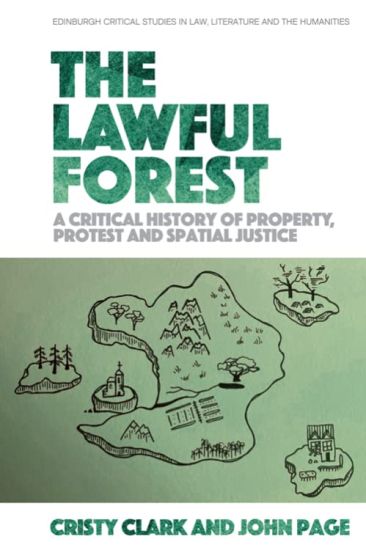
The Lawful Forest

The Lawful Forest

Cristy Clark; John Page

EDINBURGH UNIVERSITY PRESS
2024
nidottu
Using the forest as a thematic device, Clark and Page explore the tensions that pervade our propertied relationships; between commodity and community, abstraction and context, and private enclosure and the public square. They draw on a range of case studies including the 13th century Forest Charter, Thomas More's Utopia, the Diggers' radical agrarianism, the Paris Commune's battle for the right to the city, and Australian forest protestors of the late 20th and early 21st centuries. By analysing these movements and their contexts, Clark and Page illustrate the origin, history and legal status of the lawful forest and its modern-day companions. Although the dominant spatial paradigm is one where private rights prevail, this book shows that communal relationships with land have always been part of our law and culture.
The Lawful Forest

The Lawful Forest

Cristy Clark; John Page

EDINBURGH UNIVERSITY PRESS
2022
sidottu
This book is a study of the critical history of space, and the ways in which a dominant property ideology has entrenched an exclusionary and profoundly alienating version of spatial ordering. It focuses on select periods in time, when the seemingly linear trajectory of enclosure momentarily wavers and alternate spatial paths briefly materialize, before 'disappearing' from plain sight. Using the forest as a thematic device, Clark and Page explore the tensions that pervade our propertied relationships; between commodity and community, abstraction and context, and private enclosure and the public square.The book draws on a range of case studies including the 13th century Forest Charter, Thomas More's Utopia, the Diggers' radical agrarianism, the Paris Commune's battle for the right to the city, and Australian forest protestors of the late 20th and early 21st centuries. Through analysis of these movements and their contexts, the authors illustrate the origin, history and legal status of the lawful forest and its modern-day companions. Although the dominant spatial paradigm is one where private rights prevail, this book shows that communal relationships with land have always been part of our law and culture.
Public Property, Law and Society
This book examines the almost entirely neglected realm of public property, identifying and describing a number of key organizing principles around which a nascent jurisprudence of public property may be developed. In property law terms, the public realm is lost to plain view. Despite the vast acreage of public lands, or the extensive tracts of private lands over which public rights subsist, there is little commensurate scholarly discussion of the ideas, theories, practices, and laws of public property. This is no accident. Public property has been marginalized and pushed to the periphery for centuries, a consequence of the dominant discourse of private property, and its enclosing, encroaching tendencies. This book explores the rich diversity of the public estate, of what the public realm means for us, the general public, canvassing what we may ‘own’, where we may ‘belong’, or not, and how we may ‘connect’ through a shared use and enjoyment of public place and space. To better understand public property is to better value its critical public-wealth. Whether overlooked, over-used, or under threat of imminent loss, this book maintains that our loved (and not so loved) public spaces are essential components of our diverse, functioning, and optimistically livable human geographies. As such, they demand legal protection. This important and original book will be of considerable interest to scholars and others with interests in property and land law, socio-legal studies, legal geography and urban studies.
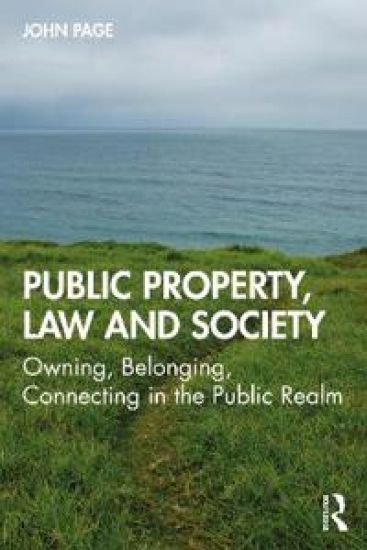
Public Property, Law and Society
This book examines the almost entirely neglected realm of public property, identifying and describing a number of key organizing principles around which a nascent jurisprudence of public property may be developed. In property law terms, the public realm is lost to plain view. Despite the vast acreage of public lands, or the extensive tracts of private lands over which public rights subsist, there is little commensurate scholarly discussion of the ideas, theories, practices, and laws of public property. This is no accident. Public property has been marginalized and pushed to the periphery for centuries, a consequence of the dominant discourse of private property, and its enclosing, encroaching tendencies. This book explores the rich diversity of the public estate, of what the public realm means for us, the general public, canvassing what we may ‘own’, where we may ‘belong’, or not, and how we may ‘connect’ through a shared use and enjoyment of public place and space. To better understand public property is to better value its critical public-wealth. Whether overlooked, over-used, or under threat of imminent loss, this book maintains that our loved (and not so loved) public spaces are essential components of our diverse, functioning, and optimistically livable human geographies. As such, they demand legal protection. This important and original book will be of considerable interest to scholars and others with interests in property and land law, socio-legal studies, legal geography and urban studies.
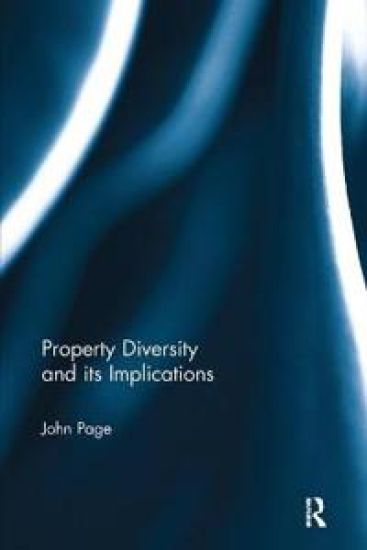
Property Diversity and its Implications
Property is more diverse than is usually assumed. Developing the concept of property diversity, this book explores the varied role of property in placed human landscapes. In acknowledging the propertied diversity about us, the book highlights the paucity of our settled contemporary assumptions of property as defined by private ownership. Challenging this universalizing model, the book analyses how this self-limiting view produces critical blind spots in modern property discourse. In response, it offers a re-conceptualization of property that matches the grounded reality of our rich and diverse relationships with land. Integrating the plurality of real property types (private, public and common) with inclusive understandings of both interest and ownership, it thus identifies and substantiates an overarching theory of property diversity. Drawing on studies from numerous jurisdictions, including the USA, New Zealand, Australia, and the UK, its analysis of property as something more – and indeed other – than a place-less abstraction provides an invaluable contribution to the contemporary law and theory of property.
Property Diversity and its Implications
Property is more diverse than is usually assumed. Developing the concept of property diversity, this book explores the varied role of property in placed human landscapes. In acknowledging the propertied diversity about us, the book highlights the paucity of our settled contemporary assumptions of property as defined by private ownership. Challenging this universalizing model, the book analyses how this self-limiting view produces critical blind spots in modern property discourse. In response, it offers a re-conceptualization of property that matches the grounded reality of our rich and diverse relationships with land. Integrating the plurality of real property types (private, public and common) with inclusive understandings of both interest and ownership, it thus identifies and substantiates an overarching theory of property diversity. Drawing on studies from numerous jurisdictions, including the USA, New Zealand, Australia, and the UK, its analysis of property as something more – and indeed other – than a place-less abstraction provides an invaluable contribution to the contemporary law and theory of property.
From the Ground Up

From the Ground Up

Helena Norberg-Hodge; Peter Goering; John Page

Zed Books Ltd
2001
nidottu
Modern industrial agriculture is in crisis. In our obsession with 'efficiency' and short-term profit, we are losing all real connection with the natural world. As a result, the dream of global abundance promised by the introduction of chemical fertilisers, pesticides and hybrid seeds is becoming a nightmare of health risks, degraded land and ailing communities. The way we produce our food is destructive and quite simply unsustainable. From the Ground Up sets the decline of agriculture within the broader context of industrialisation as a whole, and explores some of the fundamental principles which underlie the 'growth-at-any-cost' thinking of modern society. At the same time, it documents the growing public distrust of conventional agricultural practices, and highlights some of the most promising alternatives leading to more sane, environmentally healthy ways of producing food. This book is a valuable reference for those concerned with the future of agriculture - in the industrialised countries as well as in the South, where agricultural development continues to be modelled on the industrial ideal.