Kirjojen hintavertailu. Mukana 12 595 353 kirjaa ja 12 kauppaa.

Kirjailija

John Parker

Kirjat ja teokset yhdessä paikassa: 93 kirjaa, julkaisuja vuosilta 1989-2026, suosituimpien joukossa Great Kingdoms of Africa. Vertaile teosten hintoja ja tarkista saatavuus suomalaisista kirjakaupoista.

93 kirjaa

Kirjojen julkaisuhaarukka 1989-2026.

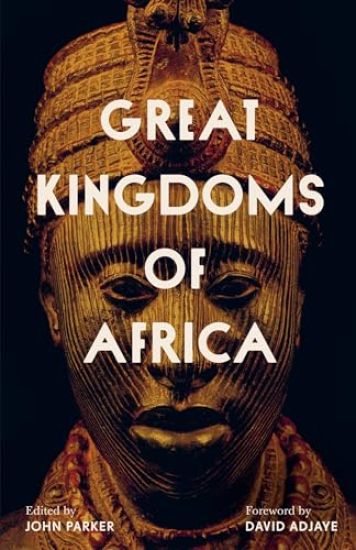
Great Kingdoms of Africa

Great Kingdoms of Africa

John Parker

THAMES HUDSON LTD
2026
nidottu
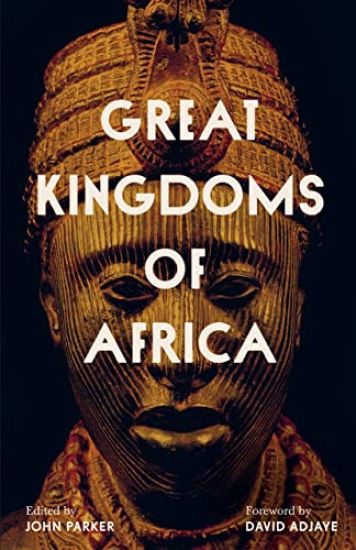
An essential overview of great kingdoms in African history and their legacies, written by world-leading experts. From the ancient Nile Valley to the savannas of medieval West Africa, the highlands of Ethiopia and on to the forests, lakes and grasslands to the south, African civilizations have given rise to some of the world’s most impressive kingdoms. Yet Africa’s history is often little known beyond the devastation wrought by the slave trade and European colonial rule. In this groundbreaking book, nine leading historians of Africa take a fresh look at these great kingdoms and empires over five thousand years of recorded history. How was kingship forged in Africa and how did it operate? Was dynastic power maintained by consent or by coercion? Did kings – and queens – display and project that power for all to see, or did they hide it away, as beneath the fringed crowns that concealed the faces of sacred Yoruba rulers? In what ways have African peoples themselves recorded, celebrated and critiqued the deeds of their kings? Great Kingdoms of Africa explores some of the most important questions in the continent’s deep past.
In My Time of Dying

In My Time of Dying

John Parker

PRINCETON UNIVERSITY PRESS
2025
pokkari
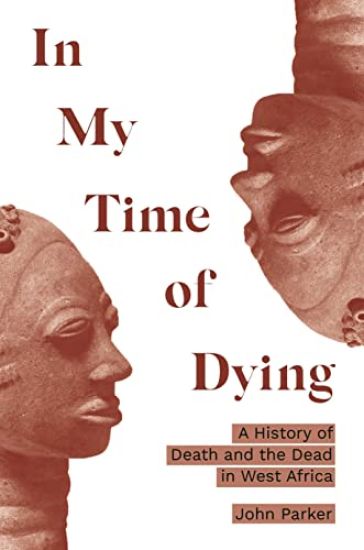
An in-depth look at how mortuary cultures and issues of death and the dead in Africa have developed over four centuriesIn My Time of Dying is the first detailed history of death and the dead in Africa south of the Sahara. Focusing on a region that is now present-day Ghana, John Parker explores mortuary cultures and the relationship between the living and the dead over a four-hundred-year period spanning the seventeenth to twentieth centuries. Parker considers many questions from the African historical perspective, including why people die and where they go after death, how the dead are buried and mourned to ensure they continue to work for the benefit of the living, and how perceptions and experiences of death and the ends of life have changed over time.From exuberant funeral celebrations encountered by seventeenth-century observers to the brilliantly conceived designer coffins of the late twentieth century, Parker shows that the peoples of Ghana have developed one of the world’s most vibrant cultures of death. He explores the unfolding background of that culture through a diverse range of issues, such as the symbolic power of mortal remains and the dominion of hallowed ancestors, as well as the problem of bad deaths, vile bodies, and vengeful ghosts. Parker reconstructs a vast timeline of death and the dead, from the era of the slave trade to the coming of Christianity and colonial rule to the rise of the modern postcolonial nation.With an array of written and oral sources, In My Time of Dying richly adds to an understanding of how the dead continue to weigh on the shoulders of the living.
Great Kingdoms of Africa

Great Kingdoms of Africa

John Parker

University of California Press
2023
sidottu
A groundbreaking, sweeping overview of the great kingdoms in African history and their legacies, written by world-leading experts. This is the first book for nonspecialists to explore the great precolonial kingdoms of Africa that have been marginalized throughout history. Great Kingdoms of Africa aims to decenter European colonialism and slavery as the major themes of African history and instead explore the kingdoms, dynasties, and city-states that have shaped cultures across the African continent. This groundbreaking book offers an innovative and thought-provoking overview that takes us from ancient Egypt and Nubia to the Zulu Kingdom almost two thousand years later. Each chapter is written by a leading historian, interweaving political and social history and drawing on a rich array of sources, including oral histories and recent archaeological findings. Great Kingdoms of Africa is a timely and vital book for anyone who wants to expand their knowledge of Africa's rich history.
In My Time of Dying

In My Time of Dying

John Parker

PRINCETON UNIVERSITY PRESS
2021
sidottu
An in-depth look at how mortuary cultures and issues of death and the dead in Africa have developed over four centuriesIn My Time of Dying is the first detailed history of death and the dead in Africa south of the Sahara. Focusing on a region that is now present-day Ghana, John Parker explores mortuary cultures and the relationship between the living and the dead over a four-hundred-year period spanning the seventeenth to twentieth centuries. Parker considers many questions from the African historical perspective, including why people die and where they go after death, how the dead are buried and mourned to ensure they continue to work for the benefit of the living, and how perceptions and experiences of death and the ends of life have changed over time.From exuberant funeral celebrations encountered by seventeenth-century observers to the brilliantly conceived designer coffins of the late twentieth century, Parker shows that the peoples of Ghana have developed one of the world’s most vibrant cultures of death. He explores the unfolding background of that culture through a diverse range of issues, such as the symbolic power of mortal remains and the dominion of hallowed ancestors, as well as the problem of bad deaths, vile bodies, and vengeful ghosts. Parker reconstructs a vast timeline of death and the dead, from the era of the slave trade to the coming of Christianity and colonial rule to the rise of the modern postcolonial nation.With an array of written and oral sources, In My Time of Dying richly adds to an understanding of how the dead continue to weigh on the shoulders of the living.
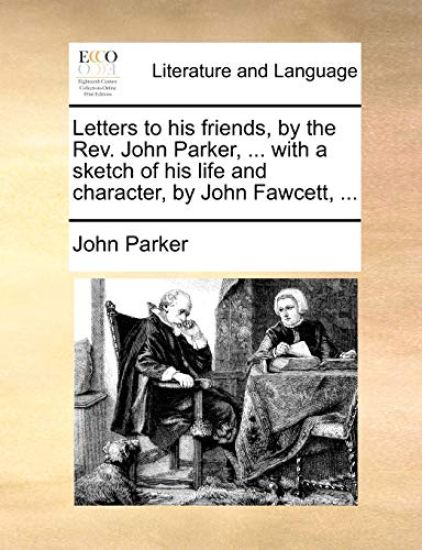
Letters to his Friends, by the Rev. John Parker, ... With a Sketch of his Life and Character, by John Fawcett,
The 18th century was a wealth of knowledge, exploration and rapidly growing technology and expanding record-keeping made possible by advances in the printing press. In its determination to preserve the century of revolution, Gale initiated a revolution of its own: digitization of epic proportions to preserve these invaluable works in the largest archive of its kind. Now for the first time these high-quality digital copies of original 18th century manuscripts are available in print, making them highly accessible to libraries, undergraduate students, and independent scholars.Western literary study flows out of eighteenth-century works by Alexander Pope, Daniel Defoe, Henry Fielding, Frances Burney, Denis Diderot, Johann Gottfried Herder, Johann Wolfgang von Goethe, and others. Experience the birth of the modern novel, or compare the development of language using dictionaries and grammar discourses. ++++The below data was compiled from various identification fields in the bibliographic record of this title. This data is provided as an additional tool in helping to insure edition identification: ++++British LibraryT018641Text and register continuous despite pagination.Leeds: printed by Thomas Wright; and sold by Mr. Wills; Mr. Johnson; Mr. Button, London; and Mr. Thomson, Manchester; Mr. Smith, Sheffield; Messrs. Wilson and Co. York; Mr. Binns, Leeds; and the booksellers in Halifax, Bradford, Huddersfield, &c. &c., 17 120,123-182,179-214p.; 12
Explaining Social Life

Explaining Social Life

John Parker; Hilary Stanworth

Red Globe Press
2014
nidottu
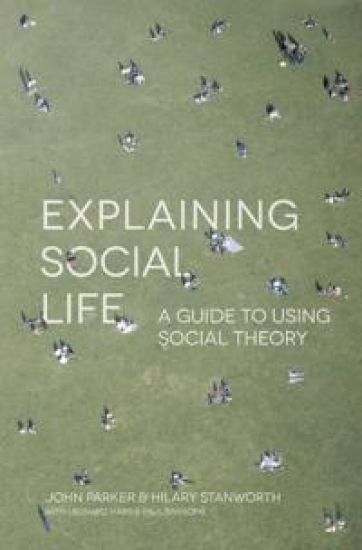
This distinctive text makes social theory accessible to and usable by students. Whereas social theory is often seen as abstract, esoteric and separate from our understanding of the social world, here it is shown to be a flexible and practical resource for anyone wanting to explain social phenomena.This expanded and updated second edition actively encourages readers to develop and practice their own capacities for social explanation:- Providing readers with a powerful 'tool kit' of five social theoretical concepts – Individuals, Nature, Culture, Action and Social Structure – that are fundamental to social explanation;- Drawing on a historically and geographically wide range of examples of social phenomena to show how these theoretical concepts operate and why they're important;- Offering end of chapter questions that enable readers to put theory into practice and begin theorising for themselves.Explaining Social Life is ideal for anyone interested in social theory, including students of sociology, anthropology and related social sciences - both those engaging with social theory for the first time, and more advanced students looking to build upon their understanding.
Explaining Social Life

Explaining Social Life

John Parker; Hilary Stanworth

Red Globe Press
2014
sidottu
This distinctive text makes social theory accessible to and usable by students. Whereas social theory is often seen as abstract, esoteric and separate from our understanding of the social world, here it is shown to be a flexible and practical resource for anyone wanting to explain social phenomena.This expanded and updated second edition actively encourages readers to develop and practice their own capacities for social explanation:- Providing readers with a powerful 'tool kit' of five social theoretical concepts – Individuals, Nature, Culture, Action and Social Structure – that are fundamental to social explanation;- Drawing on a historically and geographically wide range of examples of social phenomena to show how these theoretical concepts operate and why they're important;- Offering end of chapter questions that enable readers to put theory into practice and begin theorising for themselves.Explaining Social Life is ideal for anyone interested in social theory, including students of sociology, anthropology and related social sciences - both those engaging with social theory for the first time, and more advanced students looking to build upon their understanding.
Michael Douglas: Acting on Instinct

Michael Douglas: Acting on Instinct

John Parker

Headline Book Publishing
2012
pokkari
In the shadow of his father Kirk's overpowering fame, Michael Douglas forged a career for himself and became recognised in his own right as an award-winning actor and producer.But fame has taken its toll on Michael's personal life. His struggles with sexual addiction, his treatment for alcoholism and drug dependency and the break-up of his first marriage show another side to Michael's success. In 2010, his troubled past came back to haunt him when Cameron, his eldest son, was sentenced to five years in prison for drug dealing.Yet, despite a rocky road, Michael has found happiness later in life. His marriage to Catherine Zeta Jones meant a second shot at fatherhood and gave him strength following a devastating diagnosis of advanced throat cancer at the age of 65.This is the compelling and remarkable story of a Hollywood son who waged a battle against the odds to achieve his fame and fortune, and has kept on fighting with every challenge he faces.
The Early History and Antiquities of Wycombe in Buckinghamshire. by J. P. [Assisted by E. J. Payne. with Plates.]
Title: The early History and Antiquities of Wycombe in Buckinghamshire. By J. P. assisted by E. J. Payne. With plates.]Publisher: British Library, Historical Print EditionsThe British Library is the national library of the United Kingdom. It is one of the world's largest research libraries holding over 150 million items in all known languages and formats: books, journals, newspapers, sound recordings, patents, maps, stamps, prints and much more. Its collections include around 14 million books, along with substantial additional collections of manuscripts and historical items dating back as far as 300 BC.The HISTORY OF BRITAIN & IRELAND collection includes books from the British Library digitised by Microsoft. As well as historical works, this collection includes geographies, travelogues, and titles covering periods of competition and cooperation among the people of Great Britain and Ireland. Works also explore the countries' relations with France, Germany, the Low Countries, Denmark, and Scandinavia. ++++The below data was compiled from various identification fields in the bibliographic record of this title. This data is provided as an additional tool in helping to insure edition identification: ++++ British Library Parker, John; Payne, Edward John; 1878. 4 . 10360.i.1.
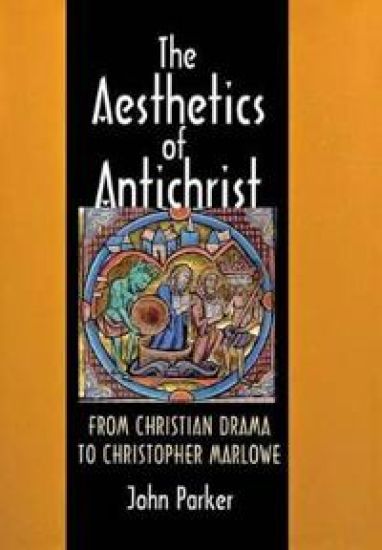
The Aesthetics of Antichrist

The Aesthetics of Antichrist

John Parker

Cornell University Press
2007
sidottu
In Dr. Faustus, Christopher Marlowe wrote a profoundly religious drama despite the theater's newfound secularism and his own reputation for anti-Christian irreverence. The Aesthetics of Antichrist explores this apparent paradox by suggesting that, long before Marlowe, Christian drama and ritual performance had reveled in staging the collapse of Christianity into its historical opponents—paganism, Judaism, worldliness, heresy. By embracing this tradition, Marlowe's work would at once demonstrate the theatricality inhering in Christian worship and, unexpectedly, resacralize the commercial theater. The Antichrist myth in particular tells of an impostor turned prophet: performing Christ's life, he reduces the godhead to a special effect yet in so doing foretells the real second coming. Medieval audiences, as well as Marlowe's, could evidently enjoy the constant confusion between true Christianity and its empty look-alikes for that very reason: mimetic degradation anticipated some final, as yet deferred revelation. Mere theater was a necessary prelude to redemption. The versions of the myth we find in Marlowe and earlier drama actually approximate, John Parker argues, a premodern theory of the redemptive effect of dramatic representation itself. Crossing the divide between medieval and Renaissance theater while drawing heavily on New Testament scholarship, Patristics, and research into the apocrypha, The Aesthetics of Antichrist proposes a wholesale rereading of pre-Shakespearean drama.
R.L. Moore

R.L. Moore

John Parker

Mathematical Association of America
2005
sidottu
R. L. Moore: Mathematician and Teacher presents a full and frank biography of a mathematician recognized as one of the principal figures in the 20th Century progression of the American school of point set topology. He was equally well known as creator of the Moore Method (no textbooks, no lectures, no conferring) in which there is a current and growing revival of interest and modified application under inquiry-based learning projects in both the United States and the United Kingdom.Parker draws on oral history, with first-person recollections from many leading figures in the American mathematics community of the last half-century. The story embraces some of the most famous and influential mathematical names in America and Europe from the late 1900s in what is undoubtedly a lively account of this controversial figure, once described as Mr. Chips with Attitude. He was the first American to become a Visiting Lecturer for the American Mathematical Society, was a member of the National Academy of Sciences, published 68 papers and a book that is still referred to seventy years later and that has been the subject of literally hundreds of papers by other mathematicians around the globe. Three of Moore's students followed him as president of the American Mathematical Society, and three others became vice-presidents. Five served as president of the Mathematical Association of America, and three became members of the National Academy of Sciences.
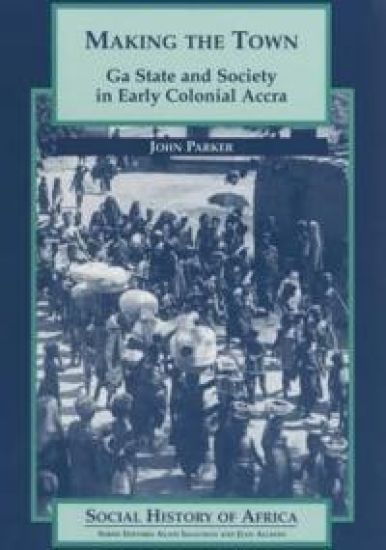
Making the Town

Making the Town

John Parker

James Currey
2001
pokkari
A social history of a West African urban community during colonialism. The focus is centered on town politics and the ways in which the Ga political action shaped Accra's transition from pre-colonial city-state to colonial port city. North America: Heinemann
Cross Numbers

Cross Numbers

John Parker

Tarquin Publications
1994
nidottu
Cross-numbers are the mathematical equivalent of crossword puzzles. The earlier puzzles in this book only require simple arithmetic and basic knowledge, but, as the sequence continues, so the level of difficulty increases. The later ones also demand some enjoyable logical reasoning to tease out the solutions. For the final puzzles, access to a calculator would be helpful and some would say essential. Anyone who enjoys arithmetic and likes to search for patterns and relations between numbers will find much to please them in this book.
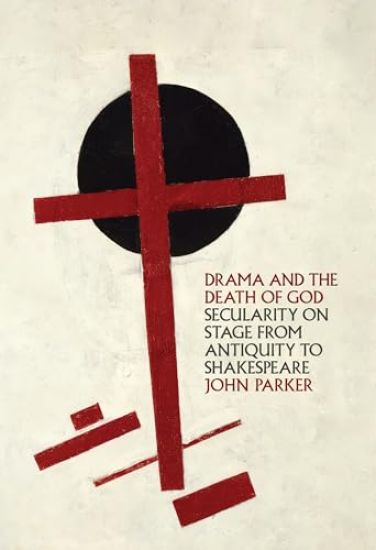
Drama and the Death of God

Drama and the Death of God

John Parker

CORNELL UNIVERSITY PRESS
2026
sidottu
In Drama and the Death of God, John Parker argues that the secularity often associated with Shakespeare inspired a variety of performances going back to antiquity. Scripture presupposes, even needs, the existence of a worldly sphere inimical to faith: known as the saeculum, this finite domain of appetite and unbelief invited both condemnation and celebration throughout medieval Christendom, as exemplified by the songs and plays of the Carmina Burana. After the tenth century, Christians routinely impersonated unbelievers in music-dramas connected to the high holidays so that they might question Biblical truths, in particular the authenticity of miracles. The church generated by this means a vision of the godless world that modernity stepped into. After the English Reformation, when Europe's first commercial theaters arose on ruined monastic estates, players continued to showcase how divine intervention could be staged by humans in the absence of God. King Lear in particular explores the ancient proposition that the saeculum holds no inherent meaning and is capable of generating only pseudo-miraculous spectacles to salve the ache of existence.
Drama and the Death of God

Drama and the Death of God

John Parker

CORNELL UNIVERSITY PRESS
2026
pokkari
In Drama and the Death of God, John Parker argues that the secularity often associated with Shakespeare inspired a variety of performances going back to antiquity. Scripture presupposes, even needs, the existence of a worldly sphere inimical to faith: known as the saeculum, this finite domain of appetite and unbelief invited both condemnation and celebration throughout medieval Christendom, as exemplified by the songs and plays of the Carmina Burana. After the tenth century, Christians routinely impersonated unbelievers in music-dramas connected to the high holidays so that they might question Biblical truths, in particular the authenticity of miracles. The church generated by this means a vision of the godless world that modernity stepped into. After the English Reformation, when Europe's first commercial theaters arose on ruined monastic estates, players continued to showcase how divine intervention could be staged by humans in the absence of God. King Lear in particular explores the ancient proposition that the saeculum holds no inherent meaning and is capable of generating only pseudo-miraculous spectacles to salve the ache of existence.