Kirjojen hintavertailu. Mukana 12 390 323 kirjaa ja 12 kauppaa.

Kirjailija

John Piacentini

Kirjat ja teokset yhdessä paikassa: 7 kirjaa, julkaisuja vuosilta 2007-2016, suosituimpien joukossa Managing Tourette Syndrome. Vertaile teosten hintoja ja tarkista saatavuus suomalaisista kirjakaupoista.

7 kirjaa

Kirjojen julkaisuhaarukka 2007-2016.

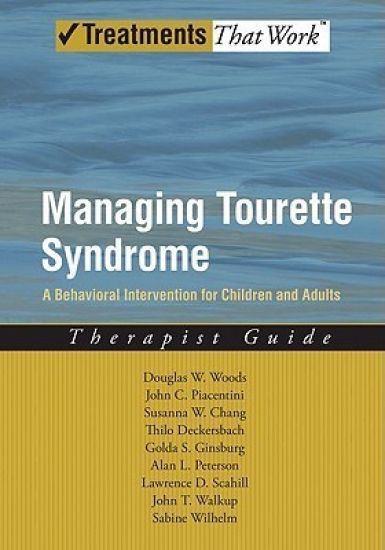
Managing Tourette Syndrome

Managing Tourette Syndrome

Douglas W Woods; John Piacentini; Susanna Chang; Thilo Deckersbach; Golda Ginsburg; Alan Peterson; Lawrence D Scahill; John Walup; Sabine Wilhelm

Oxford University Press Inc
2008
nidottu
In 2002, the Tourette Syndrome Association formed the TS Behavioral Sciences Consortium (BSC). The charge of the BSC was to develop and test nonpharmacological treatment options for individuals, both children and adults with Tourette Syndrome. This manual is the result of their work, and represents the most scientifically effective behavioral treatment for Tourette Syndrome available today. The treatment program uses Habit Reversal Training (HRT) for children and adults with chronic tic disorder. Individual treatment is based at its core on awareness training, the development of a specific competing response for each tic, and the use of functionally-based strategies for the elimination of tic-exacerbating antecedent and consequent variables. In addition, individual treatment includes techniques designed to enhance patient compliance, including social support and an inconvenience review, as well as scheduled time for the therapist and client to discuss areas of functioning that individuals with TS may find difficult, such as social/familial difficulties and disruptive anger/rage behavior. Each week, clients are given homework assignments, to be done 4-5 times per week, consisting of 20 to 30 minutes of awareness and competing response training to tics addressed in session. The client will be encouraged to keep tally marks to monitor tic behavior. Home-based monitoring and competing response training are reviewed at each session. All homework assignments will be available in this companion workbook.
Managing Tourette Syndrome

Managing Tourette Syndrome

Douglas W Woods; John Piacentini; Susanna Chang; Thilo Deckersbach; Golda Ginsburg; Alan Peterson; Lawrence d Scahill; John T Walkup; Sabine Wilhelm

Oxford University Press Inc
2008
nidottu
In 2002, the Tourette Syndrome Association formed the TS Behavioral Sciences Consortium (BSC). The charge of the BSC was to develop and test nonpharmacological treatment options for individuals, both children and adults with Tourette Syndrome. This manual is the result of their work, and represents the most scientifically effective behavioral treatment for Tourette Syndrome available today. The treatment program uses Habit Reversal Training (HRT) for children and adults with chronic tic disorder. Individual treatment is based at its core on awareness training, the development of a specific competing response for each tic, and the use of functionally-based strategies for the elimination of tic-exacerbating antecedent and consequent variables. In addition, individual treatment includes techniques designed to enhance patient compliance, including social support and an inconvenience review, as well as scheduled time for the therapist and client to discuss areas of functioning that individuals with TS may find difficult, such as social/familial difficulties and disruptive/anger/rage behavior. Each week, clients are given homework assignments, to be done 4-5 times per week, consisting of 20 to 30 minutes of awareness and competing response training to tics addressed in session. The client will be encouraged to keep tally marks to monitor tic behavior. Home-based monitoring and competing response training are reviewed at each session. All homework assignments will be available in the companion workbook.
Managing Tourette Syndrome

Managing Tourette Syndrome

Douglas W Woods; John Piacentini; Susanna Chang; Thilo Deckersbach; Golda Ginsburg; Alan Peterson; Lawrence D Scahill; John T Walkup; Sabine Wilhelm

Oxford University Press Inc
2008
nidottu
In 2002, the Tourette Syndrome Association formed the TS Behavioral Sciences Consortium (BSC). The charge of the BSC was to develop and test nonpharmacological treatment options for individuals, both children and adults with Tourette Syndrome. This manual is the result of their work, and represents the most scientifically effective behavioral treatment for Tourette Syndrome available today. The treatment program uses Habit Reversal Training (HRT) for children and adults with chronic tic disorder. Individual treatment is based at its core on awareness training, the development of a specific competing response for each tic, and the use of functionally-based strategies for the elimination of tic-exacerbating antecedent and consequent variables. In addition, individual treatment includes techniques designed to enhance patient compliance, including social support and an inconvenience review, as well as scheduled time for the therapist and client to discuss areas of functioning that individuals with TS may find difficult, such as social/familial difficulties and disruptive/anger/rage behavior. Each week, clients are given homework assignments, to be done 4-5 times per week, consisting of 20 to 30 minutes of awareness and competing response training to tics addressed in session. The client will be encouraged to keep tally marks to monitor tic behavior. Home-based monitoring and competing response training are reviewed at each session. All homework assignments will be available in the companion workbook.
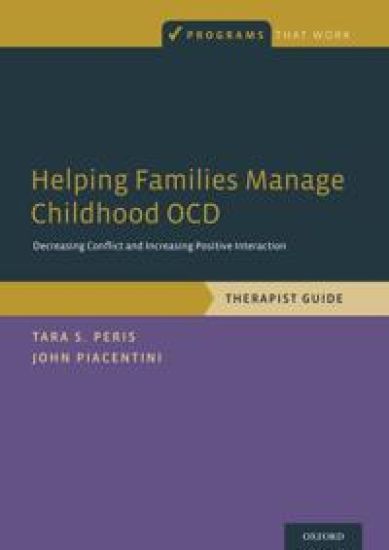
Helping Families Manage Childhood OCD

Helping Families Manage Childhood OCD

Tara S. Peris; John Piacentini

Oxford University Press Inc
2016
nidottu
Pediatric obsessive compulsive disorder (OCD) is a common condition that can take a substantial toll on the entire family system. Research suggests that families of youth with OCD face a unique set of difficulties in that they often are intimately involved in the child's symptoms. This involvement, also known as symptom accommodation, can be quite taxing, and it is often accompanied by high levels of distress, anxiety, and family conflict. These family responses, while natural and understandable, pose very real problems for treatment. Growing research suggests that poor family functioning undermines successful child OCD treatment. Helping Families Manage Childhood OCD provides clinicians with a comprehensive set of strategies for identifying and intervening with family dynamics that are likely to interfere with successful treatment of pediatric OCD. Moving beyond commonly employed techniques such as parent education and behavior management training, this manual includes skills training in emotion regulation for the entire family. It offers step-by-step strategies for helping family members to identify and manage their own emotional responses to OCD and provides a foundation for more effective and collaborative problem-solving around OCD. Through interactive exercises, families develop strategies for communicating around and troubleshooting difficult OCD episodes as well as strategies for promoting a more positive home environment in which to work on OCD.
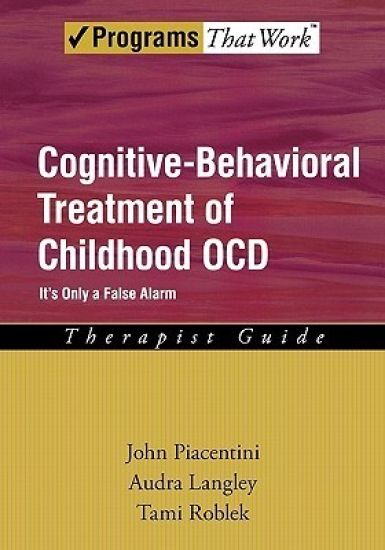
Cognitive-Behavioral Treatment of Childhood OCD

Cognitive-Behavioral Treatment of Childhood OCD

John Piacentini; Audra Langley; Tami Roblek

Oxford University Press Inc
2007
nidottu
OCD is characterised by a pattern of rituals (or compulsions) and obsessive thinking. Common obsessions among children and teens include a fear of dirt or germs, a need for symmetry, order, and precision, and a fear of illness or harm coming to oneself or relatives. Common compulsions include grooming, repeating, and cleaning rituals. These obsessions and compulsions can severely interfere with daily functioning and are a source of significant distress. Without adequate treatment, the quality of life for youths and families dealing with OCD often suffers. Cognitive-Behavioral Therapy (CBT) has shown to be effective in the treatment of childhood OCD. This Therapist Guide outlines a 12-session CBT-based treatment for OCD that benefits not only children and adolescents, but their families as well. Each session incorporates a family therapy component in addition to individual treatment for the child. It is a combined approach program that educates the child and family about OCD in order to reduce negative feelings of guilt and blame and to normalise family functioning. This manual also provides guidelines for conducting both imaginal and in vivo exposures; techniques at the core of helping children reduce their anxiety. For use with children ages 8 to 17, this book is an indispensable resource for clinicians helping children and their families cope with OCD.
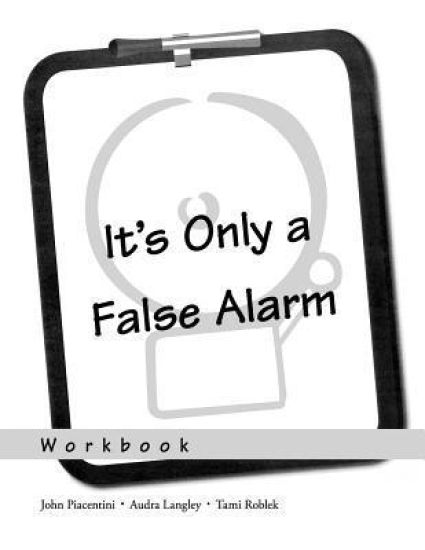
It's Only a False Alarm: Workbook

It's Only a False Alarm: Workbook

John Piacentini; Audra Langley; Tami Roblek

Oxford University Press Inc
2007
nidottu
It's Only a False Alarm, Workbook is written for children and adolescents ages 8 - 17 who are undergoing treatment for Obsessive-Compulsive Disorder (OCD). Designed to be used in conjunction with the program outlined in the corresponding Therapist Guide, this workbook contains easy-to-read psychoeducational material that help children understand their disorder and how to covercome it. It is filled with interactive worksheets and forms, as well as at-home exercises designed to help children relieve their anxiety and manage their OCD-related symptoms. Whether they are fearful of contamination or obsessed with symmetry, children will benefit from the exposure exercises found in this workbook. They will learn that just like a false fire alarm, there is nothing really dangerous around and nothing bad will occur if they don't perform their rituals and habits. Graphs and an OCD Thermometer provide children with a visual reminder of their progress over time.