

Kirjailija
John Pickles
Kirjat ja teokset yhdessä paikassa: 12 kirjaa, julkaisuja vuosilta 2000-2025, suosituimpien joukossa Reporting Simplified. Graphic Shorthand, By J.p******. Vertaile teosten hintoja ja tarkista saatavuus suomalaisista kirjakaupoista.
12 kirjaa
Kirjojen julkaisuhaarukka 2000-2025.


Geographical Dynamics and Firm Spatial Strategy in China
Shengjun Zhu; John Pickles; Canfei He
Springer-Verlag Berlin and Heidelberg GmbH Co. K
2018
nidottu
This book offers the first detailed account of the complex geographical dynamics currently restructuring China’s export-oriented industries. The topics covered are relevant to post-socialist geography, development studies, economics, economic sociology and international studies. It offers academics, international researchers, postgraduate and advanced undergraduate students in these fields an accessible, grounded, yet theoretically sophisticated account of the geographies of global production networks, value chains, and regional development in developing countries and emerging economies. It is of particular interest to economic geographers and economic sociologists involved in the growing debates over local clusters, embeddedness, global sourcing and global production, and over the global value chain/global production network. It also appeals to national policymakers, since it directly addresses economic and industrial policy issues, such as industrial competitiveness, regional and national development, industrial and employment restructuring and trade regulation.

Geographical Dynamics and Firm Spatial Strategy in China
Shengjun Zhu; John Pickles; Canfei He
Springer-Verlag Berlin and Heidelberg GmbH Co. K
2017
sidottu
This book offers the first detailed account of the complex geographical dynamics currently restructuring China’s export-oriented industries. The topics covered are relevant to post-socialist geography, development studies, economics, economic sociology and international studies. It offers academics, international researchers, postgraduate and advanced undergraduate students in these fields an accessible, grounded, yet theoretically sophisticated account of the geographies of global production networks, value chains, and regional development in developing countries and emerging economies. It is of particular interest to economic geographers and economic sociologists involved in the growing debates over local clusters, embeddedness, global sourcing and global production, and over the global value chain/global production network. It also appeals to national policymakers, since it directly addresses economic and industrial policy issues, such as industrial competitiveness, regional and national development, industrial and employment restructuring and trade regulation.

Articulations of Capital offers an accessible, grounded, yet theoretically-sophisticated account of the geographies of global production networks, value chains, and regional development in post-socialist Eastern and Central Europe. Proposes a new theorization of global value chains as part of a conjunctural economic geographyDevelops a set of conceptual and theoretical arguments concerning the regional embeddedness of global productionDraws on longitudinal empirical research from over 20 years in the Bulgarian and Slovakian apparel industriesMakes a major intervention into the debate over the economic geographies of European integration and EU enlargement
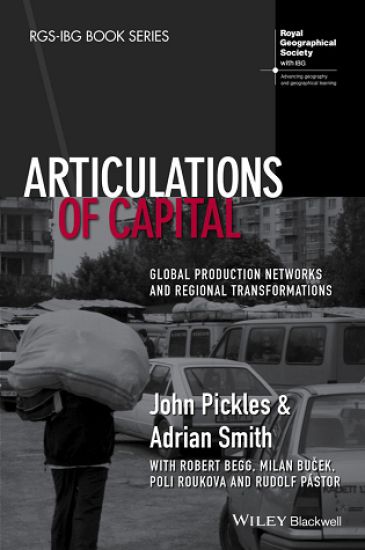
Articulations of Capital offers an accessible, grounded, yet theoretically-sophisticated account of the geographies of global production networks, value chains, and regional development in post-socialist Eastern and Central Europe. Proposes a new theorization of global value chains as part of a conjunctural economic geographyDevelops a set of conceptual and theoretical arguments concerning the regional embeddedness of global productionDraws on longitudinal empirical research from over 20 years in the Bulgarian and Slovakian apparel industriesMakes a major intervention into the debate over the economic geographies of European integration and EU enlargement

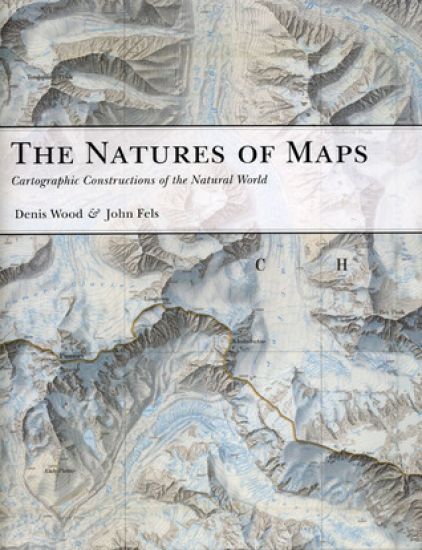
Cartographers have known for decades that maps are far from objective representations of the world; rather, every map reflects the agendas and intentions of its creators. Yet that understanding has had almost no effect on the way maps are viewed and used by the general public. In "The Natures of Maps", cartographers Denis Wood and John Fels present a compelling exploration of a wide range of maps to answer the question of, as they put it, why maps have "gotten away with it."To answer that question, the authors turn to a category of maps with a particularly strong reputation for objectivity: maps of nature. From depictions of species habitats and bird migrations to portrayals of the wilds of the Grand Canyon and the reaches of the Milky Way, such maps are usually presumed - even by users who should know better - to be strictly scientific. Yet by drawing our attention to every aspect of these maps' self-presentation, from place names to titles and legends, the authors reveal the way that each piece of information collaborates in a disguised effort to mount an argument about reality. Without our realizing it, those arguments can then come to define our very relationship to the natural world - determining whether we see ourselves as humble hikers or rampaging despoilers, participants or observers, consumers or stewards.Richly illustrated, and crafted in vivid and witty prose, "The Natures of Maps" will enlighten and entertain map aficionados, scholars, and armchair navigators alike. You'll never be able to look at Google Maps quite the same way again.

This book provides an essential insight into the practices and ideas of maps and map-making. It draws on a wide range of social theorists, and theorists of maps and cartography, to show how maps and map-making have shaped the spaces in which we live. Going beyond the focus of traditional cartography, the book draws on examples of the use of maps from the sixteenth century to the present, including their role in projects of the national and colonial state, emergent capitalism and the planetary consciousness of the natural sciences. It also considers the use of maps for military purposes, maps that have coded modern conceptions of health, disease and social character, and maps of the transparent human body and the transparent earth.

This book provides an essential insight into the practices and ideas of maps and map-making. It draws on a wide range of social theorists, and theorists of maps and cartography, to show how maps and map-making have shaped the spaces in which we live. Going beyond the focus of traditional cartography, the book draws on examples of the use of maps from the sixteenth century to the present, including their role in projects of the national and colonial state, emergent capitalism and the planetary consciousness of the natural sciences. It also considers the use of maps for military purposes, maps that have coded modern conceptions of health, disease and social character, and maps of the transparent human body and the transparent earth.
Environmental Transitions is a detailed and comprehensive account of the environmental changes in Central and Eastern Europe, both under state socialism and during the period of transition to capitalism. The change in politics in the late 1980s and early 1990s allowed an opportunity for a rapid environmental clean up, in an area once considered one of the most environmentally devastated regions on earth. The book illustrates how transformations after 1989 have brought major environmental improvements, as well as new environmental problems. It shows how environmental policy, economic change and popular support for environmental movements, have specific and changing geographies associated with them. Environmental Transitions addresses a large number of topics, including the historical geographical analysis of the environmental change, health impacts of environmental degradation, the role of environmental issues during the anti-communist revolutions, legislative reform and the effects of transition on environmental quality after 1989. Environmental Transitions contains detailed case studies from the region, which illustrate the complexity of environmental issues and their intimate relationship with political and economic realities. It gives theoretically informed ideas for understanding environmental change in the context of the political economy of state socialism and post-communist transformations, drawing on a wide body of literature from West, Central and Eastern Europe.
Environmental Transitions is a detailed and comprehensive account of the environmental changes in Central and Eastern Europe, both under state socialism and during the period of transition to capitalism. The change in politics in the late 1980s and early 1990s allowed an opportunity for a rapid environmental clean up, in an area once considered one of the most environmentally devastated regions on earth. The book illustrates how transformations after 1989 have brought major environmental improvements, as well as new environmental problems. It shows how environmental policy, economic change and popular support for environmental movements, have specific and changing geographies associated with them. Environmental Transitions addresses a large number of topics, including the historical geographical analysis of the environmental change, health impacts of environmental degradation, the role of environmental issues during the anti-communist revolutions, legislative reform and the effects of transition on environmental quality after 1989. Environmental Transitions contains detailed case studies from the region, which illustrate the complexity of environmental issues and their intimate relationship with political and economic realities. It gives theoretically informed ideas for understanding environmental change in the context of the political economy of state socialism and post-communist transformations, drawing on a wide body of literature from West, Central and Eastern Europe.