Kirjojen hintavertailu. Mukana 12 595 353 kirjaa ja 12 kauppaa.

Kirjailija

John Postill

Kirjat ja teokset yhdessä paikassa: 9 kirjaa, julkaisuja vuosilta 2006-2024, suosituimpien joukossa Digital Ethnography. Vertaile teosten hintoja ja tarkista saatavuus suomalaisista kirjakaupoista.

9 kirjaa

Kirjojen julkaisuhaarukka 2006-2024.

The Anthropology of Digital Practices

The Anthropology of Digital Practices

John Postill

TAYLOR FRANCIS LTD
2024
sidottu
The Anthropology of Digital Practices connects for the first time three distinct research areas – digital ethnography, causal ethnography, and media practice theory – to explore how we might track the effects of new media practices in a digital world. It invites media and communication students and scholars to overcome the field’s old aversion to ‘media effects’ and explores the messy, complex, open-ended effects of new media practices in a digital age.Based on long-term ethnographic research and drawing from recent advances in the study of causality and ethnography, this book tells the ‘formation story’ of the anti-woke movement through a series of critical media events. It argues that digital media practices (e.g. podcasting, YouTubing, tweeting, commenting, broadcasting) will have ‘formative’ effects on an emerging social world at different points in time. One important task of the digital ethnographer is precisely to distinguish between the formative and non-formative effects of specific media practices. This book makes three contributions to our understanding of media practices in the digital era, namely a theoretical, methodological, and empirical contribution. Theoretically, it furthers the ‘practice turn’ in media and communication studies by engaging with the latest thinking on causality and ethnography. Methodologically, it serves as a compelling, up-to-date guide to doing digital ethnography, with special reference to the study of digitally mediated practices. Empirically, it is the first book-length study of the anti-woke movement, a major actor in the ‘culture wars’ currently being fought across the Western world.With its accessible language and rich case studies, The Anthropology of Digital Practices will make an ideal supplementary textbook for a range of undergraduate and graduate courses in research methods, digital ethnography/anthropology, and digital activism.

The Anthropology of Digital Practices

The Anthropology of Digital Practices

John Postill

TAYLOR FRANCIS LTD
2024
nidottu
The Anthropology of Digital Practices connects for the first time three distinct research areas – digital ethnography, causal ethnography, and media practice theory – to explore how we might track the effects of new media practices in a digital world. It invites media and communication students and scholars to overcome the field’s old aversion to ‘media effects’ and explores the messy, complex, open-ended effects of new media practices in a digital age.Based on long-term ethnographic research and drawing from recent advances in the study of causality and ethnography, this book tells the ‘formation story’ of the anti-woke movement through a series of critical media events. It argues that digital media practices (e.g. podcasting, YouTubing, tweeting, commenting, broadcasting) will have ‘formative’ effects on an emerging social world at different points in time. One important task of the digital ethnographer is precisely to distinguish between the formative and non-formative effects of specific media practices. This book makes three contributions to our understanding of media practices in the digital era, namely a theoretical, methodological, and empirical contribution. Theoretically, it furthers the ‘practice turn’ in media and communication studies by engaging with the latest thinking on causality and ethnography. Methodologically, it serves as a compelling, up-to-date guide to doing digital ethnography, with special reference to the study of digitally mediated practices. Empirically, it is the first book-length study of the anti-woke movement, a major actor in the ‘culture wars’ currently being fought across the Western world.With its accessible language and rich case studies, The Anthropology of Digital Practices will make an ideal supplementary textbook for a range of undergraduate and graduate courses in research methods, digital ethnography/anthropology, and digital activism.

The Rise of Nerd Politics

The Rise of Nerd Politics

John Postill

Pluto Press
2018
sidottu
The irruption of WikiLeaks, Anonymous, Snowden and other tech-savvy actors onto the global political stage raises urgent questions about the impact of digital activism on political systems around the world. The Rise of Nerd Politics is an anthropological exploration of the role that such actors play in sparking and managing new processes of political change in the digital age. Drawing from long-term ethnographic research in Spain and Indonesia - as well as case studies from the United States, Iceland, Tunisia, Taiwan, Brazil and elsewhere - Postill tracks the rise of techno-political 'nerds' as a new class of political brokers with growing influence. The book identifies and explores four domains of 'nerd politics' that have dramatically expanded since 2010: data activism, digital rights, social protest and formal politics. A lively and engaging intervention at the conjuncture of anthropology, media studies and sociology, The Rise of Nerd Politics offers a pertinent reflection on the future of political change in the digital age.
The Rise of Nerd Politics

The Rise of Nerd Politics

John Postill

Pluto Press
2018
pokkari
The irruption of WikiLeaks, Anonymous, Snowden and other tech-savvy actors onto the global political stage raises urgent questions about the impact of digital activism on political systems around the world. The Rise of Nerd Politics is an anthropological exploration of the role that such actors play in sparking and managing new processes of political change in the digital age. Drawing from long-term ethnographic research in Spain and Indonesia - as well as case studies from the United States, Iceland, Tunisia, Taiwan, Brazil and elsewhere - Postill tracks the rise of techno-political 'nerds' as a new class of political brokers with growing influence. The book identifies and explores four domains of 'nerd politics' that have dramatically expanded since 2010: data activism, digital rights, social protest and formal politics. A lively and engaging intervention at the conjuncture of anthropology, media studies and sociology, The Rise of Nerd Politics offers a pertinent reflection on the future of political change in the digital age.
Digital Ethnography

Digital Ethnography

Sarah Pink; Heather Horst; John Postill; Larissa Hjorth; Tania Lewis; Jo Tacchi

SAGE Publications Ltd
2015
sidottu
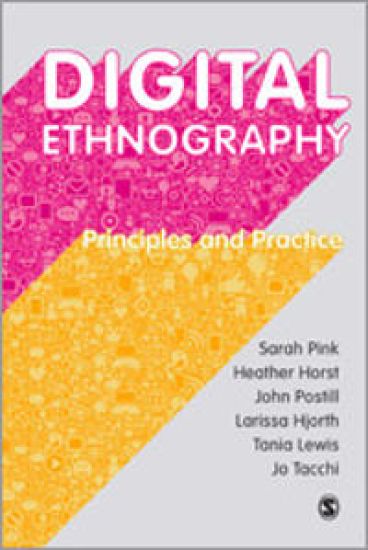
This sharp, innovative book champions the rising significance of ethnographic research on the use of digital resources around the world. It contextualises digital and pre-digital ethnographic research and demonstrates how the methodological, practical and theoretical dimensions are increasingly intertwined. Digital ethnography is central to our understanding of the social world; it can shape methodology and methods, and provides the technological tools needed to research society. The authoritative team of authors clearly set out how to research localities, objects and events as well as providing insights into exploring individuals’ or communities’ lived experiences, practices and relationships. The book: Defines a series of central concepts in this new branch of social and cultural researchChallenges existing conceptual and analytical categoriesShowcases new and innovative methodsTheorises the digital world in new waysEncourages us to rethink pre-digital practices, media and environments This is the ideal introduction for anyone intending to conduct ethnographic research in today’s digital society.
Digital Ethnography

Digital Ethnography

Sarah Pink; Heather Horst; John Postill; Larissa Hjorth; Tania Lewis; Jo Tacchi

SAGE Publications Ltd
2015
nidottu
This sharp, innovative book champions the rising significance of ethnographic research on the use of digital resources around the world. It contextualises digital and pre-digital ethnographic research and demonstrates how the methodological, practical and theoretical dimensions are increasingly intertwined. Digital ethnography is central to our understanding of the social world; it can shape methodology and methods, and provides the technological tools needed to research society. The authoritative team of authors clearly set out how to research localities, objects and events as well as providing insights into exploring individuals’ or communities’ lived experiences, practices and relationships. The book: Defines a series of central concepts in this new branch of social and cultural researchChallenges existing conceptual and analytical categoriesShowcases new and innovative methodsTheorises the digital world in new waysEncourages us to rethink pre-digital practices, media and environments This is the ideal introduction for anyone intending to conduct ethnographic research in today’s digital society.
Localizing the Internet

Localizing the Internet

John Postill

Berghahn Books
2011
sidottu
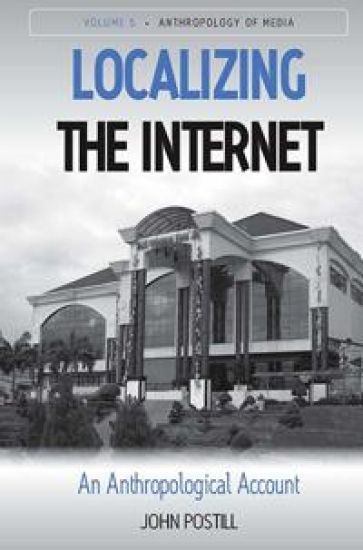
Internet activism is playing a crucial role in the democratic reform happening across many parts of Southeast Asia. Focusing on Subang Jaya, a suburb of Kuala Lumpur, this study offers an in-depth examination of the workings of the Internet at the local level. In fact, Subang Jaya is regarded as Malaysia’s electronic governance laboratory. The author explores its field of residential affairs, a digitally mediated social field in which residents, civil servants, politicians, online journalists and other social agents struggle over how the locality is to be governed at the dawn of the ‘Information Era’. Drawing on the field theories of both Pierre Bourdieu and the Manchester School of political anthropology, this study challenges the unquestioned predominance of ‘network’ and ‘community’ as the two key sociation concepts in contemporary Internet studies. The analysis extends field theory in four new directions, namely the complex articulations between personal networking and social fields, the uneven diffusion and circulation of new field technologies and contents, intra- and inter-field political crises, and the emergence of new forms of residential sociality.
Media and Nation Building

Media and Nation Building

John Postill

Berghahn Books
2008
pokkari
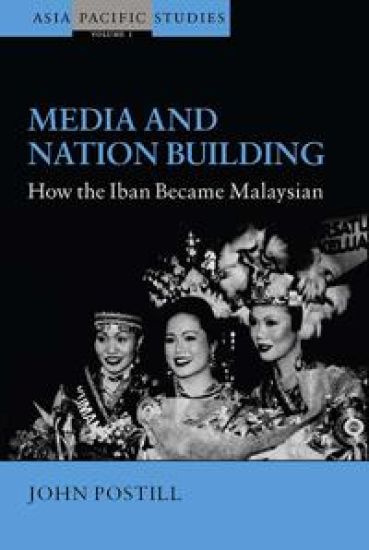
With the end of the Cold War and the proliferation of civil wars and "regime changes," the question of nation building has acquired great practical and theoretical urgency. From Eastern Europe to East Timor, Afghanistan and recently Iraq, the United States and its allies have often been accused of shirking their nation-building responsibilities as their attention — and that of the media -- turned to yet another regional crisis. While much has been written about the growing influence of television and the Internet on modern warfare, little is known about the relationship between media and nation building. This book explores, for the first time, this relationship by means of a paradigmatic case of successful nation building: Malaysia. Based on extended fieldwork and historical research, the author follows the diffusion, adoption, and social uses of media among the Iban of Sarawak, in Malaysian Borneo and demonstrates the wide-ranging process of nation building that has accompanied the Iban adoption of radio, clocks, print media, and television. In less than four decades, Iban longhouses ('villages under one roof') have become media organizations shaped by the official ideology of Malaysia, a country hastily formed in 1963 by conjoining four disparate territories.
Media and Nation Building

Media and Nation Building

John Postill

Berghahn Books
2006
sidottu
With the end of the Cold War and the proliferation of civil wars and "regime changes," the question of nation building has acquired great practical and theoretical urgency. From Eastern Europe to East Timor, Afghanistan and recently Iraq, the United States and its allies have often been accused of shirking their nation-building responsibilities as their attention — and that of the media -- turned to yet another regional crisis. While much has been written about the growing influence of television and the Internet on modern warfare, little is known about the relationship between media and nation building. This book explores, for the first time, this relationship by means of a paradigmatic case of successful nation building: Malaysia. Based on extended fieldwork and historical research, the author follows the diffusion, adoption, and social uses of media among the Iban of Sarawak, in Malaysian Borneo and demonstrates the wide-ranging process of nation building that has accompanied the Iban adoption of radio, clocks, print media, and television. In less than four decades, Iban longhouses ('villages under one roof') have become media organizations shaped by the official ideology of Malaysia, a country hastily formed in 1963 by conjoining four disparate territories.