Kirjojen hintavertailu. Mukana 12 519 493 kirjaa ja 12 kauppaa.

Kirjailija

John Pratt

Kirjat ja teokset yhdessä paikassa: 19 kirjaa, julkaisuja vuosilta 2002-2024, suosituimpien joukossa A Treatise on Attractions, Laplace's Functions. Vertaile teosten hintoja ja tarkista saatavuus suomalaisista kirjakaupoista.

19 kirjaa

Kirjojen julkaisuhaarukka 2002-2024.

Populism, Punishment and the Threat to Democratic Order
This book traces the rise of contemporary populism in Western democracies, marked by the return of would-be 'strong men' politicians. It seeks to make sense of the nature, origins, and consequences of their ascendancy—as expressed, for example, in the startling rise of the social movement surrounding Trump in the US, Brexit in the UK and the remarkable spread of ideologies that express resistance to ‘facts,’ science, and expertise. Uniquely, the book shows how what began as a form of penal populism in the early 1990s transformed into a more wide ranging populist politics. This has had the potential to undermine or even overthrow the democratic order altogether. It examines the way in which the COVID-19 pandemic has impacted on these forces, arguing it threw the flailing democratic order an important lifeline, as Vladimir Putin has subsequently done with his war in Ukraine. The book argues that contemporary political populism can be seen as a wider manifestation of the earlier tropes and appeal of penal populism arising under neo-liberalism. The author traces this cross over and the roots of discontent, anxiety, anti-elites sentiment and the sense of being forgotten, that lie at the heart of populism, along with its effects in terms of climate denial, ‘fake news’, othering, nativism and the denigration of scientific and other forms of expertise. In a highly topical and important extension to the field the author suggests that the current COVID pandemic might prove to be an ‘antidote’ to populism, providing the conditions in which scientific and medical expertise, truth telling, government intervention in the economy and in health policy, and social solidarity, are revalorised. Encompassing numerous subject areas and crossing many conventional disciplinary boundaries, this book will be of great interest to students and scholars of criminology and criminal justice, sociology, political science, law, and public policy.
Populism, Punishment and the Threat to Democratic Order
This book traces the rise of contemporary populism in Western democracies, marked by the return of would-be 'strong men' politicians. It seeks to make sense of the nature, origins, and consequences of their ascendancy—as expressed, for example, in the startling rise of the social movement surrounding Trump in the US, Brexit in the UK and the remarkable spread of ideologies that express resistance to ‘facts,’ science, and expertise. Uniquely, the book shows how what began as a form of penal populism in the early 1990s transformed into a more wide ranging populist politics. This has had the potential to undermine or even overthrow the democratic order altogether. It examines the way in which the COVID-19 pandemic has impacted on these forces, arguing it threw the flailing democratic order an important lifeline, as Vladimir Putin has subsequently done with his war in Ukraine. The book argues that contemporary political populism can be seen as a wider manifestation of the earlier tropes and appeal of penal populism arising under neo-liberalism. The author traces this cross over and the roots of discontent, anxiety, anti-elites sentiment and the sense of being forgotten, that lie at the heart of populism, along with its effects in terms of climate denial, ‘fake news’, othering, nativism and the denigration of scientific and other forms of expertise. In a highly topical and important extension to the field the author suggests that the current COVID pandemic might prove to be an ‘antidote’ to populism, providing the conditions in which scientific and medical expertise, truth telling, government intervention in the economy and in health policy, and social solidarity, are revalorised. Encompassing numerous subject areas and crossing many conventional disciplinary boundaries, this book will be of great interest to students and scholars of criminology and criminal justice, sociology, political science, law, and public policy.
Historic Tales of Decatur County, Indiana
Heartland stories of heroism, tragedy, mystery, and moreDecatur County, Indiana, may be small town America, but its history is exceptionally fascinating. Local luminary Will Cumback was not only a noted statesman but also a good friend to President Abraham Lincoln. The Underground Railroad ran through the county. The first tree on the Decatur County Courthouse Tower was seen in 1870, and a tree has grown there ever since. David Letterman's first broadcasting job was at WTRE in Greensburg, and the last no-hitter in the history of the All-American Girls Professional Baseball League was thrown by Burney's Janet Rumsey.Join history teacher and Greensburg native John Pratt on a journey through the colorful history of Decatur County.
Historic Tales of Decatur County, Indiana
Heartland stories of heroism, tragedy, mystery, and moreDecatur County, Indiana, may be small town America, but its history is exceptionally fascinating. Local luminary Will Cumback was not only a noted statesman but also a good friend to President Abraham Lincoln. The Underground Railroad ran through the county. The first tree on the Decatur County Courthouse Tower was seen in 1870, and a tree has grown there ever since. David Letterman's first broadcasting job was at WTRE in Greensburg, and the last no-hitter in the history of the All-American Girls Professional Baseball League was thrown by Burney's Janet Rumsey.Join history teacher and Greensburg native John Pratt on a journey through the colorful history of Decatur County.
Law, Insecurity and Risk Control

Law, Insecurity and Risk Control

John Pratt

Springer Nature Switzerland AG
2021
nidottu
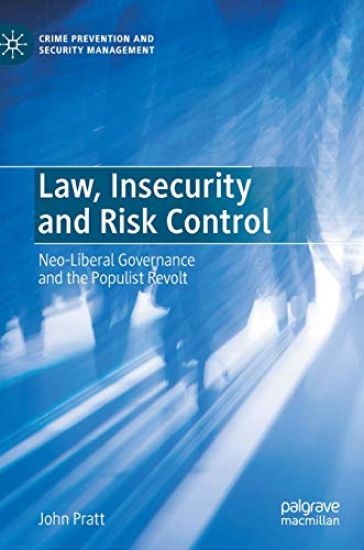
This book examines our contemporary preoccupation with risk and how criminal law and punishment have been transformed as a result of these anxieties. It adopts an historical approach to examine the development of risk control measures used across the US, UK, New Zealand, Australia and Canada - particularly since the 1980’s - with the rise of the "security sanction". It also takes a criminological and sociological approach to analysing shifts in criminal law and punishment and its implications for contemporary society and criminal justice systems. Law, Insecurity and Risk Control analyses the range and scope of the ‘security sanction’ and its immobilizing measures, ranging from control over minor incivilities to the most serious crimes. Despite these innovations, though, it argues that our anxieties about risk have become so extensive that the "security sanction" is no longer sufficient to provide social stability and cohesion. As a consequence, people have been attracted to the ‘magic’ of populism in a revolt against mainstream politics and organisations of government, as with the EU referendum in the UK and the US presidential election of Donald Trump in 2016. While there have been political manoeuvrings to rein back risk and place new controls on it, these have only brought further disillusionment, insecurity and anxiety. This book argues that the "security sanction" is likely to become more deeply embedded in the criminal justice systems of these societies, as new risks to both the well-being of individuals and the nation state are identified.
Law, Insecurity and Risk Control

Law, Insecurity and Risk Control

John Pratt

Springer Nature Switzerland AG
2020
sidottu
This book examines our contemporary preoccupation with risk and how criminal law and punishment have been transformed as a result of these anxieties. It adopts an historical approach to examine the development of risk control measures used across the US, UK, New Zealand, Australia and Canada - particularly since the 1980’s - with the rise of the "security sanction". It also takes a criminological and sociological approach to analysing shifts in criminal law and punishment and its implications for contemporary society and criminal justice systems. Law, Insecurity and Risk Control analyses the range and scope of the ‘security sanction’ and its immobilizing measures, ranging from control over minor incivilities to the most serious crimes. Despite these innovations, though, it argues that our anxieties about risk have become so extensive that the "security sanction" is no longer sufficient to provide social stability and cohesion. As a consequence, people have been attracted to the ‘magic’ of populism in a revolt against mainstream politics and organisations of government, as with the EU referendum in the UK and the US presidential election of Donald Trump in 2016. While there have been political manoeuvrings to rein back risk and place new controls on it, these have only brought further disillusionment, insecurity and anxiety. This book argues that the "security sanction" is likely to become more deeply embedded in the criminal justice systems of these societies, as new risks to both the well-being of individuals and the nation state are identified.
Prison Diary of A C Barrington

Prison Diary of A C Barrington

John Pratt

OTAGO UNIVERSITY PRESS
2016
nidottu
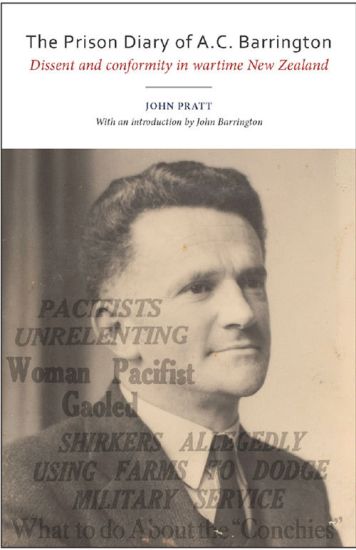
A.C. (Archie) Barrington was a leading New Zealand pacifist during World War 2. Incarcerated in Mount Crawford Prison for his beliefs in 1941, he kept an illicit diary, scrawled in the margins of books. Many years later his son John happened across the diary and painstakingly reconstructed it. John Pratt has edited the diary and provides a fascinating commentary on the issues it raises in relation to prison life then and now.
Real-Time Embedded Components and Systems with Linux and RTOS

Real-Time Embedded Components and Systems with Linux and RTOS

Sam Siewert; John Pratt

Mercury Learning Information
2016
sidottu
This book is intended to provide a senior undergraduate or graduate student in electrical engineering or computer science with a balance of fundamental theory, review of industry practice, and hands-on experience to prepare for a career in the real-time embedded system industries. It is also intended to provide the practicing engineer with the necessary background to apply real-time theory to the design of embedded components and systems. Typical industries include aerospace, medical diagnostic and therapeutic systems, telecommunications, automotive, robotics, industrial process control, media systems, computer gaming, and electronic entertainment, as well as multimedia applications for general-purpose computing. This updated edition adds three new chapters focused on key technology advancements in embedded systems and with wider coverage of real-time architectures. The overall focus remains the RTOS (Real-Time Operating System), but use of Linux for soft real-time, hybrid FPGA (Field Programmable Gate Array) architectures and advancements in multi-core system-on-chip (SoC), as well as software strategies for asymmetric and symmetric multiprocessing (AMP and SMP) relevant to real-time embedded systems, have been added. Companion files are provided with numerous project videos, resources, applications, and figures from the book. Instructors' resources are available upon adoption.Features:Provides a comprehensive, up to date, and accessible presentation of embedded systems without sacrificing theoretical foundationsFeatures the RTOS (Real-Time Operating System), but use of Linux for soft real-time, hybrid FPGA architectures and advancements in multi-core system-on-chip is includedDiscusses an overview of RTOS advancements, including AMP and SMP configurations, with a discussion of future directions for RTOS use in multi-core architectures, such as SoCDetailed applications coverage including robotics, computer vision, and continuous mediaIncludes a companion disc (4GB) with numerous videos, resources, projects, examples, and figures from the bookProvides several instructors' resources, including lecture notes, Microsoft PP slides, etc.
Long-Term Care

Long-Term Care

John Pratt

Jones and Bartlett Publishers, Inc
2015
sidottu
Long-Term Care: Managing Across the Continuum, Fourth Edition is an ideal introduction to management in this industry. Adopted as a reference for the national licensing examination prepared by the National Association of Long-Term Care Administrator Boards (NAB), this book covers the full continuum of long-term care. The Fourth Edition is a thorough update that offers a new chapter on the Affordable Care Act (Obamacare), with a particular focus on its impact on long-term care. All other chapters have been updated with the latest changes in regulations, financing methods, forms of service delivery and management methods in this dynamic field. The chapter on Leadership and Culture Change has been separated into two distinct chapters: Leadership in Long-Term Care and Culture Change in Long-Term – each with expanded information.
Contrasts in Punishment

Contrasts in Punishment

John Pratt; Anna Eriksson

Routledge
2014
nidottu
Why do some modern societies punish their offenders differently to others? Why are some more punitive and others more tolerant in their approach to offending and how can these differences be explained? Based on extensive historical analysis and fieldwork in the penal systems of England, Australia and New Zealand on the one hand and Finland, Norway and Sweden on the other, this book seeks to answer these questions. The book argues that the penal differences that currently exist between these two clusters of societies emanate from their early nineteenth-century social arrangements, when the Anglophone societies were dominated by exclusionary value systems that contrasted with the more inclusionary values of the Nordic countries. The development of their penal programmes over this two hundred year period, including the much earlier demise of the death penalty in the Nordic countries and significant differences between the respective prison rates and prison conditions of the two clusters, reflects the continuing influence of these values. Indeed, in the early 21st century these differences have become even more pronounced. John Pratt and Anna Eriksson offer a unique contribution to this topic of growing importance: comparative research in the history and sociology of punishment. This book will be of interest to those studying criminology, sociology, punishment, prison and penal policy, as well as professionals working in prisons or in the area of penal policy across the six societies that feature in the book.
Contrasts in Punishment

Contrasts in Punishment

John Pratt; Anna Eriksson

Routledge
2012
sidottu
Why do some modern societies punish their offenders differently to others? Why are some more punitive and others more tolerant in their approach to offending and how can these differences be explained? Based on extensive historical analysis and fieldwork in the penal systems of England, Australia and New Zealand on the one hand and Finland, Norway and Sweden on the other, this book seeks to answer these questions. The book argues that the penal differences that currently exist between these two clusters of societies emanate from their early nineteenth-century social arrangements, when the Anglophone societies were dominated by exclusionary value systems that contrasted with the more inclusionary values of the Nordic countries. The development of their penal programmes over this two hundred year period, including the much earlier demise of the death penalty in the Nordic countries and significant differences between the respective prison rates and prison conditions of the two clusters, reflects the continuing influence of these values. Indeed, in the early 21st century these differences have become even more pronounced. John Pratt and Anna Eriksson offer a unique contribution to this topic of growing importance: comparative research in the history and sociology of punishment. This book will be of interest to those studying criminology, sociology, punishment, prison and penal policy, as well as professionals working in prisons or in the area of penal policy across the six societies that feature in the book.
Long-Term Care: Managing Across The Continuum

Long-Term Care: Managing Across The Continuum

John Pratt

Jones and Bartlett Publishers, Inc
2009
nidottu
This book is intended as both a college text and a reference source for professionals, policy makers, and regulators. The text provides a sound reference source for anyone wishing to gain a better understanding of the long-term care system. It is concise, but complete, defining the various segments of the system. It also describes how the system developed to its current state, compares it to an ideal system, and projects future trends likely to impact the system. The earlier editions have been used by multiple colleges and universities for their long-term care administration courses. It has also been adopted as a cited reference for the national licensing examination prepared by the National Association of Long-Term Care Administrator Boards (NAB) which is used by all fifty state licensing boards (and the District of Columbia), and for the Certification examination of the American College of Health Care Administrators (ACHCA). It covers the full continuum of long-term care in enough detail to develop a sound understanding of the system, yet does not get bogged down in overly-specific detail as some texts do. Features: 1. Explains how the long-term care system developed and compares it to an ideal system, 2. Describes the primary types of long-term care providers (nursing facilities, assisted living, subacute care, senior housing, community-based care), presenting each in a similar manner, making it easy to compare and contrast them, 3. Covers how the providers interact with each other and with consumers and regulators - focusing specifically on how they compete, cooperate, and integrate; how they are regulated; financing; quality; ethical issues, 4. Discusses how long-term care providers are governed and managed, with chapters also devoted to leadership and culture change, technology, and marketing, 5. Outlines future trends and their projected impact on long-term care, and discusses how managers should act for success in the future. Students will find: 1. Case studies with each of the provider chapters, showing how they serve specific consumers. 2. Discussion questions and vocab terms at the end of each chapter 3. Online supplemental materials with both chapter-based interactive flash cards and an overall Glossary on-line
Penal Populism

Penal Populism

John Pratt

Routledge
2006
nidottu
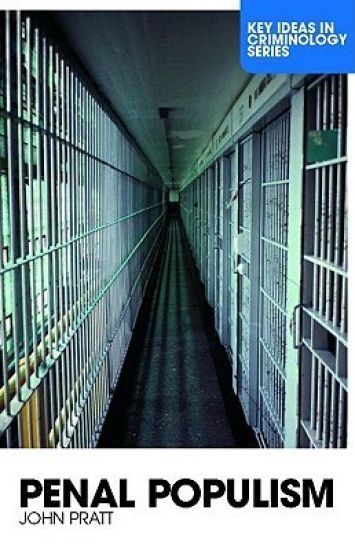
Expertly drawing on international examples and existing literature, Penal Populism closes a gap in the field of criminology. In this fascinating expose of current crime policy John Pratt examines the role played by penal populism on trends in contemporary penal policy.Penal populism is associated with the public's decline of deference to the criminal justice establishment amidst alarm that crime is out of control. Pratt argues that new media technology is helping to spread national insecurities and politicians are not only encouraging such sentiments but are also being led on by them. Pratt explains it is having most influence in the development of policy on sex offenders, youth crime, persistent criminals and anti-social behaviour. This topical resource also covers new dimensions of the phenomenon, including:the changing nature and structure of the mass media less reliance on the more orthodox expertise of civil servants and academics limitations to the impact of populism, bureaucratic resistance from judges, lawyers and academics and the restorative justice movement. This is essential reading for students, researchers and professionals working in criminology and crime policy.
Penal Populism

Penal Populism

John Pratt

Routledge
2006
sidottu
Expertly drawing on international examples and existing literature, Penal Populism closes a gap in the field of criminology. In this fascinating expose of current crime policy John Pratt examines the role played by penal populism on trends in contemporary penal policy.Penal populism is associated with the public's decline of deference to the criminal justice establishment amidst alarm that crime is out of control. Pratt argues that new media technology is helping to spread national insecurities and politicians are not only encouraging such sentiments but are also being led on by them. Pratt explains it is having most influence in the development of policy on sex offenders, youth crime, persistent criminals and anti-social behaviour. This topical resource also covers new dimensions of the phenomenon, including:the changing nature and structure of the mass media less reliance on the more orthodox expertise of civil servants and academics limitations to the impact of populism, bureaucratic resistance from judges, lawyers and academics and the restorative justice movement. This is essential reading for students, researchers and professionals working in criminology and crime policy.
Punishment and Civilization

Punishment and Civilization

John Pratt

SAGE Publications Inc
2002
nidottu
`A lucid and fascinating account of how society initially comes to be viewed as 'civilized' on the basis of how it punishes its offenders, and the various numances and contradictions that form the backdrop to that 'civilization' prior to 1970 and the unraveling of that process thereafter. ...He [Pratt] has at the very least broadened the boundaries of the debate about the history of imprisonment in new and novel ways that will surely become a basis for future analysis' - The Howard Journal of Criminal Justice 'In presenting and organizing such a wealth of historical material, John Pratt's book will be welcomed by those who teach and study the history of the prison in the English-speaking world' - Criminal Justice Punishment and Civilization examines how a framework of punishment that suited the values and standards of the civilized world came to be set in place from around 1800 to the late 20th century. In this book, John Pratt draws on research about prison architecture, clothing, diet, hygienic arrangements and changes in penal language to establish this. The author demonstrates that this did not mean, however, that such a framework of punishment was 'civilized'. Instead it meant that punishment in the civilized world became anonymous and remote. Prison brutalities and privations could be largely unchecked by a public that did not want to be involved. In the last few decades it has become clear that civilized societies have to tolerate new boundaries of punishment. This is not because of any development of 'civilized punishment'. Instead this is due to a shift in public mood and power: from public indifference to public involvement in penal development. Throughout this text theoretical ideas and concepts are accessibly introduced and illustrated with a wide range of examples from the UK, USA, Canada, Australia and New Zealand. It will be essential reading for students and academics of punishment, prisons and social theory.
Punishment and Civilization

Punishment and Civilization

John Pratt

SAGE Publications Inc
2002
sidottu
`A lucid and fascinating account of how society initially comes to be viewed as 'civilized' on the basis of how it punishes its offenders, and the various numances and contradictions that form the backdrop to that 'civilization' prior to 1970 and the unraveling of that process thereafter. ...He [Pratt] has at the very least broadened the boundaries of the debate about the history of imprisonment in new and novel ways that will surely become a basis for future analysis' - The Howard Journal of Criminal Justice 'In presenting and organizing such a wealth of historical material, John Pratt's book will be welcomed by those who teach and study the history of the prison in the English-speaking world' - Criminal Justice Punishment and Civilization examines how a framework of punishment that suited the values and standards of the civilized world came to be set in place from around 1800 to the late 20th century. In this book, John Pratt draws on research about prison architecture, clothing, diet, hygienic arrangements and changes in penal language to establish this. The author demonstrates that this did not mean, however, that such a framework of punishment was 'civilized'. Instead it meant that punishment in the civilized world became anonymous and remote. Prison brutalities and privations could be largely unchecked by a public that did not want to be involved. In the last few decades it has become clear that civilized societies have to tolerate new boundaries of punishment. This is not because of any development of 'civilized punishment'. Instead this is due to a shift in public mood and power: from public indifference to public involvement in penal development. Throughout this text theoretical ideas and concepts are accessibly introduced and illustrated with a wide range of examples from the UK, USA, Canada, Australia and New Zealand. It will be essential reading for students and academics of punishment, prisons and social theory.