Kirjojen hintavertailu. Mukana 12 595 353 kirjaa ja 12 kauppaa.
Kirjailija
John R. Allen
Kirjat ja teokset yhdessä paikassa: 7 kirjaa, julkaisuja vuosilta 2001-2022, suosituimpien joukossa Turning Point. Vertaile teosten hintoja ja tarkista saatavuus suomalaisista kirjakaupoista.
Artificial Intelligence is here, today. How can society make the best use of it?Until recently, ?artificial intelligence? sounded like something out of science fiction. But the technology of artificial intelligence, AI, is becoming increasingly common, from self-driving cars to e-commerce algorithms that seem to know what you want to buy before you do. Throughout the economy and many aspects of daily life, artificial intelligence has become the transformative technology of our time.Despite its current and potential benefits, AI is little understood by the larger public and widely feared. The rapid growth of artificial intelligence has given rise to concerns that hidden technology will create a dystopian world of increased income inequality, a total lack of privacy, and perhaps a broad threat to humanity itself.In their compelling and readable book, two experts at Brookings discuss both the opportunities and risks posed by artificial intelligence?and how near-term policy decisions could determine whether the technology leads to utopia or dystopia.Drawing on in-depth studies of major uses of AI, the authors detail how the technology actually works. They outline a policy and governance blueprint for gaining the benefits of artificial intelligence while minimizing its potential downsides.The book offers major recommendations for actions that governments, businesses, and individuals can take to promote trustworthy and responsible artificial intelligence. Their recommendations include: creation of ethical principles, strengthening government oversight, defining corporate culpability, establishment of advisory boards at federal agencies, using third-party audits to reduce biases inherent in algorithms, tightening personal privacy requirements, using insurance to mitigate exposure to AI risks, broadening decision-making about AI uses and procedures, penalizing malicious uses of new technologies, and taking pro-active steps to address how artificial intelligence affects the workforce.Turning Point is essential reading for anyone concerned about how artificial intelligence works and what can be done to ensure its benefits outweigh its harm.
Future War and the Defence of Europe offers a major new analysis of how peace and security can be maintained in Europe: a continent that has suffered two cataclysmic conflicts since 1914. Taking as its starting point the COVID-19 pandemic and way it will inevitably accelerate some key global dynamics already in play, the book goes on to weave history, strategy, policy, and technology into a compelling analytical narrative. It lays out in forensic detail the scale of the challenge Europeans and their allies face if Europe's peace is to be upheld in a transformative century. The book upends foundational assumptions about how Europe's defence is organised, the role of a fast-changing transatlantic relationship, NATO, the EU, and their constituent nation-states. At the heart of the book is a radical vision of a technology-enabling future European defence, built around a new kind of Atlantic Alliance, an innovative strategic public-private partnership, and the future hyper-electronic European force, E-Force, it must spawn. Europeans should be under no illusion: unless they do far more for their own defence, and very differently, all that they now take for granted could be lost in the maze of hybrid war, cyber war, and hyper war they must face.
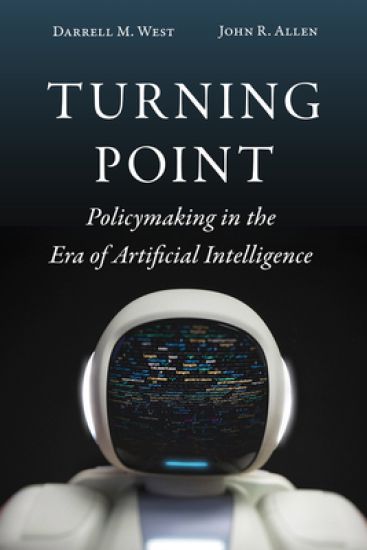
Artificial Intelligence is here, today. How can society make the best use of it?Until recently, “artificial intelligence” sounded like something out of science fiction. But the technology of artificial intelligence, AI, is becoming increasingly common, from self-driving cars to e-commerce algorithms that seem to know what you want to buy before you do. Throughout the economy and many aspects of daily life, artificial intelligence has become the transformative technology of our time.Despite its current and potential benefits, AI is little understood by the larger public and widely feared. The rapid growth of artificial intelligence has given rise to concerns that hidden technology will create a dystopian world of increased income inequality, a total lack of privacy, and perhaps a broad threat to humanity itself.In their compelling and readable book, two experts at Brookings discuss both the opportunities and risks posed by artificial intelligence—and how near-term policy decisions could determine whether the technology leads to utopia or dystopia.Drawing on in-depth studies of major uses of AI, the authors detail how the technology actually works. They outline a policy and governance blueprint for gaining the benefits of artificial intelligence while minimizing its potential downsides.The book offers major recommendations for actions that governments, businesses, and individuals can take to promote trustworthy and responsible artificial intelligence. Their recommendations include: creation of ethical principles, strengthening government oversight, defining corporate culpability, establishment of advisory boards at federal agencies, using third-party audits to reduce biases inherent in algorithms, tightening personal privacy requirements, using insurance to mitigate exposure to AI risks, broadening decision-making about AI uses and procedures, penalizing malicious uses of new technologies, and taking pro-active steps to address how artificial intelligence affects the workforce.Turning Point is essential reading for anyone concerned about how artificial intelligence works and what can be done to ensure its benefits outweigh its harm.
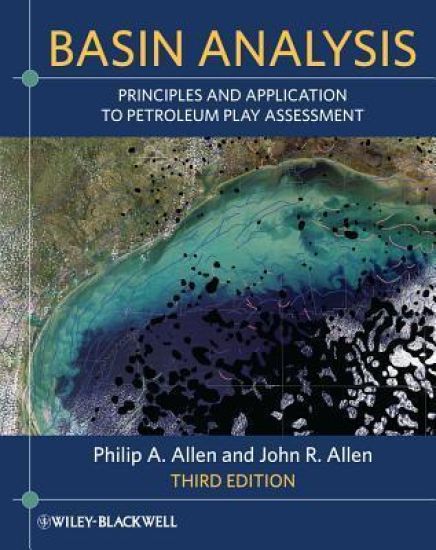
Basin Analysis is an advanced undergraduate and postgraduate text aimed at understanding sedimentary basins as geodynamic entities. The rationale of the book is that knowledge of the basic principles of the thermo-mechanical behaviour of the lithosphere, the dynamics of the mantle, and the functioning of sediment routing systems provides a sound background for studying sedimentary basins, and is a pre-requisite for the exploitation of resources contained in their sedimentary rocks. The third edition incorporates new developments in the burgeoning field of basin analysis while retaining the successful structure and overall philosophy of the first two editions. The text is divided into 4 parts that establish the geodynamical environment for sedimentary basins and the physical state of the lithosphere, followed by a coverage of the mechanics of basin formation, an integrated analysis of the controls on the basin-fill and its burial and thermal history, and concludes with an application of basin analysis principles in petroleum play assessment, including a discussion of unconventional hydrocarbon plays. The text is richly supplemented by Appendices providing mathematical derivations of a wide range of processes affecting the formation of basins and their sedimentary fills. Many of these Appendices include practical exercises that give the reader hands-on experience of quantitative solutions to important basin analysis processes. Now in full colour and a larger format, this third edition is a comprehensive update and expansion of the previous editions, and represents a rigorous yet accessible guide to problem solving in this most integrative of geoscientific disciplines. Additional resources for this book can be found at: www.wiley.com/go/allen/basinanalysis.
Basin Analysis is an advanced undergraduate and postgraduate text aimed at understanding sedimentary basins as geodynamic entities. The rationale of the book is that knowledge of the basic principles of the thermo-mechanical behaviour of the lithosphere, the dynamics of the mantle, and the functioning of sediment routing systems provides a sound background for studying sedimentary basins, and is a pre-requisite for the exploitation of resources contained in their sedimentary rocks. The third edition incorporates new developments in the burgeoning field of basin analysis while retaining the successful structure and overall philosophy of the first two editions. The text is divided into 4 parts that establish the geodynamical environment for sedimentary basins and the physical state of the lithosphere, followed by a coverage of the mechanics of basin formation, an integrated analysis of the controls on the basin-fill and its burial and thermal history, and concludes with an application of basin analysis principles in petroleum play assessment, including a discussion of unconventional hydrocarbon plays. The text is richly supplemented by Appendices providing mathematical derivations of a wide range of processes affecting the formation of basins and their sedimentary fills. Many of these Appendices include practical exercises that give the reader hands-on experience of quantitative solutions to important basin analysis processes. Now in full colour and a larger format, this third edition is a comprehensive update and expansion of the previous editions, and represents a rigorous yet accessible guide to problem solving in this most integrative of geoscientific disciplines. Additional resources for this book can be found at: www.wiley.com/go/allen/basinanalysis.