Kirjojen hintavertailu. Mukana 12 595 353 kirjaa ja 12 kauppaa.

Kirjailija

John R. Baldwin

Kirjat ja teokset yhdessä paikassa: 7 kirjaa, julkaisuja vuosilta 1995-2022, suosituimpien joukossa Innovation Strategies and Performance in Small Firms. Vertaile teosten hintoja ja tarkista saatavuus suomalaisista kirjakaupoista.

7 kirjaa

Kirjojen julkaisuhaarukka 1995-2022.

Regulatory Failure and Renewal

Regulatory Failure and Renewal

John R. Baldwin; Stanley Winer

MCGILL-QUEEN'S UNIVERSITY PRESS
2022
nidottu
Regulatory Failure and Renewal develops a framework to understand the choice of regulatory instrument used in Canada for natural monopolies such as telephone companies, water utilities, streetcars, hydroelectricity, and railways from the 1880s to the 1930s.Using the transaction-cost literature pioneered by Oliver Williamson, John Baldwin examines the nature of contractual failure in Canada in natural monopoly cases, asking why initial forms of contracts between the state and private enterprise failed and why this failure so often resulted in the use of public enterprise. Baldwin outlines early attempts to deal with natural monopolies – from the use of a franchise contract to regulatory tribunals and finally to public enterprise – and compares Canadian experiences to US approaches, which turned more frequently to regulatory tribunals. This difference is due to Canada’s more limited constraints on the state’s ability to exercise coercive power, which sometimes leads to contractual failure that results in replacing franchise and regulatory frameworks with public enterprise.Regulatory Failure and Renewal demonstrates that public enterprise arose not so much as part of a purposive choice but because of reoccurring failures in the contractual process between the Canadian state and private enterprise.
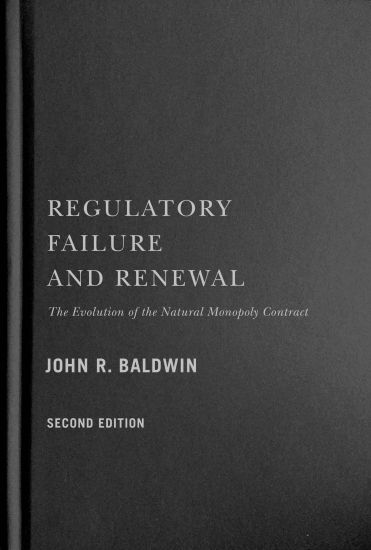
Regulatory Failure and Renewal

Regulatory Failure and Renewal

John R. Baldwin; Stanley Winer

MCGILL-QUEEN'S UNIVERSITY PRESS
2022
sidottu
Regulatory Failure and Renewal develops a framework to understand the choice of regulatory instrument used in Canada for natural monopolies such as telephone companies, water utilities, streetcars, hydroelectricity, and railways from the 1880s to the 1930s.Using the transaction-cost literature pioneered by Oliver Williamson, John Baldwin examines the nature of contractual failure in Canada in natural monopoly cases, asking why initial forms of contracts between the state and private enterprise failed and why this failure so often resulted in the use of public enterprise. Baldwin outlines early attempts to deal with natural monopolies – from the use of a franchise contract to regulatory tribunals and finally to public enterprise – and compares Canadian experiences to US approaches, which turned more frequently to regulatory tribunals. This difference is due to Canada’s more limited constraints on the state’s ability to exercise coercive power, which sometimes leads to contractual failure that results in replacing franchise and regulatory frameworks with public enterprise.Regulatory Failure and Renewal demonstrates that public enterprise arose not so much as part of a purposive choice but because of reoccurring failures in the contractual process between the Canadian state and private enterprise.

Innovation and Knowledge Creation in an Open Economy

Innovation and Knowledge Creation in an Open Economy

John R. Baldwin; Petr Hanel

Cambridge University Press
2007
pokkari
This study of innovation - its intensity, the sources used for knowledge creation, and its impacts - is based on a comprehensive survey of innovation of Canadian manufacturing firms. Attention is paid to the different actors in the system, who both compete with and complement one another. The study investigates how innovation regimes differ across size of firm and across industries. Owing to the high degree of foreign investment in Canada, special attention is paid to the performance of foreign-owned firms. The innovation regime of Canadian innovators is compared with results of studies of other industrialized countries. The picture of a typical innovator is a firm that combines internal resources and external contacts to develop a set of complementary strategies. The study finds that innovating firms depend not only on R&D, but also on ideas and technology from various other sources, both internal and external to the firm.
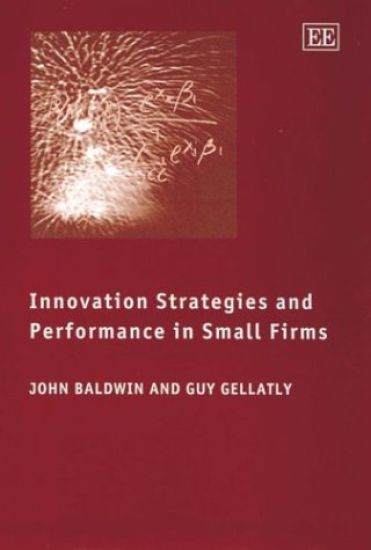
Innovation Strategies and Performance in Small Firms

Innovation Strategies and Performance in Small Firms

John R. Baldwin; Guy Gellatly

Edward Elgar Publishing Ltd
2003
sidottu
Exploring the scope, breadth and depth of innovation in small firms, the authors of this book employ a rich array of survey data to analyze the operating characteristics of dynamic small-firm populations. They investigate the strategies and activities that small firms pursue at different stages in their lifecycles and in different competitive environments, as well as which business skills are associated with survival, innovation, growth and high performance. John Baldwin and Guy Gellatly find that the strategic decisions young firms make play a critical role in determining their odds for survival and growth. New small firms survive by developing a core set of business skills - skills related inter alia to management, human resources, marketing and financing. Advanced innovation capabilities related to R&D and technology set high-performance firms apart from other businesses. Industry-level differences in product lifecycle, production activity, competitive intensity and the science base all influence the nature of small-firm innovation. Unique features of this volume include:comprehensive strategic profiles representative of small-firm populationsinformation from business surveys and administrative data sources for a better understanding of how strategies and activities relate to firm performance an exploration of how small-firm strategies and activities vary across a diverse range of operating environments - from manufacturing to services to science-based environments.Researchers and students interested in small firms and entrepreneurship will benefit from the wealth of new data that investigates relationships between business strategies, innovation and performance. Those interested in industrial organization, innovation and firm turnover will appreciate the new data on how small-firm strategies vary in different competitive environments and at different stages of the entry and exit process.
Innovation and Knowledge Creation in an Open Economy

Innovation and Knowledge Creation in an Open Economy

John R. Baldwin; Petr Hanel

Cambridge University Press
2003
sidottu
This study of innovation - its intensity, the sources used for knowledge creation, and its impacts - is based on a comprehensive survey of innovation of Canadian manufacturing firms. Attention is paid to the different actors in the system, who both compete with and complement one another. The study investigates how innovation regimes differ across size of firm and across industries. Owing to the high degree of foreign investment in Canada, special attention is paid to the performance of foreign-owned firms. The innovation regime of Canadian innovators is compared with results of studies of other industrialized countries. The picture of a typical innovator is a firm that combines internal resources and external contacts to develop a set of complementary strategies. The study finds that innovating firms depend not only on R&D, but also on ideas and technology from various other sources, both internal and external to the firm.
The Dynamics of Industrial Competition

The Dynamics of Industrial Competition

John R. Baldwin; Paul Gorecki

Cambridge University Press
1998
pokkari
The Dynamics of Industrial Competition describes the internal dynamics of industries using new and unique longitudinal data that make it possible to track firms over time. It provides a comprehensive picture of a number of different aspects of firm turnover in North America that arise from the competitive process - the entry and the exit of firms, the growth and decline of incumbent firms, and the merger process. Instantaneous and cumulative measures of market dynamics are provided by examining change in both the short and the long run. Using various measures of firm turnover to proxy the amount of competition, the study examines and contextualizes the relationship between industry performance and the intensity of the competitive process.
The Dynamics of Industrial Competition

The Dynamics of Industrial Competition

John R. Baldwin; Paul Gorecki

Cambridge University Press
1995
sidottu
The Dynamics of Industrial Competition describes the internal dynamics of industries using new and unique longitudinal data that make it possible to track firms over time. It provides a comprehensive picture of a number of different aspects of firm turnover in North America that arise from the competitive process - the entry and the exit of firms, the growth and decline of incumbent firms, and the merger process. Instantaneous and cumulative measures of market dynamics are provided by examining change in both the short and the long run. Using various measures of firm turnover to proxy the amount of competition, the study examines and contextualizes the relationship between industry performance and the intensity of the competitive process.