Kirjojen hintavertailu. Mukana 12 390 323 kirjaa ja 12 kauppaa.

Kirjailija

John R Fanchi

Kirjat ja teokset yhdessä paikassa: 20 kirjaa, julkaisuja vuosilta 1993-2024, suosituimpien joukossa Reason, Faith, And Purpose: The Ultimate Gamble. Vertaile teosten hintoja ja tarkista saatavuus suomalaisista kirjakaupoista.

Mukana myös kirjoitusasut: John R. Fanchi

20 kirjaa

Kirjojen julkaisuhaarukka 1993-2024.

Energy Transition And The Struggle For Global Governance, The

Energy Transition And The Struggle For Global Governance, The

John R Fanchi

WORLD SCIENTIFIC PUBLISHING CO PTE LTD
2024
sidottu
Events around the world have shown that the energy transition is more likely to be chaotic rather than peaceful as nations around the world engage in a struggle to achieve global governance. This unique compendium of useful information will help readers understand how the desire to implement an energy transition is being used to catalyze a change in the modern world order. The book concludes with the identification of possible world orders that might emerge after the energy transition.
Energy In The 21st Century: Energy In Transition (5th Edition)

Energy In The 21st Century: Energy In Transition (5th Edition)

John R Fanchi

WORLD SCIENTIFIC PUBLISHING CO PTE LTD
2023
nidottu
This unique compendium provides a fact-based analysis of the most prominent energy issues of our time. It covers the period when the Covid pandemic swept across the world and substantially altered energy production and consumption. It discusses lessons learned following the reopening of economies around the world, and recognizes that we are in the midst of the energy transition. Insights into key energy topics, such as the timing of the energy transition and the need for a reliable energy portfolio for national security, are included.Some highlights of the new edition include discussions of climate change; lessons learned from the 2022 Russian invasion of Ukraine; introduction to small-scale, modular nuclear fission reactors; updates on the status of nuclear fusion reactor prototypes; advances in solar power plants and transparent photovoltaic cells; improvements in large-scale wind power; tidal and wave energy converters; oil from algae; the EU Supergrid; the transition to electric vehicles and its impact on demand for oil; and updating the Goldilocks Policy forecast.This textbook can also serve as a useful reference for students, decision makers, opinion leaders and the general public. Previous editions have been used as an introductory energy text for college and MBA students.
Energy In The 21st Century: Energy In Transition (5th Edition)

Energy In The 21st Century: Energy In Transition (5th Edition)

John R Fanchi

WORLD SCIENTIFIC PUBLISHING CO PTE LTD
2023
sidottu
This unique compendium provides a fact-based analysis of the most prominent energy issues of our time. It covers the period when the Covid pandemic swept across the world and substantially altered energy production and consumption. It discusses lessons learned following the reopening of economies around the world, and recognizes that we are in the midst of the energy transition. Insights into key energy topics, such as the timing of the energy transition and the need for a reliable energy portfolio for national security, are included.Some highlights of the new edition include discussions of climate change; lessons learned from the 2022 Russian invasion of Ukraine; introduction to small-scale, modular nuclear fission reactors; updates on the status of nuclear fusion reactor prototypes; advances in solar power plants and transparent photovoltaic cells; improvements in large-scale wind power; tidal and wave energy converters; oil from algae; the EU Supergrid; the transition to electric vehicles and its impact on demand for oil; and updating the Goldilocks Policy forecast.This textbook can also serve as a useful reference for students, decision makers, opinion leaders and the general public. Previous editions have been used as an introductory energy text for college and MBA students.
Confronting The Enigma Of Time

Confronting The Enigma Of Time

John R Fanchi

World Scientific Europe Ltd
2023
nidottu
In Newton's classical mechanics, time played the role of a monotonically increasing evolution parameter. Einstein rejected the Newtonian concept and instead identified time as the fourth coordinate of a space-time four-vector. Today, scientists are considering different concepts of time as a means of resolving incompatibilities between relativity and quantum mechanics. Some view time as an emergent property of a system rather than a fundamental property, while others consider two temporal variables. The purpose of this book is to examine the role of time in modern physics so that the reader gains an increased awareness of time and its place in our understanding of nature.
Confronting The Enigma Of Time

Confronting The Enigma Of Time

John R Fanchi

World Scientific Europe Ltd
2023
sidottu
In Newton's classical mechanics, time played the role of a monotonically increasing evolution parameter. Einstein rejected the Newtonian concept and instead identified time as the fourth coordinate of a space-time four-vector. Today, scientists are considering different concepts of time as a means of resolving incompatibilities between relativity and quantum mechanics. Some view time as an emergent property of a system rather than a fundamental property, while others consider two temporal variables. The purpose of this book is to examine the role of time in modern physics so that the reader gains an increased awareness of time and its place in our understanding of nature.
Reason, Faith, And Purpose: The Ultimate Gamble

Reason, Faith, And Purpose: The Ultimate Gamble

John R Fanchi

World Scientific Europe Ltd
2021
sidottu
Reason, Faith, and Purpose: The Ultimate Gamble is a guide for believers and inquiring skeptics. This book summarizes the scientific view of the origins of the universe and life and analyzes the question of the existence of god from philosophical, religious, and scientific perspectives.The material is presented in two parts. Part I presents the secular, scientific view of the origin and evolution of the physical universe and life. Part II introduces other perspectives that are representative of ideas historically prevalent around the world. The material in Reason, Faith, and Purpose is designed to provide insight into the choice each of us must make in this life: the ultimate gamble.
Goldilocks Policy, The: The Basis For A Grand Energy Bargain

Goldilocks Policy, The: The Basis For A Grand Energy Bargain

John R Fanchi

World Scientific Publishing Co Pte Ltd
2019
nidottu
'The author leavens his discussion of a transition to a sustainable energy mix with the views of three prominent energy experts; following this is an introduction to ‘Goldilocks policy’ and a detailed discussion of its obstacles. The author stresses the importance of factoring in capacity, cost, safety, reliability, and environmental effects in developing a sustainable energy policy.'CHOICEThis book makes the case for a grand energy bargain that recognizes the need to protect the environment from the combustion of fossil fuels while protecting the national and global economies during the transition from fossil fuels to sustainable energy.Our future energy mix depends on choices we make, which depends, in turn, on energy policy. Society is continuing a trend toward decarbonization: the reduction in the relative amount of carbon in combustible fuels. The 21st century energy mix will depend on technological advances, including some advances that cannot be anticipated, and on choices made by society.There are competing visions for reaching a sustainable energy mix. If the energy transition is too fast, it could significantly damage the global economy. If the energy transition is too slow, damage to the environment could be irreversible.The 'Goldilocks Policy for Energy Transition' is designed to establish a middle ground between these competing visions. We need the duration of the energy transition to be just right; we need to adopt a reasonable plan of action that reduces uncertainty for businesses and innovators with predictable public policy while simultaneously minimizing environmental impact.The question of climate change is still unsettled, but enough is known to motivate a transition away from fossil fuels. The transition does not have to be abrupt and catastrophic, however. Historical energy transitions can be a guide to a reasonable duration for making an orderly transition. If we exercise discipline and patience, we can overcome the obstacles to successful implementation of a grand energy bargain.
Goldilocks Policy, The: The Basis For A Grand Energy Bargain

Goldilocks Policy, The: The Basis For A Grand Energy Bargain

John R Fanchi

World Scientific Publishing Co Pte Ltd
2019
sidottu
'The author leavens his discussion of a transition to a sustainable energy mix with the views of three prominent energy experts; following this is an introduction to ‘Goldilocks policy’ and a detailed discussion of its obstacles. The author stresses the importance of factoring in capacity, cost, safety, reliability, and environmental effects in developing a sustainable energy policy.'CHOICEThis book makes the case for a grand energy bargain that recognizes the need to protect the environment from the combustion of fossil fuels while protecting the national and global economies during the transition from fossil fuels to sustainable energy.Our future energy mix depends on choices we make, which depends, in turn, on energy policy. Society is continuing a trend toward decarbonization: the reduction in the relative amount of carbon in combustible fuels. The 21st century energy mix will depend on technological advances, including some advances that cannot be anticipated, and on choices made by society.There are competing visions for reaching a sustainable energy mix. If the energy transition is too fast, it could significantly damage the global economy. If the energy transition is too slow, damage to the environment could be irreversible.The 'Goldilocks Policy for Energy Transition' is designed to establish a middle ground between these competing visions. We need the duration of the energy transition to be just right; we need to adopt a reasonable plan of action that reduces uncertainty for businesses and innovators with predictable public policy while simultaneously minimizing environmental impact.The question of climate change is still unsettled, but enough is known to motivate a transition away from fossil fuels. The transition does not have to be abrupt and catastrophic, however. Historical energy transitions can be a guide to a reasonable duration for making an orderly transition. If we exercise discipline and patience, we can overcome the obstacles to successful implementation of a grand energy bargain.
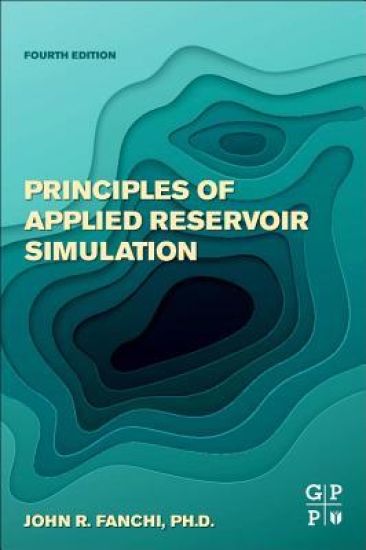
Principles of Applied Reservoir Simulation

Principles of Applied Reservoir Simulation

John R. Fanchi

Gulf Professional Publishing
2018
nidottu
Reservoir engineers today need to acquire more complex reservoir management and modeling skills. Principles of Applied Reservoir Simulation, Fourth Edition, continues to provide the fundamentals on these topics for both early and seasoned career engineers and researchers. Enhanced with more practicality and with a focus on more modern reservoir simulation workflows, this vital reference includes applications to not only traditional oil and gas reservoir problems but specialized applications in geomechanics, coal gas modelling, and unconventional resources. Strengthened with complementary software from the author to immediately apply to the engineer’s projects, Principles of Applied Reservoir Simulation, Fourth Edition, delivers knowledge critical for today’s basic and advanced reservoir and asset management.
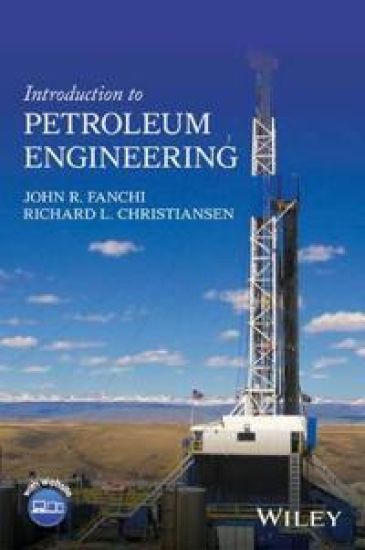
Introduction to Petroleum Engineering

Introduction to Petroleum Engineering

John R. Fanchi; Richard L. Christiansen

Wiley-Blackwell
2016
sidottu
Presents key concepts and terminology for a multidisciplinary range of topics in petroleum engineering Places oil and gas production in the global energy contextIntroduces all of the key concepts that are needed to understand oil and gas production from exploration through abandonmentReviews fundamental terminology and concepts from geology, geophysics, petrophysics, drilling, production and reservoir engineeringIncludes many worked practical examples within each chapter and exercises at the end of each chapter highlight and reinforce material in the chapterIncludes a solutions manual for academic adopters
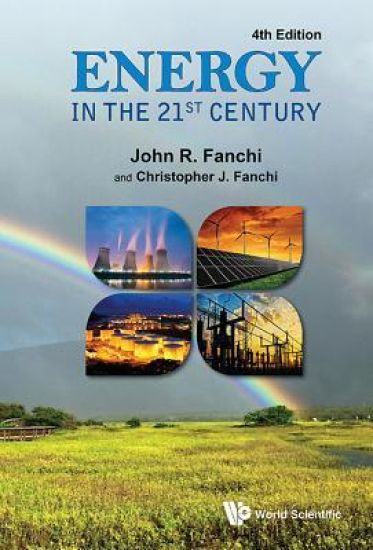
Energy In The 21st Century (4th Edition)

Energy In The 21st Century (4th Edition)

John R Fanchi; Christopher J Fanchi

World Scientific Publishing Co Pte Ltd
2016
nidottu
Energy in the 21st Century is a valuable source of information for students, decision makers, opinion leaders, and the general public. Oil and natural gas price volatility continue to affect both the supply and demand for energy. Advances in other technologies, such as nuclear, wind, solar, and tidal technology, are altering the comparative economics of competing energy sources. New government policies are changing the landscape of the global energy marketplace.From our reliance on fossil fuels to the quest for new sources of energy, Energy in the 21st Century provides a fact-based analysis of the most prominent energy issues of our time. The fourth edition updates data and includes more discussion of recent advances. Some of the highlights of the fourth edition are expanded discussion of climate change and anthropogenic climate change; the 2015 COP21 Paris Agreement on Climate Change; nuclear fusion reactor prototypes (tokomak ITER and stellarator W7-X); advances in solar thermal and solar photovoltaic power plants, space based solar power, transparent photovoltaic cells, and hybrid solar wind technology; tidal and wave energy converters; oil from algae; the EU Supergrid; the Goldilocks Policy for energy transition and the Grand Energy Bargain.Energy in the 21st Century has been used as the text for the general college student population, as well as energy overview for MBA students. Pedagogical material includes learning objectives at the beginning of each chapter, end of chapter activities, a comprehensive index, a glossary, and an Appendix to help with converting units. Points to Ponder are provided throughout the text and are designed to encourage the reader to consider material from different perspectives.
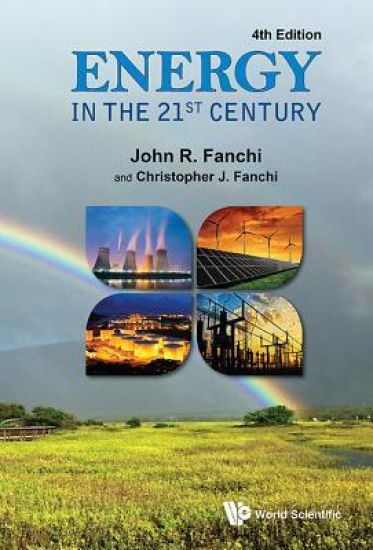
Energy In The 21st Century (4th Edition)

Energy In The 21st Century (4th Edition)

John R Fanchi; Christopher J Fanchi

World Scientific Publishing Co Pte Ltd
2016
sidottu
Energy in the 21st Century is a valuable source of information for students, decision makers, opinion leaders, and the general public. Oil and natural gas price volatility continue to affect both the supply and demand for energy. Advances in other technologies, such as nuclear, wind, solar, and tidal technology, are altering the comparative economics of competing energy sources. New government policies are changing the landscape of the global energy marketplace.From our reliance on fossil fuels to the quest for new sources of energy, Energy in the 21st Century provides a fact-based analysis of the most prominent energy issues of our time. The fourth edition updates data and includes more discussion of recent advances. Some of the highlights of the fourth edition are expanded discussion of climate change and anthropogenic climate change; the 2015 COP21 Paris Agreement on Climate Change; nuclear fusion reactor prototypes (tokomak ITER and stellarator W7-X); advances in solar thermal and solar photovoltaic power plants, space based solar power, transparent photovoltaic cells, and hybrid solar wind technology; tidal and wave energy converters; oil from algae; the EU Supergrid; the Goldilocks Policy for energy transition and the Grand Energy Bargain.Energy in the 21st Century has been used as the text for the general college student population, as well as energy overview for MBA students. Pedagogical material includes learning objectives at the beginning of each chapter, end of chapter activities, a comprehensive index, a glossary, and an Appendix to help with converting units. Points to Ponder are provided throughout the text and are designed to encourage the reader to consider material from different perspectives.
Energy In The 21st Century (3rd Edition)

Energy In The 21st Century (3rd Edition)

John R Fanchi

World Scientific Publishing Co Pte Ltd
2013
sidottu
Many events that affect global energy production and consumption have occurred since the second edition of Energy in the 21st Century appeared in 2011. For example, an earthquake and tsunami in Japan led to the disruption of the Fukushima nuclear facility and a global re-examination of the safety of the nuclear industry. Oil and natural gas prices continue to be volatile, and the demand for energy has been affected by the global economy. The third edition updates data and the discussion of recent events.Energy in the 21st Century has been used as the text for an introductory energy course for the general college student population. Based on student feedback, we have included several features that enhance the value of the third edition as a textbook. In particular, we have included learning objectives at the beginning of each chapter, end of chapter activities, a comprehensive index, and a glossary. Points to Ponder are abbreviated as P2P in the Learning Objectives boxes and are provided throughout the text. They are designed to encourage the reader to consider the material from different perspectives.
Parametrized Relativistic Quantum Theory
Over the past five de-::ades researchers have sought to develop a new framework that would resolve the anomalies attributable to a patchwork formulation of relativistic quantum mechanics. This book chronicles the development of a new paradigm for describing relativistic quantum phenomena. What makes the new paradigm unique is its inclusion of a physically measurable, invariant evolution parameter. The resulting theory has been sufficiently well developed in the refereed literature that it is now possible to present a synthesis of its ideas and techniques. My synthesis is intended to encourage and enhance future research, and is presented in six parts. The environment within which the conventional paradigm exists is described in the Introduction. Part I eases the mainstream reader into the ideas of the new paradigm by providing the reader with a discussion that should look very familiar, but contains subtle nuances. Indeed, I try to provide the mainstream reader with familiar "landmarks" throughout the text. This is possible because the new paradigm contains the conventional paradigm as a subset. The foundation of the new paradigm is presented in Part II, fol!owed by numerous applications in the remaining three parts. The reader should notice that the new paradigm handles not only the broad class of problems typically dealt with in conventional relativistic quantum theory, but also contains fertile research areas for both experimentalists and theorists. To avoid developing a theoretical framework without physical validity, numerous comparisons between theory and experiment are provided, and several predictions are made.
Energy In The 21st Century (2nd Edition)

Energy In The 21st Century (2nd Edition)

John R Fanchi

World Scientific Publishing Co Pte Ltd
2010
sidottu
Energy may be the most important factor that will influence the shape of society in the 21st century. The cost and availability of energy significantly impacts our quality of life, the health of national economies, the relationships between nations, and the stability of our environment. What kind of energy do we want to use in our future? Will there be enough? What will be the consequences of our decisions? Everyone has a stake in the answers to these questions and the decisions that are being made to provide energy.Energy in the 21st Century, in its second edition, examines the energy sources that play a vital role in society today, as well as those that may be the primary energy sources of tomorrow. From our reliance on fossil fuels to the quest for energy independence, and the environmental issues that follow each decision, this book delves into the most prominent energy issues of our time. Armed with this information, the reader can think critically about the direction they want this world to take.
Math Refresher for Scientists and Engineers

Math Refresher for Scientists and Engineers

John R. Fanchi

John Wiley Sons Inc
2006
nidottu
Expanded coverage of essential math, including integral equations, calculus of variations, tensor analysis, and special integrals Math Refresher for Scientists and Engineers, Third Edition is specifically designed as a self-study guide to help busy professionals and students in science and engineering quickly refresh and improve the math skills needed to perform their jobs and advance their careers. The book focuses on practical applications and exercises that readers are likely to face in their professional environments. All the basic math skills needed to manage contemporary technology problems are addressed and presented in a clear, lucid style that readers familiar with previous editions have come to appreciate and value. The book begins with basic concepts in college algebra and trigonometry, and then moves on to explore more advanced concepts in calculus, linear algebra (including matrices), differential equations, probability, and statistics. This Third Edition has been greatly expanded to reflect the needs of today's professionals. New material includes: * A chapter on integral equations * A chapter on calculus of variations * A chapter on tensor analysis * A section on time series * A section on partial fractions * Many new exercises and solutions Collectively, the chapters teach most of the basic math skills needed by scientists and engineers. The wide range of topics covered in one title is unique. All chapters provide a review of important principles and methods. Examples, exercises, and applications are used liberally throughout to engage the readers and assist them in applying their new math skills to actual problems. Solutions to exercises are provided in an appendix. Whether to brush up on professional skills or prepare for exams, readers will find this self-study guide enables them to quickly master the math they need. It can additionally be used as a textbook for advanced-level undergraduates in physics and engineering.
Energy In The 21st Century

Energy In The 21st Century

John R Fanchi

World Scientific Publishing Co Pte Ltd
2005
nidottu
Energy may be the most important factor that will influence the shape of society in the 21st century. The cost and availability of energy significantly impacts our quality of life, the health of national economies, the relationships between nations, and the stability of our environment. What kind of energy do we want to use in our future? Will there be enough? What will the consequences of our decisions be? Every one of us has a stake in the answers to these questions and the decisions that are being made to provide energy.The choices we make today will affect generations to come. What kind of future do we want to prepare for them? We can make the best decisions by being aware of our options and the consequences of our choices. This informative book examines how society can make the transition from a reliance on fossil fuels to energy independence. The reader is exposed to a broad range of energy types and will develop an appreciation of the role that each energy type may play in the future. Energy in the 21st Century was written to give the concerned citizen enough information about energy to make informed decisions and contribute to the debate.
Energy In The 21st Century

Energy In The 21st Century

John R Fanchi

World Scientific Publishing Co Pte Ltd
2005
sidottu
Energy may be the most important factor that will influence the shape of society in the 21st century. The cost and availability of energy significantly impacts our quality of life, the health of national economies, the relationships between nations, and the stability of our environment. What kind of energy do we want to use in our future? Will there be enough? What will the consequences of our decisions be? Every one of us has a stake in the answers to these questions and the decisions that are being made to provide energy.The choices we make today will affect generations to come. What kind of future do we want to prepare for them? We can make the best decisions by being aware of our options and the consequences of our choices. This informative book examines how society can make the transition from a reliance on fossil fuels to energy independence. The reader is exposed to a broad range of energy types and will develop an appreciation of the role that each energy type may play in the future. Energy in the 21st Century was written to give the concerned citizen enough information about energy to make informed decisions and contribute to the debate.
Energy Technology and Directions for the Future

Energy Technology and Directions for the Future

John R. Fanchi

Academic Press Inc
2004
sidottu
Energy Technology and Directions for the Future presents the fundamentals of energy for scientists and engineers. It is a survey of energy sources that will be available for use in the 21st century energy mix. The reader will learn about the history and science of several energy sources as well as the technology and social significance of energy. Themes in the book include thermodynamics, electricity distribution, geothermal energy, fossil fuels, solar energy, nuclear energy, alternate energy (wind, water, biomass), energy and society, energy and the environment, sustainable development, the hydrogen economy, and energy forecasting. The approach is designed to present an intellectually rich and interesting text that is also practical.This is accomplished by introducing basic concepts in the context of energy technologies and, where appropriate, in historical context. Scientific concepts are used to solve concrete engineering problems. The technical level of presentation presumes that readers have completed college level physics with calculus and mathematics through calculus of several variables. The selection of topics is designed to provide the reader with an introduction to the language, concepts and techniques used in all major energy components that are expected to contribute to the 21st century energy mix. Future energy professionals will need to understand the origin and interactions of these energy components to thrive in an energy industry that is evolving from an industry dominated by fossil fuels to an industry working with many energy sources.
Parametrized Relativistic Quantum Theory
Over the past five de-::ades researchers have sought to develop a new framework that would resolve the anomalies attributable to a patchwork formulation of relativistic quantum mechanics. This book chronicles the development of a new paradigm for describing relativistic quantum phenomena. What makes the new paradigm unique is its inclusion of a physically measurable, invariant evolution parameter. The resulting theory has been sufficiently well developed in the refereed literature that it is now possible to present a synthesis of its ideas and techniques. My synthesis is intended to encourage and enhance future research, and is presented in six parts. The environment within which the conventional paradigm exists is described in the Introduction. Part I eases the mainstream reader into the ideas of the new paradigm by providing the reader with a discussion that should look very familiar, but contains subtle nuances. Indeed, I try to provide the mainstream reader with familiar "landmarks" throughout the text. This is possible because the new paradigm contains the conventional paradigm as a subset. The foundation of the new paradigm is presented in Part II, fol!owed by numerous applications in the remaining three parts. The reader should notice that the new paradigm handles not only the broad class of problems typically dealt with in conventional relativistic quantum theory, but also contains fertile research areas for both experimentalists and theorists. To avoid developing a theoretical framework without physical validity, numerous comparisons between theory and experiment are provided, and several predictions are made.