Kirjojen hintavertailu. Mukana 12 390 323 kirjaa ja 12 kauppaa.

Kirjailija

John R. Gillis

Kirjat ja teokset yhdessä paikassa: 4 kirjaa, julkaisuja vuosilta 1986-2015, suosituimpien joukossa The Human Shore. Vertaile teosten hintoja ja tarkista saatavuus suomalaisista kirjakaupoista.

4 kirjaa

Kirjojen julkaisuhaarukka 1986-2015.

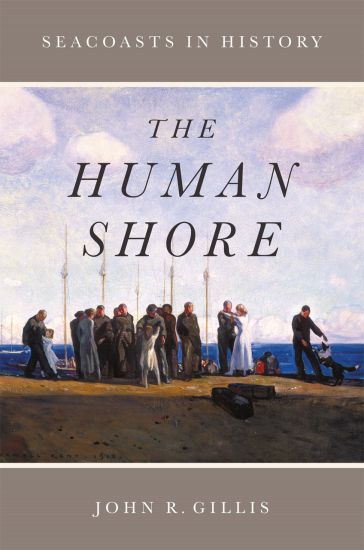
The Human Shore

The Human Shore

John R. Gillis

University of Chicago Press
2015
nidottu
Since before recorded history, people have congregated near water. But as growing populations around the globe continue to flow toward the coasts on an unprecedented scale and climate change raises water levels, our relationship to the sea has begun to take on new and potentially catastrophic dimensions. The latest generation of coastal dwellers lives largely in ignorance of the history of those who came before them, the natural environment, and the need to live sustainably on the world's shores. Humanity has forgotten how to live with the oceans. In The Human Shore, a magisterial account of 100,000 years of seaside civilization, John R. Gillis recovers the coastal experience from its origins among the people who dwelled along the African shore to the bustle and glitz of today's megacities and beach resorts. He takes readers from discussion of the possible coastal location of the Garden of Eden to the ancient communities that have existed along beaches, bays, and bayous since the beginning of human society to the crucial role played by coasts during the age of discovery and empire. An account of the mass movement of whole populations to the coasts in the last half-century brings the story of coastal life into the present. Along the way, Gillis addresses humankind's changing relationship to the sea from an environmental perspective, laying out the history of the making and remaking of coastal landscapes-the creation of ports, the draining of wetlands, the introduction and extinction of marine animals, and the invention of the beach-while giving us a global understanding of our relationship to the water. Learned and deeply personal, The Human Shore is more than a history: it is the story of a space that has been central to the attitudes, plans, and existence of those who live and dream at land's end.
The Human Shore

The Human Shore

John R. Gillis

University of Chicago Press
2012
sidottu
Since before recorded history, people have congregated near water. But as growing populations around the globe continue to flow toward the coasts on an unprecedented scale and climate change raises water levels, our relationship to the sea has begun to take on new and potentially catastrophic dimensions. The latest generation of coastal dwellers lives largely in ignorance of the history of those who came before them, the natural environment, and the need to live sustainably on the world's shores. Humanity has forgotten how to live with the oceans. In "The Human Shore", a magisterial account of 100,000 years of seaside civilization, John R. Gillis recovers the coastal experience from its origins among the people who dwelled along the African shore to the bustle and glitz of today's megacities and beach resorts. He takes readers from discussion of the possible coastal location of the Garden of Eden to the ancient communities that have existed along beaches, bays, and bayous since the beginning of human society to the crucial role played by coasts during the age of discovery and empire. An account of the mass movement of whole populations to the coasts in the last half-century brings the story of coastal life into the present. Along the way, Gillis addresses humankind's changing relationship to the sea from an environmental perspective, laying out the history of the making and remaking of coastal landscapes-the creation of ports, the draining of wetlands, the introduction and extinction of marine animals, and the invention of the beach - while giving us a global understanding of our relationship to the water. Learned and deeply personal, "The Human Shore" is more than a history: it is the story of a space that has been central to the attitudes, plans, and existence of those who live and dream at land's end.
A World of Their Own Making

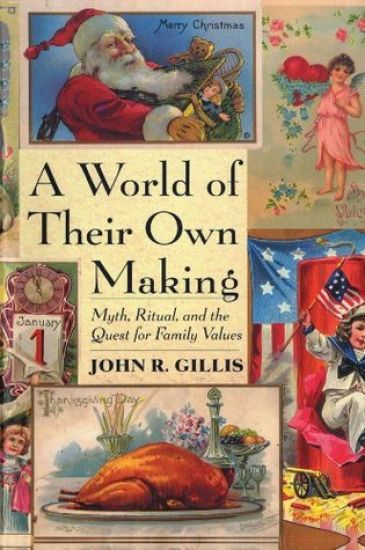
A World of Their Own Making

John R. Gillis

Harvard University Press
1997
pokkari
Weddings, birthdays, funerals, reunions, Mother's Day, even Christmas, we think of these ritual events as timeless traditions, our links to the distant past and the future. John Gillis aims to reveal just how modern and how politically constructed these rituals are. Our whole society may be obsessed with family values, but as John Gillis points out in this book, most of our images of home-sweet-home are of very recent vintage. The book questions our idealized notion of "the family", a mind-set in which myth and symbol still hold sway. As the families we live with become more fragile, the symbolic families we live by become more powerful. Yet it is only by accepting the notion that our ritual, myths, and images must be open to perpetual revision that we can satisfy our human needs and changing circumstances. The book uses both recent and historical literature on Western family life from the Middle Ages to the present.
For Better, For Worse

For Better, For Worse

John R. Gillis

Oxford University Press Inc
1986
sidottu
Did you know that...The "contemporary" fashion of living together before marriage is far from new, and was frequently practiced in earlier days...Self-divorce, although never legal, was once a commonplace occurrence...Marriage is more popular today than in the Victorian era...Marriage in church was not compulsory in England and Wales until the mid-18th century. These are just a few of the fascinating, and often surprising, revelations in For Better, For Worse, the most comprehensive treatment to date of the history of marriage in a major Western society. Using fresh evidence from popular courtship and wedding rituals over four centuries, Gillis challenges the widely held belief that marriage has evolved from a cold, impersonal arrangement to a more affectionate, egalitarian form of companionship. The truth, argues Gillis, lies somewhere in between: conjugal love was never wholly absent in preindustrial times, while today's marriages are less companionate than is commonly believed. Gillis also illustrates, in rich detail, the perpetual tension between marital ideals and actual practices. This social history of the behavior and emotions of ordinary men and women radically revises our perspective on love and marriage in the past--and the present.