Kirjojen hintavertailu. Mukana 12 595 353 kirjaa ja 12 kauppaa.

Kirjailija

John R. Gribbin

Kirjat ja teokset yhdessä paikassa: 2 kirjaa, julkaisuja vuosilta 2001-2012, suosituimpien joukossa Planet Earth. Vertaile teosten hintoja ja tarkista saatavuus suomalaisista kirjakaupoista.

2 kirjaa

Kirjojen julkaisuhaarukka 2001-2012.

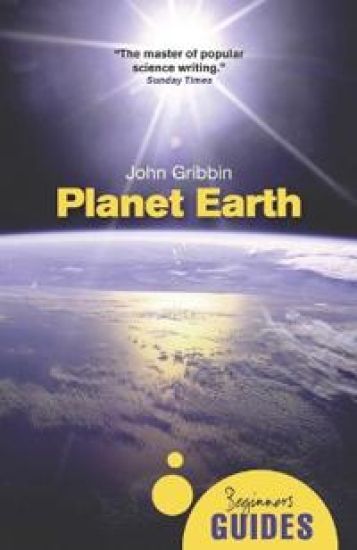
Planet Earth

Planet Earth

John R. Gribbin

Oneworld Publications
2012
nidottu
The result, Planet Earth: A Beginner’s Guide, is an expedition into the origins, evolution, and workings of our home planet in which John Gribbin does what he does best: takes 4.5 billion years of geological history and digs out the essential bits, from the physics of Newton and the geology of Wegener to the environmentalism of Lovelock. Along the journey, he uses stories from history and more current events to bring the science to a human level. Gribbin's introductory guidebook — very much a first step into geology and geography for the uninitiated — is filled with his lively voice and unique view, as he takes on the subject of the Earth from an astronomer's perspective.
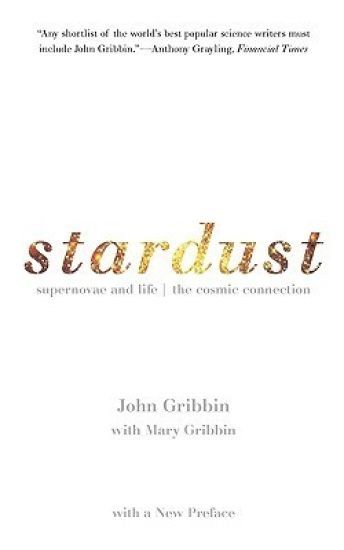
Stardust

Stardust

John R. Gribbin; Gribbin Mary

Yale University Press
2001
pokkari
We are made of stardust-and so is all life as we know it. All the chemical elements on earth except hydrogen-including the ones in our bodies-have been processed inside stars, scattered across the universe in great stellar explosions, and recycled to become new stars, planets, and parts of us. In this engrossing book, John and Mary Gribbin relate the developments in twentieth-century astronomy that have led to this shattering realization. They begin their account in the 1920s, when astronomers discovered that the oldest stars are chiefly composed of the primordial elements hydrogen and helium, produced in the birth of the universe in a Big Bang. They then describe the seminal work of the 1950s and 1960s, which unlocked the secret of how elements are "cooked" by nuclear fusion inside stars. The heart of the story is their discussion of supernovae, only recently understood as great stellar explosions in which the resulting ash is spread far and wide through the cosmos, forming new generations of stars, planets, and people. Focusing on the relationship between the universe and the Earth, the authors eloquently explain how the physical structure of the universe has produced conditions ideal for life.