Kirjojen hintavertailu. Mukana 12 390 323 kirjaa ja 12 kauppaa.

Kirjailija

John R Haddad

Kirjat ja teokset yhdessä paikassa: 5 kirjaa, julkaisuja vuosilta 2013-2025, suosituimpien joukossa Cultures Colliding. Vertaile teosten hintoja ja tarkista saatavuus suomalaisista kirjakaupoista.

Mukana myös kirjoitusasut: John R. Haddad

5 kirjaa

Kirjojen julkaisuhaarukka 2013-2025.

Thrill Ride

Thrill Ride

John R. Haddad

Pennsylvania State University Press
2025
pokkari
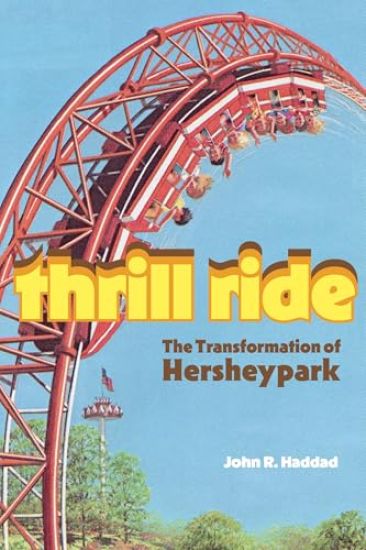
More than an amusement park linked to a chocolate empire, Hershey Park in its early years was an extension of industrialist Milton Hershey’s paternalistic capitalism. Hershey sought to avoid the labor strife seen in other industries by giving his workers a better deal. He provided employees with affordable homes, free schools, utility subsidies, and municipal services as well as amenities including a theater, library, and amusement park. In exchange, he expected hard work, loyalty, and no strikes. Eventually the Hershey Company faced intense market pressure from its competitor Mars and discontinued the services and amenities the community had come to expect. By the 1960s, the park had become so run-down that Hershey officials decided it needed a redesign, and they refashioned it into a Disney-style theme park. What had been an old-fashioned, pay-as-you-go amusement park for chocolate workers, their families, and the community would become a major mid-Atlantic attraction. Haddad’s engaging and accessible social history explores how this remodel of the park strategically used symbols of the past and future to help the Hershey community cope with change. The new park guided patrons from depictions of the Old World through subsequent eras, culminating in a space exemplifying modernity, with colossal steel structures and sophisticated thrill rides.Drawing on deep archival work and personal interviews, Haddad charts how memory and feelings are tied to locations and how people respond when change threatens those locations.
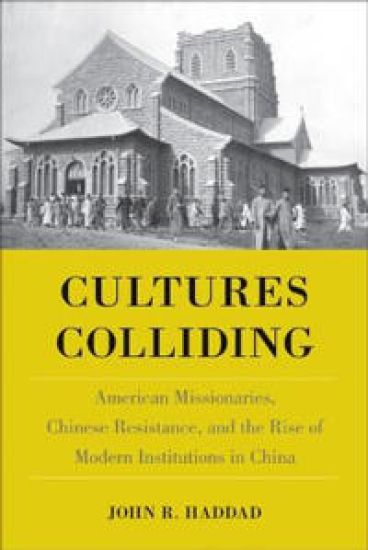
Cultures Colliding

Cultures Colliding

John R Haddad

TEMPLE UNIVERSITY PRESS,U.S.
2023
nidottu
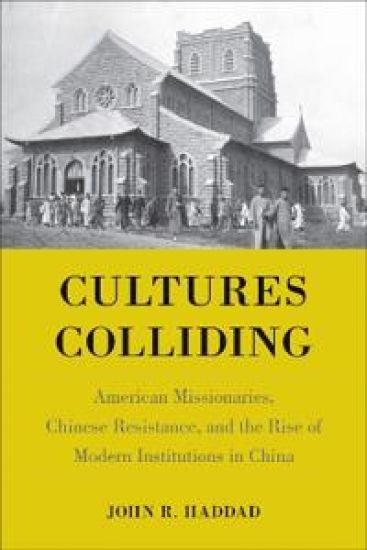
As incredible as it may seem, the American missionaries who journeyed to China in 1860 planning solely to spread the Gospel ultimately reinvented their entire enterprise. By 1900, they were modernizing China with schools, colleges, hospitals, museums, and even YMCA chapters. In Cultures Colliding, John R. Haddad nimbly recounts this transformative institution-building-how and why it happened-and its consequences. When missionaries first traveled to rural towns atop mules, they confronted populations with entrenched systems of belief that embraced Confucius and rejected Christ. Conflict ensued as these Chinese viewed missionaries as unwanted disruptors. So how did this failing movement eventually change minds and win hearts? Many missionaries chose to innovate. They built hospitals and established educational institutions offering science and math. A second wave of missionaries opened YMCA chapters, coached sports, and taught college. Crucially, missionaries also started listening to Chinese citizens, who exerted surprising influence over the preaching, teaching, and caregiving, eventually running some organizations themselves. They embraced new American ideals while remaining thoroughly Chinese.In Cultures Colliding, Haddad recounts the unexpected origins and rapid rise of American institutions in China by telling the stories of the Americans who established these institutions and the Chinese who changed them from within. Today, the impact of this untold history continues to resonate in China.
Cultures Colliding

Cultures Colliding

John R Haddad

TEMPLE UNIVERSITY PRESS,U.S.
2023
sidottu
As incredible as it may seem, the American missionaries who journeyed to China in 1860 planning solely to spread the Gospel ultimately reinvented their entire enterprise. By 1900, they were modernizing China with schools, colleges, hospitals, museums, and even YMCA chapters. In Cultures Colliding, John R. Haddad nimbly recounts this transformative institution-building-how and why it happened-and its consequences. When missionaries first traveled to rural towns atop mules, they confronted populations with entrenched systems of belief that embraced Confucius and rejected Christ. Conflict ensued as these Chinese viewed missionaries as unwanted disruptors. So how did this failing movement eventually change minds and win hearts? Many missionaries chose to innovate. They built hospitals and established educational institutions offering science and math. A second wave of missionaries opened YMCA chapters, coached sports, and taught college. Crucially, missionaries also started listening to Chinese citizens, who exerted surprising influence over the preaching, teaching, and caregiving, eventually running some organizations themselves. They embraced new American ideals while remaining thoroughly Chinese.In Cultures Colliding, Haddad recounts the unexpected origins and rapid rise of American institutions in China by telling the stories of the Americans who established these institutions and the Chinese who changed them from within. Today, the impact of this untold history continues to resonate in China.
America's First Adventure in China

America's First Adventure in China

John R Haddad

Temple University Press,U.S.
2014
pokkari
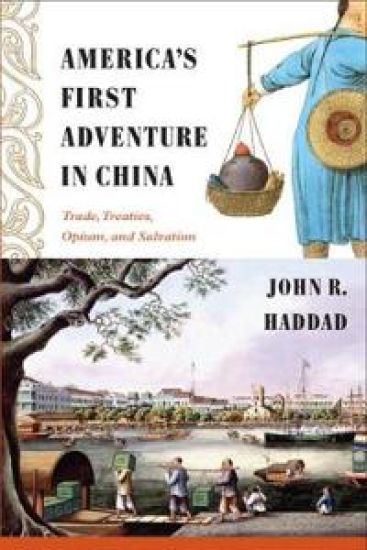
In 1784, when Americans first voyaged to China, they confronted Chinese authorities who were unaware that the United States even existed. Nevertheless, a long, complicated, and fruitful trade relationship was born after American traders, missionaries, diplomats, and others sailed to China with lofty ambitions: to acquire fabulous wealth, convert China to Christianity, and even command a Chinese army. In America's First Adventure in China, John Haddad provides a colourful history of the evolving cultural exchange and interactions between these countries. He recounts how American expatriates adopted a pragmatic attitude - as well as an entrepreneurial spirit and improvisational approach - to their dealings with the Chinese. Haddad shows how opium played a potent role in the dreams of Americans who either smuggled it or opposed its importation, and he considers the missionary movement that compelled individuals to accept a hard life in an alien culture. As a result of their efforts, Americans achieved a favourable outcome - they established a unique presence in China - and cultivated a relationship whose complexities continue to grow. John Haddad is an Associate Professor of American Studies and Popular Culture at Penn State Harrisburg. He was awarded the Gutenberg-e Prize in 2002 for his dissertation, which was published as The Romance of China: Excursions to China in U.S. Culture, 1776-1876.
America's First Adventure in China

America's First Adventure in China

John R Haddad

Temple University Press,U.S.
2013
sidottu
In 1784, when Americans first voyaged to China, they confronted Chinese authorities who were unaware that the United States even existed. Nevertheless, a long, complicated, and fruitful trade relationship was born after American traders, missionaries, diplomats, and others sailed to China with lofty ambitions: to acquire fabulous wealth, convert China to Christianity, and even command a Chinese army. In America's First Adventure in China, John Haddad provides a colourful history of the evolving cultural exchange and interactions between these countries. He recounts how American expatriates adopted a pragmatic attitude - as well as an entrepreneurial spirit and improvisational approach - to their dealings with the Chinese. Haddad shows how opium played a potent role in the dreams of Americans who either smuggled it or opposed its importation, and he considers the missionary movement that compelled individuals to accept a hard life in an alien culture. As a result of their efforts, Americans achieved a favourable outcome - they established a unique presence in China - and cultivated a relationship whose complexities continue to grow. John Haddad is an Associate Professor of American Studies and Popular Culture at Penn State Harrisburg. He was awarded the Gutenberg-e Prize in 2002 for his dissertation, which was published as The Romance of China: Excursions to China in U.S. Culture, 1776-1876.