Kirjojen hintavertailu. Mukana 12 233 282 kirjaa ja 12 kauppaa.

Kirjailija

John R. Hibbing

Kirjat ja teokset yhdessä paikassa: 10 kirjaa, julkaisuja vuosilta 1982-2024, suosituimpien joukossa Choosing to Leave. Vertaile teosten hintoja ja tarkista saatavuus suomalaisista kirjakaupoista.

10 kirjaa

Kirjojen julkaisuhaarukka 1982-2024.

Predisposed

Predisposed

John R. Hibbing; Kevin B. Smith; John R. Alford

TAYLOR FRANCIS LTD
2024
sidottu
This thoughtfully updated revision of a classic text sheds new light on the potential sociological and biological differences that result in deep, seemingly unbridgeable political divisions.Renowned social scientists and experts in biopolitics, John R. Hibbing, Kevin B. Smith, and John R. Alford present overwhelming evidence that political opinion is shaped not just by cultural background or information bias but is rather the result of diverse psychological, physiological, and genetic traits. This new edition shifts the emphasis from differences between the political left and the right (liberals and conservatives) as they have traditionally been understood and explores specific brands of liberalism and conservatism such as ardent supporters of politicians such as Donald Trump.An essential read for students and scholars of political psychology and party politics, this book invites the reader to reconsider their perspectives on public opinion and partisan conflict.
Predisposed

Predisposed

John R. Hibbing; Kevin B. Smith; John R. Alford

TAYLOR FRANCIS LTD
2024
nidottu
This thoughtfully updated revision of a classic text sheds new light on the potential sociological and biological differences that result in deep, seemingly unbridgeable political divisions.Renowned social scientists and experts in biopolitics, John R. Hibbing, Kevin B. Smith, and John R. Alford present overwhelming evidence that political opinion is shaped not just by cultural background or information bias but is rather the result of diverse psychological, physiological, and genetic traits. This new edition shifts the emphasis from differences between the political left and the right (liberals and conservatives) as they have traditionally been understood and explores specific brands of liberalism and conservatism such as ardent supporters of politicians such as Donald Trump.An essential read for students and scholars of political psychology and party politics, this book invites the reader to reconsider their perspectives on public opinion and partisan conflict.
The Securitarian Personality

The Securitarian Personality

John R. Hibbing

OXFORD UNIVERSITY PRESS INC
2023
nidottu
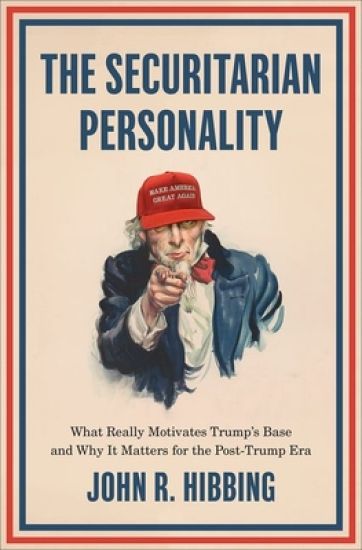
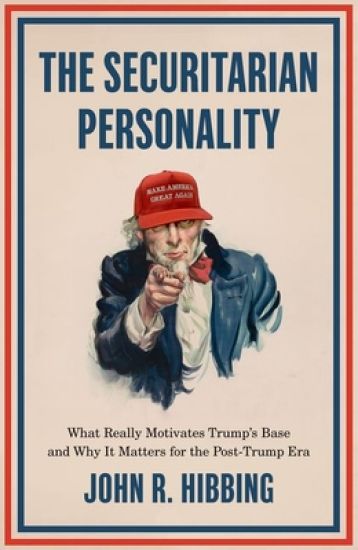
A unique analysis that looks at the true motivation of Trump supporters. The Authoritarian Personality, which was published by Theordor Adorno and a set of colleagues in the 1950s, was the first broad-based empirical attempt to explain why certain individuals are attracted to the authoritarian, even fascist, leaders that dominated the political scene in the 1930s and 1940s. Today, the concept has been applied to leaders ranging from Trump to Viktor Orban to Rodrigo Duterte. But is it really accurate to label Trump supporters as authoritarians? In The Securitarian Personality, John R. Hibbing argues that an intense desire for authority is not central to those constituting Trump's base. Drawing from participant observation, focus groups, and especially an original, nationwide survey of the American public that included over 1,000 ardent Trump supporters, Hibbing demonstrates that what Trump's base really craves is actually a specific form of security. Trump supporters do not strive for security in the face of all threats, such as climate change, Covid-19, and economic inequality, but rather only from those threats they perceive to be emanating from human outsiders, defined broadly to include welfare cheats, unpatriotic athletes, norm violators, non-English speakers, religious and racial minorities, and certainly people from other countries. The central objective of these "securitarians" is to strive for protection for themselves, their families, and their dominant cultural group from these embodied outsider threats. A radical reinterpretation of the support for Trumpism, The Securitarian Personality not only provides insight into a political movement that many find baffling and frustrating, but offers a compelling thesis that all observers of American political behavior will have to contend with, even if they disagree with it.
The Securitarian Personality

The Securitarian Personality

John R. Hibbing

Oxford University Press Inc
2020
sidottu
The Authoritarian Personality, which was published by Theordor Adorno and a set of colleagues in the 1950s, was the first broad-based empirical attempt to explain why certain individuals are attracted to the authoritarian, even fascist, leaders that dominated the political scene in the 1930s and 1940s. Today, the concept has been applied to leaders ranging from Trump to Viktor Orban to Rodrigo Duterte. But is it really accurate to label Trump supporters as authoritarians? In The Securitarian Personality, John R. Hibbing argues that an intense desire for authority is not central to those constituting Trump's base. Drawing from participant observation, focus groups, and especially an original, nationwide survey of the American public that included over 1,000 ardent Trump supporters, Hibbing demonstrates that what Trump's base really craves is actually a specific form of security. Trump supporters do not strive for security in the face of all threats, such as climate change, Covid-19, and economic inequality, but rather only from those threats they perceive to be emanating from human outsiders, defined broadly to include welfare cheats, unpatriotic athletes, norm violators, non-English speakers, religious and racial minorities, and certainly people from other countries. The central objective of these "securitarians" is to strive for protection for themselves, their families, and their dominant cultural group from these embodied outsider threats. A radical reinterpretation of the support for Trumpism, The Securitarian Personality not only provides insight into a political movement that many find baffling and frustrating, but offers a compelling thesis that all observers of American political behavior will have to contend with, even if they disagree with it.
Predisposed

Predisposed

John R. Hibbing; Kevin B. Smith; John R. Alford

Routledge
2013
nidottu
Buried in many people and operating largely outside the realm of conscious thought are forces inclining us toward liberal or conservative political convictions. Our biology predisposes us to see and understand the world in different ways, not always reason and the careful consideration of facts. These predispositions are in turn responsible for a significant portion of the political and ideological conflict that marks human history.With verve and wit, renowned social scientists John Hibbing, Kevin Smith, and John Alford—pioneers in the field of biopolitics—present overwhelming evidence that people differ politically not just because they grew up in different cultures or were presented with different information. Despite the oft-heard longing for consensus, unity, and peace, the universal rift between conservatives and liberals endures because people have diverse psychological, physiological, and genetic traits. These biological differences influence much of what makes people who they are, including their orientations to politics.Political disputes typically spring from the assumption that those who do not agree with us are shallow, misguided, uninformed, and ignorant. Predisposed suggests instead that political opponents simply experience, process, and respond to the world differently. It follows, then, that the key to getting along politically is not the ability of one side to persuade the other side to see the error of its ways but rather the ability of each side to see that the other is different, not just politically, but physically. Predisposed will change the way you think about politics and partisan conflict.As a bonus, the book includes a "Left/Right 20 Questions" game to test whether your predispositions lean liberal or conservative.
Stealth Democracy

Stealth Democracy

John R. Hibbing; Elizabeth Theiss-Morse

Cambridge University Press
2002
sidottu
Americans often complain about the operation of their government, but scholars have never developed a complete picture of people's preferred type of government. In this provocative and timely book, Hibbing and Theiss-Morse, employing an original national survey and focus groups, report the governmental procedures Americans desire. Contrary to the prevailing view that people want greater involvement in politics, most citizens do not care about most policies and therefore are content to turn over decision-making authority to someone else. People's wish for the political system is that decision makers be empathetic and, especially, non-self-interested, not that they be responsive and accountable to the people's largely nonexistent policy preferences or, even worse, that the people be obligated to participate directly in decision making. Hibbing and Theiss-Morse conclude by cautioning communitarians, direct democrats, social capitalists, deliberation theorists, and all those who think that greater citizen involvement is the solution to society's problems.
Stealth Democracy

Stealth Democracy

John R. Hibbing; Elizabeth Theiss-Morse

Cambridge University Press
2002
pokkari
Americans often complain about the operation of their government, but scholars have never developed a complete picture of people’s preferred type of government. In this provocative and timely book, Hibbing and Theiss-Morse, employing an original national survey and focus groups, report the governmental procedures Americans desire. Contrary to the prevailing view that people want greater involvement in politics, most citizens do not care about most policies and therefore are content to turn over decision-making authority to someone else. People’s wish for the political system is that decision makers be empathetic and, especially, non-self-interested, not that they be responsive and accountable to the people’s largely nonexistent policy preferences or, even worse, that the people be obligated to participate directly in decision making. Hibbing and Theiss-Morse conclude by cautioning communitarians, direct democrats, social capitalists, deliberation theorists, and all those who think that greater citizen involvement is the solution to society’s problems.
Congress as Public Enemy

Congress as Public Enemy

John R. Hibbing; Elizabeth Theiss-Morse

Cambridge University Press
1995
sidottu
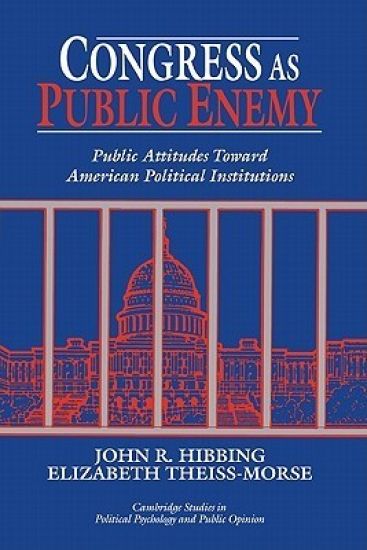
This timely book describes and explains the American people’s alleged hatred of their own branch of government, the US Congress. Intensive focus group sessions held across the country and a specially designed national survey indicate that much of the negativity is generated by popular perceptions of the processes of governing visible in Congress. John Hibbing and Elizabeth Theiss-Morse argue that, although the public is deeply disturbed by debate, compromise, delicate pace, the presence of interest groups, and the professionalization of politics, many of these traits are actually endemic to modern democratic government. Congress is an enemy of the public partially because it is so public. Calls for reform, such as term limitations, reflect the public’s desire to attack these disliked features. But the authors conclude, the public’s unwitting desire to reform democracy out of a democratic legislature is a cure more dangerous than the disease.
Congress as Public Enemy

Congress as Public Enemy

John R. Hibbing; Elizabeth Theiss-Morse

Cambridge University Press
1995
pokkari
This timely book describes and explains the American people’s alleged hatred of their own branch of government, the US Congress. Intensive focus group sessions held across the country and a specially designed national survey indicate that much of the negativity is generated by popular perceptions of the processes of governing visible in Congress. John Hibbing and Elizabeth Theiss-Morse argue that, although the public is deeply disturbed by debate, compromise, delicate pace, the presence of interest groups, and the professionalization of politics, many of these traits are actually endemic to modern democratic government. Congress is an enemy of the public partially because it is so public. Calls for reform, such as term limitations, reflect the public’s desire to attack these disliked features. But the authors conclude, the public’s unwitting desire to reform democracy out of a democratic legislature is a cure more dangerous than the disease.