Kirjojen hintavertailu. Mukana 12 390 323 kirjaa ja 12 kauppaa.

Kirjailija

John R. K. Clark

Kirjat ja teokset yhdessä paikassa: 10 kirjaa, julkaisuja vuosilta 1985-2023, suosituimpien joukossa Ni?ihau Place Names. Vertaile teosten hintoja ja tarkista saatavuus suomalaisista kirjakaupoista.

Mukana myös kirjoitusasut: John R.K. Clark

10 kirjaa

Kirjojen julkaisuhaarukka 1985-2023.

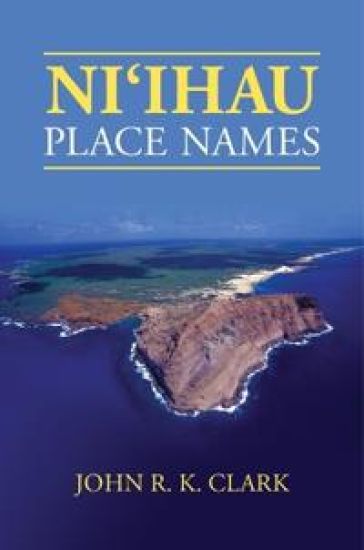
Ni?ihau Place Names

Ni?ihau Place Names

John R. K. Clark

UNIVERSITY OF HAWAI'I PRESS
2023
nidottu
The story of Ni‘ihau has been told many times by many people, but Ni‘ihau Place Names adds new information to the island’s history from a unique source: Hawaiian-language newspapers. From 1834 to 1948, approximately 125,000 pages of Native Hawaiian expression were printed in more than 100 different papers. In this book, John Clark has gathered and edited a large collection of invaluable articles that recorded daily life on Ni?ihau, events and topics of interest, and the island’s place names. Additionally, Keao NeSmith, a Native Hawaiian of Kaua‘i and an applied linguist, translator, and researcher fluent in ‘olelo Hawai‘i, translated each passage into English. Most of these excerpts have not appeared in any other publication.Ni‘ihau is unique in the State of Hawai‘i because it is the only privately-owned island. In 1864, Kamehameha V, the monarch of the Kingdom of Hawai‘i,sold the island to the Sinclairs, a wealthy immigrant family looking to establish a ranching business. Descendants of the Sinclairs still own the island today. Many diverse opinions about the sale of Ni?ihau were published in newspapers across the Hawaiian Islands, and this book traces the development and aftershocks of this historic event.Ni‘ihau Place Names contains over thirty kanikau (dirges, poetic chants) written and published from 1845 to 1931 to honor deceased Ni?ihau residents. These compositions of deep emotion are treasuries of language, history, genealogy, cultural knowledge, and especially place names. Another important contribution in this volume is the identification of ‘olelo no‘eau (proverbs and poetical sayings) with demonstrations of their use in everyday conversation.The book is divided into two main sections. Ni‘ihau Places Names is an alphabetical list of prominent place names on the island, accompanied by relevant passages in Hawaiian and their English translations. The list also includes Lehua, the small island near the northwest tip of Ni‘ihau. “Ni‘ihau History” is an additional collection of articles that includes many lesser-known place names and elucidates other topics deemed worthy by reporters and contributors of the time. Following the main text, readers will find helpful indexes of general terms, place names, and personal names.
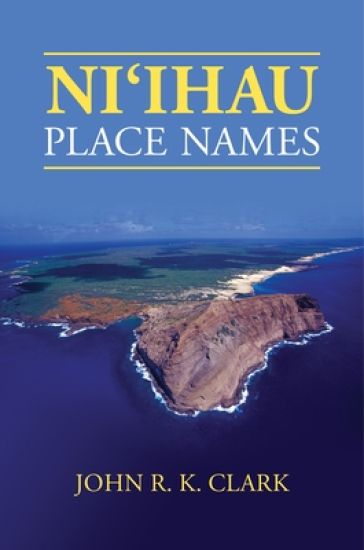
Ni?ihau Place Names

Ni?ihau Place Names

John R. K. Clark

UNIVERSITY OF HAWAI'I PRESS
2023
sidottu
The story of Ni‘ihau has been told many times by many people, but Ni‘ihau Place Names adds new information to the island’s history from a unique source: Hawaiian-language newspapers. From 1834 to 1948, approximately 125,000 pages of Native Hawaiian expression were printed in more than 100 different papers. In this book, John Clark has gathered and edited a large collection of invaluable articles that recorded daily life on Ni?ihau, events and topics of interest, and the island’s place names. Additionally, Keao NeSmith, a Native Hawaiian of Kaua‘i and an applied linguist, translator, and researcher fluent in ‘olelo Hawai‘i, translated each passage into English. Most of these excerpts have not appeared in any other publication.Ni‘ihau is unique in the State of Hawai‘i because it is the only privately-owned island. In 1864, Kamehameha V, the monarch of the Kingdom of Hawai‘i,sold the island to the Sinclairs, a wealthy immigrant family looking to establish a ranching business. Descendants of the Sinclairs still own the island today. Many diverse opinions about the sale of Ni?ihau were published in newspapers across the Hawaiian Islands, and this book traces the development and aftershocks of this historic event.Ni‘ihau Place Names contains over thirty kanikau (dirges, poetic chants) written and published from 1845 to 1931 to honor deceased Ni?ihau residents. These compositions of deep emotion are treasuries of language, history, genealogy, cultural knowledge, and especially place names. Another important contribution in this volume is the identification of ‘olelo no‘eau (proverbs and poetical sayings) with demonstrations of their use in everyday conversation.The book is divided into two main sections. Ni‘ihau Places Names is an alphabetical list of prominent place names on the island, accompanied by relevant passages in Hawaiian and their English translations. The list also includes Lehua, the small island near the northwest tip of Ni‘ihau. “Ni‘ihau History” is an additional collection of articles that includes many lesser-known place names and elucidates other topics deemed worthy by reporters and contributors of the time. Following the main text, readers will find helpful indexes of general terms, place names, and personal names.
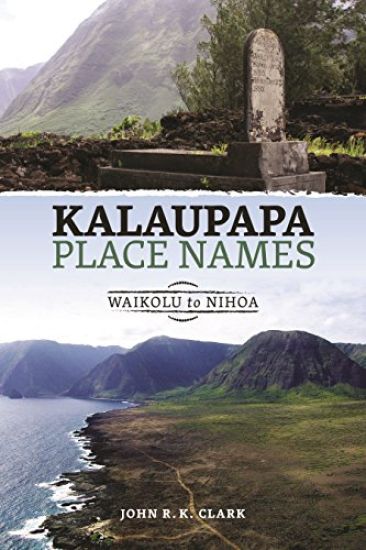
Kalaupapa Place Names

Kalaupapa Place Names

John R. K. Clark

University of Hawai'i Press
2018
nidottu
In Kalaupapa Place Names, John Clark presents a unique history of the leprosy settlement on Moloka‘i, based on his meticulous research of more than three hundred Hawaiian-language newspaper articles. He first assembled an extensive list of familiar and long-forgotten place names associated with the Kalaupapa peninsula and then searched for them in the online repository of Hawaiian-language newspapers. With translation assistance by I?sona Ellinwood and Keao NeSmith, he discovered articles that show a community of Hawaiians from every island except uninhabited Kaho‘olawe. Their stories reveal an active community with its members trying to live their lives as normally as possible in the face of a debilitating disease.The first section of the book contains newspaper articles arranged under an alphabetical listing of place names. The second section organizes the material into chronological segments, from before the establishment of the Kalaupapa Settlement to the death of Mother Marianne Cope in 1918. These two sections are followed by a collection of kanikau or lamentations, interviews with Kalaupapa residents, and a list of Hawaiian language newspapers. Introductory paragraphs for groupings of newspaper articles assist the reader in visualizing the physical landscape and understanding the history and significance of a particular location.Kalaupapa Place Names is a treasure trove of information, with its intimate look at a community brought together by adversity, but held together by a determination to achieve a sense of normalcy.
North Shore Place Names

North Shore Place Names

John R.K. Clark

University of Hawai'i Press
2014
nidottu
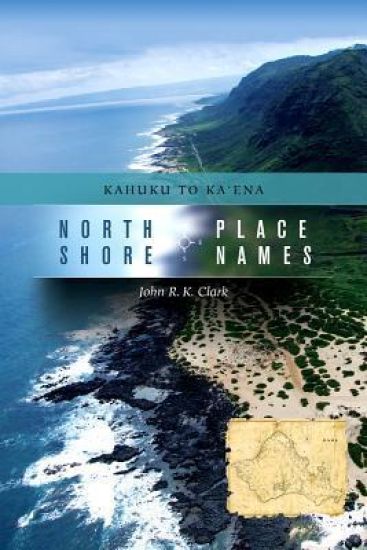
In his latest book, John Clark, author of Hawaiian Surfing: Traditions from the Past and Hawai`i Place Names: Shores, Beaches, and Surf Sites, continues his fascinating look at Hawai`i history as told through the stories hidden in its place names. North Shore Place Names: Kahuku to Ka`ena takes the reader on a historical tour of the North Shore of O`ahu conveyed by Hawaiian place names. To research information on place names Clark tapped into 125,000 pages of Hawaiian-language newspapers published from 1834 to 1948, an archive available online in the Papakilo Database, the Office of Hawaiian Affairs’ repository of historically and culturally significant data collections.The author collected an enormous number of references to specific North Shore locations and presents the material in the original Hawaiian with English translations in an easy-to-use dictionary style format. An invaluable resource for anyone interested in Hawai`i history and the Hawaiian language, North Shore Place Names: Kahuku to Ka`ena brings to life the names, places, and events of the historic North Shore community.
Hawaiian Surfing

Hawaiian Surfing

John R. K. Clark

University of Hawai'i Press
2011
nidottu
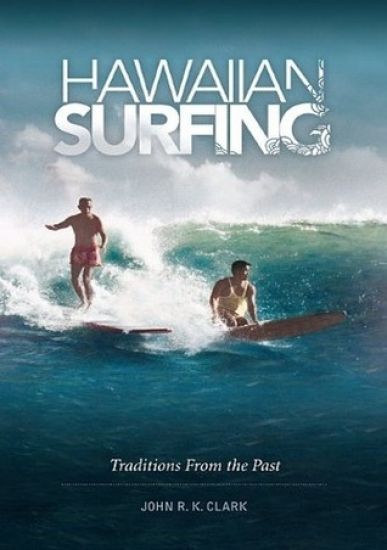
Hawaiian Surfing is a history of the traditional sport narrated primarily by native Hawaiians who wrote for the Hawaiian-language newspapers of the 1800s. An introductory section covers traditional surfing, including descriptions of the six Hawaiian surf-riding sports (surfing, bodysurfing, canoe surfing, body boarding, skimming, and river surfing). This is followed by an exhaustive Hawaiian-English dictionary of surfing terms and references from Hawaiian-language publications and a special section of Waikiki place names related to traditional surfing. The information in each of these sections is supported by passages in Hawaiian, followed by English translations. The work concludes with a glossary of English-Hawaiian surfing terms and an index of proper names, place names, and surf spots.
Guardian of the Sea

Guardian of the Sea

John R. K. Clark

University of Hawai'i Press
2007
nidottu
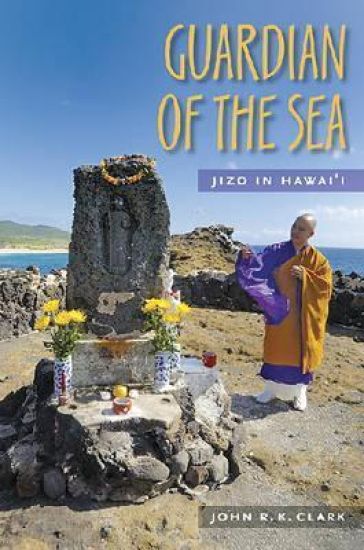
Jizo, one of the most beloved Buddhist deities in Japan, is known primarily as the guardian of children and travelers. In coastal areas, fishermen and swimmers also look to him for protection. Soon after their arrival in the late 1800s, issei (first-generation Japanese) shoreline fishermen began casting for ulua on Hawai'i's treacherous sea cliffs, where they risked being swept off the rocky ledges. In response to numerous drownings, Jizo statues were erected near dangerous fishing and swimming sites, including popular Bamboo Ridge, near the Blowhole in Hawai'i Kai; Kawaihapai Bay in Mokule'ia; and Kawailoa Beach in Hale'iwa. ""Guardian of the Sea"" tells the story of a compassionate group of men who raised these statues as a service to their communities. Written by an authority on Hawai'i's beaches and water safety, ""Guardian of the Sea"" shines a light on a little-known facet of Hawai'i's past. It incorporates valuable firsthand accounts taken from interviews with nisei (second-generation) fishermen and residents and articles from Japanese-language newspapers dating as far back as the early 1900s. In addition to background information on Jizo as a guardian deity and historical details on Jizo statues in Hawai'i, the author discusses shorecasting techniques and organizations, which once played a key role in the lives of local Japanese. Although shorecasting today is done more for sport than subsistence, it remains an important ocean activity in the Islands. In examining Jizo and the lives of issei, ""Guardian of the Sea"" makes a significant contribution to our understanding of recent Hawai'i history.
Beaches of O'ahu

Beaches of O'ahu

John R. K. Clark

University of Hawai'i Press
2004
nidottu
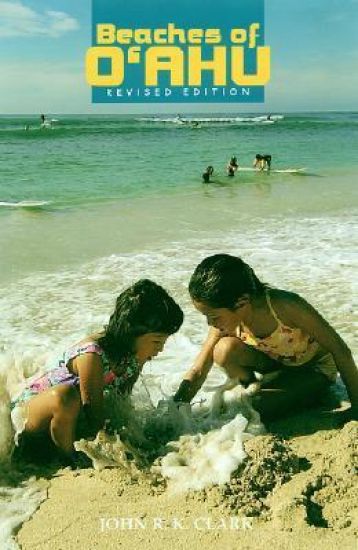
Now completely revised and updated, this edition of Beaches of O'ahu offers sixty new color photos of the island's spectacular beaches and coastline by photographer Mike Waggoner, a water safety section, and 22 newly drawn maps locating more than 130 beaches and shoreline parks. The beach descriptions and maps include many of the island's popular surfing sites. All beaches, known and relatively unknown, are listed with their physical characteristics, recreational uses, historic and cultural significance, and any dangers that beach-goers may encounter. Each beach is identified by its official and unofficial, or popular, name (if any) used by residents. When available, the author has added brief histories of beaches as handed down through the native Hawaiian oral tradition and related Hawaiian chants and verses.
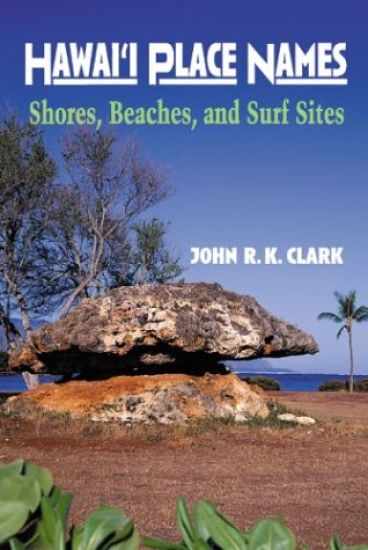
Hawai'i Place Names

Hawai'i Place Names

John R. K. Clark

University of Hawai'i Press
2003
nidottu
This title gives us the many captivating stories behind the hundreds of Hawai'i place names associated with the ocean - the names of shores, beaches, and other sites where people fish, swim, dive, surf, and paddle. Significant features and landmarks on or near shores, such as fishponds, monuments, shrines, reefs, and small islands, are also included. The names of surfing sites are the most numerous and among the most colourful: from the purely descriptive (Black Rock, Blue Hole) to the humorous (No Can Tell, Pray for Sex).
Beaches of Kaua'i and Ni'ihau

Beaches of Kaua'i and Ni'ihau

John R. K. Clark

University of Hawai'i Press
1989
nidottu
Kaua'i has more sand beaches per mile of shoreline than any other island in Hawai'i. Its spectacular shoreline ranges from cliffs of bird sanctuaries to a fishpond in a volcanic crater to the traditional swimming, snorkeling, surfing, and beachcombing beaches. Although the owners of Ni'ihau discourage visitors, author John Clark includes fascinating sketches of the island to complete his inventory of Hawai'i's beaches. The Beaches series by John R. K. Clark include Beaches of Maui County, Beaches of the Big Island, Beaches of Kaua'i and Ni'ihau, and The Beaches of O'ahu. The author, an ocean recreation consultant, includes comprehensive site descriptions of hundreds of beaches in the Hawaiian Islands and shares his extensive knowledge of, and deep respect for, Hawai'i's shorelines.
Beaches of the Big Island

Beaches of the Big Island

John R. K. Clark

University of Hawai'i Press
1985
nidottu
The Big Island, world famous for its active volcanoes and coral gardens, has many wonderful beaches. In fact its shoreline is as diverse and dynamic as the rest of this massive island and includes more than 100 black, green, and white sand beaches.The Beaches series by John R. K. Clark include Beaches of Maui County, Beaches of the Big Island, Beaches of Kauai and Niihau, and The Beaches of Oahu. The author, an ocean recreation consultant, includes comprehensive site descriptions of hundreds of beaches in the Hawaiian Islands and shares his extensive knowledge of, and deep respect for, Hawaii's shorelines.