Kirjojen hintavertailu. Mukana 12 152 606 kirjaa ja 12 kauppaa.

Kirjailija

John R. Peteet

Kirjat ja teokset yhdessä paikassa: 7 kirjaa, julkaisuja vuosilta 2003-2024, suosituimpien joukossa Spirituality and Religion Within the Culture of Medicine. Vertaile teosten hintoja ja tarkista saatavuus suomalaisista kirjakaupoista.

Mukana myös kirjoitusasut: John R Peteet

7 kirjaa

Kirjojen julkaisuhaarukka 2003-2024.

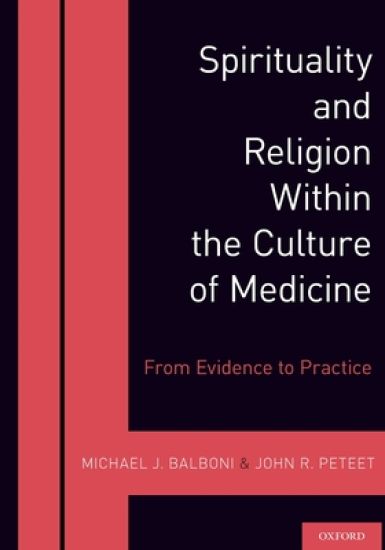
Spirituality and Religion Within the Culture of Medicine

Spirituality and Religion Within the Culture of Medicine

Michael J. Balboni; John R. Peteet

Oxford University Press Inc
2021
nidottu
Spirituality and Religion Within the Culture of Medicine provides a comprehensive evaluation of the relationship between spirituality, religion, and medical practice. The authors, all leading clinician-researchers in their fields, assess the strengths and weaknesses of the most recent empirical research of religion and spirituality within many distinct fields of medicine. Recognizing the interdisciplinary aspects of spirituality, religion, and health, the book also turns to scholarship throughout a multitude of academic fields-including psychology, sociology, anthropology, law, history, philosophy, and theology-to consider cultural dimensions of clinical practice. This is the first time in a single volume that readers can reflect on these multi-dimensional, complex issues with contributions from leading scholars, as well as the first collection that assesses how the medical context interacts with patient spirituality recognizing crucial differences between contexts from obstetrics and family medicine, to nursing, to gerontology and the ICU. The book concludes with a synthesis, identifying the best studies in the field of religion and health, ongoing weaknesses in research, and highlighting what can be confidently believed based on prior studies. The synthesis also considers relations between the empirical literature on religion and health and the theological and religious traditions, discussing places of convergence and tension, as well as remaining open questions for further reflection and research. Spirituality and Religion within the Culture of Medicine provides trainees and clinicians introductory information for newcomers to the field of spirituality, religion, and medicine, and provides researchers and scholars familiar with field critical and up-to-date analysis from a multi-disciplinary approach.
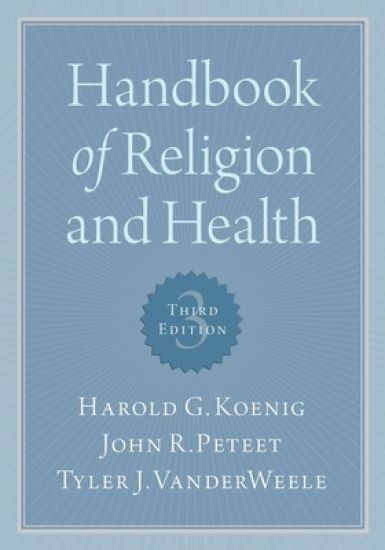
Handbook of Religion and Health

Handbook of Religion and Health

Harold G. Koenig; Tyler VanderWeele; John R. Peteet

OXFORD UNIVERSITY PRESS INC
2024
sidottu
The Handbook of Religion and Health has become the seminal research text on religion, spirituality, and health, outlining a rational argument for the connection between religion and health. For the past two decades, this handbook has been the most cited of all references on religion and health. This Third Edition is the most scientifically rigorous edition to date, covering the best research published through 2021 with an emphasis on prospective studies and randomized controlled trials. This volume examines research on the relationship between religion and health outcomes, surveys the historical connections between religion and health, and discusses the distinction between the terms ''religion'' and ''spirituality'' in research and clinical practice. It reviews research on religion and mental health, literature on the mind-body relationship, and develops a model to explain how religious involvement may impact physical health through the mind-body mechanisms. It also explores the direct relationships between religion and physical health, covering such topics as immune and endocrine function, heart disease, hypertension and stroke, neurological disorders, cancer, and infectious diseases; and examines the consequences of illness including chronic pain, disability, and quality of life. Additionally, most of its 34 chapters conclude with clinical and community applications making this text relevant to both health care professionals and clergy. This book is the most insightful and authoritative resource available to anyone who wants to understand the relationship between religion and health.
Downcast

Downcast

Jennifer Huang-Harris; Harold G Koenig; John R Peteet

Cmda
2020
pokkari
What is depression really? A psychological disorder? An emotional problem? A spiritual weakness? A medical condition? People struggling with depression are often given simplistic answers, which can lead to fear of seeking help, and even a sense that they have personally failed in some way. With compassion developed from their personal and clinical experience as psychiatrists, the authors tackle the complexities of depression from a multi-disciplinary approach. In this thoughtful and practical guide, they weave together Scripture with science, theology with cutting edge scientific research, and the stories of many Christians who have suffered, to help those with depression to find healing. For Christians, hope for depression lies in a deep understanding of both what it means to inhabit broken bodies in a fallen world, and the hope we have in the gospel. By fully grasping the implications of both for our bodies, minds, and souls, can we learn what it means to walk by faith even through the dark valley of depression.
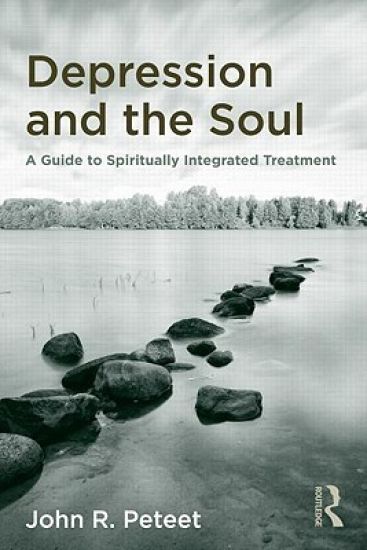
Depression and the Soul

Depression and the Soul

John R. Peteet

Routledge
2015
nidottu
In Depression and the Soul, John Peteet proves the old adage that the best physician is also a philosopher. He considers how to approach the problem of depression within a larger context, and reviews current concepts of successful living relative to the heart (emotion and volition), the mind (cognition and coping), and the soul (the self in relation to transcendent reality). Each chapter goes on to further explore the relationship between depression and the context of a patient’s entire life. This is done through consideration of how the existential struggles of depressed individuals engage their spiritual lives, by reviewing current empirical literature on depression and spirituality, comparing the perspectives of various spiritual traditions or world views, and summarizing ways that spirituality and depression interact.
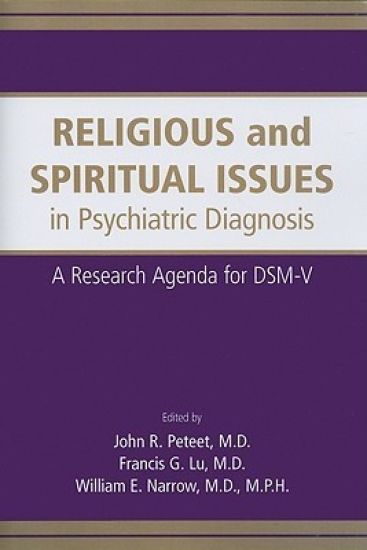
Religious and Spiritual Issues in Psychiatric Diagnosis

Religious and Spiritual Issues in Psychiatric Diagnosis

John R. Peteet; Francis G. Lu; William E. Narrow

American Psychiatric Association Publishing
2010
pokkari
Religious and Spiritual Issues in Psychiatric Diagnosis: A Research Agenda for DSM-V examines the role of spiritual and religious considerations in the DSM revision process. The volume includes chapters on each major category of psychiatric disorder, with an analysis of the implications of religion and spirituality for their diagnosis, course, and outcome. Based on the work presented by the prominent clinicians and researchers who participated in the 2006 Corresponding Committee on Religion, Spirituality, and Psychiatry of the American Psychiatric Association, the volume addresses the spiritual and philosophical issues involved in distinguishing a psychiatric disorder from a spiritual condition. This volume is unique in reviewing the literature on spirituality and major psychiatric disorders with the objective of clarifying where existing descriptions of diagnostic criteria and of the course and outcome of these disorders require revision. In addition, the contributors identify areas that demand further research. Only in this book can clinicians find a comprehensive treatment of this important topic, as well as features that enhance understanding and encourage future scholarship. • Each chapter makes specific recommendations for revising the wording of the DSM, and each is followed by two commentaries that contextualize, analyze, and critique the chapter's recommendations.• Other chapter contributors make the case for updating the V Code for a Spiritual or Religious Problem, and discuss the place of spiritual and religious considerations in the Outline for a Cultural Formulation. • Mental health practitioners from all disciplines who seek to practice in a more integrated, holistic fashion will find in this volume a foundation for including religious and spiritual considerations in their cases, as well as recognition and validation that these problems are worthy of clinical attention. Psychiatry has often been viewed as hostile to religion, and the DSM has been criticized for neglecting this vital dimension of human experience. As interest in the intersection between spirituality and mental health continues to grow, Religious and Spiritual Issues in Psychiatric Diagnosis: A Research Agenda for DSM-V will become an ever more relevant and necessary resource for addressing these concerns in a positive, practical, and systematic way.
Depression and the Soul

Depression and the Soul

John R. Peteet

Routledge
2010
sidottu
In Depression and the Soul, John Peteet proves the old adage that the best physician is also a philosopher. He considers how to approach the problem of depression within a larger context, and reviews current concepts of successful living relative to the heart (emotion and volition), the mind (cognition and coping), and the soul (the self in relation to transcendent reality). Each chapter goes on to further explore the relationship between depression and the context of a patient’s entire life. This is done through consideration of how the existential struggles of depressed individuals engage their spiritual lives, by reviewing current empirical literature on depression and spirituality, comparing the perspectives of various spiritual traditions or world views, and summarizing ways that spirituality and depression interact.
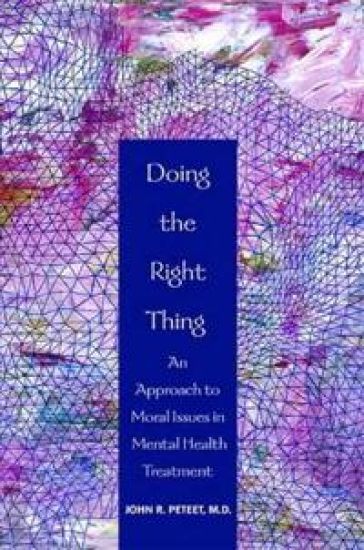
Doing the Right Thing

Doing the Right Thing

John R. Peteet

American Psychiatric Association Publishing
2003
nidottu
Here is the first practical guide for dealing with the moral issues that regularly confront clinicians in their work. Written for all mental health professionals, Doing the Right Thing: An Approach to Moral Issues in Mental Health Treatment offers a framework both for making moral decisions concerning the treatment of patients and for helping patients deal with their own moral concerns. Drawing on current thinking in several disciplines, Doing the Right Thing introduces the concept of moral functioning as a basis for therapeutic influence. Numerous case examples illustrate how to ; Assess patients' ability to function morally - Learn how six basic capacities needed for moral functioning develop, and how identifying problems in an individual's moral functioning can help guide the formulation of a treatment plan. Treat patients with problems functioning morally - Appreciate when it is time to set aside neutrality as a therapeutic stance in favor of a more direct approach to helping patients make moral commitments, decisions and self-assessments and develop moral character. Deal with the moral aspects of clinical decision-making - Develop a framework for making moral choices in planning the direction of treatment, confronting resistance and addressing problems in caring effectively. Help patients address moral challenges - Learn how to take into account your own and the patient's values in reasoning through moral dilemmas. Understand more clearly how to help patients deal with unfair pain caused by others, as well as the guilt and shame caused by their own moral failures. Employ the therapeutic potential of moral growth, transformation, and integration - Discover the role of a clinician in helping demoralized patients reformulate their ideals for better outcomes. Recognize where a moral paradigm is useful in improving the delivery of mental health care. Concise, clear, and clinically relevant, Doing the Right Thing is a valuable, thought-provoking guide for both new and seasoned mental health practitioners who live and work in a morally complex environment. It is also an excellent supplementary text for courses dealing with the practice of psychotherapy and the ethical aspects of mental health care.