
Kirjailija
John R. Searle
Kirjat ja teokset yhdessä paikassa: 15 kirjaa, julkaisuja vuosilta 1969-2017, suosituimpien joukossa Mind, Language And Society. Vertaile teosten hintoja ja tarkista saatavuus suomalaisista kirjakaupoista.
Mukana myös kirjoitusasut: John R Searle
15 kirjaa
Kirjojen julkaisuhaarukka 1969-2017.
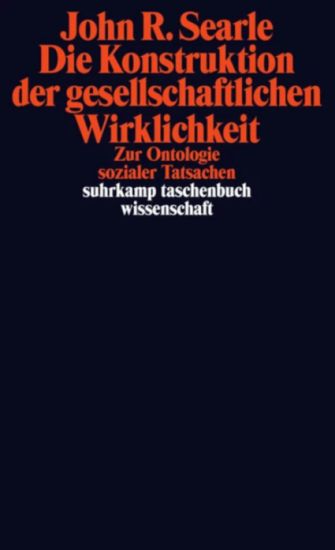

Making the Social World: The Structure of Human Civilization
John R. Searle
Oxford University Press
2011
nidottu
There are few more important philosophers at work today than John Searle, a creative and contentious thinker who has shaped the way we think about mind and language. Now he offers a profound understanding of how we create a social reality--a reality of money, property, governments, marriages, stock markets and cocktail parties. The paradox he addresses in Making the Social World is that these facts only exist because we think they exist and yet they have an objective existence. Continuing a line of investigation begun in his earlier book The Construction of Social Reality, Searle identifies the precise role of language in the creation of all "institutional facts." His aim is to show how mind, language and civilization are natural products of the basic facts of the physical world described by physics, chemistry and biology. Searle explains how a single linguistic operation, repeated over and over, is used to create and maintain the elaborate structures of human social institutions. These institutions serve to create and distribute power relations that are pervasive and often invisible. These power relations motivate human actions in a way that provides the glue that holds human civilization together. Searle then applies the account to show how it relates to human rationality, the freedom of the will, the nature of political power and the existence of universal human rights. In the course of his explication, he asks whether robots can have institutions, why the threat of force so often lies behind institutions, and he denies that there can be such a thing as a "state of nature" for language-using human beings.
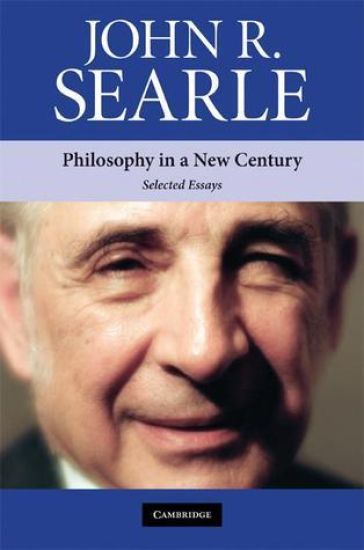
John R. Searle has made profoundly influential contributions to three areas of philosophy: philosophy of mind, philosophy of language, and philosophy of society. This volume gathers together in accessible form a selection of his essays in these areas. They range widely across social ontology, where Searle presents concise and informative statements of positions developed in more detail elsewhere; artificial intelligence and cognitive science, where Searle assesses the current state of the debate and develops his most recent thoughts; and philosophy of language, where Searle connects ideas from various strands of his work in order to develop original answers to fundamental questions. There are also explorations of the limitations of phenomenological inquiry, the mind-body problem, and the nature and future of philosophy. This rich collection from one of America's leading contemporary philosophers will be valuable for all who are interested in these central philosophical questions.
John R. Searle has made profoundly influential contributions to three areas of philosophy: philosophy of mind, philosophy of language, and philosophy of society. This volume gathers together in accessible form a selection of his essays in these areas. They range widely across social ontology, where Searle presents concise and informative statements of positions developed in more detail elsewhere; artificial intelligence and cognitive science, where Searle assesses the current state of the debate and develops his most recent thoughts; and philosophy of language, where Searle connects ideas from various strands of his work in order to develop original answers to fundamental questions. There are also explorations of the limitations of phenomenological inquiry, the mind-body problem, and the nature and future of philosophy. This rich collection from one of America's leading contemporary philosophers will be valuable for all who are interested in these central philosophical questions.

Bogen kan bruges som en generel introduktion til en lang række af filosofiens centrale begreber og emner såsom sjæl-legeme-problemet, psykens struktur, intentionalitet, sprogets natur og det sociale univers’ opbygning. Men den særlige styrke i Searles tilgang til disse emner er bestræbelsen på at få tingene til at hænge sammen. Han viser, at der ikke behøver at være et modsætningsforhold mellem at vi mennesker er bevidste væsener, skønt ”det hele egentligt er processer i hjerne og nervesystem”, og at der heller ikke behøver at være modstrid mellem, at vi på den ene side er individuelle, bevidste væsener, og på den anden side er fælles om sprog og samfundsmæssige systemer. Især gymnasielærere, der underviser i Almen Studieforberedelse, vil have glæde af bogen, idet den afspejler tredelingen af filosofifaget i gymnasiet som rettet imod hhv. Mennesket, Samfundet og Naturen.
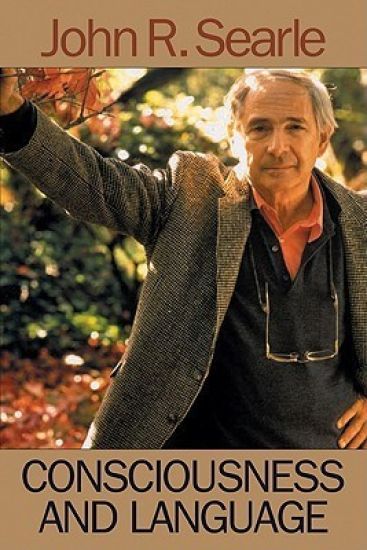
One of the most important and influential philosophers of the last 30 years, John Searle has been concerned throughout his career with a single overarching question: how can we have a unified and theoretically satisfactory account of ourselves and of our relations to other people and to the natural world? In other words, how can we reconcile our common-sense conception of ourselves as conscious, free, mindful, rational agents in a world that we believe comprises brute, unconscious, mindless, meaningless, mute physical particles in fields of force? The essays in this collection are all related to the broad overarching issue that unites the diverse strands of Searle's work. Gathering in an accessible manner essays available only in relatively obscure books and journals, this collection will be of particular value to professionals and upper-level students in philosophy as well as to Searle's more extended audience in such fields as psychology and linguistics.
Disillusionment with psychology is leading more and more people to formal philosophy for clues about how to think about life. But most of us who try to grapple with concepts such as reality, truth, common sense, consciousness, and society lack the rigorous training to discuss them with any confidence. John Searle brings these notions down from their abstract heights to the terra firma of real-world understanding, so that those with no knowledge of philosophy can understand how these principles play out in our everyday lives. The author stresses that there is a real world out there to deal with, and condemns the belief that the reality of our world is dependent on our perception of it.

John Searle, en av samtidens mest betydelsefulla språkfilosofer, undersöker i Konstruktionen av den sociala verkligheten vad vår värld egentligen består av. Pengar, äktenskap, egendom, styrelseskick - det är alltsammans fenomen som existerar endast i kraft av mänskliga överenskommelser, de har en objektiv existens endast eftersom vi tror på att de existerar. Det är sådana fenomen som utgör den så omdiskuterade, och ofta missförstådda, kulturella och samhälleliga verkligheten. Vi lever i den enda värld som finns, men denna värld består av fenomen som beskrivs av såväl naturvetenskaper som fysik och kemi som av samhällsvetenskaper som psykologi, sociologi och ekonomi. Den fråga som Searle försöker besvara i Konstruktionen av den sociala verkligheten är följande: Hur kommer det sig att vi människor kan frambringa en objektiv samhällelig verklighet? Searle beskriver hur våra handlingar i själva verket uppvisar en förbluffande metafysisk komplexitet. Ändå tycks de samhälleliga institutionerna bestå endast tack vare konventioner och gammal vana. Konstruktionen av den sociala verkligheten frilägger dessa institutioners karaktär och logiska strukturer. John R. Searle är professor i filosofi vid University of California, Berkeley.
In this major new work, John Searle launches a formidable attack on current orthodoxies in the philosophy of mind. More than anything else, he argues, it is the neglect of consciousness that results in so much barrenness and sterility in psychology, the philosophy of mind, and cognitive science: there can be no study of mind that leaves out consciousness. What is going on in the brain is neurophysiological processes and consciousness and nothing more-no rule following, no mental information processing or mental models, no language of thought, and no universal grammar. Mental events are themselves features of the brain, "like liquidity is a feature of water."Beginning with a spirited discussion of what's wrong with the philosophy of mind, Searle characterizes and refutes the philosophical tradition of materialism. But he does not embrace dualism. All these "isms" are mistaken, he insists. Once you start counting types of substance you are on the wrong track, whether you stop at one or two. In four chapters that constitute the heart of his argument, Searle elaborates a theory of consciousness and its relation to our overall scientific world view and to unconscious mental phenomena. He concludes with a criticism of cognitive science and a proposal for an approach to studying the mind that emphasizes the centrality of consciousness to any account of mental functioning.In his characteristically direct style, punctuated with persuasive examples, Searle identifies the very terminology of the field as the main source of truth. He observes that it is a mistake to suppose that the ontology of the mental is objective and to suppose that the methodology of a science of the mind must concern itself only with objectively observable behavior; that it is also a mistake to suppose that we know of the existence of mental phenomena in others only by observing their behavior; that behavior or causal relations to behavior are not essential to the existence of mental phenomena; and that it is inconsistent with what we know about the universe and our place in it to suppose that everything is knowable by us.
It has long been one of the most fundamental problems of philosophy, and it is now, John Searle writes, "the most important problem in the biological sciences" What is consciousness? Is my inner awareness of myself something separate from my body? In what began as a series of essays in The New York Review of Books, John Searle evaluates the positions on consciousness of such well-known scientists and philosophers as Francis Crick, Gerald Edelman, Roger Penrose, Daniel Dennett, David Chalmers, and Israel Rosenfield. He challenges claims that the mind works like a computer, and that brain functions can be reproduced by computer programs. With a sharp eye for confusion and contradiction, he points out which avenues of current research are most likely to come up with a biological examination of how conscious states are caused by the brain. Only when we understand how the brain works will we solve the mystery of consciousness, and only then will we begin to understand issues ranging from artificial intelligence to our very nature as human beings.
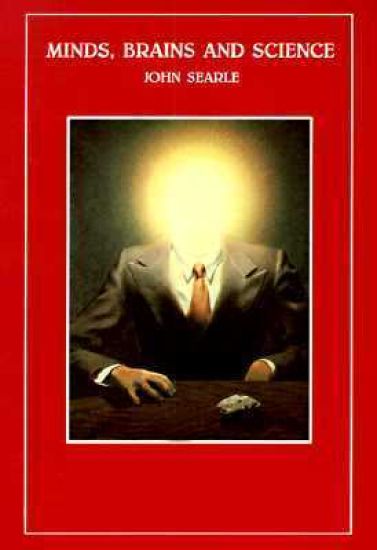
Minds, Brains and Science takes up just the problems that perplex people, and it does what good philosophy always does: it dispels the illusion caused by the specious collision of truths. How do we reconcile common sense and science? John Searle argues vigorously that the truths of common sense and the truths of science are both right and that the only question is how to fit them together.Searle explains how we can reconcile an intuitive view of ourselves as conscious, free, rational agents with a universe that science tells us consists of mindless physical particles. He briskly and lucidly sets out his arguments against the familiar positions in the philosophy of mind, and details the consequences of his ideas for the mind-body problem, artificial intelligence, cognitive science, questions of action and free will, and the philosophy of the social sciences.
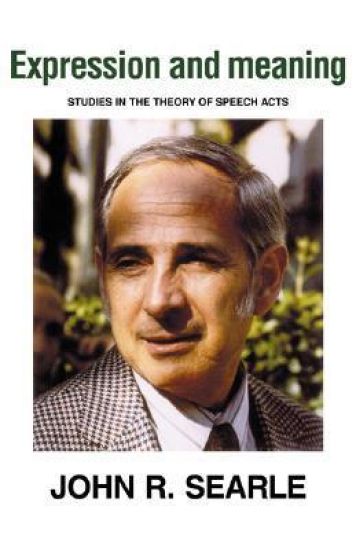
John Searle’s Speech Acts made a highly original contribution to work in the philosophy of language. Expression and Meaning is a direct successor, concerned to develop and refine the account presented in Searle’s earlier work, and to extend its application to other modes of discourse such as metaphor, fiction, reference, and indirect speech arts. Searle also presents a rational taxonomy of types of speech acts and explores the relation between the meanings of sentences and the contexts of their utterance. The book points forward to a larger theme implicit in these problems - the basis certain features of speech have in the intentionality of mind, and even more generally, the relation of the philosophy of language to the philosophy of mind.

John Searle’s Speech Acts (1969) and Expression and Meaning (1979) developed a highly original and influential approach to the study of language. But behind both works lay the assumption that the philosophy of language is in the end a branch of the philosophy of the mind: speech acts are forms of human action and represent just one example of the mind’s capacity to relate the human organism to the world. The present book is concerned with these biologically fundamental capacities, and, though third in the sequence, in effect it provides the philosophical foundations for the other two. Intentionality is taken to be the crucial mental phenomenon, and its analysis involves wide-ranging discussions of perception, action, causation, meaning, and reference. In all these areas John Searle has original and stimulating views. He ends with a resolution of the ‘mind-body’ problem.
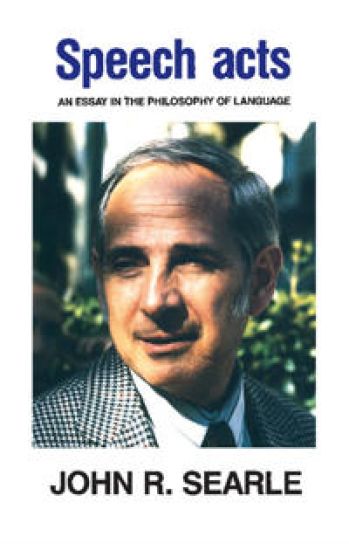
Written in an outstandingly clear and lively style, this 1969 book provokes its readers to rethink issues they may have regarded as long since settled.