Kirjojen hintavertailu. Mukana 12 595 353 kirjaa ja 12 kauppaa.
Kirjailija
John R. Wunder
Kirjat ja teokset yhdessä paikassa: 9 kirjaa, julkaisuja vuosilta 2006-2019, suosituimpien joukossa Sandoz Studies, Volume 1. Vertaile teosten hintoja ja tarkista saatavuus suomalaisista kirjakaupoista.
Mari Sandoz, born on Mirage Flats, south of Hay Springs, Nebraska, on May 11, 1896, was the eldest daughter of Swiss immigrants. She experienced firsthand the difficulties and pleasures of the family’s remote plains existence and early on developed a strong desire to write. Her keen eye for detail combined with meticulous research enabled her to become one of the most valued authorities of her time on the history of the plains and the culture of Native Americans.Women in the Writings of Mari Sandoz is the first volume of the Sandoz Studies series, a collection of thematically grouped essays that feature writing by and about Mari Sandoz and her work. When Sandoz wrote about the women she knew and studied, she did not shy away from drawing attention to the sacrifices, hardships, and disappointments they endured to forge a life in the harsh plains environment. But she also wrote about moments of joy, friendship, and-for some-a connection to the land that encouraged them to carry on. The scholarly essays and writings of Sandoz contained in this book help place her work into broader contexts, enriching our understanding of her as an author and as a woman deeply connected to the Sandhills of Nebraska.
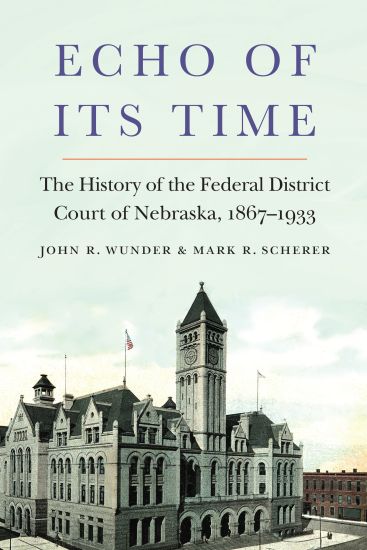
Throughout its existence the Federal District Court of Nebraska has echoed the dynamics of its time, reflecting the concerns, interests, and passions of the people who have made this state their home. Echo of Its Time explores the court’s development, from its inception in 1867 through 1933, tracing the careers of its first four judges: Elmer Dundy, William Munger, Thomas Munger (no relation), and Joseph Woodrough, whose rulings addressed an array of issues and controversies echoing macro-level developments within the state, nation, and world. Echo of Its Time both informs and entertains while using the court’s operations as a unique and accessible prism through which to explore broader themes in the history of the state and the nation. The book explores the inner workings of the court through Thomas Munger’s personal correspondence, as well as the court’s origins and growing influence under the direction of its legendary first judge, Elmer Dundy. Dundy handled many notable and controversial matters and made significant decisions in the field of Native American law, including Standing Bear v. Crook and Elk v. Wilkins. From the turn of the century through 1933 the court’s docket reflected the dramatic and rapid changes in state, regional, and national dynamics, including labor disputes and violence, political corruption and Progressive Era reform efforts, conflicts between cattle ranchers and homesteaders, wartime sedition and “slacker” prosecutions, criminal enterprises, and the endless battles between government agents and bootleggers during Prohibition.
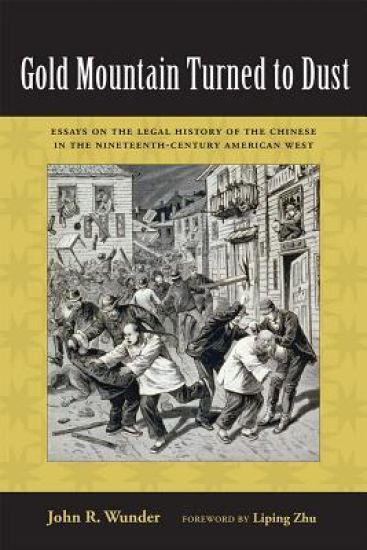
Some half million Chinese immigrants settled in the American West in the nineteenth century. In spite of their vital contributions to the economy in gold mining, railroad construction, the founding of small businesses, and land reclamation, the Chinese were targets of systematic political discrimination and widespread violence. This legal history of the Chinese experience in the American West, based on the author's lifetime of research in legal sources all over the West-from California to Montana to New Mexico-serves as a basic account of the legal treatment of Chinese immigrants in the West.The first two essays deal with anti-Chinese racial violence and judicial discrimination. The remainder of the book examines legal precedents and judicial doctrines derived from Chinese cases in specific western states. The Chinese, Wunder shows, used the American legal system to protect their rights and test a variety of legal doctrines, making vital contributions to the legal history of the American West.
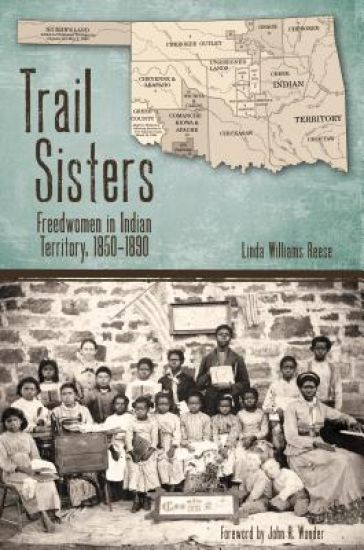
African American women enslaved by the Cherokee, Choctaw, Chickasaw, Seminole, and Creek Nations led lives ranging from utter subjection to recognized kinship. Regardless of status, during Removal, they followed the Trail of Tears in the footsteps of the slaveholders, suffering the same life-threatening hardships and poverty. As if Removal to Indian Territory weren’t cataclysmic enough, the Civil War shattered the worlds of these slave women even more, scattering families, destroying property, and disrupting social and family relationships. Suddenly free, they had nowhere to turn. Freedwomen found themselves negotiating new lives within a labyrinth of federal and tribal oversight, Indian resentment, and intruding entrepreneurs and settlers. Remarkably, they reconstructed their families and marshaled the skills to fashion livelihoods in a burgeoning capitalist environment. They sought education and forged new relationships with immigrant black women and men, managing to establish a foundation for survival. Linda Williams Reese is the first to trace the harsh and often bitter journey of these women from arrival in Indian Territory to free-citizen status in 1890. In doing so, she establishes them as pioneers of the American West equal to their Indian and other Plains sisters.
African American women enslaved by the Cherokee, Choctaw, Chickasaw, Seminole, and Creek Nations faced an arduous journey from Indian Territory to free citizen status in 1890. Following the Trail of Tears in the footsteps of their Indian slaveholders, they experienced the same hardships, death, and poverty of relocation. The trail from enslavement to freedom was harsh and often bitter, but Indian Territory freedwomen join their Indian and white sisters as pioneers in the American West.
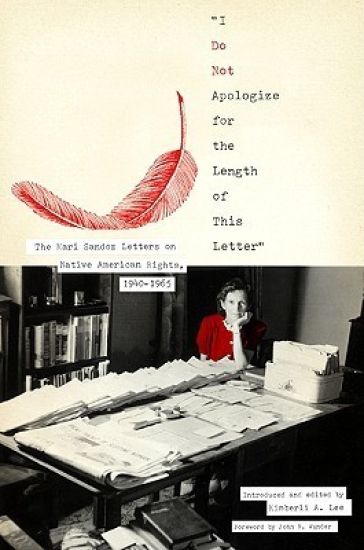
Now it is time for you to read the letters of Mari Sandoz. If it has been a clear summer day and it is near sundown, take this book and a cool drink outside and soak in the wisdom of a writer with a cause. —John R. Wunder, from the forewordAuthor Mari Sandoz was as passionate about Plains peoples as she was about language and literary acclaim. That the mastery of Crazy Horse’s biographer spilled into her zealous advocacy for Native Americans is scarcely surprising. An avid letter writer, Sandoz kept carbons of everything. Fortunately these came into the Sandoz Collection at the University of Nebraska Archives, organized by Kimberli A. Lee, foremost expert on Sandoz’s writings.Though Sandoz richly deserves attention, recent scholarship is scant. In arranging and analyzing this correspondence, Lee reinstates Sandoz as one of the most significant non-Native chroniclers and advocates for Plains Indian cultures. There is much here for historians and other scholars of American Indian, Great Plains, rhetorical, and women’s studies. Yet Sandoz’s wider fan base should not be surprised to hearken to a voice and ardor they will find well familiar.
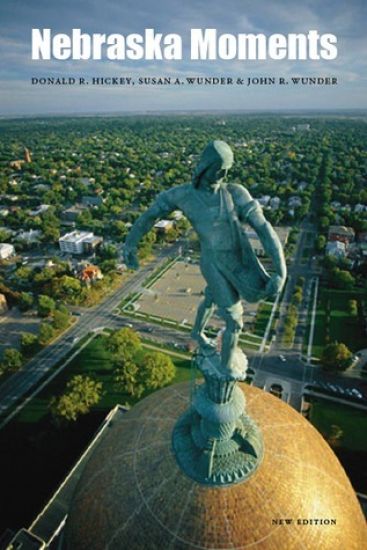
Nebraska author Mari Sandoz remarked that most people see Nebraska as "that long flat state that sets between me and any place I want to go." If so, they're missing plenty, as this entertaining volume makes abundantly clear. Susan A. Wunder and John R. Wunder's new, expanded, and updated edition of Donald R. Hickey's classic account of defining Nebraska moments showcases triumph, tragedy, comedy, and accomplishments that could have happened nowhere else and that reveal the rich culture and history under the state's deceptively quiet surface. There are moments that shine—surviving the Oregon and Mormon trails; completing the Union Pacific Railroad; and winning national football championships, Nobel and Pulitzer prizes, and presidential nominations. There are also moments of darkness such as the murders of Crazy Horse, Malcolm X, and Brandon Teena; the lynchings of Will Brown and Juan Gonzalez; and the Blizzard of 1888. Together they evoke a dramatic history populated with the likes of Pedro Villasur, Willa Cather, and William Jennings Bryan. This new edition also mines Nebraska's most recent history, adding to the ever-changing, ever-intriguing picture of this Great Plains state.
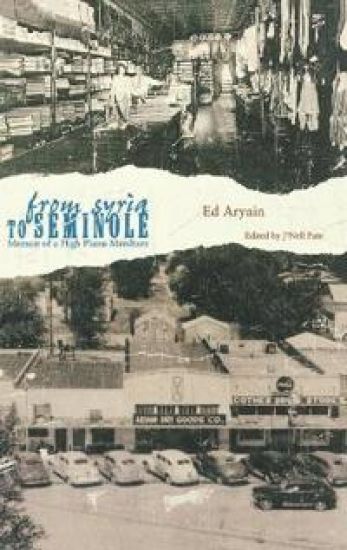
"Sixty years after his arrival in America in 1913 at age fifteen, Syrian-American Mohammed (Ed) Aryain recounts his life as first a dry-goods peddler and then a merchant and family man on the Great Plains, eventually owning a store in Seminole, Texas. Introduction and notes provide historical context"--Provided by publisher.
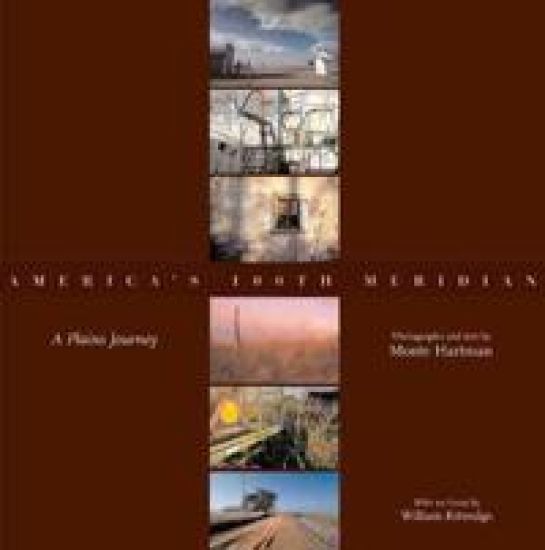
There's no denying [Hartman's] abilities as a photographer. Shape, color, and light, he has an impeccable eye for composition, for juxtaposing line against line, drawing the viewer's eye into his subject...In North Dakota, he likes a flood-drenched plain in orange twilight, one stretch of barbed wire fence in a strong horizontal, another triangulating stretch (just the fence posts visible above the water) disappearing into the distance. In South Dakota, he gives us a flat plain with alternating gold, green, and brown strips of field, a dark storm building overhead...Accompanying the first third of Hartman's photos is a new essay by William Kittredge (always an occasion)...There is no one more authoritatively positioned to comment on the West than Kittredge, nor anyone who can write about it half as well' - NewWest.net. 'Tells the story of the region in textures of flaking paint and rust juxtaposed against stunning sunsets and big skies. Intense color photographs narrate the 1500-mile, often-inhospitable route from Texas to Canada' - Texas Parks & Wildlife. 'A lavish and glorious new coffee-table book ...Hartman has a gifted eye for both the natural and man-made vistas that he encounters, and his color images are breathtaking. Beginning in North Dakota and working south, Hartman presents pictures that are themselves eloquent essays in rural and small-town spaces. An aura of loneliness and abandonment clings to many of these shots. It's no secret that people have been fleeing the harsh physical and economic realities of the Great Plains for years, and these pictures document that fact. Unpainted farm houses and rickety windmills hold silent vigil amid awesome expanses of earth and sky, weeds grow through a Nebraska sidewalk, and an old truck rusts into the Oklahoma soil...A testament to the alluring visual appeal of this country's great middle' - Mobile Register. Resulting from an arduous series of six journeys along the two-thousand-mile line that divides East from West, Monte Hartmans perceptive photographs provide the intimate yet dispassionate observations of a person who chose to explore the meanings inherent in the great empty middle between our coasts. These images inspired William Kittredge to travel the Meridian himself. His essay, an unblinking yet sensitive musing on what once was and what now remains, offers a poignant counterpoint to Hartmans visual tapestry. 'This slice of North America requires stamina unimaginable to the rest of us, and is populated by enduring people who've lost all patience with strangers when their efforts to convey their attachment to this place have fallen on deaf ears. It is not easy to know why a land so lonesome, so often melancholy, parts of which have never surpassed frontier density, will go on having such meaning to those who choose to stay. Hartman and Kittredge, discerning souls, have caught their attachment' - Thomas McGuane, author of The Cadence of Grass. '""Americas100th Meridian"" exposes our nations heartland in its beauty and desolation land as open and mysterious as the palm of Gods hand' - Annick Smith, co-producer of ""A River Runs Through It"". 'A breathtaking reminder of the beauty concentrated in that narrow slice of the continent' - ""North Dakota Quarterly"". 'An astounding coffee-table book tour ...A truly splendid and pristine memory, capturing timeless moments and locations' - ""Wisconsin Bookwatch"". 'A testament to the alluring visual appeal of this country's great middle' - ""Mobile Press-Register"". Monte Hartman has an M.A. in art from UCLA and forty years of experience in photography, design, and the arts. He lives with his wife in Hayward, California. William Kittredge, one of America's great Western writers, has authored many books, including ""Hole in the Sky"" and ""Who Owns the West?"".