Kirjojen hintavertailu. Mukana 12 657 676 kirjaa ja 12 kauppaa.
Kirjailija
John Rae
Kirjat ja teokset yhdessä paikassa: 59 kirjaa, julkaisuja vuosilta 2001-2026, suosituimpien joukossa Life of Adam Smith (Cram Edition). Vertaile teosten hintoja ja tarkista saatavuus suomalaisista kirjakaupoista.
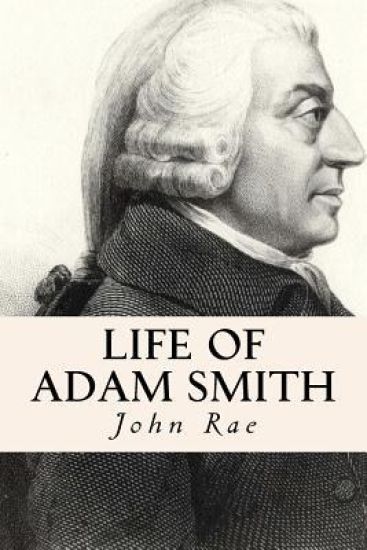
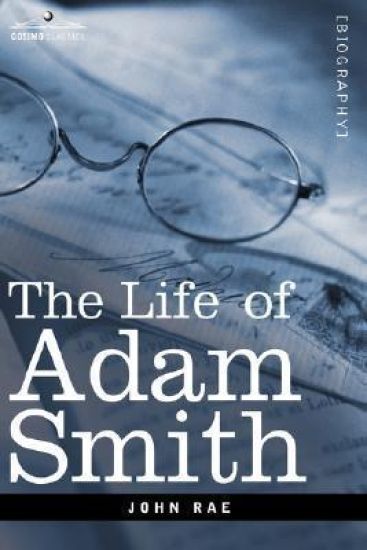
Life of Adam Smith is a classic biography of the great Scottish economist, Adam Smith, by John Rae. Adam Smith FRSA (16 June 1723 NS (5 June 1723 OS) - 17 July 1790) was a Scottish economist, philosopher and author as well as a moral philosopher, a pioneer of political economy and a key figure during the Scottish Enlightenment era. 1] Smith is best known for two classic works: An Inquiry into the Nature and Causes of the Wealth of Nations (1776) and The Theory of Moral Sentiments (1759). The former, usually abbreviated as The Wealth of Nations, is considered his magnum opus and the first modern work of economics. Smith studied social philosophy at the University of Glasgow and at Balliol College, Oxford, where he was one of the first students to benefit from scholarships set up by fellow Scot, John Snell. After graduating, he delivered a successful series of public lectures at Edinburgh, leading him to collaborate with David Hume during the Scottish Enlightenment. Smith obtained a professorship at Glasgow teaching moral philosophy and during this time wrote and published The Theory of Moral Sentiments. In his later life, he took a tutoring position that allowed him to travel throughout Europe, where he met other intellectual leaders of his day. Smith laid the foundations of classical free market economic theory. The Wealth of Nations was a precursor to the modern academic discipline of economics. In this and other works, he developed the concept of division of labour and expounded upon how rational self-interest and competition can lead to economic prosperity. Smith was controversial in his own day and his general approach and writing style were often satirised by Tory writers in the moralising tradition of William Hogarth and Jonathan Swift. In 2005, The Wealth of Nations was named among the 100 Best Scottish Books of all time. 3] The minor planet 12838 Adamsmith was named in his memory. The Wealth of Nations was a precursor to the modern academic discipline of economics. In this and other works, Smith expounded how rational self-interest and competition can lead to economic prosperity. Smith was controversial in his own day and his general approach and writing style were often satirised by Tory writers in the moralising tradition of Hogarth and Swift, as a discussion at the University of Winchester suggests. 92] In 2005, The Wealth of Nations was named among the 100 Best Scottish Books of all time. 3] Former UK Prime Minister Margaret Thatcher, it is said, used to carry a copy of the book in her handbag. 93] In light of the arguments put forward by Smith and other economic theorists in Britain, academic belief in mercantilism began to decline in Britain in the late 18th century. During the Industrial Revolution, Britain embraced free trade and Smith's laissez-faire economics, and via the British Empire, used its power to spread a broadly liberal economic model around the world, characterised by open markets, and relatively barrier free domestic and international trade. 94] George Stigler attributes to Smith "the most important substantive proposition in all of economics." It is that, under competition, owners of resources (for example labour, land, and capital) will use them most profitably, resulting in an equal rate of return in equilibrium for all uses, adjusted for apparent differences arising from such factors as training, trust, hardship, and unemployment. 95] Paul Samuelson finds in Smith's pluralist use of supply and demand as applied to wages, rents, and profit a valid and valuable anticipation of the general equilibrium modelling of Walras a century later. Smith's allowance for wage increases in the short and intermediate term from capital accumulation and invention contrasted with Malthus, Ricardo, and Karl Marx in their propounding a rigid subsistence-wage theory of labour supply.
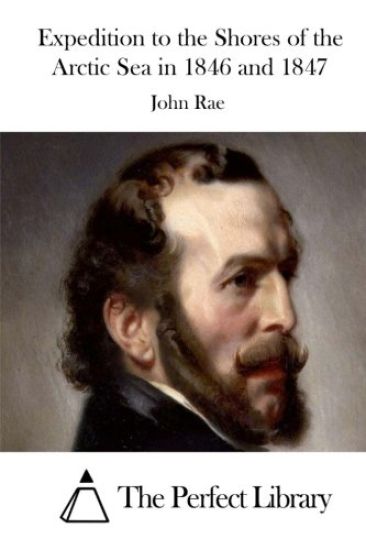
In the mid-nineteenth century, the northern coastline of North America was of particular interest to the Hudson's Bay Company as it was believed to hold the key to the elusive North-West Passage, a trade route from the Atlantic to the Pacific. Recruited to lead a team to survey part of this forbidding region, the Scottish explorer John Rae (1813–93) undertook his first expedition during 1846–7. It was remarkable not only for its success, but also because Rae's was the first crew to overwinter in the Arctic. Unlike other Victorian explorers, Rae embraced the culture of the Inuit and learnt to live off the land like them, which enabled him to complete his survey. First published in 1850, this journal relates the details of his journey as well as how he and his men survived the extreme conditions. It remains a valuable document in the history of Arctic exploration.
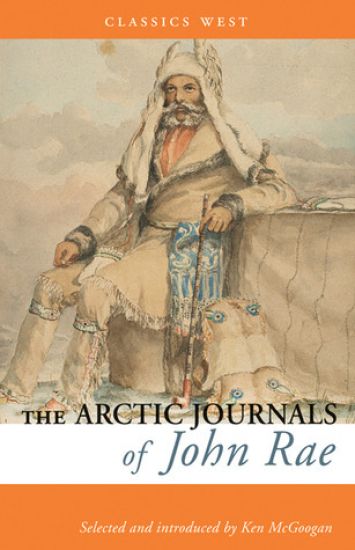
Scottish doctor and explorer John Rae is a controversial figure in the history of the Arctic. He began his career with the Hudson's Bay Company as a surgeon in Moose Factory, Ontario, where he learned to survey, live off the land, and travel great distances on snowshoes. These skills served him well when, in 1846, he was charged with completing the geography of the northern shore of North America and set out on his first expedition. Some years later, while exploring the Boothia Peninsula in 1854, Rae obtained information about the rather shocking fate of the Franklin expedition, which had been missing since 1845. Upon his return to England, however, Rae was discredited by Charles Dickens and shunned by the British establishment, never receiving proper recognition for his roles in finding the Northwest Passage and discovering the fate of Franklin and his crew. 'The Arctic Journals of John Rae' is the definitive collection of John Rae's writings, from his only published work, 'Narrative of an Expedition to the Shores of the Arctic Sea in 1846 and 1847', to obscure notes and journals and reports of his controversial findings in 1854.An accomplished explorer who had great respect for the customs and skills of the peoples native to the Arctic, John Rae is a fascinating figure and an important part of the history of the North.
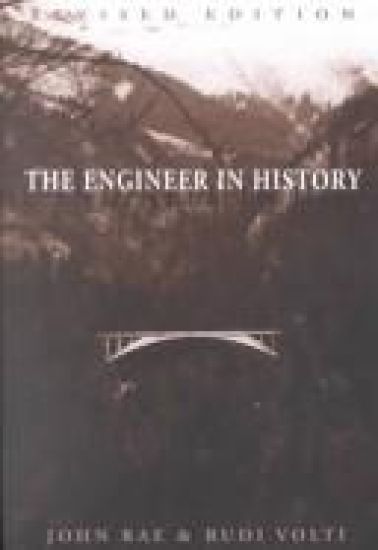
Surveying more than two millennia, The Engineer in History presents the story of the designers and builders of aqueducts, cathedrals, clocks, machine tools, bridges, railroads, and airplanes. It examines their social origins, educations, working methods, relationships with employers, influences on management theory and practices, and many other topics. Throughout, the narrative focuses on particular engineers whose working lives exemplify the themes presented.