

Kirjailija
John Rhodes
Kirjat ja teokset yhdessä paikassa: 38 kirjaa, julkaisuja vuosilta 2001-2024, suosituimpien joukossa Applications Of Automata Theory And Algebra: Via The Mathematical Theory Of Complexity To Biology, Physics, Psychology, Philosophy, And Games. Vertaile teosten hintoja ja tarkista saatavuus suomalaisista kirjakaupoista.
38 kirjaa
Kirjojen julkaisuhaarukka 2001-2024.
Schema Therapy Adapted for Psychosis and Bipolarity
John Rhodes; Natasha Vorontsova
TAYLOR FRANCIS LTD
2024
nidottu
This book explores how Schema Therapy and its underlying theory might be used in work with clients who suffer from psychosis, bipolarity and related symptoms.The first part of the book presents in-depth qualitative research featuring first-person testimonies that describe the self-states or ‘modes’ of a person with psychosis or bipolarity. These self-states involve a range of features, such as emotions, thoughts, motivations and behaviours, which manifest as patterns. The second part proposes the adaptation and application of Schema Therapy, a transdiagnostic approach working with emotion and interpersonal functioning for clinical work with these two groups. Offering unique insights, this text will appeal to a range of practicing clinicians, such as psychologists, therapists, psychiatrists and those with a special interest in psychosis or bipolarity.
Schema Therapy Adapted for Psychosis and Bipolarity
John Rhodes; Natasha Vorontsova
TAYLOR FRANCIS LTD
2024
sidottu
This book explores how Schema Therapy and its underlying theory might be used in work with clients who suffer from psychosis, bipolarity and related symptoms.The first part of the book presents in-depth qualitative research featuring first-person testimonies that describe the self-states or ‘modes’ of a person with psychosis or bipolarity. These self-states involve a range of features, such as emotions, thoughts, motivations and behaviours, which manifest as patterns. The second part proposes the adaptation and application of Schema Therapy, a transdiagnostic approach working with emotion and interpersonal functioning for clinical work with these two groups. Offering unique insights, this text will appeal to a range of practicing clinicians, such as psychologists, therapists, psychiatrists and those with a special interest in psychosis or bipolarity.

Jennifer goes to visit her friend next door.She follows the stream, which she's been told not to do.Along the path, Jennifer finds a meadow carpeting in Skunk Cabbages.She loves skunk cabbages, so she stayed in the meadow and played- lost in her imagination, enjoying the skunk cabbages as a little girl might.Jennifer realizes she doesn't know how to get back home, and soon a fairy hears her cries. The Skunk Cabbage Fairy, along with her friends, realizes that they would like to help Jennifer, but to do so would risk their own safety.The Skunk Cabbage Fairy decides she will help, and she and Jennifer set out to get Jennifer back on the right path.The Skunk Cabbage Fairy is a story of adventure, listening, and finding the courage to do what's right when the opportunity presents itself.

Psychosis and the Traumatised Self explores what it is like to experience psychosis for individuals with histories of childhood physical and sexual abuse. The book additionally explores how meaning expressed in psychosis might originate from the effects of abuse, but also long-term life difficulties, motivations, memories, social history, and struggles to narrate and understand. One chapter focuses on refugees who suffered trauma as adults and later became psychotic. Another chapter examines how trauma leads to the destruction of certainty and trust, thereby opening a pathway to persecutory ideas. Drawing on a developmental model of trauma, it is proposed that dissociated parts of the self that developed during childhood contribute to psychosis in adults when undergoing difficulties and stress.Presented with case illustrations, the book will be useful for those who work in the area of psychosis and abuse to understand the experiences of individuals, and how we might develop appropriate therapy and care.
Psychosis and the Traumatised Self explores what it is like to experience psychosis for individuals with histories of childhood physical and sexual abuse. The book additionally explores how meaning expressed in psychosis might originate from the effects of abuse, but also long-term life difficulties, motivations, memories, social history, and struggles to narrate and understand. One chapter focuses on refugees who suffered trauma as adults and later became psychotic. Another chapter examines how trauma leads to the destruction of certainty and trust, thereby opening a pathway to persecutory ideas. Drawing on a developmental model of trauma, it is proposed that dissociated parts of the self that developed during childhood contribute to psychosis in adults when undergoing difficulties and stress.Presented with case illustrations, the book will be useful for those who work in the area of psychosis and abuse to understand the experiences of individuals, and how we might develop appropriate therapy and care.
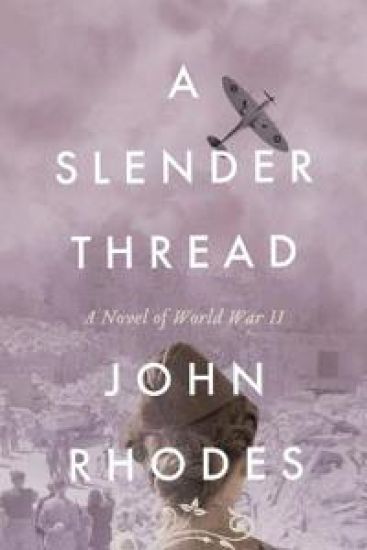
1942: Amid the Siege of Malta, one of the most crucial battles in modern history, only extraordinary courage and willpower can turn looming defeat into victory. The war in the Mediterranean, 1942: The outcome of World War II hangs, as Churchill says, by "a slender thread." Erwin Rommel, Hitler's "Desert Fox," is poised to defeat the reeling British army in Egypt and thwart America's first operation in Europe. Only the tiny, embattled, half-starved Mediterranean island of Malta stands in Rommel's way. Will heroism and devotion be enough to stave off the implacable forces of Hitler's all-conquering Third Reich and Mussolini's new Roman Empire? And, as the battle rages, the relentless strains of war threaten not only the survival of Malta but also the survival of Johnnie and Eleanor's relationship. Will their future together be yet another casualty of war? John Rhodes, author of the award-winning Breaking Point series, weaves the fictional story of fighter pilot Johnnie Shaux and military strategist Eleanor Rand into the heartbreaking, inspiring historical fabric of World War II.
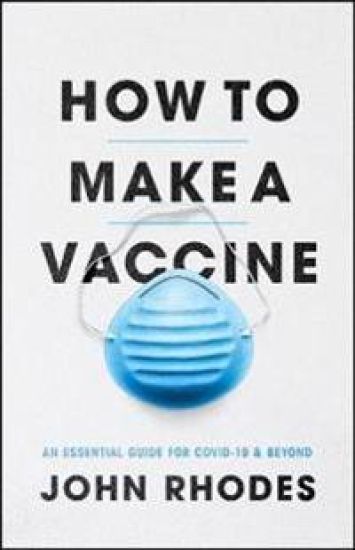
As the COVID-19 pandemic has affected every corner of the world, changing our relationship to our communities, to our jobs, and to each other, the most pressing question has been—when will it end? Researchers around the globe are urgently trying to answer this question by racing to test and distribute a vaccine that could end the greatest public health threat of our time. In How to Make a Vaccine, an expert who has firsthand experience developing vaccines tells an optimistic story of how three hundred years of vaccine discovery and a century and a half of immunology research have come together at this powerful moment—and will lead to multiple COVID-19 vaccines. Dr. John Rhodes draws on his experience as an immunologist, including working alongside a young Anthony Fauci, to unravel the mystery of how vaccines are designed, tested, and produced at scale for global deployment. Concise and accessible, this book describes in everyday language how the immune system evolved to combat infection, how viruses responded by evolving ways to evade our defenses, and how vaccines do their work. That history, and the pace of current research developments, make Rhodes hopeful that multiple vaccines will protect us. Today the complex workings of the immune system are well understood. The tools needed by biomedical scientists stand ready to be used, and more than 160 vaccine candidates have already been produced. But defeating COVID-19 won’t be the end of the story: Rhodes describes how discoveries today are also empowering scientists to combat future threats to global health, including a recent breakthrough in the development of genetic vaccines, which have never before been used in humans. As the world prepares for a vaccine, Rhodes offers a current and informative look at the science and strategies that deliver solutions to the crisis.

1940: Hitler's aerial assault on England reaches a crescendo on Battle of Britain Day when, against all odds, the Luftwaffe is turned back by the outnumbered pilots of Fighter Command. Infinite Stakes-picking up where Breaking Point left off-puts you both inside the cockpit as the pilots duel and at RAF Headquarters with Winston Churchill on that fateful day and through the year that follows, when Britain must fight on alone.Johnnie Shaux, a battle-hardened fighter pilot, now leads a squadron of brave American volunteers against superior forces until he is forced down and imprisoned as a POW.Meanwhile, Eleanor Rand, a brilliant mathematician, is tasked to predict Hitler's plans and to help persuade America to join the war. Written with historical accuracy and page-turning speed, Infinite Stakes takes you to diplomatic conference tables with Churchill, Roosevelt, and Stalin, to desperate battles over France, and, finally, on another fateful day, to Pearl Harbor.
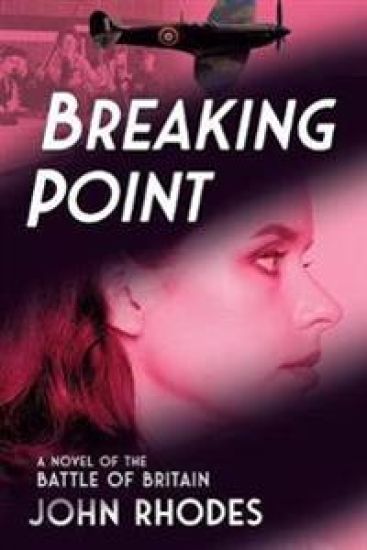
Breaking Point, a novel by John Rhodes, tells the story of the Battle of Britain and the men and women who fought it...It is August, 1940. Hitler's triumphant Third Reich has crushed all Europe--except Britain. As Hitler launches a massive aerial assault, only the heavily outnumbered British RAF and the iron will of Winston Churchill can stop him. The fate of Western civilization teeters in the balance.Johnnie Shaux, a Spitfire fighter pilot, knows that the average life expectancy of a pilot is a mere five hours of operational flying time. Sooner or later, his luck will run out. Yet he must constantly summon up the fortitude to fly into conditions in which death is all but inevitable and continue to do so until the inevitable occurs...Meanwhile, Eleanor Rand, a WAAF staff officer in RAF headquarters, is struggling to find her role in a man's world and to make a contribution to the battle. She studies the control room maps that track the ebb and flow of conflict, the aerial thrust and parry, and begins to see the glimmerings of a radical strategic breakthrough...Breaking Point is based on the actual events of six days in the historic Battle of Britain. The story alternates between Johnnie, face to face with the implacable enemy; and Eleanor, in 11 Group headquarters, using 'zero-sum' game theory to evolve a strategic model of the battle.
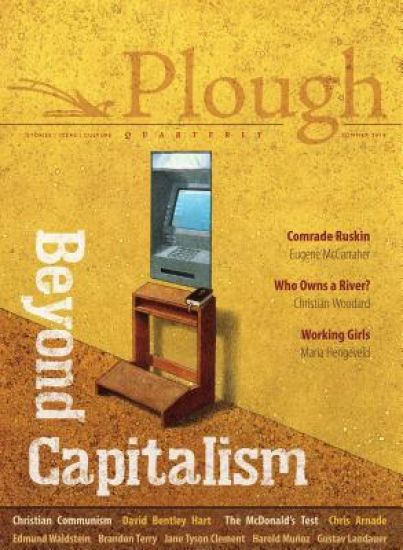
Plough Quarterly No. 21 - Beyond Capitalism
David Bentley Hart; Chris Arnade; Eugene McCarraher; Brandon M. Terry; Eberhard Arnold; G. K. Chesterton; Maria Hengeveld; John Rhodes; Harold Muñoz; Susannah Black; Jason Landsel
Plough Publishing House
2019
pokkari
Is there a better way than capitalism? A much-cited recent poll found that more young Americans have a positive view of socialism than of capitalism. There’s a sense of newly opened possibilities: Might this be the moment for a mass movement of solidarity to overthrow the tyranny of concentrated power and wealth? But what exactly is this cause? Socialism’s champions know how to take effective whacks at capitalism, but diagnosis is not yet the cure. This issue of Plough springs from a conviction that there is a better answer beyond capitalism and socialism, a freely chosen life of sharing and caring that overcomes economic exploitation, a way of life that is both thoroughly practical and independent of the state. This vision is much older than Adam Smith and Karl Marx; it lies at the heart of Jesus’ Sermon on the Mount and throughout the New Testament, as well as in the writings of the Old Testament prophets. It is exemplified by the communal life of the first church in Jerusalem, in which “all who believed were together and had all things in common; they would sell their possessions and goods and distribute the proceeds to all, as any had need” (Acts 2:44–45). Also in this issue: poetry by Jane Tyson Clement; reviews of books by Jennifer Berry Hawes, Robert Macfarlane, Emily Bazelon, and John Connell; and art and photography by Wassily Kandinsky, N. C. Wyeth, Deborah Batt, Kari Nielsen, Chris Arnade, William Morris, Hilzías Salazar, Amedeo Modigliani, Benjamin Meader, Bianca Berends, Elise Palmigiani, and Danny Burrows. Plough Quarterly features stories, ideas, and culture for people eager to put their faith into action. Each issue brings you in-depth articles, interviews, poetry, book reviews, and art to help you put Jesus’ message into practice and find common cause with others.

Plough Quarterly No. 15 - Staying Human
Eberhard Arnold; Michael Plato; Alexi Sargeant; Susannah Black; Stephanie Bennett; Johann Christoph Arnold; Philip Britts; John Rhodes; Chico Fajardo-Heflin; Mark Bauerlein; Michael T. McRay; C. S. Lewis; Wendell Berry; Alfred Delp; Timothy Cardinal Dolan; Maureen Swinger
Plough Publishing House
2018
pokkari
This issue of Plough Quarterly explores the effects of technology on human flourishing. Whether its artificial intelligence, genome editing, Big Tech monopolies, or social media–induced depression, we live in a world that is being reshaped by technology from the ground up. How do we stay human? This issue of Plough Quarterly addresses challenges ranging from the lure of transhumanism to the erosion of silence by the smartphone. Technophobia is no answer, our contributors agree, but neither is a refusal to tackle real dangers. They ask: Why not try living without a computer or a television? Why give tablets to children when Steve Jobs refused to give them to his kids? Why write using a keyboard when you could wield a fountain pen? Technological asceticism of this kind won’t solve society-wide dilemmas. But it can help us maintain the spiritual independence needed to respond to them rightly. Also in this issue: original poetry by Jacob Stratman; reviews of new books by Ian Johnson, Steve Roud, and Markus Rathey; insights from Wendell Berry, Viktor Frankl, Ivan Illich, Carl Sandburg, C. S. Lewis, Alfred Delp, and Christoph Blumhardt; and art by Pieter Bruegel the Elder, Jack Baumgartner, Nicholas Roerich, Rachel Newling, Kay Polk, Suellen McCrary, Stephen Scott Young, Jie Wei Zhou, Kiéra Malone, Torkel Pettersson, Mari Rast, Albrecht Dürer, René Magritte, and Kyle T. Webster. Plough Quarterly features stories, ideas, and culture for people eager to put their faith into action. Each issue brings you in-depth articles, interviews, poetry, book reviews, and art to help you put Jesus’ message into practice and find common cause with others.

"John Rhodes' Videoconferencing for the Real World, is a one of the world's most comprehensive blueprints on the awesome power of videoconferencing."From the Foreword by Brad CaldwellChairman ICIA and President ofIntegrated Media Services, Anaheim, CADesigned to be useful to both technical and non-technical managers, Video-Conferencing for the Real World demystifies the subject of video communications. It provides easy-to-follow guidelines for deploying a cost-effective video-conferencing solution tailored to an organization's specific needs.Developed to flexible to the readers need, Video Conferencing for the Real World offers dynamic problem-solving techniques for the communication challenges facing managers today. Examining the technical, economic, and organizational aspects of each requirement and solution, this book offers a sound base of technical information and provides practical solutions based on a wealth of professional experience. Combining his own ideas with the input of system managers and users, service providers, consultants, and manufacturers, the author has developed a guide that will help readers make more informed investments of their time and money. Special attention is paid to conducting an effective needs analysis, and the development of solutions that will adapt easily to future changes in organizational requirements.Covering a variety of solutions, this book explores the advantages and disadvantages of desktop systems, set-top systems, rollabout systems, and room systems. In addition to compression, multipoint conferencing and data conferencing, this book also addresses topics such as, pilot projects, the preparation of RFPs, service contracts, training, content creation, and convergence.
Boolean Representations of Simplicial Complexes and Matroids
John Rhodes; Pedro V. Silva
Springer International Publishing AG
2016
nidottu
This self-contained monograph explores a new theory centered around boolean representations of simplicial complexes leading to a new class of complexes featuring matroids as central to the theory. The book illustrates these new tools to study the classical theory of matroids as well as their important geometric connections. Moreover, many geometric and topological features of the theory of matroids find their counterparts in this extended context. Graduate students and researchers working in the areas of combinatorics, geometry, topology, algebra and lattice theory will find this monograph appealing due to the wide range of new problems raised by the theory. Combinatorialists will find this extension of the theory of matroids useful as it opens new lines of research within and beyond matroids. The geometric features and geometric/topological applications will appeal to geometers. Topologists who desire to perform algebraic topology computations will appreciate the algorithmic potential of boolean representable complexes.

Boolean Representations of Simplicial Complexes and Matroids
John Rhodes; Pedro V. Silva
Springer International Publishing AG
2015
sidottu
This self-contained monograph explores a new theory centered around boolean representations of simplicial complexes leading to a new class of complexes featuring matroids as central to the theory. The book illustrates these new tools to study the classical theory of matroids as well as their important geometric connections. Moreover, many geometric and topological features of the theory of matroids find their counterparts in this extended context. Graduate students and researchers working in the areas of combinatorics, geometry, topology, algebra and lattice theory will find this monograph appealing due to the wide range of new problems raised by the theory. Combinatorialists will find this extension of the theory of matroids useful as it opens new lines of research within and beyond matroids. The geometric features and geometric/topological applications will appeal to geometers. Topologists who desire to perform algebraic topology computations will appreciate the algorithmic potential of boolean representable complexes.
At the turn of the twentieth century, smallpox claimed the lives of two million people per year. By 1979, the disease had been eradicated and victory was declared across the globe. Yet the story of smallpox remains the exception, as today a host of deadly contagions, from polio to AIDS, continue to threaten human health around the world. Spanning three centuries, The End of Plagues weaves together the discovery of vaccination, the birth and growth of immunology, and the fight to eradicate the world's most feared diseases. From Edward Jenner's discovery of vaccination in 1796, to the early nineteenth-century foundling voyages in which chains of orphans, vaccinated one by one, were sent to colonies around the globe, to the development of polio vaccines and the stockpiling of smallpox as a biological weapon in the Cold War, world-renown immunologist John Rhodes charts our fight against these plagues, and shows how vaccinations gave humanity the upper hand. Today, aid groups including the Bill and Melinda Gates Foundation and the World Health Organization have made the eradication of polio a priority, and Rhodes takes us behind the scenes to witness how soon we may be celebrating the eradication of polio.
The popularity of using narrative, metaphor and building solutions in CBT has increased in recent years. Narrative CBT, part of the third wave of cognitive therapies, recognises the importance of helping to build new ideas and practices in order to create change, examining a person’s multiple and evolving narratives and their behaviour as intrinsically meaningful.In Narrative CBT, John Rhodes presents the features of NCBT in thirty key points. The first fifteen summarise how the theory of narrative can clarify difficulties with emotions, motives and interactions and address how rebuilding confidence and trust is crucial for change to be achieved. In the second half of the book, case conceptualisation and the techniques of NCBT are explained and illustrated. Narrative, solution-orientated and CBT techniques are integrated and specific NCBT approaches for trauma, depression and OCD are highlighted.Ideal for clinical and counselling psychologists, both established and in training, psychotherapists and all professionals carrying out therapy in the field of mental health, this book clearly and accessibly presents the techniques and key concepts of Narrative CBT.
The popularity of using narrative, metaphor and building solutions in CBT has increased in recent years. Narrative CBT, part of the third wave of cognitive therapies, recognises the importance of helping to build new ideas and practices in order to create change, examining a person’s multiple and evolving narratives and their behaviour as intrinsically meaningful.In Narrative CBT, John Rhodes presents the features of NCBT in thirty key points. The first fifteen summarise how the theory of narrative can clarify difficulties with emotions, motives and interactions and address how rebuilding confidence and trust is crucial for change to be achieved. In the second half of the book, case conceptualisation and the techniques of NCBT are explained and illustrated. Narrative, solution-orientated and CBT techniques are integrated and specific NCBT approaches for trauma, depression and OCD are highlighted.Ideal for clinical and counselling psychologists, both established and in training, psychotherapists and all professionals carrying out therapy in the field of mental health, this book clearly and accessibly presents the techniques and key concepts of Narrative CBT.
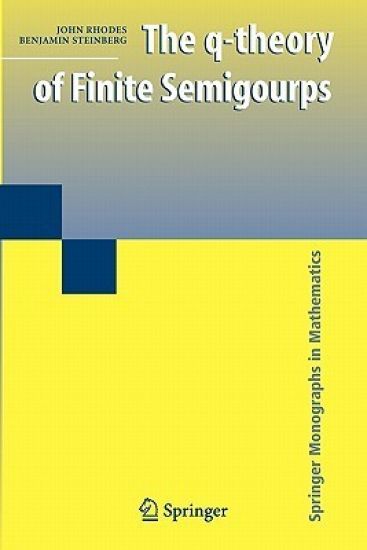
The q-theory of Finite Semigroups
John Rhodes; Benjamin Steinberg
Springer-Verlag New York Inc.
2010
nidottu
Discoveries in finite semigroups have influenced several mathematical fields, including theoretical computer science, tropical algebra via matrix theory with coefficients in semirings, and other areas of modern algebra. This comprehensive, encyclopedic text will provide the reader - from the graduate student to the researcher/practitioner – with a detailed understanding of modern finite semigroup theory, focusing in particular on advanced topics on the cutting edge of research. Key features: (1) Develops q-theory, a new theory that provides a unifying approach to finite semigroup theory via quantization; (2) Contains the only contemporary exposition of the complete theory of the complexity of finite semigroups; (3) Introduces spectral theory into finite semigroup theory; (4) Develops the theory of profinite semigroups from first principles, making connections with spectra of Boolean algebras of regular languages; (5) Presents over 70 research problems, most new, and hundreds of exercises. Additional features: (1) For newcomers, an appendix on elementary finite semigroup theory; (2) Extensive bibliography and index. The q-theory of Finite Semigroups presents important techniques and results, many for the first time in book form, and thereby updates and modernizes the literature of semigroup theory.