Kirjailija
John Ruskin
Kirjat ja teokset yhdessä paikassa: 1 197 kirjaa, julkaisuja vuosilta 1849-2026, suosituimpien joukossa The Harbours of England. with Thirteen Illustrations by J. M. W. Turner, R.A. Edited by T. J. Wise.. Vertaile teosten hintoja ja tarkista saatavuus suomalaisista kirjakaupoista.
1 197 kirjaa
Kirjojen julkaisuhaarukka 1849-2026.
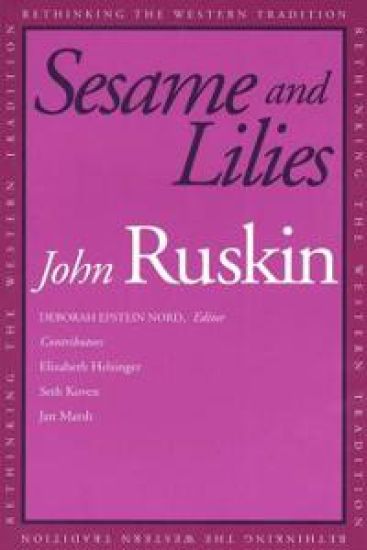
John Ruskin’s Sesame and Lilies, first published in 1865, stands as a classic nineteenth-century statement on the natures and duties of men and women. Although widely popular in its time, the work in its entirety has been out of print since the early twentieth century. This volume returns Sesame and Lilies to easy availability and reunites the two halves of the work: Of Kings’ Treasuries, in which Ruskin critiques Victorian manhood, and Of Queens’ Gardens, in which he counsels women to take their places as the moral guides of men and urges the parents of girls to educate them to this end. Feminist critics of the 1960s and 1970s regarded Of Queens’ Gardens as an exemplary expression of repressive Victorian ideas about femininity, and they paired it with John Stuart Mill’s more progressive Subjection of Women. This volume, by including the often ignored Of Kings’ Treasuries, offers readers full access to Ruskin’s complex and sometimes contradictory views on men and women. The accompanying essays place Sesame and Lilies within historical debates on men, women, culture, and the family. Elizabeth Helsinger examines the text as a meditation on the pleasures of reading, Seth Koven gives a wide-ranging account of how Victorians read Sesame and Lilies, and Jan Marsh situates the work within controversies over educational reform.
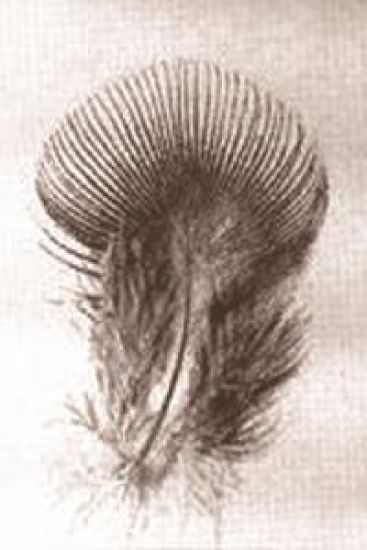
Fors Clavigera (1871-1884), Ruskin's serial 'Letters to the Workmen of Great Britain', is his most controversial and personal text. 'I neither wish to please, nor displease you; but to provoke you to think', Ruskin told his readers. Discursive, angry, and uncompromising, Fors is now seen as the most innovative and in many ways the most modern work of his later years. Interest in its extraordinary achievement has steadily expanded. Tim Hilton's biography identifies Fors Clavigera as 'Ruskin's masterpiece'. The lack of an accessible edition has obstructed the testing of Hilton's claim. This selected edition of Fors Clavigera is the first since the Library edition completed its 3-volume text (long out of print, and now often hard to find) in 1907. It provides an extensive and carefully chosen selection of the most challenging writing in Fors, including several complete letters and sequences. The densely allusive text is elucidated with full annotation, and the edition is provided with a critical introduction, bibliographical notes, and suggestions for further reading. Ruskin's original illustrations, essential for the understanding of his argument, are reproduced.This edition will at last make Fors Clavigera, disturbing and endlessly fascinating, available to modern readers.
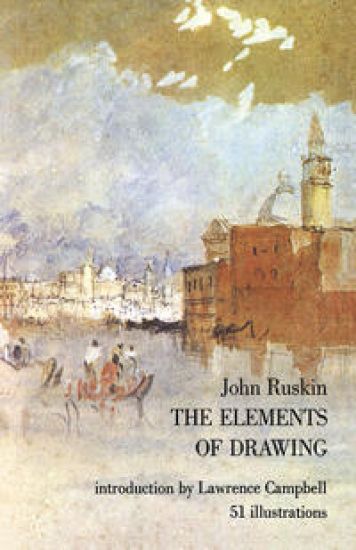
Can drawing -- sound, honest representation of the world as the eye sees it, not tricks with the pencil or a few "effects" -- be learned from a book? One of the most gifted draftsmen, who is also one of the greatest art critics and theorists of all time, answers that question with a decided "Yes." He is John Ruskin, the author of this book, a classic in art education as well as a highly effective text for the student and amateur today.The work is in three parts, cast in the form of letters to a student, successively covering "First Practice," "Sketching from Nature," and "Colour and Composition." Starting with the bare fundamentals (what kind of drawing pen to buy; shading a square evenly), and using the extremely practical method of exercises which the student performs from the very first, Ruskin instructs, advises, guides, counsels, and anticipates problems with sensitivity. The exercises become more difficult, developing greater and greater skills until Ruskin feels his reader is ready for watercolors and finally composition, which he treats in detail as to the laws of principality, repetition, continuity, curvature, radiation, contrast, interchange, consistency, and harmony. All along the way, Ruskin explains, in plain, clear language, the artistic and craftsmanlike reasons behind his practical advice -- underlying which, of course, is Ruskin's brilliant philosophy of honest, naturally observed art which has so much affected our aesthetic.Three full-page plates and 48 woodcuts and diagrams (the latter from drawings by the author) show the student what the text describes. An appendix devotes many pages to the art works which may be studied with profit.
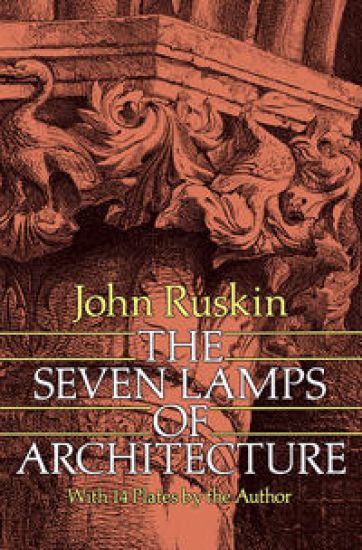
Classic work by the great Victorian expresses his deepest convictions about the nature and role of architecture and its aesthetics. This authoritative edition includes reproductions of the 14 original plates of Ruskin's superb drawings of architectural details from such structures as the Doge's Palace in Venice to the Cathedral of Rouen.
Intended to make his ideas and writings accessible to the modern reader, this text presents Ruskin through five of his most famous works, presented in date order. It provides an authentic portrait of Ruskin by stressing the works that most richly display the temper of his mind: Modern Painters; The Stones of Venice; Unto this Last; Fors Clavigera; and Praeterita. The book was first published in 1963 and this edition is expanded with a new forward and an updated bibliography which takes into account Ruskinian scholarship up until the late 1990s.
John Ruskin was arguably the most important art critic of the nineteenth century. This book makes available a generous selection of his finest writings on painting, sculpture and architecture.
Prterita is perhaps the best-loved of all the fruits of Ruskin's many-sided and tormented genius. This exceptional biography - the first of Ruskin's works in the Whitehouse edition - simultaneously presents a deeply reflective portrait of an early 19th-century Protestant family - its genuine piety, its severities, its suffocating possessive affections - and the product (at once intellectually brilliant and emotionally damaged) of its educational system.
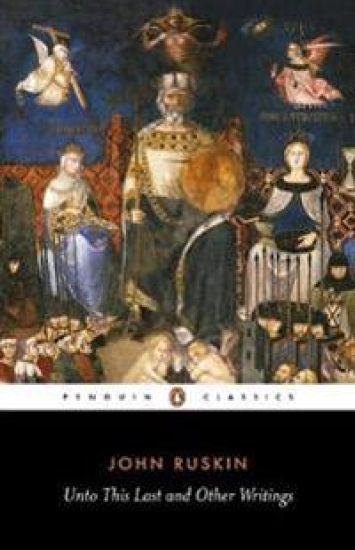
First and foremost an outcry against injustice and inhumanity, Unto this Last is also a closely argued assault on the science of political economy, which dominated the Victorian period. Ruskin was a profoundly conservative man who looked back to the Middle Ages as a Utopia, yet his ideas had a considerable influence on the British socialist movement. And in making his powerful moral and aesthetic case against the dangers of unhindered industrialization he was strangely prophetic. This volume shows the astounding range and depth of Ruskin's work, and in an illuminating introduction the editor reveals the consistency of Ruskin's philosophy and his adamant belief that questions of economics, art and science could not be separated from questions of morality. In Ruskin's words, 'There is no Wealth but Life.'
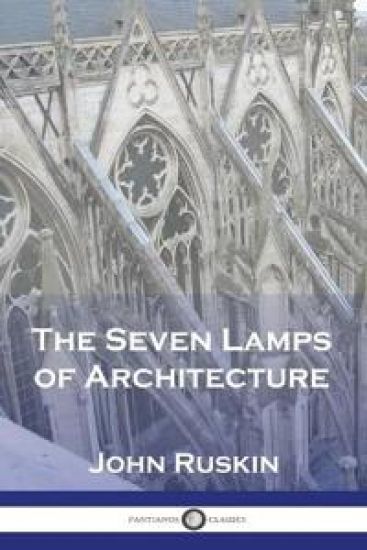
Ruskin's respected treatise on architectural methods and style is presented here complete, with all of the original edition's images.Writing in the 1840s, John Ruskin set out his architectural beliefs. A man of deep religiosity, Ruskin was convinced that Gothic architecture was at the very height of beauty and achievement in building design. Even during his prime, Ruskin had opponents who felt his staunch, traditionalist take on structural architecture confining.Despite Ruskin's views, this book acts as a well-informed and detailed history of architecture as it stood in the mid-19th century. The Seven Lamps of the title describe seven principles which Ruskin viewed should be reflected in a building: Sacrifice, Truth, Power, Beauty, Life, Memory, and Obedience.We find within this edition illustrations of the structures and flourishes which Ruskin admires most. His opinions on certain newer designs of the industrial era, and the painstaking restoration of ancient artworks, may be summed up in a single word: desecration.Despite the author's stark views and ornate style, for its context The Seven Lamps of Architecture is a worthy edition to the library of architects and enthusiasts of design. A particular strength from a historic viewpoint is Ruskin's discussions of the material contrasts and conflict between traditional design and newer forms, together with his sometimes apt phrasing: "Architecture is the art which so disposes and adorns the edifices raised by man...that the sight of them may contribute to his mental health, power, and pleasure."