

Kirjailija
John S C Abbott
Kirjat ja teokset yhdessä paikassa: 415 kirjaa, julkaisuja vuosilta 1874-2026, suosituimpien joukossa Josephine. Vertaile teosten hintoja ja tarkista saatavuus suomalaisista kirjakaupoista.
Mukana myös kirjoitusasut: John S. C. Abbott, John S.C. Abbott
415 kirjaa
Kirjojen julkaisuhaarukka 1874-2026.





The Path of Peace, or a Practical Guide to Duty and Happiness
John S. C. Abbott
Antigonos Verlag
2025
nidottu




Austria, Its Rise and Present Power
John S C Abbott; Wilfred C Lay; Wilfred C Lay
Wildside Press
2025
pokkari



This is one of the most enthralling and all-encompassing biographies ever written about Christopher Columbus, the man who changed the course of world history with his voyages over the Atlantic Ocean. Renowned history writer John S. C. Abbott takes the reader on a no-holds-barred-and remarkably objective-ride from Columbus's background and life, to his struggle in the courts of Portugal and Spain to gain acceptance for his radical idea of sailing west to reach the east-and the astonishing details of his four voyages to the New World and their aftermath. Abbott spares no detail in highlighting the bravery, achievements, and staggering feats which paved the way for European colonization of the New World. But he also deals equally dispassionately with the less savory aspects which followed the Spanish settlements-such as the fact that most of Columbus's crews were criminals recruited only with the promise of pardons, the institution of slavery, and the resultant practical extermination of the Indians on the Caribbean islands. Throughout this breathtaking narrative, Abbott never loses touch with the human aspects of Columbus's life, and ends with an assessment which gives an indication of the struggles and tribulations faced by the simple man from Genoa: "His eventful life was, on the whole, one of the most joyless and full of trouble of which we have any record. That he had his faults all will admit. That those blemishes of character were redeemed by many and exalted virtues, few candid minds will deny."
John Stevens Cabot Abbott (1805-1877), an American historian, pastor, and pedagogical writer, was born in Brunswick, Maine to Jacob and Betsey Abbott. Owing to the success of his work, The Mother at Home, he devoted himself from 1844 onwards, to literature. He was a voluminous writer of books on Christian ethics, and of popular histories, which were credited with cultivating a popular interest in history. He is best known as the author of the widely popular History of Napoleon Bonaparte (1855), in which the various elements and episodes in Napoleon's career are described. Abbott takes a very favourable view towards his subject throughout.
The tragic drama of Maria Antoinette-otherwise known as Marie Antoinette-and her bloody end during the French Revolution has fascinated students of history from all over the world, but rarely have the full facts been so completely captured and mapped out as in this wonderful retelling by master storyteller John Abbott. The fifth child of Holy Roman Empress Maria Theresa and Emperor Francis I, Maria Antoinette was married to Louis-Auguste, heir to the throne of France in 1770, in what was expected to be the beginning of a familial alliance between the Austrian and French royal houses. When her husband finally acceded to the throne in 1774, she became Queen of France and Navarre-and the most powerful woman in the land. The author recounts how political and social events enveloped Maria Antoinette, who was plunged into political intrigues not of her own making and of which, in many cases, she was completely unaware. Abbott paints a sympathetic, but objective, overview of her life, and what could have been done differently-with the benefit of hindsight. The royal family's attempted escape to Austria at the very height of the French Revolution however sealed her and her husband's fate. Accused by the revolutionaries of treason and of loyalty to the Austrians, Maria and her husband found their titles abolished, were imprisoned, and ultimately executed. This work, written only fifty-six years after the events, and at a time when Maria and Louis' eldest daughter, Marie Therese, was still alive, remains one of the finest accounts of this bloody, terrible, and often misunderstood event in European royal history.
The astonishing story of one of the leading women of the French Revolution-and of her own ironic but grisly end at the guillotine-is told with typical intensity and passion by master storyteller John Abbott in this gripping account of the events leading up to the infamous Reign of Terror. Marie-Jeanne Phlippon Roland, better known as Madame Roland, and her husband, Jean-Marie Roland de la Platiere, were leading supporters of the initial ideals of equality and freedom which they presumed the French revolutionaries sought. As such, they became the leaders of what was known as the Girondist faction during those tumultuous events. The Girondists campaigned for the end of the monarchy but then found themselves at odds with the increasing violence and extremist nature of the radicals. In June 1793, Madame Roland and her husband were arrested by the radical faction under the leadership of Robespierre, charged with treason and thrown into prison. Although there were no real grounds for the charge, a guilty sentence was inevitable as it became clear that the trial was part of Robespierre's plot to destroy his Girondist opposition. In November 1793, Madame Roland suffered the fate of so many other innocent people of the time, and was beheaded in public on the Place de la Revolution, uttering the famous remark for which she is remembered: O Liberte, que de crimes on commet en ton nom (Oh Liberty, what crimes are committed in thy name )
The story of Napoleon Bonaparte's stepdaughter-and mother of Emperor Napoleon III-is as interesting as those of her more well-known family members, as revealed in this penetrating study by master storyteller John S. C. Abbott. Written while many of the personalities discussed in the book were still alive, this work tells of the life and times of Hortense Eugenie Cecile de Beauharnais, who was the daughter of Napoleon I's wife from her first marriage. Her father was executed during the French Revolution's Reign of Terror, and her mother was only saved from the guillotine by Napoleon's intervention after his election as consul. As her stepfather became ever more powerful, Hortense was persuaded to marry Napoleon's brother, Louis-who in turn was appointed King of Holland. Hortense subsequently took up the position of Queen of Holland during her stepfather's four years of greatest power from 1806 to 1810. Her marriage was an unhappy affair and after she was allowed to leave Holland, she never lived with her husband again. Her family distress was multiplied by her mother's divorce from Napoleon I, and his later downfall which plunged the entire family into great danger. Hortense received the protection of Alexander I of Russia after the restoration of the Bourbon King Louis XVIII, but her open support for her former stepfather-still her brother-in-law-Napoleon, during his "Hundred Days" return to power after his exile in Elba, led to her banishment from France after his final defeat at Waterloo. Hortense traveled in Germany and Italy before purchasing the Chateau of Arenemberg in the Swiss canton of Thurgau in 1817, where she lived in exile until her death in 1837, aged fifty-four. Her son, Charles Louis, would later gain fame as France's Emperor Napoleon III. This work forms part of John S. C. Abbott's complete series on the Napoleonic era, and is a worthy companion to his related works on that time period.
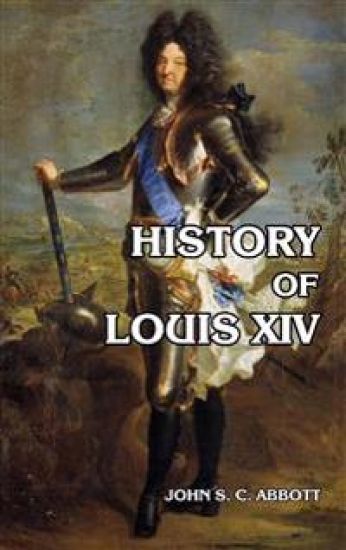
The story of Louis XIV-the "Sun King" of France, is a gripping tale of royal grandeur, despotism, corruption, and moral degeneracy, which, in its very extravagance, laid the seed for the destruction of the French royal house and the infamous revolution of 1789. During Louis XIV's lengthy reign he engaged in what seemed to be a never-ending series of foreign wars, all the while furiously waging interreligious strife at home, as he ruthlessly suppressed Protestant dissent and political conspiracies. His reign saw wars with the Dutch, the Austrians, and the War of the Spanish Succession, a conflict which ultimately spread to North America and involved almost every power on the European continent. As if these wars were not enough of a drain on the economy, Louis XIV's lavish court lifestyle also exhausted the treasury, and all of France suffered grievously as he and his nobles lived debauched lives with no thought of tomorrow. Louis XIV's successors would ultimately pay the price for his seventy-two-year despotic and careless reign, and it is, as the author notes, regrettable that those who plunged France into the misery in which it found itself, died peacefully in their beds, leaving others to be blamed. "The thoughtful reader will perceive that in this long and wicked reign Louis XIV was sowing the wind from which his descendants reaped the whirlwind. It was the despotism of Louis XIV and of Louis XV which ushered in that most sublime of all earthly dramas, the French Revolution."-from the Preface.
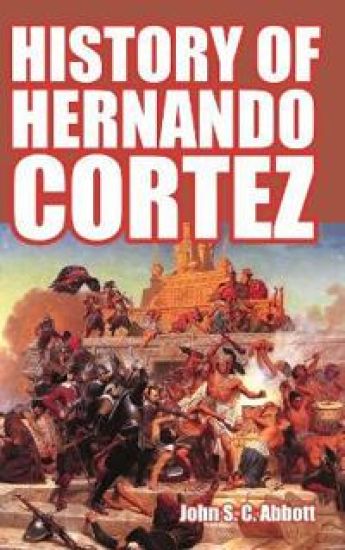
A masterful retelling of the incredible story of the conquest of the Aztec Empire by a handful of Spaniard Conquistadors, assisted by their far more numerous Indian allies, under the leadership of Hernando Cortez. Starting with Cortez's family background, master storyteller John Abbott sketches the path of the young adventurer-sparing no details of the less pleasant aspects of his personality-to the time of his landing at Hispaniola (present-day Cuba) in the New World in 1518. From there, the adventure really begins, when he is appointed captain of an expedition to the mainland, his continual clashes with the Spanish colonial authorities notwithstanding. His expedition, which set off against the direct orders of the authorities, landed on the coast of present-day Mexico, and, after skillfully-but often deceptively-allying himself with the local Indian tribes who had suffered grievously under the murderous and cannibalistic reign of terror instituted by the Aztecs, he then marched on the great city of Tenochtitlan, center of the Aztec Empire. What makes the telling of this story more valuable than most is the author's ability to continually posit the actions of Spaniards, Aztecs and local Indian tribes into the moral and practical conditions of the time-which, as the writer points out, are quite different to those of today. The astonishing tale includes accounts of the brutal behavior of the Conquistadors, the shocking bloodlust of the Aztecs, the cannibalism of Cortez's Indian allies, and the advanced technological level of Aztec society. The final battle-and the resultant destruction of Tenochtitlan (and its conversion into present-day Mexico City) was not however the grand finale to Cortez's adventures. His triumphant return to Spain, his falling out with the queen of that nation, his return to the New World, and his death are all covered in this highly readable and satisfying biography.
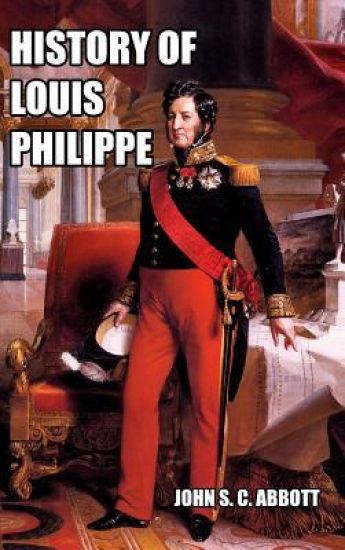
A fascinating account of the life, trials, tribulations-and ultimately failure-of one of Europe's first notable "constitutional monarchs," Louis Philippe (1773-1850). The first king to be properly elected by the National Assembly, his reign was based on the principle of union of king and people, and marked the first real shift away from the "divine right to rule" approach to kingship. This sweeping work reveals many details not generally known about this momentous change in European politics, all the while keeping the reader's attention by weaving together the story of Louis Philippe's youth, his years of exile, the dramatic events leading to his appointment as king, his extended family and relations, and finally his steady decline in popularity until his own forced abdication and exile in 1848. Regarded as a usurper by the aristocracy, but rejected by the masses because of the fact that he was made king by an assembly elected by only one hundred and fifty thousand voters-he was stalked by assassins at every step, becoming known as the "Target King." Finally, caught between the conflicting demands of the aristocracy and the 1848 revolutions, he resigned and fled into exile once again. "We may search history in vain for the record of any monarch so unrelentingly harassed as was Louis Philippe from the time he ascended the throne until he was driven from it. He was irreproachable in morals, a man who had seen much of the world in all its phases, sagacious and well meaning. But he was placed in a position in which no earthly wisdom could rescue him from the direst trouble."