Kirjojen hintavertailu. Mukana 12 595 353 kirjaa ja 12 kauppaa.

Kirjailija

John S. D. Eisenhower

Kirjat ja teokset yhdessä paikassa: 11 kirjaa, julkaisuja vuosilta 1994-2025, suosituimpien joukossa Zachary Taylor: The American Presidents Series: The 12th President, 1849-1850. Vertaile teosten hintoja ja tarkista saatavuus suomalaisista kirjakaupoista.

Mukana myös kirjoitusasut: John S.D. Eisenhower

11 kirjaa

Kirjojen julkaisuhaarukka 1994-2025.

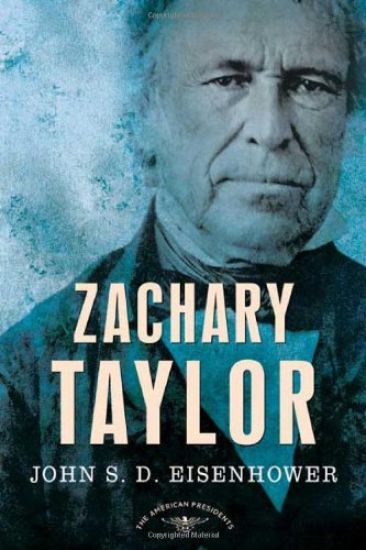
Zachary Taylor: The American Presidents Series: The 12th President, 1849-1850
The rough-hewn general who rose to the nation's highest office, and whose presidency witnessed the first political skirmishes that would lead to the Civil War Zachary Taylor was a soldier's soldier, a man who lived up to his nickname, "Old Rough and Ready." Having risen through the ranks of the U.S. Army, he achieved his greatest success in the Mexican War, propelling him to the nation's highest office in the election of 1848. He was the first man to have been elected president without having held a lower political office. John S. D. Eisenhower, the son of another soldier-president, shows how Taylor rose to the presidency, where he confronted the most contentious political issue of his age: slavery. The political storm reached a crescendo in 1849, when California, newly populated after the Gold Rush, applied for statehood with an anti- slavery constitution, an event that upset the delicate balance of slave and free states and pushed both sides to the brink. As the acrimonious debate intensified, Taylor stood his ground in favor of California's admission--despite being a slaveholder himself--but in July 1850 he unexpectedly took ill, and within a week he was dead. His truncated presidency had exposed the fateful rift that would soon tear the country apart.
They Fought at Anzio

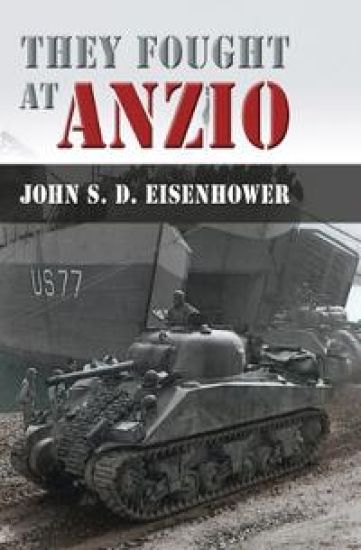
They Fought at Anzio

John S. D. Eisenhower

UNIVERSITY OF MISSOURI PRESS
2025
nidottu
Italy, from the toe to the Alps, was the scene of the longest, bloodiest, most frustrating, and least understood series of battles fought by the Western Allies during World War II. Now, John S. D. Eisenhower offers a new look at the Italian campaign, emphasizing the Anzio offensive—an operation pushed by Winston Churchill that fell largely to American troops to carry out. It was visualized as an amphibious landing of two Allied divisions behind German lines that would force the Wehrmacht to evacuate all of Italy. But the Germans held on and, with the arrival of reinforcements, nearly wiped out the Allied troops pinned down at Anzio Beach. By portraying that struggle from the perspectives of both commanders and foot soldiers, this prominent military historian focuses on the experiences of the individuals who fought in the Italian campaign to reveal what the battle at Anzio was all about. But more than the account of one operation, They Fought at Anzio covers the entire Italian campaign, from the landings at Salerno to the capture of Rome.Eisenhower brings a trained eye to reconstructing the difficult terrain of battle, approaching the Anzio campaign as a contest between opposing commands striving to anticipate and counter the opponent’s moves—not as a field exercise but as a deadly struggle for survival. He analyzes the command decisions that brought about the Anzio stalemate, interspersing his account with personal experiences of the men in the trenches, the nurses of the 56th Evacuation Hospital, and the young officers witnessing the horrors of war for the first time.As a study in command, Eisenhower’s narrative gives new credit to generals Lucian Truscott and Fred Walker and assesses both the strengths and weaknesses of General Mark Clark, allowing us to grasp the situation as it appeared to those in command. He also offers compelling portraits of German commanders Field Marshal Albert Kesselring and General Frido von Senger und Etterlin. It has been said that Anzio was a soldier’s battle, remembered more for blood shed than for military objectives achieved. By focusing on the experiences of the soldiers who fought there and the decisions of commanders in perilous circumstances, They Fought at Anzio offers a new appreciation of the contributions of both and a new understanding of this unheralded theater of the war.
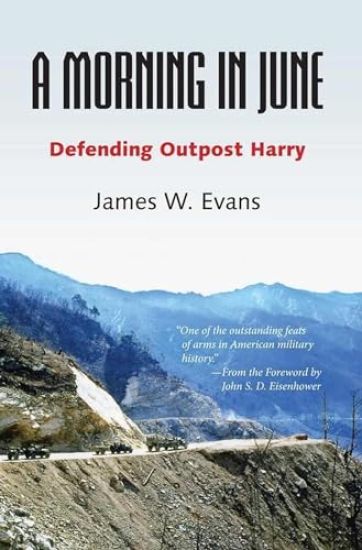
A Morning in June

A Morning in June

James W. Evans; John S. D. Eisenhower

THE UNIVERSITY OF ALABAMA PRESS
2024
nidottu
A first-hand account of the defense of Outpost Harry, a strategic position in Korea’s Chorwon Valley brutally contested by the US and Chinese armies as they jockeyed for advantageous positions in anticipation of peace negotiations in Panmunjom. Evans recounts these last days of the war and savage battles for control of important local terrain features against a determined Chinese assault.By June 1953 the Korean War, marked at the outset by extremely fluid advances and retreats up and down the peninsula, had settled into position warfare very near the original pre-war demarcation line between North and South Korea. At this point both sides were fighting to win a peace, to achieve incremental advantages that could be translated into gains at the peace negotiations in Panmunjom. The battle at Outpost Harry devolved into hand-to-hand combat during a period of constant, intense fighting that lasted two days. The author, although seriously wounded that night, refused evacuation and remained on the hill to successfully lead his company in defense of the outpost. It wasn’t romantic; it wasn’t chivalrous; and many died or were badly wounded. Some of the survivors never fully overcame the mental and physical damage they suffered during the nightmare.With this book, one of those scarred by that experience recounts the events of the battle and his lifelong efforts to deal with the residual horrors. The Korean Conflict may be called "the forgotten war" by some, but not by those who were on the front lines.
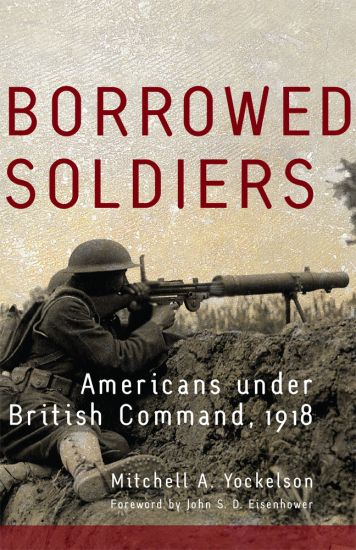
Borrowed Soldiers

Borrowed Soldiers

Mitchell A. Yockelson; John S. D. Eisenhower

University of Oklahoma Press
2016
nidottu
The combined British Expeditionary Force and American II Corps successfully pierced the Hindenburg Line during the Hundred Days Campaign of World War I, an offensive that hastened the war's end. Yet despite the importance of this effort, the training and operation of II Corps has received scant attention from historians.Mitchell A. Yockelson delivers a comprehensive study of the first time American and British soldiers fought together as a coalition force - more than twenty years before D-Day. He follows the two divisions that constituted II Corps, the 27th and 30th, from the training camps of South Carolina to the bloody battlefields of Europe. Despite cultural differences, General Pershing's misgivings, and the contrast between American eagerness and British exhaustion, the untested Yanks benefited from the experience of battle-toughened Tommies. Their combined forces contributed much to the Allied victory.Yockelson plumbs new archival sources, including letters and diaries of American, Australian, and British soldiers to examine how two forces of differing organization and attitude merged command relationships and operations. Emphasizing tactical cooperation and training, he details II Corps' performance in Flanders during the Ypres-Lys offensive, the assault on the Hindenburg Line, and the decisive battle of the Selle.Featuring thirty-nine evocative photographs and nine maps, this account shows how the British and American military relationship evolved both strategically and politically. A case study of coalition warfare, Borrowed Soldiers adds significantly to our understanding of the Great War.
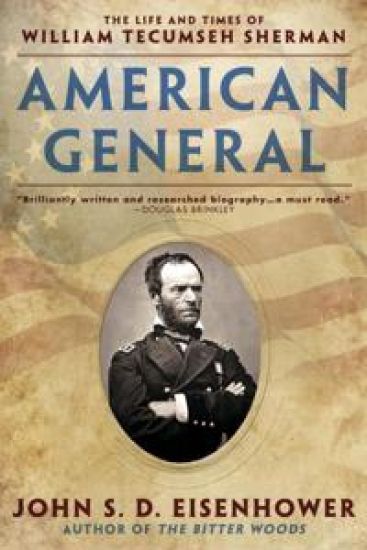
American General

American General

John S.D. Eisenhower

New American Library
2015
nidottu
Civil War general William Tecumseh Sherman earned a place in history as the first modern general, yet behind his reputation as a fierce warrior was a sympathetic man of complex character. A century and a half after the Civil War, Sherman remains one of its most controversial figures the soldier who brought the fight not only to the Confederate Army, but to Confederate civilians as well. Yet Eisenhower, a West Point graduate and a retired brigadier general (Army Reserves), finds in Sherman a man of startling contrasts, not at all defined by the implications of total war. His scruffy, disheveled appearance belied an unconventional and unyielding intellect. Intensely loyal to superior officers, especially Ulysses S. Grant, he was also a stalwart individualist. Dubbed no soldier during his years at West Point, Sherman later rose to the rank of General of the Army, and he had great affection for the people of the South despite his commitment to the Union cause. In this remarkable reassessment of Sherman s life and career, Eisenhower takes readers from Sherman s Ohio origins and his fledgling first stint in the Army to his years as a businessman in California and his hurried return to uniform at the outbreak of the war. From Bull Run through Sherman s epic March to the Sea, Eisenhower offers up a fascinating narrative of a military genius whose influence helped preserve the Union."
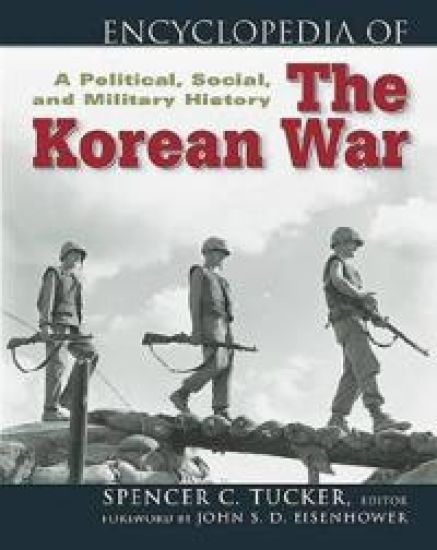
Encyclopedia of the Korean War

Encyclopedia of the Korean War

John S.D. Eisenhower

Facts On File Inc
2002
nidottu
Although it has been largely neglected, the Korean War served as the backdrop for many ""firsts"" in military history: the first extensive use of the helicopter, the first battles between jet aircraft, and the first time two world powers - the United States and China - met on a battlefield since World War II. A 1953 armistice halted the fighting, yet the war technically continues today, as North and South Korea remain divided. This comprehensive reference work draws from previously secret information found in Russian and Chinese archives as well as numerous primary source documents. It includes more than 600 A-to-Z entries written by over 100 military and civilian experts. The entries are carefully written to convey information about the war from the perspectives of both the United States and Korea, giving readers a balanced and comprehensive overview of this war.
Allies

Allies

John S. D. Eisenhower

Da Capo Press Inc
2000
pokkari
Dwight D. Eisenhower once remarked that "the history of alliances is a history of failure." This provocative, absorbing work, based on a study by the General and written by his son, is a history of one of the great exceptions, the most successful military alliance the world has ever seen,the Anglo-American military alliance of World War II. At once a study of the prodigious undertaking that brought millions of men and women together to defeat the Axis and a portrait of the great personalities who built and sustained the alliance, Allies offers vivid glimpses of war at the working level: on a convoy crossing the Atlantic, with a secret landing party on the coast of northern Africa, and with armored units in Tunisia. Eisenhower has crafted a powerful narrative and a most valuable contribution to the literature of World War II.
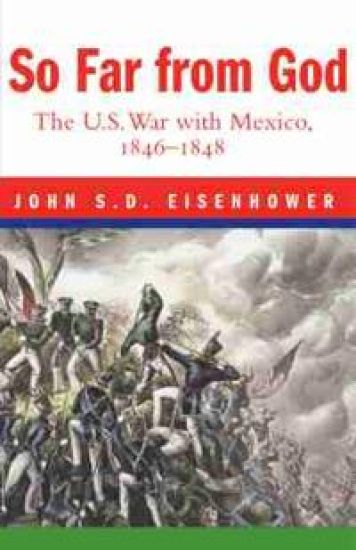
So Far From God

So Far From God

John S. D. Eisenhower

University of Oklahoma Press
2000
nidottu
The Mexican-American War of the 1840s, precipitated by border disputes and the U.S. annexation of Texas, ended with the military occupation of Mexico City by General Winfield Scott. In the subsequent treaty, the United States gained territory that would become California, Nevada, New Mexico, Arizona, Utah, and parts of Wyoming and Colorado. In this highly readable account, John S.D. Eisenhower provides a comprehensive survey of this frequently overlooked war.
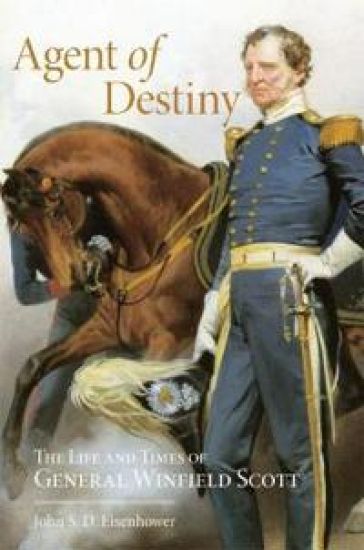
Agent of Destiny

Agent of Destiny

John S. D. Eisenhower

University of Oklahoma Press
1999
nidottu
The hero of the War of 1812, the conqueror of Mexico City in the Mexican-American War, and Abraham Lincoln's top soldier during the first six months of the Civil War, General Winfield Scott was a seminal force in the early expansion and consolidation of the American republic. John S. D. Eisenhower explores how Scott, who served under fourteen presidents, played a leading role in the development of the United States Army from a tiny, loosely organized, politics-dominated establishment to a disciplined professional force capable of effective and sustained campaigning.
Intervention!

Intervention!

John S. D. Eisenhower

WW NORTON CO
1995
nidottu
In May 1916, six American soldiers led by Lieutenant George S. Patton, Jr., surrounded a building near Rubio, Chihuahua. When the occupants burst out of the door, guns blazing, Patton and his men cut them down. A month later seventy American troopers charged into a strong Mexican position at Carrizal; ten were killed and twenty-three taken prisoner. In 1914, a powerful American naval force seized Mexico's principal seaport, Veracruz, and occupied the city for six months. Yet, all the while, Mexico and the United States were technically at peace. The United States began its involvement in the Mexican Revolution in 1913 with President Woodrow Wilson's decision to remove Victoriana Huerta, leader of a military junta that overthrew and murdered Mexico's president, Francisco Madero. Diplomatic actions failing, Wilson occupied Veracruz, cutting off Huerta's supplies of arms from abroad. When in 1916 the legendary bandit Pancho Villa raided Columbus, New Mexico, Wilson sent General John J. Pershing into Chihuahua to capture him. This story leads readers to increased respect for the people of Mexico and its revolutionary leaders—Zapata, Obregon, Carranza, and Pancho Villa. It shows that, while American troops performed well, U.S. intervention had no effect on the outcome of the Mexican Revolution. The American army had a taste of battle and Pershing went on to become the greatest American hero of the First World War.
D-Day, 1944

D-Day, 1944

John S.D. Eisenhower

University Press of Kansas
1994
nidottu
June 6, 1944: the Allies launch the largest combined aerial and amphibious assault in modern history. Taking the Germans by surprise, they storm the heavily fortified defences at the beachheads along the Normandy coast. The cost in Allied lives is enormous (nearly 10,000 lost at Omaha alone), but the long-awaited Second Front is finally opened, marking the beginning of the end for Hitler's Third Reich. 50 years later, we are still trying to come to grips with the impact of what General Dwight Eisenhower called ""this great and noble undertaking"". In ""D-Day 1944"" 20 authors reassess the meanings and lessons of this monumental event and show why it retains such a prominent place in our national memory. Drawing upon a vast array of newly available archival sources, these authors extend and revise our understanding of coalition warmaking, the controversy over opening the Second Front, the logistics of operations ""Bolero"" and ""Overlord"", air and naval operations, small unit training and combat, the unique contributions of ""special forces"" and of ""Ultra"" and ""Fortitude"" intelligence, the war zone experience for French civilians, Eisenhower's leadership, and the comparative performances of the American, British and Canadian forces in combat. ""D-Day 1944"" also features valuable eyewitness commentaries by General Omar Bradley, Vice-Admiral Friedrich Ruge (German Navy), Pulitzer Prize-winning journalist Don Whitehead, and George Marshall's biographer Forrest Pogue. Together, these essays remind us why a half century later D-Day remains one of the true defining moments of World War II.