Kirjojen hintavertailu. Mukana 12 595 353 kirjaa ja 12 kauppaa.

Kirjailija

John S. Garrison

Kirjat ja teokset yhdessä paikassa: 10 kirjaa, julkaisuja vuosilta 2013-2023, suosituimpien joukossa Glass. Vertaile teosten hintoja ja tarkista saatavuus suomalaisista kirjakaupoista.

10 kirjaa

Kirjojen julkaisuhaarukka 2013-2023.

The Pleasures of Memory in Shakespeare's Sonnets

The Pleasures of Memory in Shakespeare's Sonnets

John S. Garrison

Oxford University Press
2023
sidottu
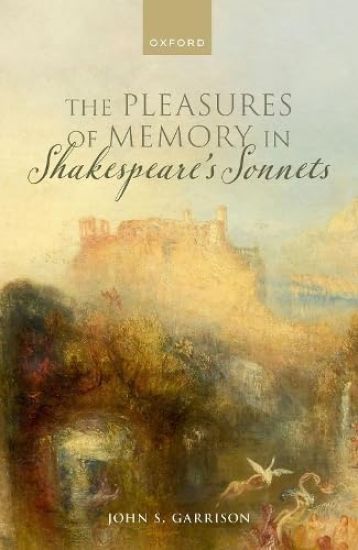
The Pleasures of Memory in Shakespeare's Sonnets uses Shakespeare's poetry as a case study for the mutually formative relationship between desire and recollection. Through a series of close readings that are both historically situated and informed by recent theory, it traces how the speaker of the poems strives for a more agential relationship to his own memory by treating recollection as a form of narrative. Drawing together insights from cognitive science, the early modern memory arts, and psychoanalysis, John S. Garrison connects the Sonnets to the larger Renaissance project of conceiving memory as a faculty to be developed and managed through self-discipline and rhetoric. In doing so, he reveals how early modern thought presaged many theories that have emerged in contemporary neuroscientific and psychoanalytic understandings of the self and its longing for pleasure. The Sonnets emerge as a collection that contemplates the affective dimensions and conceptual overlaps that bind anticipation to retrospection in the fraught pursuit of erotic pleasure. Indispensable for students and scholars working on Shakespeare's poetry, this study appeals also to a broader audience of readers interested in affect, memory, and sexuality studies. Shakespeare's most beloved sonnets are discussed, as well as less familiar ones, alongside contemporary adaptations of the poems. Garrison brings the Sonnets further into the present by comparing them with treatments of pleasure and memory by modern authors such as C.P. Cavafy, Toni Morrison, William Faulkner, and Michael Ondaatje.
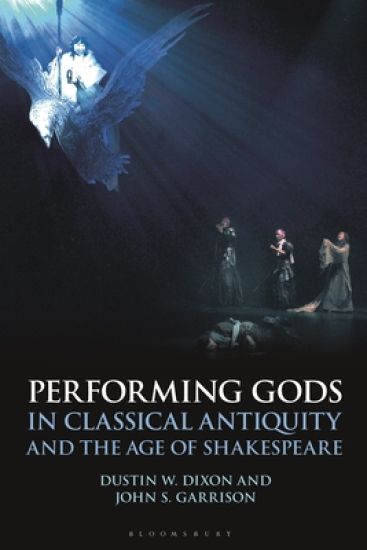
Performing Gods in Classical Antiquity and the Age of Shakespeare

Performing Gods in Classical Antiquity and the Age of Shakespeare

Dustin W. Dixon; John S. Garrison

BLOOMSBURY PUBLISHING PLC
2022
nidottu
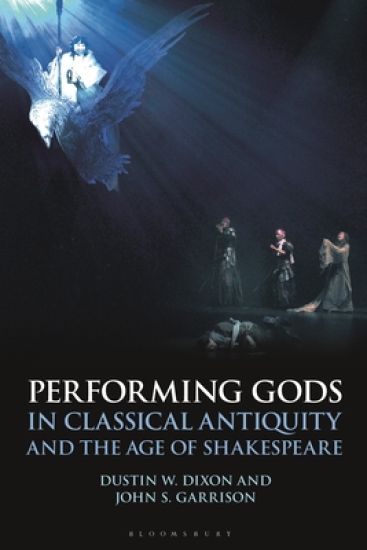
The gods have much to tell us about performance. When human actors portray deities onstage, such divine epiphanies reveal not only the complexities of mortals playing gods but also the nature of theatrical spectacle itself. The very impossibility of rendering the gods in all their divine splendor in a truly convincing way lies at the intersection of divine power and the power of the theater. This book pursues these dynamics on the stages of ancient Athens and Rome as well on those of Renaissance England to shed new light on theatrical performance. The authors reveal how gods appear onstage both to astound and to dramatize the very machinations by which theatrical performance operates. Offering an array of case studies featuring both canonical and lesser-studied texts, this volume discusses work of Aeschylus, Sophocles, Euripides, Aristophanes, and Plautus as well as Beaumont, Heywood, Jonson, Marlowe, and Shakespeare.This book uniquely brings together the joint perspectives of two experts on classical and Renaissance drama. This volume will appeal to students and enthusiasts of literature, classics, theater, and performance studies.
Performing Gods in Classical Antiquity and the Age of Shakespeare

Performing Gods in Classical Antiquity and the Age of Shakespeare

Dustin W. Dixon; John S. Garrison

Bloomsbury Academic
2021
sidottu
The gods have much to tell us about performance. When human actors portray deities onstage, such divine epiphanies reveal not only the complexities of mortals playing gods but also the nature of theatrical spectacle itself. The very impossibility of rendering the gods in all their divine splendor in a truly convincing way lies at the intersection of divine power and the power of the theater. This book pursues these dynamics on the stages of ancient Athens and Rome as well on those of Renaissance England to shed new light on theatrical performance. The authors reveal how gods appear onstage both to astound and to dramatize the very machinations by which theatrical performance operates. Offering an array of case studies featuring both canonical and lesser-studied texts, this volume discusses work of Aeschylus, Sophocles, Euripides, Aristophanes, and Plautus as well as Beaumont, Heywood, Jonson, Marlowe, and Shakespeare.This book uniquely brings together the joint perspectives of two experts on classical and Renaissance drama. This volume will appeal to students and enthusiasts of literature, classics, theater, and performance studies.
Friendship and Queer Theory in the Renaissance
In this volume, the author offers a substantial reconsideration of same-sex relations in the early modern period, and argues that early modern writers – rather than simply celebrating a classical friendship model based in dyadic exclusivity and a rejection of self-interest – sought to innovate on classical models for idealized friendship. This book redirects scholarly conversations regarding gender, sexuality, classical receptions, and the economic aspects of social relations in the early modern period. It points to new directions in the application of queer theory to Renaissance literature by examining group friendship as a celebrated social formation in the work of early modern writers from Shakespeare to Milton. This volume will be of interest to scholars of the early modern period in England, as well as to those interested in the intersections between literature and gender studies, economic history and the economic aspects of social relations, the classics and the classical tradition, and the history of sexuality.
Shakespeare and the Afterlife

Shakespeare and the Afterlife

John S. Garrison

Oxford University Press
2018
nidottu
The question of what happens after death was a vital one in Shakespeare's time, as it is today. And, like today, the answers were by no means universally agreed upon. Early moderns held surprisingly diverse beliefs about the afterlife and about how earthly life affected one's fate after death. Was death akin to a sleep where one did not wake until judgment day? Were sick bodies healed in heaven? Did sinners experience torment after death? Would an individual reunite with loved ones in the afterlife? Could the dead communicate with the world of the living? Could the living affect the state of souls after death? How should the dead be commemorated? Could the dead return to life? Was immortality possible? The wide array of possible answers to these questions across Shakespeare's work can be surprising. Exploring how particular texts and characters answer these questions, Shakespeare and the Afterlife showcases the vitality and originality of the author's language and thinking. We encounter characters with very personal visions of what awaits them after death, and these visions reveal new insights into these individuals' motivations and concerns as they navigate the world of the living. Shakespeare and the Afterlife encourages us to engage with the author's work with new insight and new curiosity. The volume connects some of the best-known speeches, characters, and conflicts to cultural debates and traditions circulating during Shakespeare's time.
Shakespeare and the Afterlife

Shakespeare and the Afterlife

John S. Garrison

Oxford University Press
2018
sidottu
The question of what happens after death was a vital one in Shakespeare's time, as it is today. And, like today, the answers were by no means universally agreed upon. Early moderns held surprisingly diverse beliefs about the afterlife and about how earthly life affected one's fate after death. Was death akin to a sleep where one did not wake until judgment day? Were sick bodies healed in heaven? Did sinners experience torment after death? Would an individual reunite with loved ones in the afterlife? Could the dead communicate with the world of the living? Could the living affect the state of souls after death? How should the dead be commemorated? Could the dead return to life? Was immortality possible? The wide array of possible answers to these questions across Shakespeare's work can be surprising. Exploring how particular texts and characters answer these questions, Shakespeare and the Afterlife showcases the vitality and originality of the author's language and thinking. We encounter characters with very personal visions of what awaits them after death, and these visions reveal new insights into these individuals' motivations and concerns as they navigate the world of the living. Shakespeare and the Afterlife encourages us to engage with the author's work with new insight and new curiosity. The volume connects some of the best-known speeches, characters, and conflicts to cultural debates and traditions circulating during Shakespeare's time.
Shakespeare at Peace

Shakespeare at Peace

Kyle Pivetti; John S. Garrison

Routledge
2018
sidottu
In the current climate of global military conflict and terrorism, Shakespeare at Peace offers new readings of Shakespeare’s plays, illuminating a discourse of peace previously shadowed by war and violence. Using contemporary examples such as speeches, popular music, and science fiction adaptations of the plays, Shakespeare at Peace reads Shakespeare’s work to illuminate current debates and rhetoric around conflict and peace. In this challenging and evocative book, Garrison and Pivetti re-frame Shakespeare as a proponent of peace, rather than war, and suggest new ways of exploring the vitality of Shakespeare’s work for politics today.
Shakespeare at Peace

Shakespeare at Peace

Kyle Pivetti; John S. Garrison

Routledge
2018
nidottu
In the current climate of global military conflict and terrorism, Shakespeare at Peace offers new readings of Shakespeare’s plays, illuminating a discourse of peace previously shadowed by war and violence. Using contemporary examples such as speeches, popular music, and science fiction adaptations of the plays, Shakespeare at Peace reads Shakespeare’s work to illuminate current debates and rhetoric around conflict and peace. In this challenging and evocative book, Garrison and Pivetti re-frame Shakespeare as a proponent of peace, rather than war, and suggest new ways of exploring the vitality of Shakespeare’s work for politics today.
Glass

Glass

John S. Garrison

Bloomsbury Academic USA
2015
nidottu
Object Lessons is a series of short, beautifully designed books about the hidden lives of ordinary things.Pause and look around: you will see that you are surrounded by glass. It reflects and refracts light through your windows; it encircles a glowing filament above you; it’s in a mirror hanging on the wall; it lies shattered in a dented corner of an iPhone—you’re drinking water out of a pint glass. Taking up a most common object, rarely considered because assumed to be transparent, John Garrison draws evocative connections between historical depictions of glass and emerging visions that see it as holding a unique promise for new forms of interaction. Grounded in everyday examples, this book offers a series of surprising insights into how we increasingly find ourselves living in a world made of glass.Object Lessons is published in partnership with an essay series in The Atlantic.
Friendship and Queer Theory in the Renaissance
In this volume, the author offers a substantial reconsideration of same-sex relations in the early modern period, and argues that early modern writers – rather than simply celebrating a classical friendship model based in dyadic exclusivity and a rejection of self-interest – sought to innovate on classical models for idealized friendship. This book redirects scholarly conversations regarding gender, sexuality, classical receptions, and the economic aspects of social relations in the early modern period. It points to new directions in the application of queer theory to Renaissance literature by examining group friendship as a celebrated social formation in the work of early modern writers from Shakespeare to Milton. This volume will be of interest to scholars of the early modern period in England, as well as to those interested in the intersections between literature and gender studies, economic history and the economic aspects of social relations, the classics and the classical tradition, and the history of sexuality.