Kirjailija
John S Knox
Kirjat ja teokset yhdessä paikassa: 20 kirjaa, julkaisuja vuosilta 2016-2024, suosituimpien joukossa Seeing the Light. Vertaile teosten hintoja ja tarkista saatavuus suomalaisista kirjakaupoista.
20 kirjaa
Kirjojen julkaisuhaarukka 2016-2024.
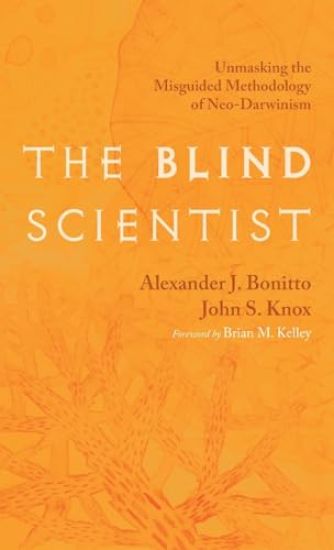
The Blind Scientist
Alexander J Bonitto; John S Knox; Brian M Kelley
Wipf Stock Publishers
2024
sidottu
This book investigates potential neo-Darwinian fallacies, specifically regarding a priori assumptions, that may have led to weak scientific methodology and praxis. It was proposed that five concepts must be true for neo-Darwinism to be true. These are gradualism, the tree of life hypothesis, the evidence of microevolutionary change accounting for macroevolutionary change, time and chance, and methodological naturalism. Prima facie, these concepts have tremendous explanatory power. Yet, with an attempt to carefully examine these concepts, all five seem to be assumed a priori so as to dictate the outcome of neo-Darwinism rather than letting the evidence speak for itself. The evidence left by the Cambrian explosion, genomic potential, genetic entropy, irreducible complexity, genetic limits, cyclical change, probability theory, the epistemology of information, and the law of causality seems to pose a dilemma for neo-Darwinian assumptions.
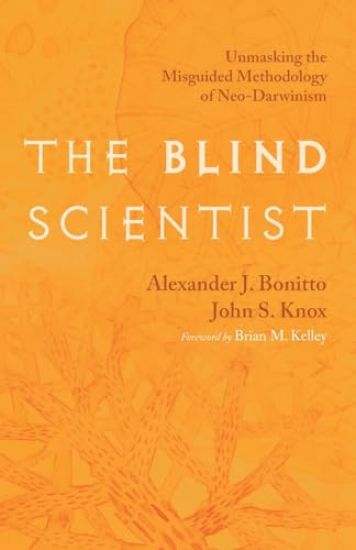
The Blind Scientist
Alexander J Bonitto; John S Knox; Brian M Kelley
Wipf Stock Publishers
2024
pokkari
This book investigates potential neo-Darwinian fallacies, specifically regarding a priori assumptions, that may have led to weak scientific methodology and praxis. It was proposed that five concepts must be true for neo-Darwinism to be true. These are gradualism, the tree of life hypothesis, the evidence of microevolutionary change accounting for macroevolutionary change, time and chance, and methodological naturalism. Prima facie, these concepts have tremendous explanatory power. Yet, with an attempt to carefully examine these concepts, all five seem to be assumed a priori so as to dictate the outcome of neo-Darwinism rather than letting the evidence speak for itself. The evidence left by the Cambrian explosion, genomic potential, genetic entropy, irreducible complexity, genetic limits, cyclical change, probability theory, the epistemology of information, and the law of causality seems to pose a dilemma for neo-Darwinian assumptions.
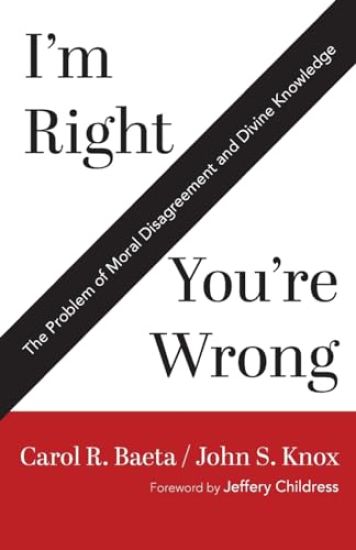
I'm Right / You're Wrong
Carol R Baeta; John S Knox; Jeffery Childress
Wipf Stock Publishers
2023
pokkari
I'm Right / You're Wrong
Carol R Baeta; John S Knox; Jeffery Childress
Wipf Stock Publishers
2023
sidottu
Moral disagreement is commonly regarded as a threat to objective morality in scholarly circles and in popular culture--perhaps being one of the most significant objections against Christian theistic moral theory. Some skeptics argue that as people divide about what is right and wrong--often inciting moral evil and causing human suffering--the Christian view of an all-powerful, all-knowing, and all-good God behind morality is inconsistent. Accordingly, I'm Right/You're Wrong investigates whether moral disagreement abolishes the traditional Christian view of God and its accepted ontology of morality. It further analyzes and proposes the logical problem of moral disagreement, applying the methodology proposed by Christian philosopher Alvin Plantinga in his free-will defense. Moreover, this book discusses key theological and philosophical perspectives regarding God's omniscience, creational power, and the human attribute of free will.
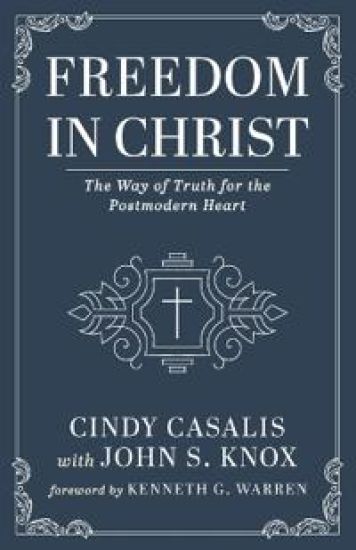
Modern Christian apologists and evangelists employ a variety of tools designed to aid communities in their understanding of God and salvation via Christ's atonement. One of the ways that defenders of the faith add to their field is in discerning the real significance of the treasures found in Christ. This work begins by dissecting the true meaning of freedom in Christ from a Judeo-Christian viewpoint. Building on that foundation, it then evaluates the sociological phenomenon of postmodernism in many of its characteristics and approaches--both positive and negative. The goal is to find pathways through which the apologist can respond to postmoderns in pointing them to Christ. Finally, the work closes by discussing how a newfound understanding of freedom in Christ adds to the three main branches of apologetics: classical, reformed, and presuppositionalism.

Modern Christian apologists and evangelists employ a variety of tools designed to aid communities in their understanding of God and salvation via Christ's atonement. One of the ways that defenders of the faith add to their field is in discerning the real significance of the treasures found in Christ. This work begins by dissecting the true meaning of freedom in Christ from a Judeo-Christian viewpoint. Building on that foundation, it then evaluates the sociological phenomenon of postmodernism in many of its characteristics and approaches--both positive and negative. The goal is to find pathways through which the apologist can respond to postmoderns in pointing them to Christ. Finally, the work closes by discussing how a newfound understanding of freedom in Christ adds to the three main branches of apologetics: classical, reformed, and presuppositionalism.
But Children Matter
Kenneth G Warren; John S Knox; Chris Goeppner; Art Matheny; Jenny Matheny
Wipf Stock Publishers
2020
pokkari
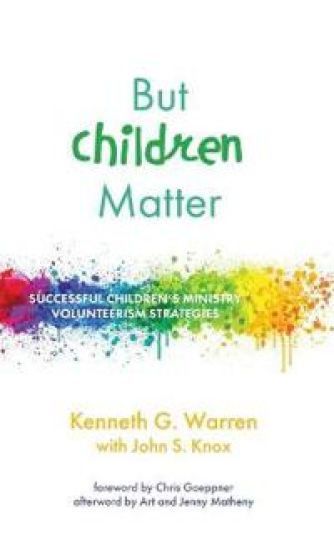
But Children Matter
Kenneth G Warren; John S Knox; Chris Goeppner; Art Matheny; Jenny Matheny
Wipf Stock Publishers
2020
sidottu
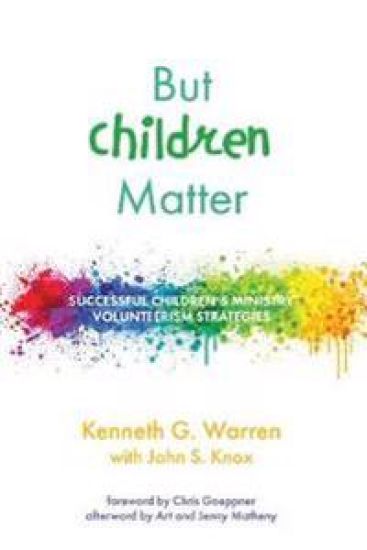
Often, a disconnect exists between the way pastors, children's ministry volunteers, and churches describe the health and impact of children's ministry volunteers (and the overall functioning of an ongoing children's ministry). The volunteer dysfunction that is evident in many churches goes beyond the building scenario or the current strategy that leadership is pursuing. If one asks the pastor of just about any local church how the children's ministry is going, most pastors will respond positively. However, if speaking with a children's ministry volunteer, one is likely to hear, ""I am burned out, but I feel obligated to serve here because we have such a shortage of volunteers and I do love these kids."" Too often, there is no program in place to monitor the health of the ministry. Official training is lacking, church vision is blurred, and many children's ministry volunteers feel like they are nothing more than large-group, unpaid babysitters. This book analyzes these problems and provides pragmatic, systematic steps to a healthier, more robust children's ministry.
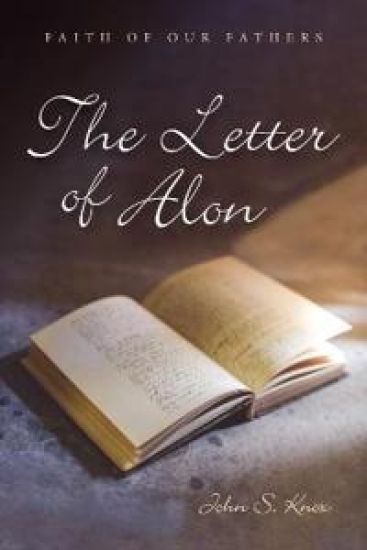
Our Faith in God Echoes Throughout Eternity . . . Professor William Berrit's life is safe, comfortable, and sheltered from inconvenient convictions until he uncovers a venerated treasure long-preserved in a dusty attic--a letter written in the first century of Christianity by a distant ancestor recounting how faith in God saved the Berrit family from destruction and showed them the way of truth. With each soul-stirring chapter, William learns more about God's amazing intervention in the lives of his ancient family, providing light and love despite the darkness and misery surrounding them. His own religious life uninspired and uncertain, William's beliefs and principles are tested, and he soon finds himself in the middle of intellectual doubt and personal danger, all because of The Letter of Alon. Come discover the golden thread of faith that weaves all believers together into the fabric of Christianity. Don't miss book one in the Faith of Our Fathers series
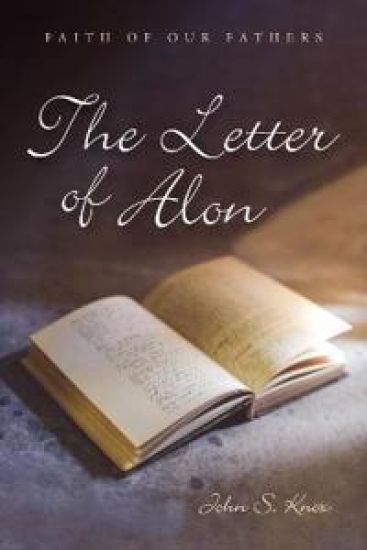
Our Faith in God Echoes Throughout Eternity . . . Professor William Berrit's life is safe, comfortable, and sheltered from inconvenient convictions until he uncovers a venerated treasure long-preserved in a dusty attic--a letter written in the first century of Christianity by a distant ancestor recounting how faith in God saved the Berrit family from destruction and showed them the way of truth. With each soul-stirring chapter, William learns more about God's amazing intervention in the lives of his ancient family, providing light and love despite the darkness and misery surrounding them. His own religious life uninspired and uncertain, William's beliefs and principles are tested, and he soon finds himself in the middle of intellectual doubt and personal danger, all because of The Letter of Alon. Come discover the golden thread of faith that weaves all believers together into the fabric of Christianity. Don't miss book one in the Faith of Our Fathers series
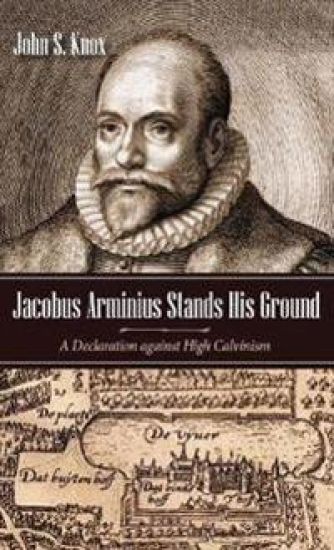
Jacobus Arminius Stands His Ground
John S Knox; Roger J Newell; Vic Reasoner
Wipf Stock Publishers
2018
sidottu
On October 30, 1608, Jacobus Arminius presented his Declaration of Sentiments to the Assembly of the States of Holland and West Friesland in the Binnenhof at The Hague. First, Arminius sought to defend himself and his theological views from the spirited attacks of opponents such as Gomarus, Lubbertus, and Plancius. Second, Arminius hoped to bring to light the wrongdoings of the European church and its extremist understanding of certain Christian doctrines. Having trained in Geneva under Jean Calvin's successor, Theodore Beza (1519-1605), and having further expanded and honed his theology at the University of Leyden from both lectern and the pulpit, Arminius thoroughly presented his theological views in both oral and written form. He spoke in his native Dutch language to an assembly of his peers and religious authorities with the hopes of avoiding a theological rift in Holland--while at the same time hoping to remove a long-standing conflict with the Supralapsarian faction warring against him. Thus, Arminius' Declaration of Sentiments is a sophisticated, passionate appeal to reason, scripture, and community. With each section, Arminius seeks not only to demonstrate the error of the attacks on him, but also to point out how and why reconciliation can take place through a careful examination of various precepts of Christian thought. ""Little did I know, all those years ago, when John Knox encountered Jacob Arminius in my Church History II course, that John would go on to an investigation like this one, in which he redeems Arminius from the extreme 'Arminianism' with which that misunderstood reformer is often maligned. This is a gracious, balanced presentation. And I humbly and with pleasure confess that with this work John Knox has mentored his mentor."" --Daniel L. Brunner, Portland Seminary, George Fox University ""Regardless of your theological bent, you will profit from these thoughtful essays on Arminius. Dr. Knox seeks neither to condemn nor defend this pivotal theologian. Rather, he invites us to join him in listening to the heart of this humble follower of Christ. My appreciation for this controversial sixteenth century scholar has forever changed."" --Mark M. Goodwin, retired pastor, Church of the Nazarene John S. Knox is an Associate Professor with Liberty University's School of Behavioral Sciences and School of Divinity in Lynchburg, Virginia. He has taught Bible, history, and sociology for nearly two decades at several Christian universities in the United States. He lives in Virginia with his wife, Brenda, and their two sons, Jacob and Joseph. He is the author of The Letter of Alon (2013), Sacro-Egoism (Wipf & Stock, 2016), John Wesley's 52 Standard Sermons (Wipf & Stock, 2017), God in the Details (2017), and A Lexicon of Sociological Terms and Theorists (2018)..
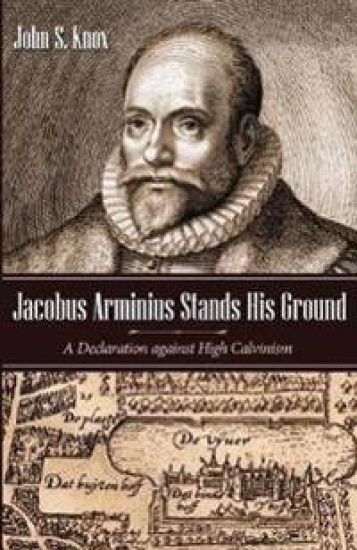
Jacobus Arminius Stands His Ground
John S Knox; Roger J Newell; Vic Reasoner
Wipf Stock Publishers
2018
pokkari
On October 30, 1608, Jacobus Arminius presented his Declaration of Sentiments to the Assembly of the States of Holland and West Friesland in the Binnenhof at The Hague. First, Arminius sought to defend himself and his theological views from the spirited attacks of opponents such as Gomarus, Lubbertus, and Plancius. Second, Arminius hoped to bring to light the wrongdoings of the European church and its extremist understanding of certain Christian doctrines. Having trained in Geneva under Jean Calvin's successor, Theodore Beza (1519-1605), and having further expanded and honed his theology at the University of Leyden from both lectern and the pulpit, Arminius thoroughly presented his theological views in both oral and written form. He spoke in his native Dutch language to an assembly of his peers and religious authorities with the hopes of avoiding a theological rift in Holland--while at the same time hoping to remove a long-standing conflict with the Supralapsarian faction warring against him. Thus, Arminius' Declaration of Sentiments is a sophisticated, passionate appeal to reason, scripture, and community. With each section, Arminius seeks not only to demonstrate the error of the attacks on him, but also to point out how and why reconciliation can take place through a careful examination of various precepts of Christian thought. ""Little did I know, all those years ago, when John Knox encountered Jacob Arminius in my Church History II course, that John would go on to an investigation like this one, in which he redeems Arminius from the extreme 'Arminianism' with which that misunderstood reformer is often maligned. This is a gracious, balanced presentation. And I humbly and with pleasure confess that with this work John Knox has mentored his mentor."" --Daniel L. Brunner, Portland Seminary, George Fox University ""Regardless of your theological bent, you will profit from these thoughtful essays on Arminius. Dr. Knox seeks neither to condemn nor defend this pivotal theologian. Rather, he invites us to join him in listening to the heart of this humble follower of Christ. My appreciation for this controversial sixteenth century scholar has forever changed."" --Mark M. Goodwin, retired pastor, Church of the Nazarene John S. Knox is an Associate Professor with Liberty University's School of Behavioral Sciences and School of Divinity in Lynchburg, Virginia. He has taught Bible, history, and sociology for nearly two decades at several Christian universities in the United States. He lives in Virginia with his wife, Brenda, and their two sons, Jacob and Joseph. He is the author of The Letter of Alon (2013), Sacro-Egoism (Wipf & Stock, 2016), John Wesley's 52 Standard Sermons (Wipf & Stock, 2017), God in the Details (2017), and A Lexicon of Sociological Terms and Theorists (2018)..
John Wesley's 52 Standard Sermons
John S Knox; Phil Towne; David R Leonard
Wipf Stock Publishers
2017
pokkari
John Wesley's 52 Standard Sermons
John S Knox; Phil Towne; David R Leonard
Wipf Stock Publishers
2017
sidottu