Kirjojen hintavertailu. Mukana 12 595 353 kirjaa ja 12 kauppaa.
Kirjailija
John S. Moore
Kirjat ja teokset yhdessä paikassa: 7 kirjaa, julkaisuja vuosilta 2007-2023, suosituimpien joukossa Selections From The Poetical Writings Of The Late John S. Moore, Of The District Of Colombia. Vertaile teosten hintoja ja tarkista saatavuus suomalaisista kirjakaupoista.
The second half of the sixteenth century was amongst the most turbulent periods of English history. Reformation, political faction, economic decline, disputed succession and foreign wars combined with a prolonged series of poor harvests to create a situation that historians labeled the 'mid-Tudor crisis'. Not least of the problems faced by people at this time was a rising rate of death from disease; which at its height may have seen one in four people dying from a combination of influenza and typhus. As this book argues, such a mortality rate constitutes the largest demographic disaster to strike England since the Black Death two-hundred years before, and dwarfs the death rates both of the seventeenth plague outbreaks, and the 1919 Spanish Flu. In this magisterial study, Dr Moore marshals a phenomenal amount of research to examine the likely impact of this disaster upon an already weakened population. Drawing particularly upon parish registers, he demonstrates that the period witnessed a much higher drop in population than has been hitherto accepted, that in turn leads to a much revised population trend for England during the early modern period. As well as assessing the ramifications of these findings, the book also examines why such a crisis appears to have passed un-noticed - or at least un-commented upon - by most of the contemporaries who lived through it. Based upon twenty-years' research, and backed up by a wealth of detailed statistical evidence, this work offers a fundamental reappraisal of the social and economic history of Tudor England. It demonstrates how disease and mortality played a major role in shaping demography, and thus the development of early modern English society.
As well as a poet, John S Moore, born in 1948, is a freelance writer and independent scholar living in London. He is the author of Aleister Crowley A Modern Master (Mandrake of Oxford, 2009), Nietzsche, an Interpretation, (AuthorsOnline Ltd, 2011), Crowley a Beginners Guide (Mandrake of Oxford, 2015) and Bulwer Lytton Occult Personality (Mandrake of Oxford, 2018).
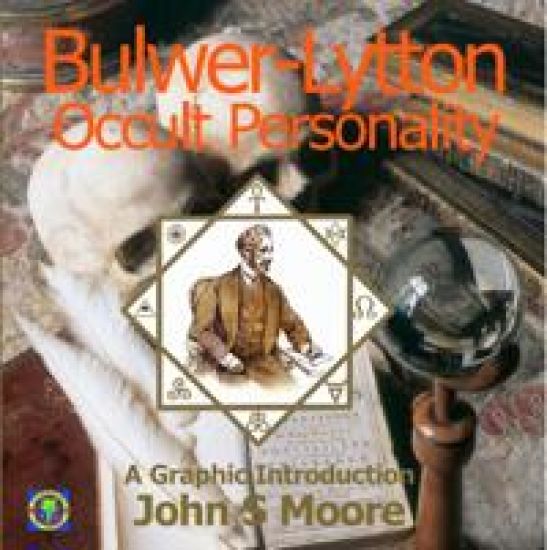
Edward Bulwer, Lord Lytton, once the most successful novelist in the English speaking world, now unfairly neglected and even derided, was also the central figure in the underground culture of magic and the occult. With his esoteric studies he built a reputation for deep learning in the history and philosophy of this alternative tradition, as well as passing for an adept in his own right. His creative influence, especially through his occult fiction, was surprisingly far reaching. The book sets the achievement of this nineteenth century magus into a large historical context, exploring the intellectual and other influences on him as well as movements he inspired. Some chapters discuss aspects of Bulwer's life, while some explore people and ideas that influenced him and others those he influenced. His seminal role in several cultural movements has been largely forgotten, not least in his home country. This book offers an often unfamiliar perspective on the Victorian era and hopefully succeeds in provoking some questions about our own times. With Bulwer as its focus, and employing a wealth of illustrations, it manages to provide a whirlwind tour of much occult and esoteric culture, from Iamblichus to Symbolist art and literature, Theosophy and modern psychedelia.
Do what thou wilt shall be the whole of the Law. Nearly seventy years after his death Aleister Crowley, the notorious Beast 666, is only just beginning to attract serious academic attention. Even so we would not expect to find him on any mainstream university courses; he is still too much associated with occultism. So, Crowley - A Beginners Guide is not your standard beginner's guide. Let my servants be few & secret: they shall rule the many & the known. Readers may be surprised at the richness and complexity of his thought, as well as the extent of his influence. He needs background to be understood. Giving this opens fresh perspectives on much recent intellectual history. Crowley - A Beginners Guide presents his main ideas in a straightforward and accessible format, with drawings and diagrams to place them in their historical context. It relates him to contemporary movements in art and scholarship. It describes his relationship to modernism and postmodernism, and his role in the counterculture of the sixties, as well as his continuing influence today. Interspersed are entertaining stories of his life and reputation. Brilliantly illustrated by John Higgins, Crowley - A Beginners Guide, is a highly accessible guide to this fascinating, complex and controversial figure. It neither promotes nor condemns him, presenting hostile as well as favourable views of his character and achievement. John S Moore is a freelance writer and independent scholar living in London. He is the author of Aleister Crowley: A Modern Master (Mandrake of Oxford, 2009) and Nietzsche - An Interpretation, (AuthorsOnline Ltd, 2011) and has written on Schopenhauer, Wittgenstein and Edward Bulwer-Lytton among others. More information at www.johnsmoore.co.uk/ John Patrick Higgins is a writer and illustrator. He is the author of The Narwhal and Other stories. His second collection will be published later in the year. He writes art criticism for various magazines and is Creative Director of Shot Glass Theatre Company. He lives in Belfast, which he continues to find extraordinary.
This book aims to present a coherent and distinctive interpretation of Nietzsche's philosophy and is critical of much current academic opinion. It consists of an introduction plus ten chapters, most of which are based on papers I presented at conferences between 1993 and 2010, on aspects of Nietzsche's thought. I try to bring out how clearly his position differs from other possible standpoints, including those expressed by Richard Wagner, Charles Darwin, Max Nordau, Sigmund Freud and some of his followers. In later chapters I find my interpretation in conflict with various others which I argue against. I felt increasing frustration at the persistence of what struck me as plain misunderstandings, passing for legitimate interpretations, that should be easily put right. What began as just one view among others takes a more combative stance.