Kirjojen hintavertailu. Mukana 12 165 938 kirjaa ja 12 kauppaa.

Kirjailija

John S. Strong

Kirjat ja teokset yhdessä paikassa: 11 kirjaa, julkaisuja vuosilta 1992-2021, suosituimpien joukossa Buddhisms. Vertaile teosten hintoja ja tarkista saatavuus suomalaisista kirjakaupoista.

11 kirjaa

Kirjojen julkaisuhaarukka 1992-2021.

The Buddha's Tooth

The Buddha's Tooth

John S. Strong

University of Chicago Press
2021
sidottu
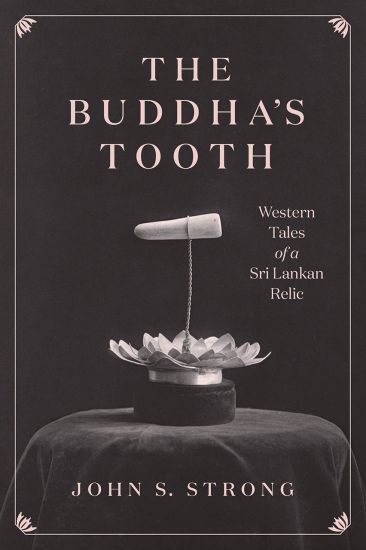
John S. Strong unravels the storm of influences shaping the received narratives of two iconic sacred objects. Bodily relics such as hairs, teeth, fingernails, pieces of bone—supposedly from the Buddha himself—have long served as objects of veneration for many Buddhists. Unsurprisingly, when Western colonial powers subjugated populations in South Asia, they used, manipulated, redefined, and even destroyed these objects to exert control. In The Buddha’s Tooth, John S. Strong examines Western stories, from the sixteenth to the twentieth century, surrounding two significant Sri Lankan sacred objects to illuminate and concretize colonial attitudes toward Asian religions. First, he analyzes a tale about the Portuguese capture and public destruction, in the mid-sixteenth century, of a tooth later identified as a relic of the Buddha. Second, he switches gears to look at the nineteenth-century saga of British dealings with another tooth relic of the Buddha—the famous Da?ada enshrined in a temple in Kandy—from 1815, when it was taken over by English forces, to 1954, when it was visited by Queen Elizabeth II. As Strong reveals, the stories of both the Portuguese tooth and the Kandyan tooth reflect nascent and developing Western understandings of Buddhism, realizations of the cosmopolitan nature of the tooth, and tensions between secular and religious interests.
The Buddha's Tooth

The Buddha's Tooth

John S. Strong

University of Chicago Press
2021
nidottu
John S. Strong unravels the storm of influences shaping the received narratives of two iconic sacred objects. Bodily relics such as hairs, teeth, fingernails, pieces of bone—supposedly from the Buddha himself—have long served as objects of veneration for many Buddhists. Unsurprisingly, when Western colonial powers subjugated populations in South Asia, they used, manipulated, redefined, and even destroyed these objects to exert control. In The Buddha’s Tooth, John S. Strong examines Western stories, from the sixteenth to the twentieth century, surrounding two significant Sri Lankan sacred objects to illuminate and concretize colonial attitudes toward Asian religions. First, he analyzes a tale about the Portuguese capture and public destruction, in the mid-sixteenth century, of a tooth later identified as a relic of the Buddha. Second, he switches gears to look at the nineteenth-century saga of British dealings with another tooth relic of the Buddha—the famous Da?ada enshrined in a temple in Kandy—from 1815, when it was taken over by English forces, to 1954, when it was visited by Queen Elizabeth II. As Strong reveals, the stories of both the Portuguese tooth and the Kandyan tooth reflect nascent and developing Western understandings of Buddhism, realizations of the cosmopolitan nature of the tooth, and tensions between secular and religious interests.
The Legend and Cult of Upagupta

The Legend and Cult of Upagupta

John S. Strong

Princeton University Press
2017
pokkari
The Buddhist monk Upagupta, who preached and taught meditative practices in Northwest India over two thousand years ago, is venerated today by the laity in parts of Burma, Thailand, and Laos as a protective figure endowed with magical powers. In this monumental work John Strong offers a systematic presentation of the Indian and Southeast Asian legends and rituals surrounding this popular saint. Once considered by Buddhist authorities as only marginally important, Upagupta emerges here as a central, ubiquitous figure within the Buddhist world. The author demonstrates the remarkable continuity among traditions focused on Upagupta in ancient Sarvastivadin Sanskrit materials, key Pali texts, medieval Thai and Burmese texts, and contemporary oral traditions and religious rituals in Southeast Asia. In so doing he reflects the orientation of popular Sanskrit Hinayana Buddhism, which allows for new perspectives on such classic questions as the nature of enlightenment, the role of asceticism, the problem of evil, the worship of the Buddha image, the veneration of saints, master-disciple relationships, the treatment of heterodoxy, and the relation of myth and ritual. Originally published in 1992. The Princeton Legacy Library uses the latest print-on-demand technology to again make available previously out-of-print books from the distinguished backlist of Princeton University Press. These editions preserve the original texts of these important books while presenting them in durable paperback and hardcover editions. The goal of the Princeton Legacy Library is to vastly increase access to the rich scholarly heritage found in the thousands of books published by Princeton University Press since its founding in 1905.
The Legend and Cult of Upagupta

The Legend and Cult of Upagupta

John S. Strong

Princeton University Press
2017
sidottu
The Buddhist monk Upagupta, who preached and taught meditative practices in Northwest India over two thousand years ago, is venerated today by the laity in parts of Burma, Thailand, and Laos as a protective figure endowed with magical powers. In this monumental work John Strong offers a systematic presentation of the Indian and Southeast Asian legends and rituals surrounding this popular saint. Once considered by Buddhist authorities as only marginally important, Upagupta emerges here as a central, ubiquitous figure within the Buddhist world. The author demonstrates the remarkable continuity among traditions focused on Upagupta in ancient Sarvastivadin Sanskrit materials, key Pali texts, medieval Thai and Burmese texts, and contemporary oral traditions and religious rituals in Southeast Asia. In so doing he reflects the orientation of popular Sanskrit Hinayana Buddhism, which allows for new perspectives on such classic questions as the nature of enlightenment, the role of asceticism, the problem of evil, the worship of the Buddha image, the veneration of saints, master-disciple relationships, the treatment of heterodoxy, and the relation of myth and ritual. Originally published in 1992. The Princeton Legacy Library uses the latest print-on-demand technology to again make available previously out-of-print books from the distinguished backlist of Princeton University Press. These editions preserve the original texts of these important books while presenting them in durable paperback and hardcover editions. The goal of the Princeton Legacy Library is to vastly increase access to the rich scholarly heritage found in the thousands of books published by Princeton University Press since its founding in 1905.
Managing the Skies

Managing the Skies

Clinton V. Oster; John S. Strong

Routledge
2016
nidottu
Over the past two decades, the organization and provision of air traffic control (ATC) services has been dramatically transformed. Privatization and commercialization of air navigation has become commonplace. Far-reaching reforms, under a variety of organizational structures and aviation settings, have occurred across the world, most notably in Canada, Britain, Australia, New Zealand, and South Africa. In contrast, innovations have lagged behind in other countries - including the United States. In addition, much recent attention has been given to aviation infrastructure and safety in Africa, in some parts of Asia and Latin America, and in rapidly growing air markets including India and China. In response, the International Civil Aviation Organization (ICAO), the International Air Transport Association (IATA), and multilateral banks and institutions have launched a major effort to improve the performance and safety of civil aviation in developing economies. Managing the Skies has been written to provide a guide to what has been tried in air traffic management, what has worked, and what lessons might be learned. The book starts with an introduction to air navigation, its development and current state, as well as trends in aviation activity. It examines in detail the experiences of ATC in both mature and emerging markets across the world, considering many alternative models, efforts to restructure and comparisons of performance. The book contains several in-depth case studies to provide a truly global perspective of ATC practices. Particular attention is given to the FAA and its efforts and challenges in reforming ATC in the US, both historically and in the current climate. It addresses the issues of finance, organization, investment, and safety restructuring and reform options that are at the core of current debates involving air traffic control in the United States. Further to this, the authors discuss the alternatives available for future change. The book concludes by examining the cross-cutting issues of labor relations and organizational structures, presenting the lessons learned and considering what the future may hold. As the world experiences a resurgence in air travel and civil aviation, the issues discussed in Managing the Skies are particularly timely not only for industry and government leaders, but for the world's air travelers.
The Legend of King Asoka

The Legend of King Asoka

John S. Strong

Princeton University Press
2016
sidottu
An English translation of the Asokavadana text, the Sanskrit version of the legend of King Asoka, first written in the second century A.D. Emperor of India during the third century B.C. and one of the most important rulers in the history of Buddhism, Asoka has hitherto been studied in the West primarily from his edicts and rock inscriptions in many parts of the Indian subcontinent. Through an extensive critical essay and a fluid translation, John Strong examines the importance of the Asoka of the legends for our overall understanding of Buddhism. Originally published in 1984. The Princeton Legacy Library uses the latest print-on-demand technology to again make available previously out-of-print books from the distinguished backlist of Princeton University Press. These editions preserve the original texts of these important books while presenting them in durable paperback and hardcover editions. The goal of the Princeton Legacy Library is to vastly increase access to the rich scholarly heritage found in the thousands of books published by Princeton University Press since its founding in 1905.
Buddhisms

Buddhisms

John S. Strong

Oneworld Publications
2015
nidottu
Buddhism or Buddhisms? By the time they move on to Buddhism in Japan, many students who have studied its origins in India ask whether this is in fact the same religion, so different can they appear. In Buddhisms: An Introduction, Professor John S. Strong provides an overview of the Buddhist tradition in all its different forms around the world. Beginning at the modern day temples of Lumbini, where the Buddha was born, Strong takes us through the life of the Buddha and a study of Buddhist Doctrine, revealing how Buddhism has changed just as it has stayed the same. Finally, Strong examines the nature of Buddhist community life and its development today in the very different environments of Thailand, Japan, and Tibet. Enriched by the author’s own insights gathered over forty years, Buddhisms never loses sight of the personal experience amidst the wide-scope of its subject. Clear in its explanations, replete with tables and suggestions for further reading, this is an essential new work that makes original contributions to the study of this 2,500 year-old religion.
The Legend of King Asoka

The Legend of King Asoka

John S. Strong

Princeton University Press
2014
pokkari
An English translation of the Asokavadana text, the Sanskrit version of the legend of King Asoka, first written in the second century A.D. Emperor of India during the third century B.C. and one of the most important rulers in the history of Buddhism, Asoka has hitherto been studied in the West primarily from his edicts and rock inscriptions in many parts of the Indian subcontinent. Through an extensive critical essay and a fluid translation, John Strong examines the importance of the Asoka of the legends for our overall understanding of Buddhism. Originally published in 1984. The Princeton Legacy Library uses the latest print-on-demand technology to again make available previously out-of-print books from the distinguished backlist of Princeton University Press. These editions preserve the original texts of these important books while presenting them in durable paperback and hardcover editions. The goal of the Princeton Legacy Library is to vastly increase access to the rich scholarly heritage found in the thousands of books published by Princeton University Press since its founding in 1905.
Managing the Skies

Managing the Skies

Clinton V. Oster; John S. Strong

Ashgate Publishing Limited
2007
sidottu
Over the past two decades, the organization and provision of air traffic control (ATC) services has been dramatically transformed. Privatization and commercialization of air navigation has become commonplace. Far-reaching reforms, under a variety of organizational structures and aviation settings, have occurred across the world, most notably in Canada, Britain, Australia, New Zealand, and South Africa. In contrast, innovations have lagged behind in other countries - including the United States. In addition, much recent attention has been given to aviation infrastructure and safety in Africa, in some parts of Asia and Latin America, and in rapidly growing air markets including India and China. In response, the International Civil Aviation Organization (ICAO), the International Air Transport Association (IATA), and multilateral banks and institutions have launched a major effort to improve the performance and safety of civil aviation in developing economies. Managing the Skies has been written to provide a guide to what has been tried in air traffic management, what has worked, and what lessons might be learned. The book starts with an introduction to air navigation, its development and current state, as well as trends in aviation activity. It examines in detail the experiences of ATC in both mature and emerging markets across the world, considering many alternative models, efforts to restructure and comparisons of performance. The book contains several in-depth case studies to provide a truly global perspective of ATC practices. Particular attention is given to the FAA and its efforts and challenges in reforming ATC in the US, both historically and in the current climate. It addresses the issues of finance, organization, investment, and safety restructuring and reform options that are at the core of current debates involving air traffic control in the United States. Further to this, the authors discuss the alternatives available for future change. The book concludes by examining the cross-cutting issues of labor relations and organizational structures, presenting the lessons learned and considering what the future may hold. As the world experiences a resurgence in air travel and civil aviation, the issues discussed in Managing the Skies are particularly timely not only for industry and government leaders, but for the world's air travelers.
Relics of the Buddha

Relics of the Buddha

John S. Strong

Princeton University Press
2004
sidottu
Buddhism is popularly seen as a religion stressing the truth of impermanence. How, then, to account for the long-standing veneration, in Asian Buddhist communities, of bone fragments, hair, teeth, and other bodily bits said to come from the historic Buddha? Early European and American scholars of religion, influenced by a characteristic Protestant bias against relic worship, declared such practices to be superstitious and fraudulent, and far from the true essence of Buddhism. John Strong's book, by contrast, argues that relic veneration has played a serious and integral role in Buddhist traditions in South and Southeast Asia-and that it is in no way foreign to Buddhism. The book is structured around the life story of the Buddha, starting with traditions about relics of previous buddhas and relics from the past lives of the Buddha Sakyamuni. It then considers the death of the Buddha, the collection of his bodily relics after his cremation, and stories of their spread to different parts of Asia. The book ends with a consideration of the legend of the future parinirvana (extinction) of the relics prior to the advent of the next Buddha, Maitreya. Throughout, the author does not hesitate to explore the many versions of these legends and to relate them to their ritual, doctrinal, artistic, and social contexts.
Why Airplanes Crash

Why Airplanes Crash

Clinton V. Oster; John S. Strong; C. Kurt Zorn

Oxford University Press Inc
1992
sidottu
The authors discuss what private and public policies can do to increase airline safety in an age of the deregulation of commercial airlines. The book compares the US experience with aviation in other countries, especially Canada. Then it examines the three safety issues: the safety margin that allows for human error and equipment failure; the worldwide ageing of all airline fleets; and terrorism and sabotage.