Kirjojen hintavertailu. Mukana 12 595 353 kirjaa ja 12 kauppaa.

Kirjailija

John Sadler

Kirjat ja teokset yhdessä paikassa: 54 kirjaa, julkaisuja vuosilta 2002-2026, suosituimpien joukossa Knights. Vertaile teosten hintoja ja tarkista saatavuus suomalaisista kirjakaupoista.

54 kirjaa

Kirjojen julkaisuhaarukka 2002-2026.

Wiltshire Parish Registers Marriages (Volume Xiii)
This book has been considered by academicians and scholars of great significance and value to literature. This forms a part of the knowledge base for future generations. So that the book is never forgotten we have represented this book in a print format as the same form as it was originally first published. Hence any marks or annotations seen are left intentionally to preserve its true nature.
Wiltshire Parish Registers; Marriages (Volume Vi)
This book has been considered by academicians and scholars of great significance and value to literature. This forms a part of the knowledge base for future generations. So that the book is never forgotten we have represented this book in a print format as the same form as it was originally first published. Hence any marks or annotations seen are left intentionally to preserve its true nature.
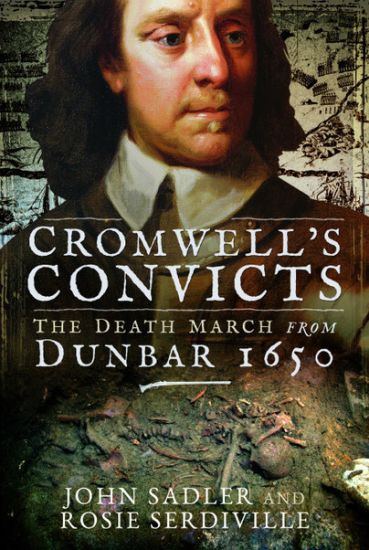
Cromwell's Convicts

Cromwell's Convicts

John Sadler; Rosie Serdiville

Pen Sword Military
2020
sidottu
On 3 September 1650 Oliver Cromwell won a decisive victory over the Scottish Covenanters at the Battle of Dunbar - a victory that is often regarded as his finest hour - but the aftermath, the forced march of 5,000 prisoners from the battlefield to Durham, was one of the cruellest episodes in his career. The march took them seven days, without food and with little water, no medical care, the property of a ruthless regime determined to eradicate any possibility of further threat. Those who survived long enough to reach Durham found no refuge, only pestilence and despair. Exhausted, starving and dreadfully weakened, perhaps as many as 1,700 died from typhus and dysentery. Those who survived were condemned to hard labour and enforced exile in conditions of virtual slavery in a harsh new world across the Atlantic. Cromwell's Convicts describes their ordeal in detail and, by using archaeological evidence, brings the story right up to date. John Sadler and Rosie Serdiville describe the battle at Dunbar, but their main focus is on the lethal week-long march of the captives that followed. They make extensive use of archive material, retrace the route taken by the prisoners and describe the recent archaeological excavations in Durham which have identified some of the victims and given us a graphic reminder of their fate.
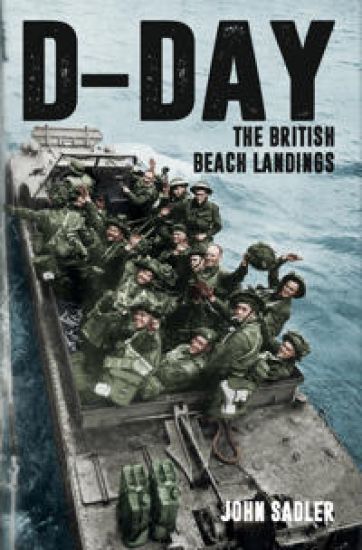
D-Day

D-Day

John Sadler

Amberley Publishing
2019
sidottu
D-Day, the Allied invasion of Europe, began on the night of 5-6 June 1944. At 07.00 hours on the 6th, Britain's First Corps and XXX Corps came ashore on Sword and Gold beaches, to withering fire from the entrenched German forces. Within the initial and critical couple of hours some 30,000 soldiers, 300 guns and 700 armoured vehicles were landed, a magnificent achievement and, though the sands were soon choked with the mother of all logjams, exacerbated by a swelling tide, the British were firmly lodged; a bridgehead had been secured, albeit a rather flimsy one at this juncture. This is the story of the British soldiers’ experience of the beach landings on that fateful morning - the spearhead of Operation Overlord.
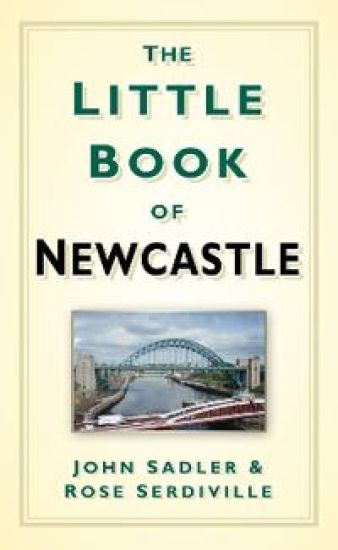
The Little Book of Newcastle

The Little Book of Newcastle

John Sadler; Rosie Serdiville

The History Press Ltd
2019
nidottu
The Little Book of Newcastle is a funny, fast-paced, fact-packed compendium of the sort of frivolous, fantastic or simply strange information which no-one will want to be without. Here we find out about the most unusual crimes and punishments, eccentric inhabitants, famous sons and daughters and literally hundreds of wacky facts (plus some authentically bizarre bits of historic trivia). John Sadler’s new book gathers together a myriad of data on Newcastle. There are lots of factual chapters but also plenty of frivolous details which will amuse and surprise. A reference book and a quirky guide, this can be dipped in to time and time again to reveal something new about the people, the heritage, the secrets and the enduring fascination of the city. A remarkably engaging little book, this is essential reading for visitors and locals alike.
Alexander the Great

Alexander the Great

John Sadler; Rosie Serdiville

Casemate Publishers
2019
nidottu
Alexander was perhaps the greatest conquering general in history. In just over a generation, his northern Greek state of Macedon rose to control the whole of the vast Persian Empire. It was the legacy of his father, Philip, that launched Alexander on a spectacular career of conquest that planted Hellenic culture across most of Asia. In a dozen years Alexander took the whole of Asia Minor and Egypt, destroyed the once mighty Persian Empire, and pushed his army eastwards as far as the Indus. No-one in history has equalled his achievement. Julius Caesar, contemplating his hero’s statue, is said to have wept because by contrast he had accomplished so little.Much of Alexander’s success can be traced to the Macedonian phalanx, a close-ordered battle formation of sarissa-wielding infantry that proved itself a war-winning weapon. The army Alexander inherited from his father was the most powerful in Greece, highly disciplined, trained and loyal only to the king. United in a single purpose, they fought as one. Alexander recognized this and is quoted as saying, “Remember upon the conduct of each depends the fate of all.” Cavalry was also of crucial importance in the Macedonian army, as the driving force to attack the flanks of the enemy in battle. A talented commander, able to anticipate how his opponent would think, Alexander understood how to commit his forces to devastating effect, and was never defeated in battle. He also developed a corps of engineers that utilised catapults and siege towers against enemy fortifications. Alexander led from the front, fighting with his men, eating with them, refusing water when there was not enough, and his men would quite literally follow him to the ends of the (known) world, and none of his successors was able to hold together the empire he had forged. Although he died an early death his fame and glory persist to this day.This concise history gives an overview of Alexander’s life from a military standpoint, from his early military exploits to the creation of his empire and the legacy left after his premature death.
Knights

Knights

Rosie Serdiville; John Sadler

Rosen Young Adult
2018
sidottu
The notion of a chivalrous knight has been the subject of much romanticizing and myth-making. That said, warriors on horseback were key players in the warfare and political fabric of Europe in the Middle Ages. This informative volume highlights key events in the world on the knight, such as the Battle of Agincourt and the Fourth Crusade. A timeline clarifies how and when figures and events fit into the historical record, sidebars supply interesting facts or define key terms, and profiles introduce interesting figures, such as Gwenllian ferch Gruffydd, Sir Henry Percy, and Joan of Arc. Maps, illustrated manuscript details, sculpture, and more illustrate this lively tome.
Flying Aces

Flying Aces

John Sadler; Rosie Serdiville

Rosen Young Adult
2018
sidottu
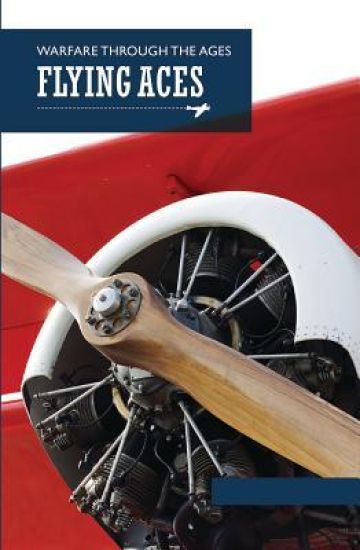
The ace in the air was once a celebrity figure, a glamorous warrior of the skies. But this was daunting and dangerous work in the midst of brutal and bloody wars. An action-packed narrative keeps the reader riveted to the tales of real-life awesome aces, and cuts through the glitz to get to the nitty-gritty of these fights and flights. Readers will learn about the top aces from around the world, all kinds of planes, the wars in which they flew, and victories, emphasizing record holders. Topical quotes, songs, and poems will engage readers as well.
The Red Rose and the White

The Red Rose and the White

John Sadler

Routledge
2018
nidottu
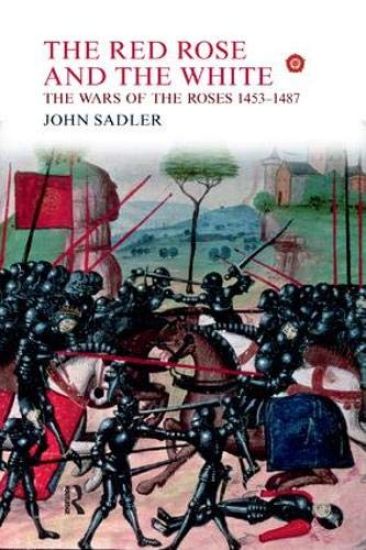
If Richard III had not charged to his death at Bosworth, how different might the history of Britain have been?Beginning in 1453 and ending in 1487, The Red Rose and the White provides a gripping overview of the bitter dynastic struggle for supremacy that raged between the houses of York and Lancaster for thirty years, culminating in the dramatic events on Bosworth Field in 1485.As well as offering a comprehensive account of the campaigns, battles and sieges of the conflict, the book also assesses the commanders and men involved and considers the weapons and tactics employed. Photographs, maps and portraits of the principal characters help to bring the period to life, whilst the fast-paced narrative conveys a sense of what it was actually like to fight in battles such as Towton or Tewkesbury the effect of the arrow storm and the grim realities of hand-to-hand combat with edged and bladed weapons. Skilfully weaving in political and social events to place the conflict in its context, The Red Rose and the White is a fascinating exploration of the turbulent period that would change the course of British history forever.
Castles

Castles

John Sadler; Rosie Serdiville

Casemate Publishers
2018
nidottu
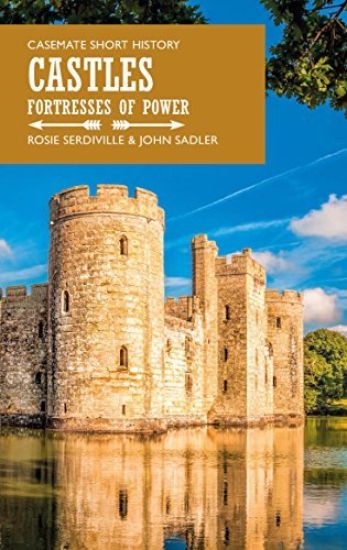
Fortified structures have been in existence for thousands of years. In ancient and medieval times castles were the ultimate symbol of power, dominating their surroundings, and marking the landscape with their imposing size and impregnable designs. After the Norman conquest of England, castles exploded in popularity amongst the nobility, with William the Conqueror building an impressive thirty-six castles between 1066-1087, including Windsor Castle is one example of such a castle which survives today, a monument of the remarkable architecture designed and developed in medieval England.This concise and entertaining short history explores the life of the castle, one that often involved warfare and sieges. The castle was a first and foremost a fortress, the focus of numerous clashes which took place in the twelfth and thirteenth centuries. Castles became targets of sieges, such as that organised by Prince Louis of France against Dover castle in 1216, and were forced to adopt greater defensive measures.Also explored is how they evolved from motte-and-bailey to stone keep castles, in the face of newly-developed siege machines and trebuchets. The trebuchet named Warwolf, which Edward I had assembled for his siege of Scotland’s Stirling Castle, reportedly took three months to construct and was almost four hundred feet tall on completion. With features such as ‘murder-holes’ for throwing boiling oil at the attackers, the defenders in the castle fought back in earnest. Alongside such violence, the castle functioned as a residence for the nobles and their servants, often totalling several hundred in number. It was the location for extravagant banquets held in the great hall by the lord and lady, and the place where the lord carried out his administrative duties such as overseeing laws and collecting taxes.
Sailing Through the Storms of Seizures
Jon has lived with epilepsy for over fifty years. There were times when he was broken and defeated by seizures; then discovered the power of hope. Jon believes he can provide that hope to others dealing with seizure disorders by sharing his experience. In Sailing through the Storms of Seizures, he provides the perspective of the child, student, father, and caregiver. Jon had his first seizure at the age of four and was treated with medication for several years. His seizures returned while in college. At the age of forty-six, his seizures became intractable, and brain surgery his only option to regain control. There were many people who helped him with his recovery: his family, church, counselor, and those he met who faced similar situations. Soon after his surgery, Jon met a man who was distraught over his four-year-old son, who suffered from intractable seizures. As Jon shared his experience he witnessed hope being instilled in the man and his family. He is now a mentor and a counselor, focusing on helping people live with epilepsy. His greatest joy comes from his two sons, who have been there when needed, and accomplished much in their lives and careers.
Sailing Through the Storms of Seizures
Jon has lived with epilepsy for over fifty years. There were times when he was broken and defeated by seizures; then discovered the power of hope. Jon believes he can provide that hope to others dealing with seizure disorders by sharing his experience. In Sailing through the Storms of Seizures, he provides the perspective of the child, student, father, and caregiver. Jon had his first seizure at the age of four and was treated with medication for several years. His seizures returned while in college. At the age of forty-six, his seizures became intractable, and brain surgery his only option to regain control. There were many people who helped him with his recovery: his family, church, counselor, and those he met who faced similar situations. Soon after his surgery, Jon met a man who was distraught over his four-year-old son, who suffered from intractable seizures. As Jon shared his experience he witnessed hope being instilled in the man and his family. He is now a mentor and a counselor, focusing on helping people live with epilepsy. His greatest joy comes from his two sons, who have been there when needed, and accomplished much in their lives and careers.
Knights

Knights

John Sadler; Rosie Serdiville

Casemate Publishers
2017
nidottu
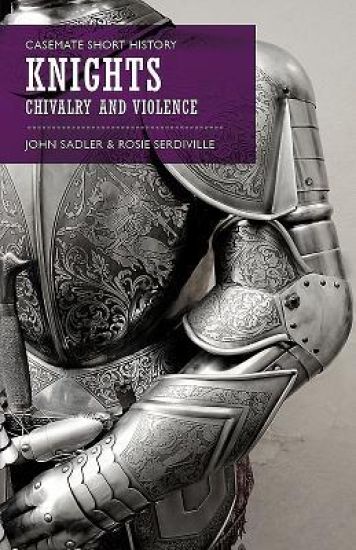
Originally warriors mounted on horseback, knights became associated with the concept of chivalry as it was popularised in medieval European literature. Knights were expected to fight bravely and honourably and be loyal to their lord until death if necessary. Later chivalry came to encompass activities such as tournaments and hunting, and virtues including justice, charity and faith. The Crusades were instrumental in the development of the code of chivalry, and some crusading orders of knighthood, such as the Knights Templar, have become legend.Boys would begin their knightly training at the age of seven, learning to hunt and studying academic studies before becoming assistants to older knights, training in combat and learning how to care for a knight’s essentials: arms, armour, and horses. After fourteen years of training, and when considered master of all the skills of knighthood, a squire was eligible to be knighted.In peacetime knights would take part in tournaments. Tournaments were a major spectator sport, but also an important way for knights to practice their skills – knights were often injured and sometimes killed in melees.Knights figured large in medieval warfare and literature. In the 15th century knights became obsolete due to advances in warfare, but the title of ‘knight’ has survived as an honorary title granted for services to a monarch or country, and knights remain a strong concept in popular culture.This short history will cover the rise and decline of the medieval knights, including the extensive training, specific arms and armour, tournaments and the important concept of chivalry.
Caesar’S Greatest Victory

Caesar’S Greatest Victory

John Sadler; Rosie Serdiville

Casemate Publishers
2016
sidottu
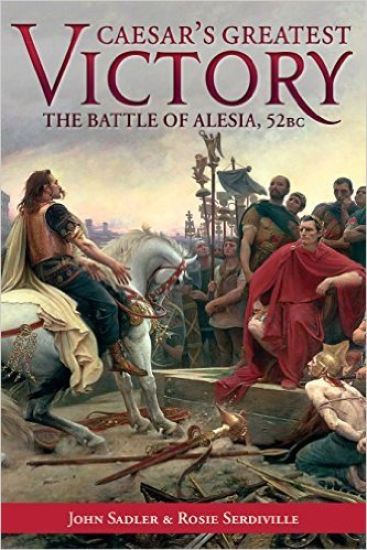
The Battle for Alesia was a decisive moment in world history. It determined whether Rome would finally conquer Gaul or whether Celtic chieftain Vercingetorix would throw off the yoke and consequently whether a number of independent Celtic tribal kingdoms could resist the might of Rome. Failure would have been a total defeat for Julius Caesar, not just in Gaul but in the Senate. His career would have been over, his enemies would have pulled him down, civil war would have ensued, no dictatorship, no liaison with Cleopatra. Rome would not have become an empire beyond the Mediterranean. European, and therefore world history might have been a very different story. Caesar’s campaign of 52 BC frequently hung in the balance. Vercingetorix was a far more formidable opponent than any encountered in Gaul; bold charismatic and imbued with strategic insight of the highest order. The Romans were caught totally off-guard and it seemed all too likely their grip on Gaul, which Caesar had imagined secure, would be prised free. The Siege of Alesia itself was one of the most astonishing military undertakings of all times. Caesar’s interior siege lines stretched for 18 kilometres and were surrounded by an outward facing line three kilometres longer, complete with palisades, towers, ditches, minefields and outposts. This work was completed in less than three weeks. Vercingetorix’s refuge proved a trap and, despite an energetic defence and the arrival of a huge relief army, there was to be no escape. Caesar’s Greatest Victory fully reveals both sides of the conflict, to explore in depth the personalities involved and to examine the legacy of the campaign which still resonates today. The arms, equipment, tactics and fighting styles of Roman and Celtic armies are explained, as well as the charisma and leadership of Caesar and Vercingetorix and the command and control structures of both sides. Using new evidence from archaeology, the authors construct a fresh account of not just the siege itself but also the Alesia campaign and place it into the wider context of the history of warfare. This is Roman history at its most exciting, featuring events still talked about today.
Scottish Battles

Scottish Battles

John Sadler

Birlinn Ltd
2016
nidottu
Scottish history has been shaped and defined by a series of great battles. John Sadler gives the first full military history of Scotland for many years. From Mons Graupius to Culloden, he shows how terrain and politics shaped the campaigns and decisive engagements we still remember today. Each chapter also features sections on the development of warfare - its tactics, equipment and styles of fighting. For the military historian, Scotland is a fascinating example of how a small country can fight off domination by a far larger neighbour. From Celtic warfare to the feudal host to the professional armies of the eighteenth century, from guerrilla warfare to the pitched battle, from siege to Border Reiver, Scotland is unique in having had almost every major type of warfare taking place within its frontiers. Battles such as Bannockburn, Flodden, and Culloden, have a resonance and impact far beyond Scotland. John Sadler weaves chronicle, narrative and analysis together in a masterly way, recreating the drama and passion of centuries past.
Border Fury

Border Fury

John Sadler

Routledge
2016
sidottu
Border Fury provides a fascinating account of the period of Anglo-Scottish Border conflict from the Edwardian invasions of 1296 until the Union of the Crowns under James VI of Scotland, James I of England in 1603.It looks at developments in the art of war during the period, the key transition from medieval to renaissance warfare, the development of tactics, arms, armour and military logistics during the period. All the key personalities involved are profiled and the typology of each battle site is examined in detail with the author providing several new interpretations that differ radically from those that have previously been understood.
Blood Divide

Blood Divide

John Sadler

Lion Fiction
2014
nidottu
Flodden , September 1513. Across a boggy valley, two armies confront each other. The Scots, backed by European allies, have superior numbers and the latest cannon to challenge a depleted English force. The English are furious and humiliated that they are not fighting alongside King Henry against their real enemy in France. The Battle of Flodden would prove one of the bloodiest ever fought on British soil, shaping Scottish national identity to this day. Sir Thomas Howard, shrewd but ancient, leads the English forces. Alexander, 3rd Lord Hume, bold but impetuous, leads the Scots. Isabella Hoppringle, Abbess of Coldstream, young and determined, struggles to keep her footing among the tides of violence. John Heron, Bastard of Ford, swaggering, violent, and disreputable, the black sheep of a good English family, finds profit while men die. Blood Divide sets us right at the heart of the action; the stink, sweat and fear, the curtain of red mist.
As Good as Any Man

As Good as Any Man

Morag Miller; Roy Laycock; John Sadler; Rosie Serdiville

The History Press Ltd
2014
nidottu
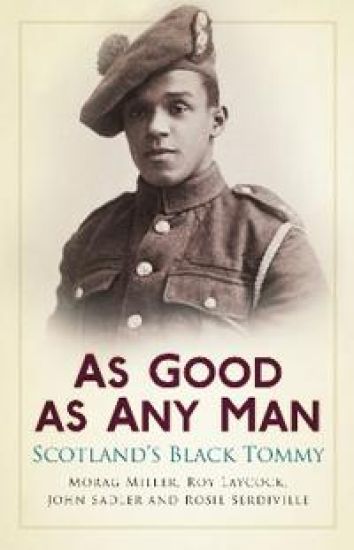
When the harrowing Great War diaries of one of Britain’s first black soldiers were unearthed in a dusty Scottish attic nearly 100 years after they were written, they posed a bit of a mystery. The diary entries – ranging from May 1917 to March 1918 – were written by one Arthur Roberts while he served initially with the King’s Own Scottish Borderers before being transferred to Royal Scots Fusiliers in 1917. He details what life was like for him during the First World War, how he survived the Battle of Passchendaele, and how he escaped unscathed when a German shell killed a dozen men round him. Yet Arthur was an otherwise unknown man – what was the rest of his life like? Now, Morag Miller and Roy Laycock have painstakingly researched Roberts’ life history, filling in the gaps. From his birth in Bristol, to his life in Glasgow and time at the front, they provide here much more than just a war memoir. This is a unique history of one man’s remarkable life. Beautifully illustrated with Roberts’ own accomplished photographs and artwork, As Good As Any Man is the remarkable biography of one of Britain’s black Tommies.
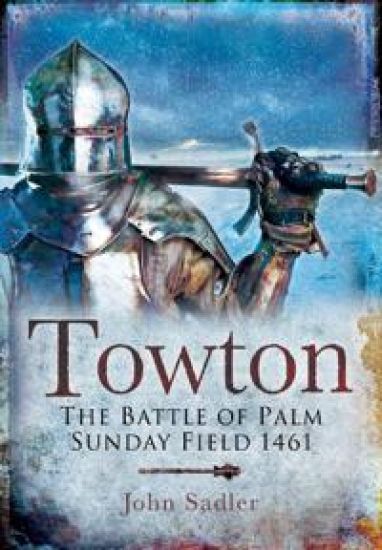
Towton: The Battle of Palm Sunday Field

Towton: The Battle of Palm Sunday Field

John Sadler

Pen Sword Military
2014
nidottu
'An astonishingly complete account of this most significant battle in the Wars of the Roses. Impeccable research, clear, concise and fascinating maps, and a narrative that persuades you you're an onlooker at the very time these astounding events took place, this is as complete a history of an English medieval battle as I have ever read. Staggering.' Books Monthly 'Towton is a masterful account of a subject which had been much written about over the years - John Sadler sets his book apart from the rest by bringing his own background research and imagination into play...[He brings] a battle which took place over 500 years ago vividly back to life.' Suite101.com 'Mr Sadler has achieved what he set out to do and has produced a readable and understandable account of the battle of Towton and the events leading up to it, especially for those less familiar with the subject. However, the more knowledgeable can find plenty of positive new aspects as well, in particular the chapters covering the period 1400-1460 and the subsequent war in the North between 1461 to 1464.' Medieval Warfare