Kirjojen hintavertailu. Mukana 12 595 353 kirjaa ja 12 kauppaa.

Kirjailija

John Schofield

Kirjat ja teokset yhdessä paikassa: 29 kirjaa, julkaisuja vuosilta 2003-2024, suosituimpien joukossa St Paul's Cathedral. Vertaile teosten hintoja ja tarkista saatavuus suomalaisista kirjakaupoista.

29 kirjaa

Kirjojen julkaisuhaarukka 2003-2024.

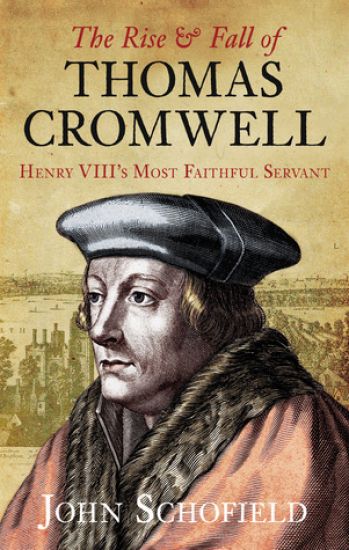
The Rise and Fall of Thomas Cromwell

The Rise and Fall of Thomas Cromwell

John Schofield

The History Press Ltd
2011
nidottu
Thomas Cromwell was a man of humble origins and outstanding intellect who rose up to become Henry VIII’s chief minister and right-hand man during the English Reformation. He wielded enormous power while he retained the king’s favour, but the failure of Henry’s marriage to Anne of Cleves, which Cromwell had arranged, led to his swift downfall and execution. In this biography, John Schofield reveals that the popular image of Cromwell as a blood-stained henchman is largely fictional. Detailed research into contemporary sources illuminates his brilliant mind and his love for and patronage of the arts and humanities, while short case studies shed new light on his relations with, and his reputation among, Henry VIII’s subjects. In his conclusion, Schofield narrates the drama of Cromwell’s downfall and highlights the king’s posthumous exoneration of the ‘most faithful servant he ever had’.
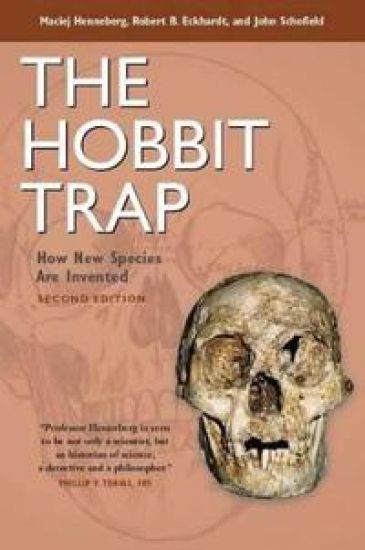
The Hobbit Trap

The Hobbit Trap

Maciej Henneberg; Robert B Eckhardt; John Schofield

Left Coast Press Inc
2010
sidottu
When scientists found the remains of a tiny hominid on an Indonesian in 2004, they claimed they found a totally new species of human ancestor (homo floresiensis), and called it a Hobbit. Film crews rolled in and the little creature took the world by storm, but a group of prominent scientists, including Maciej Henneberg and Robert Eckhardt, smelled a rat. They refuted the data—the size and shape of bones, the inferences about height—and they raised fundamental questions about scientific method, revealing cultural and political pressures that lead to the wide acceptance of unsupported theories. The Hobbit Trap describes how the case against the “new species” theory developed and offers an important critique of the species concept in evolution. In this thoroughly updated second edition, the authors include new data and analysis of the Flores fossils, and expand their important analysis of scientific practice, calling for a new movement to reverse the decline in scientific standards and the rise in scientific politics. This lively and important challenge to conventional wisdom is accessible to the general reader and makes a stimulating addition to courses on the history and philosophy of science, evolution and physical anthropology.
The Hobbit Trap

The Hobbit Trap

Maciej Henneberg; Robert B Eckhardt; John Schofield

Left Coast Press Inc
2010
nidottu
When scientists found the remains of a tiny hominid on an Indonesian in 2004, they claimed they found a totally new species of human ancestor (homo floresiensis), and called it a Hobbit. Film crews rolled in and the little creature took the world by storm, but a group of prominent scientists, including Maciej Henneberg and Robert Eckhardt, smelled a rat. They refuted the data—the size and shape of bones, the inferences about height—and they raised fundamental questions about scientific method, revealing cultural and political pressures that lead to the wide acceptance of unsupported theories. The Hobbit Trap describes how the case against the “new species” theory developed and offers an important critique of the species concept in evolution. In this thoroughly updated second edition, the authors include new data and analysis of the Flores fossils, and expand their important analysis of scientific practice, calling for a new movement to reverse the decline in scientific standards and the rise in scientific politics. This lively and important challenge to conventional wisdom is accessible to the general reader and makes a stimulating addition to courses on the history and philosophy of science, evolution and physical anthropology.
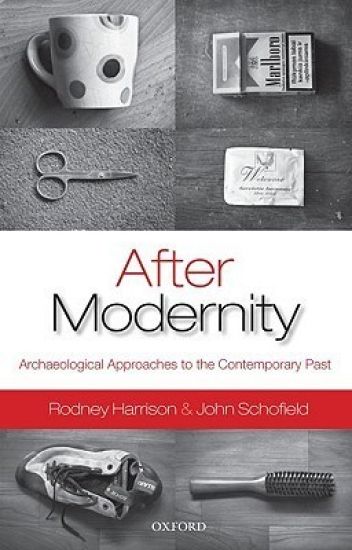
After Modernity

After Modernity

Rodney Harrison; John Schofield

Oxford University Press
2010
sidottu
This book summarizes archaeological approaches to the contemporary past, and suggests a new agenda for the archaeology of late modern societies. The principal focus is the archaeology of developed, de-industrialized societies during the second half of the twentieth century and the beginning of the twenty-first. This period encompasses the end of the Cold War and the beginning of the 'internet age', a period which sits firmly within what we would recognize to be a period of 'lived and living memory'. Rodney Harrison and John Schofield explore how archaeology can inform the study of this time period and the study of our own society through detailed case studies and an in-depth summary of the existing literature. Their book draws together cross-disciplinary perspectives on contemporary material culture studies, and develops a new agenda for the study of the materiality of late modern societies.
After Modernity

After Modernity

Rodney Harrison; John Schofield

Oxford University Press
2010
nidottu
This book summarizes archaeological approaches to the contemporary past, and suggests a new agenda for the archaeology of late modern societies. The principal focus is the archaeology of developed, de-industrialized societies during the second half of the twentieth century and the beginning of the twenty-first. This period encompasses the end of the Cold War and the beginning of the 'internet age', a period which sits firmly within what we would recognize to be a period of 'lived and living memory'. Rodney Harrison and John Schofield explore how archaeology can inform the study of this time period and the study of our own society through detailed case studies and an in-depth summary of the existing literature. Their book draws together cross-disciplinary perspectives on contemporary material culture studies, and develops a new agenda for the study of the materiality of late modern societies.
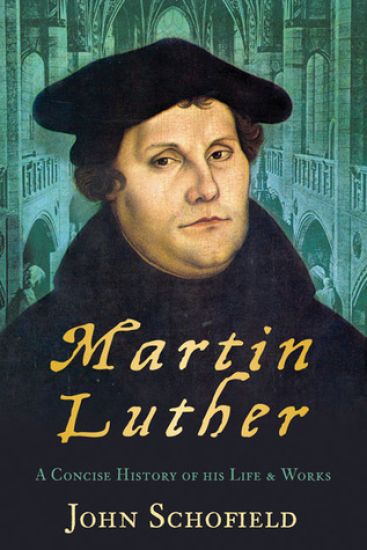
Martin Luther

Martin Luther

John Schofield

The History Press Ltd
2010
nidottu
Martin Luther was so angered by the sale of indulgences (pardons for sins granted by the Pope) that, in 1517, he nailed ninety-five arguments for reform of the Roman Catholic Church to the doors of the church and the castle at Wittenberg. This act began one of the most momentous periods of change in history: the Reformation. So much has been written on Luther that anyone with no prior knowledge wishing to find out about him is bound to be confronted with the question ‘where do I start?’. This book is an introduction, succinct and readable, but historially sound. It covers or summarises Luther’s major works and the main events of his life. It invites the reader to meet him at his study desk, in the lecture hall, in the pulpit and at the dinner table. Because it is based on Luther’s own writings, the reader can be sure that this is the real Luther, the genuine article, not an account influenced by the author’s own views or bias.
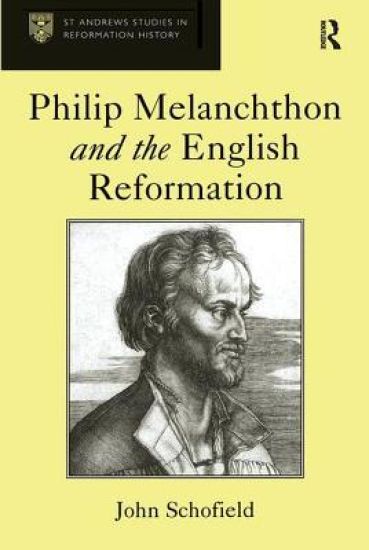
Philip Melanchthon and the English Reformation

Philip Melanchthon and the English Reformation

John Schofield

Ashgate Publishing Limited
2006
sidottu
This book explores the hitherto neglected relationship between the English Reformation and the Lutheran scholar Philip Melanchthon (1497-1560). It looks at how Henry, following his break with Rome, flirted with Lutheranism as a doctrine to replace Catholicism, before the eventual collapse of the policy and its replacement with a more moderate reform programme under Cranmer. It then goes on to investigate how Melanchthon, as the leading proponent of Lutheranism influenced successive royal governments, both positively and negatively, as they struggled to impose their own brand of doctrinal conformity on the English church. By refracting the well known narrative of the English Reformation through the lens of Melanchthon, new light is shed on many events that have puzzled historians. The study provides fascinating new perspectives on such questions as why Henry suddenly abandoned his Lutheran policy, why Cromwell fell from power in 1540 and even insights into Elizabeth's personal beliefs. By tying events in England into the context of the wider European Reformation, through the work of Philip Melanchthon, this book offers fresh insights into the nature and development of early evangelical Protestantism.
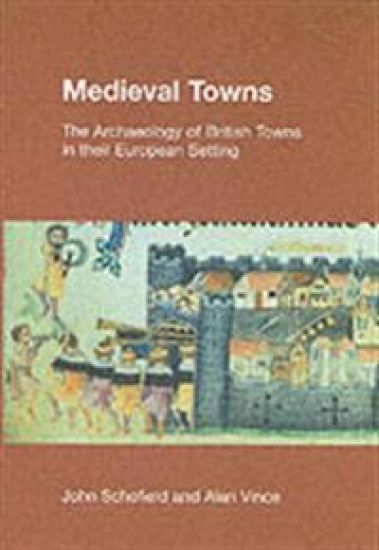
Medieval Towns

Medieval Towns

John Schofield; Alan Vince

Equinox Publishing Ltd
2005
nidottu
Archaeologists have shown that towns can claim to be more representative of the nature of society of which they formed part than any other type of site. In towns we are most likely to find archaeological evidence of both long-distance and local trade, of exploitation of natural resources, of specialization and of technological evidence in manufacturing, of social differentiation, of the means of political control, and of the religious aspirations of the population. Medieval Towns is the second and enlarged edition of the book Medieval Towns which was published in 1994 by Continuum. It surveys recent work on the archaeological study of medieval towns in Britain. Its emphasis is on the discoveries by archaeological teams, nearly always on sites to be developed or already under construction. From the vast haul of information now at our disposal, after thirty years of data gathering, we can begin to ask questions of many kinds. What went on in medieval towns? How did the rich and poor live, what nourished them, what did they die of? What was the weather like, the quality of life, the restrictions or special pleasures of living in towns?
Medieval London Houses

Medieval London Houses

John Schofield

Yale University Press
2003
pokkari
This authoritative book is the first comprehensive study of domestic buildings in London from about 1200 to the Great Fire in 1666. John Schofield describes houses and such related buildings as almshouses, taverns, inns, shops, and livery company halls, drawing on evidence from surviving buildings, archaeological excavations, documents, panoramas, drawn surveys and plans, contemporary descriptions, and later engravings and photographs.Schofield presents a comprehensive overview of the topography of the medieval city, reconstructing its streets, defenses, many religious houses, and fine civic buildings. He then provides details about the medieval and Tudor London house: its plan, individual rooms and spaces and their functions, the roofs, floors, and windows, the materials of construction and decoration, and the internal fittings and furniture. Throughout the book he discusses what this evidence tells us about the special restrictions or pleasures of living in the capital; how certain innovations of plan and construction first occurred in London before spreading to other towns; and how notions of privacy developed. The generously illustrated text is accompanied by a selective gazetteer of 201 sites in the City of London and its immediate environs.Published for the Paul Mellon Center for Studies in British Art