Kirjojen hintavertailu. Mukana 12 595 353 kirjaa ja 12 kauppaa.

Kirjailija

John Stauffer

Kirjat ja teokset yhdessä paikassa: 13 kirjaa, julkaisuja vuosilta 2004-2026, suosituimpien joukossa The American Short Story: The Nineteenth Century, Volume 1 (LOA #394). Vertaile teosten hintoja ja tarkista saatavuus suomalaisista kirjakaupoista.

13 kirjaa

Kirjojen julkaisuhaarukka 2004-2026.

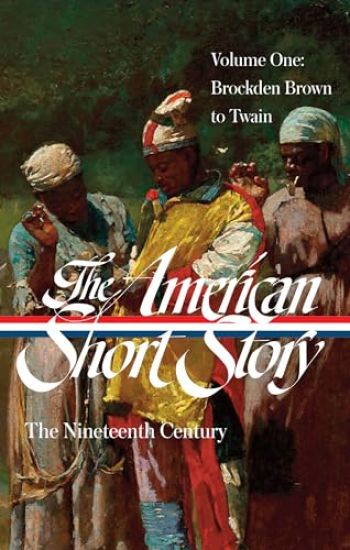
The American Short Story: The Nineteenth Century, Volume 1 (LOA #394)
The first volume in a landmark story collection that redefines what we thought we knew about the great American literary form A diverse, unprecedented gathering of more than one hundred stories, representing work by fifty different writers As much a nineteenth-century American invention as the cotton gin and the steamboat, the short story emerged here with a range of innovation and a variety of styles and subjects that has still not been fully appreciated. Diverse, wide-ranging, and unprecedented in its scope, The American Short Story: The Nineteenth Century gathers more than one hundred stories by fifty different writers. This first volume of Library of America's two-volume collection of nineteenth-century American short fiction tracks the development of the American short story from Charles Brockden Brown's fragments and Washington Irving's sketches to Poe's gothic tales of horror to Mark Twain's humorous stories. Represented here by generous selections are all the major figures--Irving, Poe, Hawthorne, Melville, and Twain--as well as Rose Terry Cooke, also a major writer, restored to a place of prominence in this anthology with three unforgettable masterpieces. Among the many unexpected writers in this volume are: William Austin, so crucial to the development of Hawthorne and Poe; the antebellum Black writer and physician James McCune Smith, whose sketches in his "Heads of the Colored People" series lampooned the pseudoscientific racism of phrenology; Lucretia Hale, the author of the feminist fantasy "The Queen of the Red Chessman," perhaps the greatest one-hit wonder of the mid-nineteenth century; Francis Parkman, whose early magazine fiction remains unknown today even to many scholars; and Fitz-James O'Brien, the author of such unnerving horror stories as "The Lost Room" and "What Was It?," whose true themes and concerns twenty-first century readers, accustomed to reading gay fiction, will not miss. Unrivaled in its range and textual authority, the anthology includes biographies of each writer, a chronology of writers and the American short story from 1800 to 1900, and extensive notes.
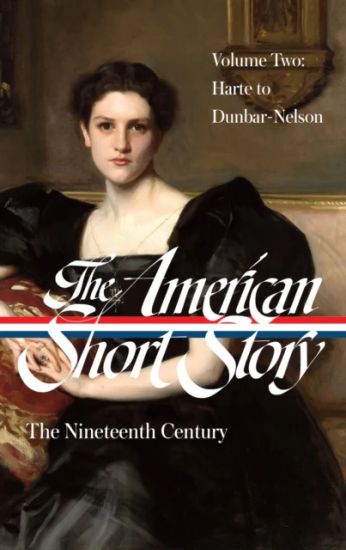
The American Short Story: The Nineteenth Century, Volume 2 (LOA #395)
The second volume in a landmark story collection that redefines what we thought we knew about the great American literary form A diverse, unprecedented gathering of more than one hundred stories, representing work by fifty different writers As much a nineteenth-century American invention as the cotton gin and the steamboat, the short story emerged here with a range of innovation and a variety of styles and subjects that has still not been fully appreciated. Diverse, wide-ranging, and unprecedented in its scope, The American Short Story: The Nineteenth Century gathers more than one hundred stories by fifty different writers. This second volume of The Library of America's two-volume anthology of nineteenth-century American short fiction follows the evolution of American short story from Bret Harte's mid-century tales of the Gold Rush frontier to Alice Dunbar-Nelson's "The Stones of the Village," a story about racial passing written around 1900 but not published in the author's lifetime. Henry James, generously represented in this volume, dominates the second half of the century, though also represeanted here are the accomplishments of the so-called local-color writers associated with the post-Civil War period. The indelible stories of Sarah Orne Jewett and Kate Chopin are justly celebrated examples of this strain, and those writers are represented by several stories, but ample space is also given here to stories by Constance Fenimore Woolson and Mary Wilkins Freeman. The reader will also discover the short fiction of Stephen Crane, in whose work naturalism finds its perfect aesthetic and philosophical expressionas well as the indispensable stories of such Black writers as Charles W. Chesnutt and Paul Laurence Dunbar. The unexpected selection of Thomas Nelson Page's "Marse Chan" provides the context for Chesnutt's groundbreaking explorations of racial identity and his use of African American speech and folklore. Other surprises in this volume include Francis Hopkinson Smith's minor comic masterpiece "Six House in Squantico," about a town left behind in the post-bellum South. Unrivaled in its range and textual authority, the anthology includes biographies of each writer, a chronology of writers and the American short story from 1800 to 1900, and extensive notes.
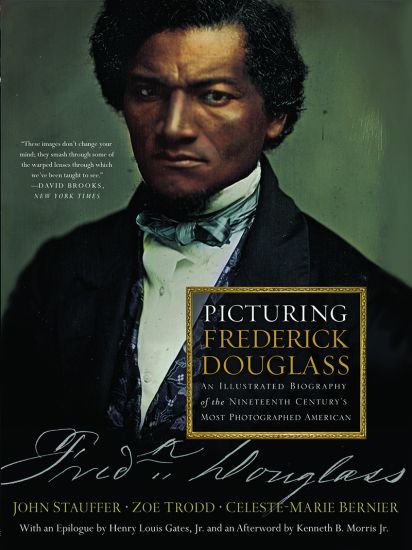
Picturing Frederick Douglass

Picturing Frederick Douglass

Celeste-Marie Bernier; John Stauffer; Zoe Trodd; Kenneth B. Morris

Liveright Publishing Corporation
2018
nidottu
Commemorating the bicentennial of Frederick Douglass’s birthday and featuring images discovered since its original publication in 2015, this “tour de force” (Library Journal, starred review) reintroduced Frederick Douglass to a twenty-first-century audience. From these pages—which include over 160 photographs of Douglass, as well as his previously unpublished writings and speeches on visual aesthetics—we learn that neither Custer nor Twain, nor even Abraham Lincoln, was the most photographed American of the nineteenth century. Indeed, it was Frederick Douglass, the ex-slave-turned-abolitionist, eloquent orator, and seminal writer, who is canonized here as a leading pioneer in photography and a prescient theorist who believed in the explosive social power of what was then just an emerging art form. Featuring: Contributions from Henry Louis Gates, Jr., and Kenneth B. Morris, Jr. (a direct Douglass descendent)160 separate photographs of Douglass—many of which have never been publicly seen and were long lost to historyA collection of contemporaneous artwork that shows how powerful Douglass’s photographic legacy remains today, over a century after his deathAll Douglass’s previously unpublished writings and speeches on visual aesthetics
Picturing Frederick Douglass

Picturing Frederick Douglass

John Stauffer; Zoe Trodd; Celeste-Marie Bernier; Kenneth B. Morris

Liveright Publishing Corporation
2015
sidottu
Frederick Douglass’s fiery speeches made him one of the most renowned and popular agitators of his age. Now, as a result of ground-breaking research, we can reclaim the ex-slave and abolitionist as a pioneer in photography, both as a subject and as a theorist. Included here are 160 photographs of Douglass—many which have never been publicly seen—combined with previously unpublished writings and speeches on visual aesthetics. The result transforms our understanding of photography and its place in the life and legacy of Douglass.
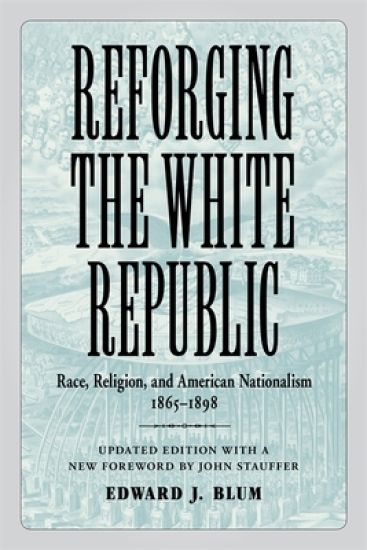
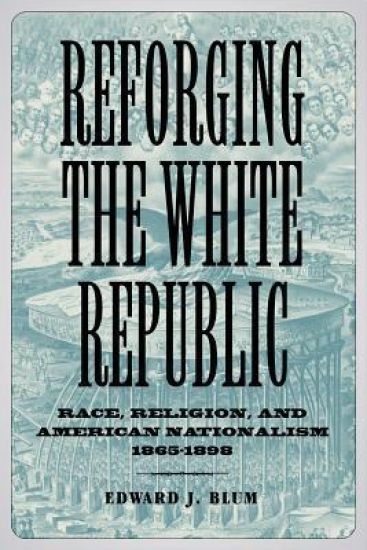
Reforging the White Republic

Reforging the White Republic

Edward J. Blum; John Stauffer

Louisiana State University Press
2015
nidottu
During Reconstruction, former abolitionists in the North had a golden opportunity to pursue true racial justice and permanent reform in America. But after the sacrifice made by thousands of Union soldiers to arrive at this juncture, the moment soon slipped away, leaving many whites throughout the North and South more racist than before. Edward J. Blum takes a fresh look at the reasons for this failure in Reforging the White Republic, focusing on the vital role that religion played in reunifying northern and southern whites into a racially segregated society. A blend of history and social science, Reforging the White Republic offers a surprising perspective on the forces of religion as well as nationalism and imperialism at a critical point in American history.
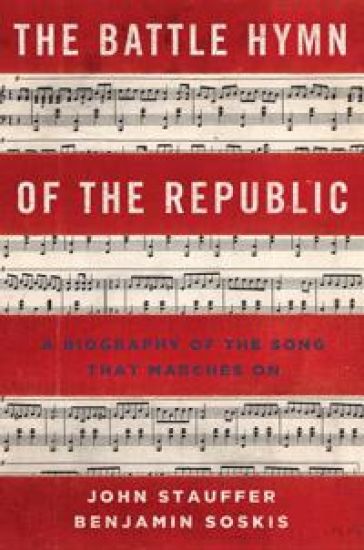
The Battle Hymn of the Republic

The Battle Hymn of the Republic

John Stauffer; Benjamin Soskis

Oxford University Press Inc
2013
sidottu
It was sung at Ronald Reagan's funeral, and adopted with new lyrics by labor radicals. John Updike quoted it in the title of one of his novels, and George W. Bush had it performed at the memorial service in the National Cathedral for victims of September 11, 2001. Perhaps no other song has held such a profoundly significant--and contradictory--place in America's history and cultural memory than the "The Battle Hymn of the Republic." In this sweeping study, John Stauffer and Benjamin Soskis show how this Civil War tune has become an anthem for cause after radically different cause. The song originated in antebellum revivalism, with the melody of the camp-meeting favorite, "Say Brothers, Will You Meet Us." Union soldiers in the Civil War then turned it into "John Brown's Body." Julia Ward Howe, uncomfortable with Brown's violence and militancy, wrote the words we know today. Using intense apocalyptic and millenarian imagery, she captured the popular enthusiasm of the time, the sense of a climactic battle between good and evil; yet she made no reference to a particular time or place, allowing it to be exported or adapted to new conflicts, including Reconstruction, sectional reconciliation, imperialism, progressive reform, labor radicalism, civil rights movements, and social conservatism. And yet the memory of the song's original role in bloody and divisive Civil War scuttled an attempt to make it the national anthem. The Daughters of the Confederacy held a contest for new lyrics, but admitted that none of the entries measured up to the power of the original. "The Battle Hymn" has long helped to express what we mean when we talk about sacrifice, about the importance of fighting--in battles both real and allegorical--for the values America represents. It conjures up and confirms some of our most profound conceptions of national identity and purpose. And yet, as Stauffer and Soskis note, the popularity of the song has not relieved it of the tensions present at its birth--tensions between unity and discord, and between the glories and the perils of righteous enthusiasm. If anything, those tensions became more profound. By following this thread through the tapestry of American history, The Battle Hymn of the Republic illuminates the fractures and contradictions that underlie the story of our nation.
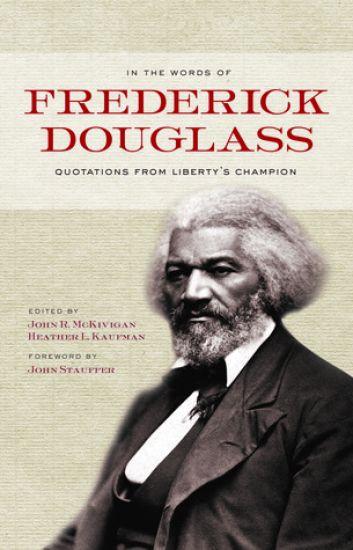
In the Words of Frederick Douglass

In the Words of Frederick Douglass

Frederick Douglass; John Stauffer

Cornell University Press
2012
sidottu
"No people are more talked about and no people seem more imperfectly understood. Those who see us every day seem not to know us."—Frederick Douglass on African Americans "There is no negro problem. The problem is whether the American people have loyalty enough, honor enough, patriotism enough, to live up to their own constitution."—on civil rights "Woman should have justice as well as praise, and if she is to dispense with either, she can better afford to part with the latter than the former."—on women "The thing worse than rebellion is the thing that causes rebellion."—on rebellion "A man is never lost while he still earnestly thinks himself worth saving; and as with a man, so with a nation."—on perseverance "I am ever pleased to see a man rise from among the people. Every such man is prophetic of the good time coming."—on Lincoln Frederick Douglass, a runaway Maryland slave, was witness to and participant in some of the most important events in the history of the American Republic between the years of 1818 and 1895. Beginning his long public career in 1841 as an agent of the Massachusetts Anti-Slavery Society, Douglass subsequently edited four newspapers and championed many reform movements. An advocate of morality, economic accumulation, self-help, and equality, Douglass supported racial pride, constant agitation against racial discrimination, vocational education for blacks, and nonviolent passive resistance. He was the only man who played a prominent role at the 1848 meeting in Seneca Falls that formally launched the women's rights movement. He was a temperance advocate and opposed capital punishment, lynching, debt peonage, and the convict lease system. A staunch defender of the Liberty and Republican parties, Douglass held several political appointments, frequently corresponded with leading politicians, and advised Presidents Lincoln, Grant, Hayes, Garfield, and Harrison. He met with John Brown before his abortive raid on Harpers Ferry, helped to recruit African American troops during the Civil War, attended most national black conventions held between 1840 and 1895, and served as U.S. ambassador to Haiti. Frederick Douglass has left one of the most extensive bodies of significant and quotable public statements of any figure in American history. In the Words of Frederick Douglass is a rich trove of quotations from Douglass. The editors have compiled nearly seven hundred quotations by Douglass that demonstrate the breadth and strength of his intellect as well as the eloquence with which he expressed his political and ethical principles.
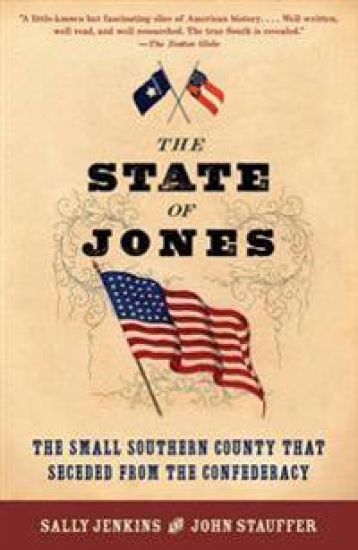
The State of Jones

The State of Jones

Sally Jenkins; John Stauffer

Anchor Books
2010
pokkari
Covering the same ground as the major motion picture The Free State of Jones, starring Matthew McConaughey, this is the extraordinary true story of the anti-slavery Southern farmer who brought together poor whites, army deserters and runaway slaves to fight the Confederacy in deepest Mississippi. Moving and powerful. -- The Washington Post. In 1863, after surviving the devastating Battle of Corinth, Newton Knight, a poor farmer from Mississippi, deserted the Confederate Army and began a guerrilla battle against it. A pro-Union sympathizer in the deep South who refused to fight a rich man's war for slavery and cotton, for two years he and other residents of Jones County engaged in an insurrection that would have repercussions far beyond the scope of the Civil War. In this dramatic account of an almost forgotten chapter of American history, Sally Jenkins and John Stauffer upend the traditional myth of the Confederacy as a heroic and unified Lost Cause, revealing the fractures within the South.
American Protest Literature

American Protest Literature

John Stauffer; Howard Zinn

The Belknap Press
2008
nidottu
“I like a little rebellion now and then”—so wrote Thomas Jefferson to Abigail Adams, enlisting in a tradition that throughout American history has led writers to rage and reason, prophesy and provoke. This is the first anthology to collect and examine an American literature that holds the nation to its highest ideals, castigating it when it falls short and pointing the way to a better collective future. American Protest Literature presents sources from eleven protest movements—political, social, and cultural—from the Revolution to abolition to gay rights to antiwar protest. Each section reprints documents from the original phase of the movement as well as evidence of its legacy in later times. Informative headnotes place the selections in historical context and draw connections with other writings within the anthology and beyond. Sources include a wide variety of genres—pamphlets, letters, speeches, sermons, legal documents, poems, short stories, photographs, posters—and a range of voices from prophetic to outraged to sorrowful, from U.S. Presidents to the disenfranchised. Together they provide an enlightening and inspiring survey of this most American form of literature.
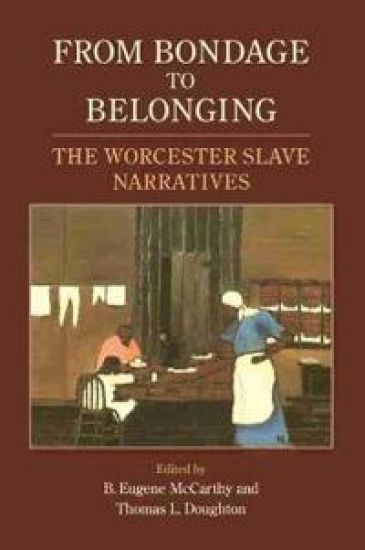
From Bondage to Belonging

From Bondage to Belonging

John Stauffer

University of Massachusetts Press
2008
nidottu
This is a rare set of personal accounts by eight ex-slaves who settled in the same northern community. First published between 1842 and 1895, the autobiographical narratives gathered in this volume document the experiences of eight former slaves who eventually took up residence in Worcester, Massachusetts. Each narrative tells a gripping individual story, its author clearly visible in the dress of his or her own words. Together they illuminate not only the inhumanity of slavery but also the dreams and dilemmas of emancipation, tracing the personal journeys of seven men and one woman from bondage to freedom. In their well-researched introduction, B. Eugene McCarthy and Thomas L. Doughton situate the Worcester slave narratives within a broader historical framework and analyze their meaning and significance. Drawing on a wide range of sources, they reconstruct the black community of Worcester and compare it with other New England black communities of the time, describing how the town evolved from a society with slaves in the colonial era to a hub for free blacks by the eve of the Civil War. They explain why these writings must be understood as part of a long-established tradition of African American self-representation, and show how the four narratives published before 1865 focus on the experience of slavery, while the four written after the war offer the fresh perspective of living in freedom. Headnotes describe the distinctive literary features of each narrative and provide additional information about the lives of the authors. The editors discuss why these ex-slaves came to Worcester, the circumstances in which each wrote his or her narrative, and the audiences they had in mind. No other collection of slave narratives offers such a diverse range of testimony within a specific historical and literary context, or a more compelling account of the transition from bondage to belonging.
Reforging the White Republic

Reforging the White Republic

Edward J. Blum; John Stauffer

Louisiana State University Press
2007
nidottu
During Reconstruction, former abolitionists in the North had a golden opportunity to pursue true racial justice and permanent reform in America. But why, after the sacrifice made by thousands of Civil War patriots to arrive at this juncture, did the moment slip away, leaving many whites throughout the North and South more racist than before? Edward J. Blum takes a fresh look at this question in Reforging the White Republic: Race, Religion, and American Nationalism, 1865-1898, where he focuses on the vital role that religion played in reunifying northern and southern whites into a racially segregated society. He tells the fascinating story of how northern Protestantism, once the catalyst for racial egalitarianism, promoted the image of a ""white republic"" that conflated whiteness, godliness, and nationalism. A blend of history and social science, Reforging the White Republic offers a surprising perspective on the forces of religion as well as nationalism and imperialism at a critical point in American history.
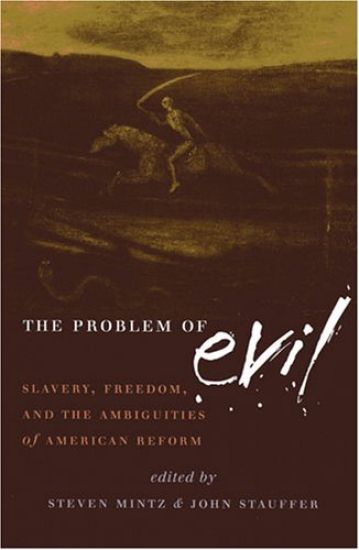
The Problem of Evil

The Problem of Evil

Steven Mintz; John Stauffer

University of Massachusetts Press
2007
nidottu
A collective effort to present a new kind of moral history, this volume seeks to show how the study of the past can illuminate profound ethical and philosophical issues. More specifically, the contributors address a variety of questions raised by the history of American slavery. How did freedom - personal, civic, and political - become one of the most cherished values in the Western world? How has the language of slavery been applied to other instances of exploitation and depersonalization? To what extent is America's high homicide rate a legacy of slavery? Did the abolitionist movement's tendency to view slavery as a product of sin, rather than as a structural and economic problem, accelerate or impede emancipation? Divided into four parts, with introductions to each section by editors Steven Mintz and John Stauffer, the essays provide succinct guides to the evolution of American slavery, the origins of anti-slavery thought, the challenges of emancipation, and the post-emancipation legacy of slavery. They also offer fresh perspectives on key individuals, from Benjamin Franklin and Frederick Douglass to Harriet Jacobs and John Brown, and shed new light on the differences between female and male critiques of slavery, the defense of slavery by the South's intellectual elite, and Catholic attitudes toward slavery and abolition. Above all, ""The Problem of Evil"" helps us understand the circumstances that allow social evils to happen, how intelligent and ostensibly moral people can participate in the most horrendous crimes, and how, at certain historical moments, some individuals are able to rise above their circumstances, address evil in fundamental ways, and expand our moral consciousness. In addition to the editors, contributors include Edward Balleisen, Ira Berlin, Iver Bernstein, Robert A. Bonner, Leslie Butler, Catherine Clinton, Ellen Dwyer, David Eltis, Stanley Engerman, Michael Fellman, Paul Finkelman, Richard Wightman Fox, Jonathan Glickstein, Peter Hinks, Jack M. Holl, Paula Kane, Margaret Kellow, William Casey King, Laura Mitchell, Orlando Patterson, Randolph Roth, Sharon Hartman Strom, and David Waldstreicher.
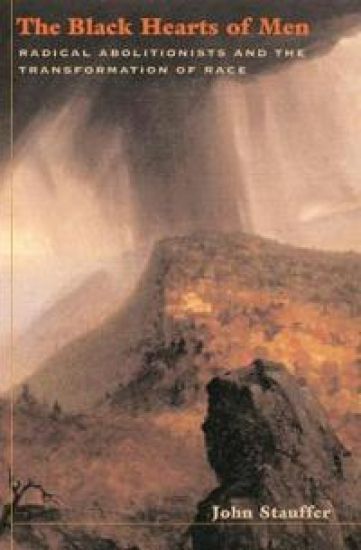
The Black Hearts of Men

The Black Hearts of Men

John Stauffer

Harvard University Press
2004
nidottu
At a time when slavery was spreading and the country was steeped in racism, two white men and two black men overcame social barriers and mistrust to form a unique alliance that sought nothing less than the end of all evil. Drawing on the largest extant bi-racial correspondence in the Civil War era, John Stauffer braids together these men's struggles to reconcile ideals of justice with the reality of slavery and oppression. Who could imagine that Gerrit Smith, one of the richest men in the country, would give away his wealth to the poor and ally himself with Frederick Douglass, an ex-slave? And why would James McCune Smith, the most educated black man in the country, link arms with John Brown, a bankrupt entrepreneur, along with the others? Distinguished by their interracial bonds, they shared a millennialist vision of a new world where everyone was free and equal. As the nation headed toward armed conflict, these men waged their own war by establishing model interracial communities, forming a new political party, and embracing violence. Their revolutionary ethos bridged the divide between the sacred and the profane, black and white, masculine and feminine, and civilization and savagery that had long girded western culture. In so doing, it embraced a malleable and "black-hearted" self that was capable of violent revolt against a slaveholding nation, in order to usher in a kingdom of God on earth. In tracing the rise and fall of their prophetic vision and alliance, Stauffer reveals how radical reform helped propel the nation toward war even as it strove to vanquish slavery and preserve the peace.