Kirjojen hintavertailu. Mukana 12 657 676 kirjaa ja 12 kauppaa.

Kirjailija

John Stuart Mill

Kirjat ja teokset yhdessä paikassa: 881 kirjaa, julkaisuja vuosilta 1850-2026, suosituimpien joukossa Sosialismin hyödyt ja haitat. Vertaile teosten hintoja ja tarkista saatavuus suomalaisista kirjakaupoista.

881 kirjaa

Kirjojen julkaisuhaarukka 1850-2026.

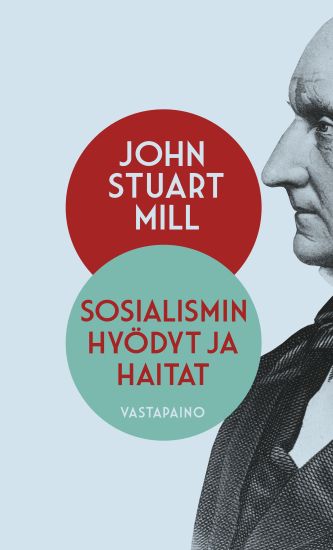
Sosialismin hyödyt ja haitat

Sosialismin hyödyt ja haitat

John Stuart Mill; Mikko Lahtinen

VASTAPAINO
2025
sidottu
Englantilainen filosofi ja taloustieteilijä John Stuart Mill (1806-1873) on tunnettu etenkin teoksessaan "Vapaudesta" esittämistään yhteiskunnallisista näkemyksistään. Siksi Millin utilitarismin ja liberalismin tuntijalle "Sosialismin hyödyt ja haitat" voi olla raikas ja yllättävä lukukokemus. Mill ei keskeneräiseksi jääneessä kirjoituksessaan julistaudu sosialismin kannattajaksi. Sen sijaan filosofi-taloustietelijä analysoi terävästi sosialistien esittämiä uusia näkemyksiä ja vaatimuksia.Mill suhtautui kriittisesti sosialisteihin. He usein liioittelevat vallalla olevan järjestelmän huonoja puolia, eivätkä tunnusta siinä jo tehtyjä parannuksia tai halua nähdä siihen sisältyviä mahdollisuuksia. Mill pohtii, missä määrin sosialistinen järjestelmä voi olla älyllisesti ja moraalisesti toimiva tapa järjestää inhimillinen yhteiselämä.Sosialismi oli suuri älyllinen haaste John Stuart Millille. Hän uskoi sosialismin asettaman haasteen hengessä, että ”kaikki perusopit, joita aiemmat sukupolvet pitivät kiistattomina, on arvioitava uudelleen”.Sosialismin hyödyt ja haitat -teokseen on kirjoittanut laajan jälkikirjoituksen Tampereen yliopiston valtio-opin yliopistonlehtori Mikko Lahtinen.Alkuteos: "Chapters on Socialism"
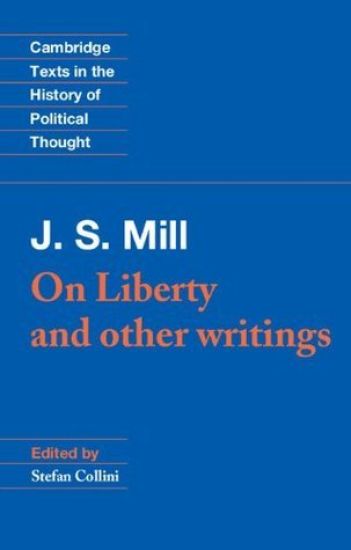
J. S. Mill: 'On Liberty' and Other Writings

J. S. Mill: 'On Liberty' and Other Writings

John Stuart Mill

Cambridge University Press
1989
pokkari
On Liberty has become celebrated as the most powerful defence of the freedom of the individual, and is now widely regarded as the most important theoretical foundation for Liberalism as a political creed. The Subjection of Women is a powerful indictment of the political, social, and economic position of women. This edition brings together these two classic texts, plus Mill’s posthumous Chapters on Socialism, his somewhat neglected examination of the strengths and weaknesses of various forms of socialism. The editor’s substantial introduction places these three works in the context both of Mill’s life and of nineteenth-century intellectual and political history. There is also a chronology of Mill’s life, a bibliographical guide, and a biographical appendix of names cited in the texts.
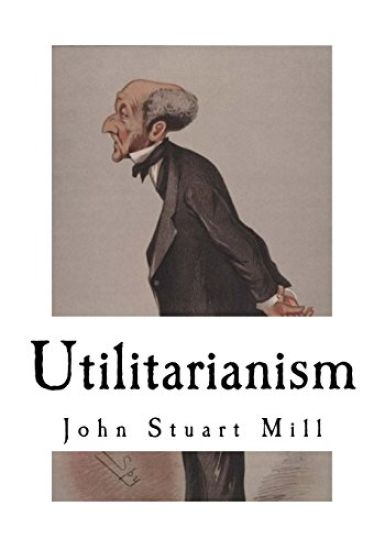
Utilitarianism: John Stuart Mill

Utilitarianism: John Stuart Mill

John Stuart Mill

Createspace Independent Publishing Platform
2018
nidottu
Utilitarianism by John Stuart Mill. John Stuart Mill's book Utilitarianism is a classic exposition and defence of utilitarianism in ethics. The essay first appeared as a series of three articles published in Fraser's Magazine in 1861; the articles were collected and reprinted as a single book in 1863. Mill's aim in the book is to explain what utilitarianism is, to show why it is the best theory of ethics, and to defend it against a wide range of criticisms and misunderstandings. Though heavily criticized both in Mill's lifetime and in the years since, Utilitarianism did a great deal to popularize utilitarian ethics and was "the most influential philosophical articulation of a liberal humanistic morality that was produced in the nineteenth century."
Die Hörigkeit der Frau

Die Hörigkeit der Frau

John Stuart Mill; Jenny Hirsch

E-Artnow
2018
pokkari
John Stuart Mill (1806-1873) war ein englischer Philosoph und konom und einer der einflussreichsten liberalen Denker des 19. Jahrhunderts. Er war Anh nger des Utilitarismus, der von Jeremy Bentham, dem Lehrer und Freund seines Vaters James Mill, entwickelt wurde. Aus dem Buch: "Bei allen zarteren Verrichtungen der Natur - von welchen die der belebten Sch pfung die zartesten und von diesen wieder die des Nervensystems die allerzartesten sind - h ngen die Verschiedenheiten der Wirkung ebensowohl von der Verschiedenheit der betreffenden Organe nach ihrer Qualit t wie nach ihrer Quantit t ab, und wenn die Qualit t eines Instrumentes nach der Feinheit und Sauberkeit des Werkes, das es verrichten kann, zu beurteilen ist, so weist dieser Schlu auf eine durchschnittlich feinere Qualit t des Gehirnes und Nervensystems der Frauen als der M nner hin. Sieht man indes von allen abstrakten Unterschieden der Qualit t ab, die zu belegen immer eine schwierige Sache bleibt, so wei man doch, da die Wirksamkeit eines Organes nicht allein von seinem Umfange, sondern von seiner T tigkeit abh ngt, und von dieser haben wir ein ann herndes Ma in der Kraft, mit welcher das Blut durch dasselbe zirkuliert, da sowohl der Stimulus wie die ersetzende Kraft haupts chlich von dieser Zirkulation abh ngt."
Autobiography by John Stuart Mill: Autobiography

Autobiography by John Stuart Mill: Autobiography

John Stuart Mill

Createspace Independent Publishing Platform
2013
nidottu
John Stuart Mill, (20 May 1806 - 8 May 1873) was an English philosopher, political economist and civil servant. He was an influential contributor to social theory, political theory and political economy. He has been called "the most influential English-speaking philosopher of the nineteenth century". Mill's conception of liberty justified the freedom of the individual in opposition to unlimited state control. He was a proponent of utilitarianism, an ethical theory developed by Jeremy Bentham. Hoping to remedy the problems found in an inductive approach to science, such as confirmation bias, he clearly set forth the premises of falsifiability as the key component in the scientific method. Mill was also a Member of Parliament and an important figure in liberal political philosophy.
John Stuart Mill and the Idea of the University

John Stuart Mill and the Idea of the University

Small Helen; John Stuart Mill

Oxford University Press
2026
Sidottu
John Stuart Mill's Inaugural Address as Rector of the University of St Andrews, delivered in 1867, is one of the great statements of the principles that should underpin a liberal higher education. This volume makes Mill's ambition for the university freshly available at a critical juncture in thinking about what higher education is for: its underpinning principles, its scope, and its social purposes. A new edition of Mill's text is paired with an expanded version of a lecture by Helen Small, 'The Liberal University and Its Enemies', delivered at St Andrews to mark the 150th Anniversary of the Inaugural Address. The lecture examines the intellectual, ethical, and aesthetic basis of Mill's idea of the university, making the case for his relevance today amid significant cultural, economic, and political pressures on the university. This book is a key contribution to debate about what universities are for. It grapples with the question of what universities should teach, how much they should teach, and why they should be broad in their coverage. The text contains: -a new edition of the Inaugural Address, with detailed notes and bibliography -a reconstruction of Mill's original audience, showing why his encouragement to 'keep, at all risks, your minds open' struck a chord with students, professors, and a wider public -Helen Small's 'The Liberal University and Its Enemies'