Kirjojen hintavertailu. Mukana 12 595 353 kirjaa ja 12 kauppaa.
Kirjailija
John T. Almarode
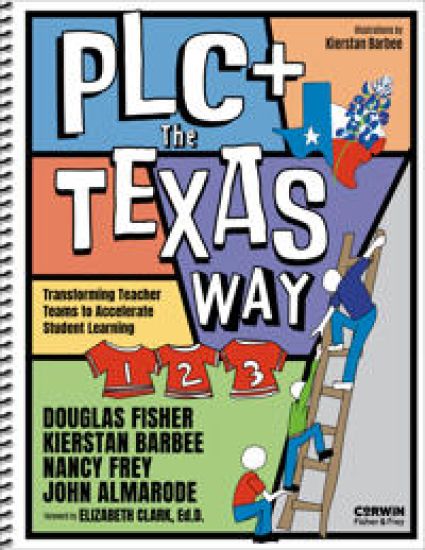
Kirjat ja teokset yhdessä paikassa: 29 kirjaa, julkaisuja vuosilta 2019-2026, suosituimpien joukossa PLC+ The Texas Way. Vertaile teosten hintoja ja tarkista saatavuus suomalaisista kirjakaupoista.
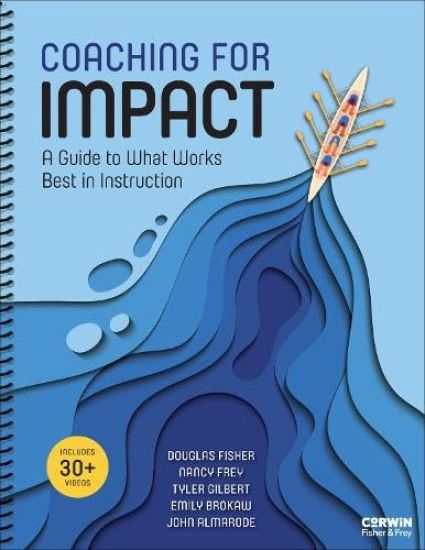
Build a sustainable coaching model that drives growth and results Instructional coaching has long been a crucial component of professional development in schools. However, without a clear framework, its true potential often goes unrealized. Coaching for Impact bridges this gap by providing a research-supported, practical guide that enhances the effectiveness of coaching programs while helping coaches transform theory into measurable results. Centered around an innovative set of "Impact Rubrics," this comprehensive flipbook offers a structured pathway for elevating coaching practices. Whether you’re an experienced instructional coach or just beginning your journey, this book equips you with actionable tools, proven strategies, and a vision to foster teacher learning and maximize student success. Inside you’ll find: Impact Rubrics, frameworks in each chapter to make coaching visible, actionable, and aligned with teacher growth and student outcomesStep-by-step guidance for building relationships, collecting evidence, and creating goal-oriented coaching plansResearch-driven content highlighting how coaching supports effective teaching and sustainable learning practicesA holistic approach with strategies to develop trust, foster communication, and align coaching with broader district and school goals By using Coaching for Impact, coaches will gain the skills to cultivate sustainable coaching models that promote both teacher and student success. If you’re ready to sharpen your focus, refine your strategies, and unlock the full potential of instructional coaching, this book is your indispensable guide.
How to Activate and Accelerate Student Learning Have you ever given instructions to your students, only to receive blank stares or confusion? Clarity is an essential part of teaching and learning, and every interaction we have with students is the foundation for moving learning forward—we must make every interaction count. Backed by the latest education research on what really works, Teacher Clarity spotlights the newest and best teaching strategies and explains the importance of clear learning intentions, success criteria, lesson design, progress monitoring, and more. Inside, you’ll discover how teacher clarity Helps educators make informed decisions around teaching and learningDemands that educators keep the "big picture" in mindAllows educators to integrate optimal teaching and learning experiences at the right timeTells us what evidence we must generate around teaching and learning and what steps to take next Organized around the four critical components of teacher clarity—organization, explanations, examples, and assessments—and filled with samples for all content and grade levels, Teacher Clarity is your essential guidebook for unlocking your learners’ potential.
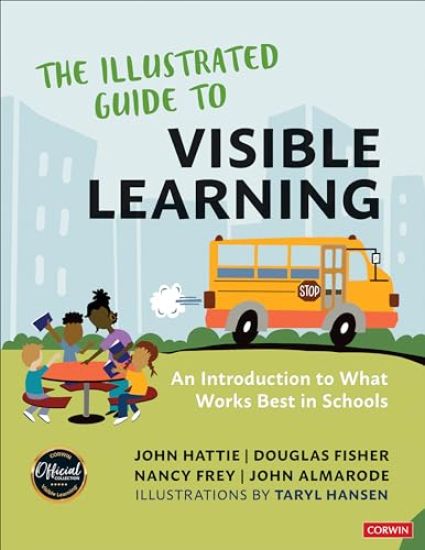
The Path to Truly Impactful Practice in Education Starts with Visible Learning It may seem obvious, but learning should never be implied or assumed. Learning must be explicit, evaluated and monitored; the impact of teaching on student learning should be visible. But how can we be sure? Armed with years of research that includes more than 2,100 meta-analyses, and 130,000 studies that include more than 300 million students—plus decades of experience as educators —bestselling authors John Hattie, Douglas Fisher, Nancy Frey, and John Almarode have collaborated to create this accessible guide to what works best to accelerate students' learning. Packed with everything you need to evaluate your impact, the Illustrated Guide to Visible Learning includes: Clear instructions for collecting, interpreting, and using evidence to make decisions with and for your studentsA primer on the 11 signature practices of Visible LearningResearch-backed mindframes that have the potential to significantly influence the quality of education. To have the greatest impact on student learning, we must know what practices work best. With this illustrated go-to guide to Visible Learning in hand, your path is set for truly impactful practice in education.
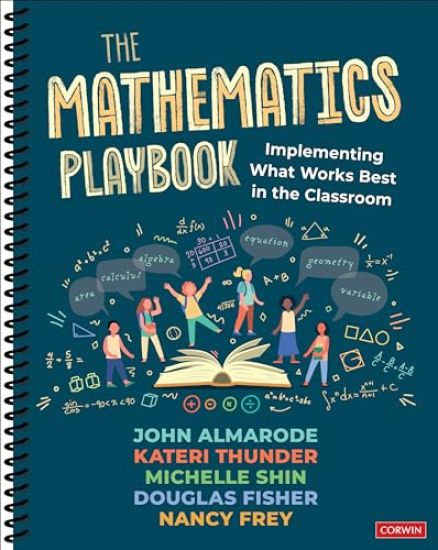
Your Guide to Engaging and Effective Math Instruction With the latest research on what works best in teaching and learning, The Mathematics Playbook is your comprehensive guide to enhancing mathematics teaching and learning. With a focus on fostering equity and maximizing student learning, the authors provide practical modules that integrate the latest research on effective teaching practices, and answer four critical questions: How do we foster, nurture, and sustain mathematics learning?How do we ensure all learners have equity of access and opportunity?What are the non-negotiables in a high-quality mathematics task?How do we know if learners really "get it"? Through real-life examples and an emphasis on self-assessment and reflection, this playbook empowers you to create engaging and impactful learning experiences in mathematics.
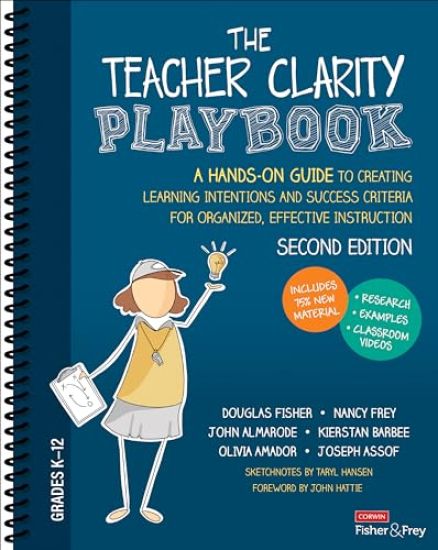
Unlock the secrets to student achievement with purposeful learning and clear expectations On a clear day, you can learn forever— that’s the adapted lyric you’ll be happily humming once you’ve covered this playbook, because you will have mastered using learning intentions and success criteria, the twin engines of Teacher Clarity. This template-filled guide shows you how to own it, do it, and live it—and your students will be more successful as a result. In this fully revised edition, this succinct, smart, and swift book’s nine learning modules take you systematically through a process that begins and ends with standards. With abundant and all new examples that span grade levels, planning templates for every step, key professional learning questions, new videos, revised success criteria and relevance sections, and the latest research, you have the most practical and up-to-date planner for designing and delivering highly effective instruction: Identifying Concepts and SkillsSequencing Learning ProgressionsElaborating Learning IntentionsCrafting Success CriteriaModifying Learning Intentions to Include Language ExpectationsDetermining the Relevance of the LearningDesigning Assessment OpportunitiesCreating Meaningful Learning ExperiencesEstablishing Mastery of Standards Designed for PLCs or independent teacher use, The Teacher Clarity Playbook helps practitioners align lessons, objectives, and outcomes of learning seamlessly, so that the classroom hours flow productively for everyone. For any teacher striving to be more organized and have stronger relationships with students, this is the book that shows you how.
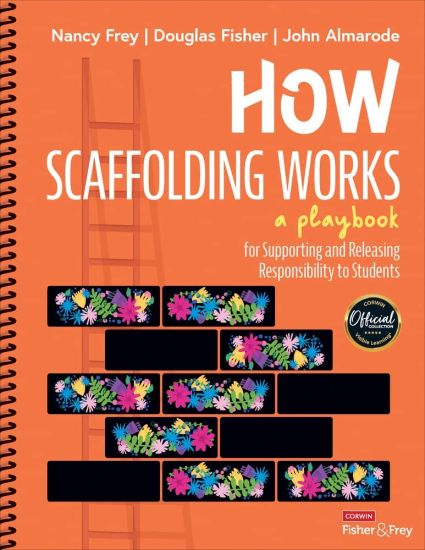
Provide the perfect structure and support to develop student independence. Effective scaffolding leads to learner autonomy—but too many educators have been airlifting students to right answers, perpetuating a generation who don’t know how to learn. Yes, we know the sweet spot for learning involves giving our students the right blend of productive failure and productive success, but how to do it is cloaked in misconceptions. How Scaffolding Works unveils the essential moves and methods. Ten interactive modules help every K-12 educator structure support in new ways, including knowing how to: Gradually release responsibility to students through intentional and purposeful scaffoldingDesign lessons and experiences that attend to the affective, metacognitive, and cognitive aspects of learningCollect data before, during, and after learning, so we can place, move, and take away scaffolds with greater intentionPromote independence with front-end scaffolds, distributed scaffolds, back-end scaffolds, peer scaffolds, and fading scaffoldsUse a blend of demonstration, modeling, coaching, explaining, questioning and choicePromote purposeful practice—in which learners knows where they’re going and how to get there Perhaps we rush in to rescue learners because the world seems fraught; we want to help our students reach the safety of academic success. Our intentions are good, but it’s time to step back, gradually and purposefully, and let them pilot their own learning.
Learn how the Visible Learning® research guides our planning and teaching as we partner with families and colleagues to have the greatest impact on the learning and development of young children.
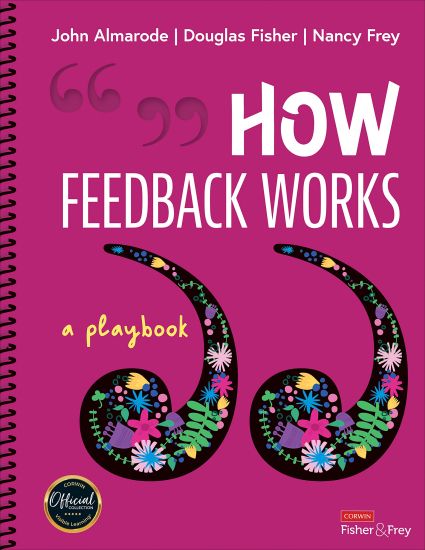
Feedback keeps learning moving forward. You have the power to improve everything about teaching and learning—through excellent feedback. Make it precise. Timely. Actionable. Feedback is absolutely necessary for learning, and is the one ingredient that, if missing, will hinder the learning process. In this Playbook, you will not only learn how to give effective feedback—but have abundant opportunities to practice this skill (and get feedback) as you learn. Bestselling authors John Almarode, Douglas Fisher, and Nancy Frey brilliantly organize this resource into 16 modules on the 4 C’s of Feedback: Care — create a culture in which teachers, students and leaders embrace feedback as a continuous loop of giving, receiving, and integrating suggestions Credibility — know how to stoke relatability, dynamism, and trust—and avoid the three most common barriers to students’ acting on feedback Clarity — align your learning goals, success criteria, and strategies so you gain the most useful evidence during learning from which to generate feedback. Communication — give feedback with intention, by speaking to the task; or to the learner’s process, or to the learner’s ability to monitor their own progress. Feedback is futile unless it motivates students to change their approach the next time, and still love learning. With the How Feedback Works: A Playbook you have the essential guide to ensuring students go-get their highest potential.
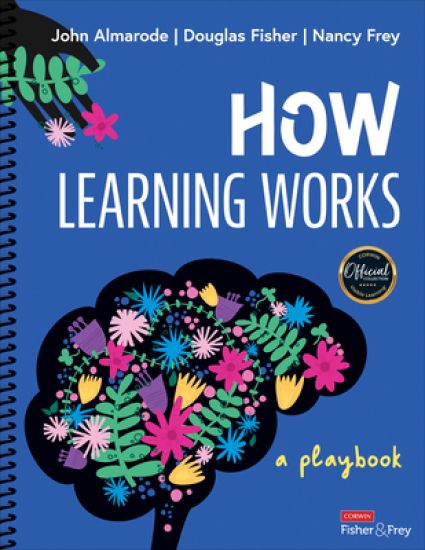
Translate the science of learning into strategies for maximum learning impact in your classroom. The content, skills, and understandings students need to learn today are as diverse, complex, and multidimensional as the students in our classrooms. How can educators best create the learning experiences students need to truly learn? How Learning Works: A Playbook unpacks the science of how students learn and translates that knowledge into promising principles or practices that can be implemented in the classroom or utilized by students on their own learning journey. Designed to help educators create learning experiences that better align with how learning works, each module in this playbook is grounded in research and features prompts, tools, practice exercises, and discussion strategies that help teachers to Describe what is meant by learning in the local context of your classroom, including identifying any barriers to learning.Adapt promising principles and practices to meet the specific needs of your students—particularly regarding motivation, attention, encoding, retrieval and practice, cognitive load and memory, productive struggle, and feedback.Translate research on learning into learning strategies that accelerate learning and build students’ capacity to take ownership of their own learning—such as summarizing, spaced practice, interleaved practice, elaborate interrogation, and transfer strategies.Generate and gather evidence of impact by engaging students in reciprocal teaching and effective feedback on learning. Rich with resources that support the process of parlaying scientific findings into classroom practice, this playbook offers all the moves teachers need to design learning experiences that work for all students!
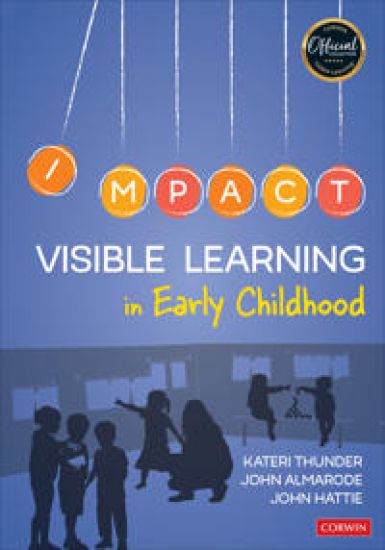
Make learning visible in the early years Early childhood is a uniquely sensitive time, when young learners are rapidly developing across multiple domains, including language and literacy, mathematics, and motor skills. Knowing which teaching strategies work best and when can have a significant impact on a child’s development and future success. Visible Learning in Early Childhood investigates the critical years between ages 3 and 6 and, backed by evidence from the Visible Learning® research, explores seven core strategies for learning success: working together as evaluators, setting high expectations, measuring learning with explicit success criteria, establishing developmentally appropriate levels of learning, viewing mistakes as opportunities, continually seeking feedback, and balancing surface, deep, and transfer learning. The authors unpack the symbiotic relationship between these seven tenets through Authentic examples of diverse learners and settings Voices of master teachers from the US, UK, and AustraliaMultiple assessment and differentiation strategiesMultidisciplinary approaches depicting mathematics, literacy, art and music, social-emotional learning, and more Using the Visible Learning research, teachers partner with children to encourage high expectations, developmentally appropriate practices, the right level of challenge, and a focus on explicit success criteria. Get started today and watch your young learners thrive!
Build students’ confidence and competence with tutoring strategies that spark meaningful, accelerated learning. Tutoring is much more than telling students information. Effective tutoring begins with the strong and caring relationship a tutor establishes with a learner to build trust, fuel motivation, and drive critical learning. How Tutoring Works distills the complexity of strategic moves effective tutors make to build students’ confidence and competence. Harnessing decades of Visible Learning® research, this easy to read, eye-opening guide details the six essential components of any effective tutoring intervention—establishing a relationship and credibility, addressing student confidence and challenges, setting shared goals, helping a student learn how to learn, teaching and learning content, and establishing a habit of deliberate practice. Indispensable for any educator who intervenes with students, this rich resource includes: Examples of impactful tutoring conversations, including what to say and what not to say when building a relationship with a learner.Specific approaches to use when establishing credibility, addressing challenges to learning, leveraging the relevance of knowledge, setting goals, and ensuring practice. Learning strategies, with effect size, for teaching and learning content, including specific strategies for improving reading, writing, and mathematics. Tips and tools for helping students develop powerful cognitive, metacognitive, and affective study skills. Resources and advice for establishing an effective and transformational tutoring program. Done well, tutoring can repair a student’s damaged relationship to learning, address unrealized potential, and alter the course of a young person’s life. A strong and nurturing relationship between tutor and learner is key.
What a year! Twelve months and counting since COVID expanded, stretched, and blurred the boundaries of teaching and learning, at least one thing has remained constant: our commitment as educators to move learning forward. It’s just the context that keeps changing—why Doug Fisher, Nancy Frey, John Almarode, and Aleigha Henderson-Rosser have created a follow-up to The Distance Learning Playbook, their all-new Quick Guide to Simultaneous, Hybrid, and Blended Learning. First, to be clear: simultaneous learning must not be an additive, meaning we combine two entirely different approaches and double our workload. That’s unsustainable! Instead, we must extract, integrate, and implement what works best from both distance learning and face-to-face learning environments. Then and only then—Doug, Nancy, John, and Aleigha insist—can we maximize the learning opportunities for all of our students. To that end, The Quick Guide to Simultaneous, Hybrid, and Blended Learning describes how to: Have clarity about the most important learning outcomes for our students. This will help us decide what is best done asynchronously and what is best done with our "Roomies" and "Zoomies." Capitalize on the potential of asynchronous learning and use that valuable time to preview and review. This way we can draw on evidence from these tasks to help us decide where to go next in our teaching and our students’ learning. Utilize synchronous learning for collaborative learning and scaffolding of content, skills, and essential understandings. In doing so, we can collect additional evidence of students’ learning so that we provide feedback that moves learning forward. Establish norms for combining synchronous and face-to-face environments in simultaneous learning. Importantly, we have to set up the environment for our Roomies and Zoomies to learn together. Develop learning experiences and tasks that maximize learner engagement for all learners in all settings. Focus on acceleration and learning recovery. In other words, no more deficit thinking! Our students are where they are and there are specific things that we can do to ensure their learning. Implement the guide’s many resources, strategies, and templates. "None of us chose to be in a situation where some learners are physically in our classrooms, while others attend virtually and remotely," write Doug, Nancy, John, and Aleigha. "However, what we hope to convey is that we’ve got this! While the context is different, the principles behind clarity, planning, high-yield strategies and interventions, student learning, and assessment hold steady." This is where The Quick Guide to Simultaneous, Hybrid, and Blended Learning will prove indispensable on this next leg of our journey.
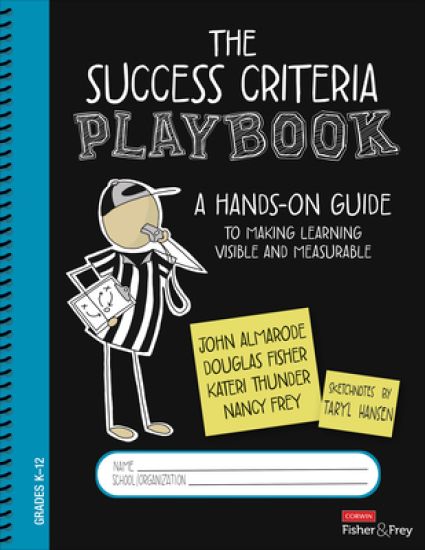
Provide students a clear view of what success looks like for any process, task, or product. What does success look like for your students? How will they know if they have learned? This essential component of teaching and learning can be difficult to articulate but is vital to achievement for both teachers and students. The Success Criteria Playbook catapults teachers beyond learning intentions to define clearly what success looks like for every student—whether face-to-face or in a remote learning environment. Designed to be used collaboratively in grade-level, subject area teams—or even on your own—the step-by-step playbook expands teacher understanding of how success criteria can be utilized to maximize student learning and better engage learners in monitoring and evaluating their own progress. Each module is designed to support the creation and immediate implementation of high-quality, high impact success criteria and includes: • Templates that allow for guided and independent study for teachers. • Extensive STEM-focused examples from across the K-12 STEM curriculum to guide teacher learning and practice. • Examples of success criteria applied across learning domains and grades, including high school content, skills, practices, dispositions, and understandings. Ensure equity of access to learning and opportunity for all students by designing and employing high-quality, high-impact success criteria that connect learners to a shared understanding of what success looks like for any given learning intention.
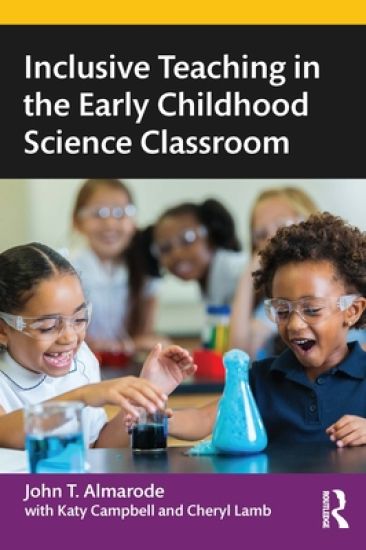
Focused on engaging all students, Inclusive Teaching in the Early Childhood Science Classroom walks readers through the process of planning, developing, and implementing science instruction for early learners. Drawing on a range of pedagogical processes and approaches, this comprehensive text links science to other disciplines and explores how we develop language, social-emotional, and content learning through early childhood science. Each chapter is framed around an essential question and features success criteria and reflection tasks to guide readers through the content. Aligned with the Next Generation Science Standards and addressing the Interstate New Teacher Assessment and Support Consortium Model Core Teaching Standards, this textbook is critical reading for preservice teacher education students enrolled in an inclusive early childhood or early childhood science methods course.
Focused on engaging all students, Inclusive Teaching in the Early Childhood Science Classroom walks readers through the process of planning, developing, and implementing science instruction for early learners. Drawing on a range of pedagogical processes and approaches, this comprehensive text links science to other disciplines and explores how we develop language, social-emotional, and content learning through early childhood science. Each chapter is framed around an essential question and features success criteria and reflection tasks to guide readers through the content. Aligned with the Next Generation Science Standards and addressing the Interstate New Teacher Assessment and Support Consortium Model Core Teaching Standards, this textbook is critical reading for preservice teacher education students enrolled in an inclusive early childhood or early childhood science methods course.
Turn good intentions into better outcomes—by design! Why leave student success up to chance? By combining your intuition and experience with the latest research on high-impact learning practices, you can evolve your teaching from good to great and make a lasting difference for your students. Organized around the DIIE framework, Great Teaching by Design takes you step-by-step from intention to implementation to accelerate the impact your teaching has on student learning. Inside, you’ll find: A deep dive into the four stages of the DIIE model: Diagnosis and Discovery, Intervention, Implementation, and Evaluation A fresh look at the Visible Learning research, which identifies the most powerful strategies for teaching and learning Stories of best practices in action and examples from classrooms around the world Great teaching may come by chance, but it will come by design. Whether you’re new to teaching or looking to give your instruction a boost, take up the challenge and discover a new framework for teaching with true intentionality.
First, let’s commend ourselves: how in the midst of a pandemic we faculty stepped up at record speed to teach in such a foreign learning environment. Try we did, adapt we did, and learn we did. But to be clear, and we already recognize this, this past spring was less about distance learning and more about crisis teaching. This time around we have the opportunity to be much more purposeful and intentional, and that’s where The Distance Learning Playbook for College and University Instruction will prove absolutely indispensable. Much more than a collection of cool tools and apps, The Distance Learning Playbook for College and University Instruction mobilizes decades of Visible Learning® research to reveal those evidence-based strategies that work best in an online environment. Supplemented by video footage and opportunities to self-assess and reflect, the book addresses every dynamic that must be in place for students to learn, even at a distance: Faculty-student relationships from a distance Teacher credibility from a distanceTeacher clarity from a distanceEngaging tasks from a distancePlanning learning experiences from a distanceFeedback, assessment, and grading from a distanceKeeping the focus on learning, from a distance or otherwise What does our post-COVID future hold? "We suspect," Fisher, Frey, Almarode, and Hattie write, "it will include increased amounts of distance learning. In the meantime, let’s seize on what we have learned to improve post-secondary education in any format, whether face-to-face or from a distance." "We are all still active faculty members, committed to teaching, scholarship, and service. The unexpected transition to remote learning doesn’t mean we no longer know how to teach. We can still impact the lives of our students and know that we made a difference. The Distance Learning Playbook for College and University Instruction will show you how." ~Douglas Fisher, Nancy Frey, John Almarode, and John Hattie