Kirjojen hintavertailu. Mukana 12 595 353 kirjaa ja 12 kauppaa.

Kirjailija

John T. Cacioppo

Kirjat ja teokset yhdessä paikassa: 6 kirjaa, julkaisuja vuosilta 1993-2020, suosituimpien joukossa Emotional Contagion. Vertaile teosten hintoja ja tarkista saatavuus suomalaisista kirjakaupoista.

Mukana myös kirjoitusasut: John T Cacioppo

6 kirjaa

Kirjojen julkaisuhaarukka 1993-2020.

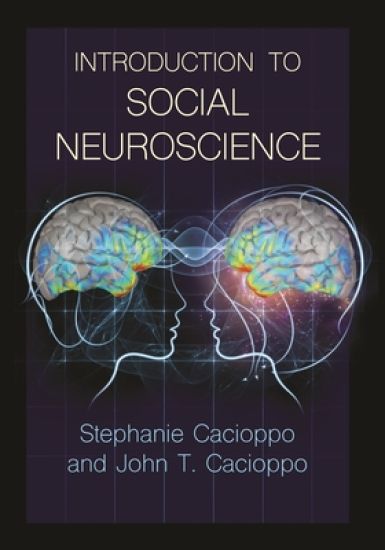
Introduction to Social Neuroscience

Introduction to Social Neuroscience

Stephanie Cacioppo; John T. Cacioppo

PRINCETON UNIVERSITY PRESS
2020
sidottu
A textbook that lays down the foundational principles for understanding social neuroscienceHumans, like many other animals, are a highly social species. But how do our biological systems implement social behaviors, and how do these processes shape the brain and biology? Spanning multiple disciplines, Introduction to Social Neuroscience seeks to engage students and scholars alike in exploring the effects of the brain’s perceived connections with others. This wide-ranging textbook provides a quintessential foundation for comprehending the psychological, neural, hormonal, cellular, and genomic mechanisms underlying such varied social processes as loneliness, empathy, theory-of-mind, trust, and cooperation.Stephanie and John Cacioppo posit that our brain is our main social organ. They show how the same objective relationship can be perceived as friendly or threatening depending on the mental states of the individuals involved in that relationship. They present exercises and evidence-based findings readers can put into practice to better understand the neural roots of the social brain and the cognitive and health implications of a dysfunctional social brain. This textbook’s distinctive features include the integration of human and animal studies, clinical cases from medicine, multilevel analyses of topics from genes to societies, and a variety of methodologies.Unveiling new facets to the study of the social brain’s anatomy and function, Introduction to Social Neuroscience widens the scientific lens on human interaction in society.The first textbook on social neuroscience intended for advanced undergraduates and graduate studentsChapters address the psychological, neural, hormonal, cellular, and genomic mechanisms underlying the brain’s perceived connections with othersMaterials integrate human and animal studies, clinical cases, multilevel analyses, and multiple disciplines

Attitudes And Persuasion

Attitudes And Persuasion

Richard E Petty; John T Cacioppo

Routledge
2019
sidottu
This book provides a needed survey of a truly remarkable number of different theoretical approaches to the related phenomena of attitude and belief change. It focuses on variable perspective theory which is far more deserving of attention than the present level of research activity.
Communication and Persuasion

Communication and Persuasion

Richard E. Petty; John T. Cacioppo

Springer-Verlag New York Inc.
2011
nidottu
It has been over 10 years since we initiated work on our first series of collaborative experiments. As graduate students, we had great fun planning, conducting, and writing this research (Petty & Cacioppo, 1977). We enjoyed arguing with each other at our initial meeting in 1973 and have sub­ sequently become best friends, but neither of us suspected at the time that we would or could actively maintain a research collaboration over the next decade, or that we would now find ourselves in a position to write this monograph. As we note in Chapter 1, we began our studies of persuasion at a time when social psychology was in "crisis," and interest in research on attitude change in particular was declining. As we write this, we are aware of six new volumes on persuasion that are in press or in preparation and that should appear over the next few years. In retrospect, it is not so surprising that research on attitudes and persuasion would reemerge as a central concern of social psychology. We believe that human feelings, beliefs, and behaviors, whether in the domain of interpersonal relations (e. g. , marriage, aggression), politics (e. g. , voting, revolution), health (e. g. , following a medical regimen), or economics (e. g. , consumer purchases) are greatly influenced by the evaluations people have of other people, objects, and issues. Furthermore, evaluations (attitudes) are influenced by affect, cognition, and behavior.
Loneliness

Loneliness

John T. Cacioppo; William Patrick

WW Norton Co
2009
nidottu
University of Chicago social neuroscientist John T. Cacioppo pioneered research on the startling effects of loneliness: a sense of isolation or social rejection disrupts not only our ability to think and will power but also our immune systems, and can be as damaging as obesity or smoking. On the flip side, social connection can be a powerful therapy. Cacioppo’s sophisticated studies relying on brain imaging, analysis of blood pressure, immune response, stress hormones, behavior, and even gene expression show that human beings are simply far more intertwined and interdependent—physiologically as well as psychologically—than our cultural assumptions have ever allowed us to acknowledge. Loneliness traces the evolution of these tandem forces, showing how, for our primitive ancestors, survival depended not on greater brawn but on greater commitments to each other. Serving as a prompt to repair frayed social bonds, the pain of loneliness engendered a fear response so powerfully disruptive that even now, millions of years later, a persistent sense of rejection or isolation can impair DNA transcription in our immune cells. This disruption also impairs our ability to read social signals and exercise social skills, as well as limits our ability to internally regulate our emotions—all of which can combine to trap us in self-defeating behaviors that reinforce the very isolation and rejection that we dread. Loneliness shows us how to overcome this feedback loop to achieve better health and greater happiness. As individuals and as a society, we have everything to gain, and everything to lose, in how well or how poorly we manage our need for social bonds.
Attitudes And Persuasion

Attitudes And Persuasion

Richard E Petty; John T Cacioppo

Westview Press Inc
1996
nidottu
This book provides a needed survey of a truly remarkable number of different theoretical approaches to the related phenomena of attitude and belief change. It focuses on variable perspective theory which is far more deserving of attention than the present level of research activity.
Emotional Contagion

Emotional Contagion

Elaine Hatfield; John T. Cacioppo; Richard L. Rapson

Cambridge University Press
1993
sidottu
When people are in a certain mood, whether elation or depression, that mood is often communicated to others. When we are talking to someone who is depressed it may make us feel depressed, whereas if we talk to someone who is feeling self-confident and buoyant we are likely to feel good about ourselves. This phenomenon, known as emotional contagion, is identified here, and compelling evidence for its affect is offered from a variety of disciplines - social and developmental psychology, history, cross-cultural psychology, experimental psychology, and psychopathology.