Kirjojen hintavertailu. Mukana 12 595 353 kirjaa ja 12 kauppaa.

Kirjailija

John T. Hancock

Kirjat ja teokset yhdessä paikassa: 7 kirjaa, julkaisuja vuosilta 2016-2026, suosituimpien joukossa Animal Behaviour, Welfare, and Interactions in Sports and Recreational Environments. Vertaile teosten hintoja ja tarkista saatavuus suomalaisista kirjakaupoista.

7 kirjaa

Kirjojen julkaisuhaarukka 2016-2026.

Animal Behaviour, Welfare, and Interactions in Sports and Recreational Environments

Animal Behaviour, Welfare, and Interactions in Sports and Recreational Environments

John T. Hancock; Ros C. Rouse; Chris Pawson

TAYLOR FRANCIS LTD
2026
sidottu
Human-animal interactions are often a significant part of our experience in sport and recreational settings. Animals contribute to the quality of these environments as well as our subjective leisure experience, but coexistence can also provide challenges. Starting from the smallest nematode and working up to bears and alligators, this book explores the impact of animals in this arena, discussing how animal behaviour impacts sport and recreation, often positively and sometimes negatively, and, in turn, how humans impact animals in these spaces. Sports and leisure facilities around the world invest significantly in managing interactions with animals to support the quality of recreational experience and the health of both human and nonhuman animals. Bringing together the expertise of the authors in biology, animal behaviour, anthrozoology and psychology, this book discusses ways to encourage, or discourage, animals in sports and leisure settings, whilst always observing best possible welfare and conservation practice. The text is supported by reference to news and media outlets as well as scientific literature. In exploring our relationships with animals in areas highly managed by humans, this book aims to progress how facilities can be improved. It also adopts a One World lens encouraging us to interrogate our preconceived ideas about the animals with which we share these spaces and ultimately hopes that, with better understanding, animals will be treated with respect and wonder rather than seen as a source of conflict.
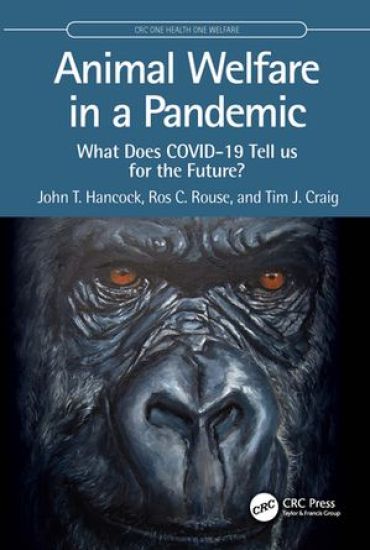
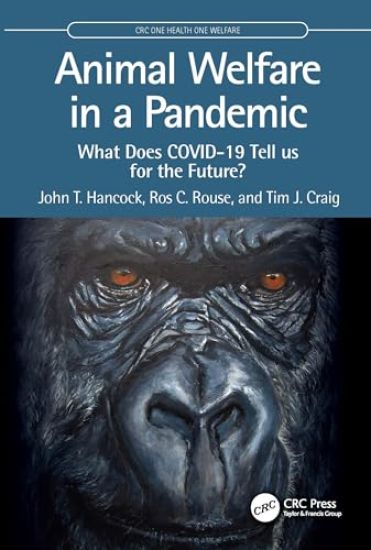
Animal Welfare in a Pandemic

Animal Welfare in a Pandemic

John T. Hancock; Ros C. Rouse; Tim J. Craig

TAYLOR FRANCIS LTD
2024
sidottu
Animal Welfare in a Pandemic explores the impact of COVID-19 on a wide array of animals, from those in the wild to companion and captive animals. During the height of the pandemic, a range of animals were infected, and many died, but this was hard to predict, even using up-to-date bioinformatics. Lockdowns around the world had, and continue to have, a major effect on animals’ welfare, influencing pet ownership and care, as well as impacting on the work of conservation institutes due to the lack of visitors and funding and lack of tourist presence in the wild which impacted on anti-poaching efforts. Some of the vast amount of personal protection equipment (PPE) that was distributed was discarded, creating both dangers and occasional opportunities for wild animals. With the rollout of human vaccines, some countries started developing animal vaccines, only some of which were deployed. In summary, the pandemic had a wide-ranging influence on animal welfare around the world. This is reviewed to highlight what can be learned to protect and enhance animal welfare in future epidemics/pandemics, and contribute to a genuinely One Health approach where the health and welfare of both humans and animals are considered holistically.This book is authored by members of the University of the West of England, Bristol, who span a range of expertise in Biological Sciences, Social Sciences, Animal Welfare, and Ethics.
Animal Welfare in a Pandemic

Animal Welfare in a Pandemic

John T. Hancock; Ros C. Rouse; Tim J. Craig

TAYLOR FRANCIS LTD
2024
nidottu
Animal Welfare in a Pandemic explores the impact of COVID-19 on a wide array of animals, from those in the wild to companion and captive animals. During the height of the pandemic, a range of animals were infected, and many died, but this was hard to predict, even using up-to-date bioinformatics. Lockdowns around the world had, and continue to have, a major effect on animals’ welfare, influencing pet ownership and care, as well as impacting on the work of conservation institutes due to the lack of visitors and funding and lack of tourist presence in the wild which impacted on anti-poaching efforts. Some of the vast amount of personal protection equipment (PPE) that was distributed was discarded, creating both dangers and occasional opportunities for wild animals. With the rollout of human vaccines, some countries started developing animal vaccines, only some of which were deployed. In summary, the pandemic had a wide-ranging influence on animal welfare around the world. This is reviewed to highlight what can be learned to protect and enhance animal welfare in future epidemics/pandemics, and contribute to a genuinely One Health approach where the health and welfare of both humans and animals are considered holistically.This book is authored by members of the University of the West of England, Bristol, who span a range of expertise in Biological Sciences, Social Sciences, Animal Welfare, and Ethics.
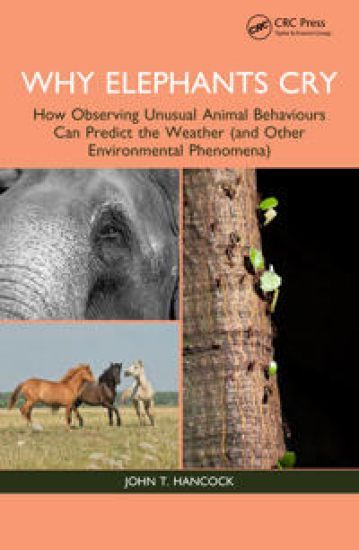
Why Elephants Cry

Why Elephants Cry

John T. Hancock

TAYLOR FRANCIS LTD
2023
nidottu
Why Elephants Cry is a fascinating frolic through the literature and evidence surrounding the use of unusual behavior of animals to measure and predict the environment. The role of animals, from the smallest ant to the biggest elephant, as predictors of environmental changes is framed around the climate crisis, which highlights the increasingly important part that animals will have to play in the future. Renowned biologist Professor John T. Hancock collects anecdotal stories and myths along with scientific evidence, demonstrating that observation of animals can be of tangible use. He looks at the measurement of the air temperature using ants, crickets and snakes, and goes on to assess the evidence that the observation of a wide range of animals can predict the weather or the imminent eruption of volcanoes and earthquakes. Evidence of animals being able to predict lunar and solar events, such as lunar cycles and the Northern Lights, is also considered. This is the only time that all this literature has been brought together in one place, a fascinating reference for anybody interested in animals and the environment. The book is also an ideal supplementary textbook for students studying animal behaviour.
Why Elephants Cry

Why Elephants Cry

John T. Hancock

TAYLOR FRANCIS LTD
2023
sidottu
Why Elephants Cry is a fascinating frolic through the literature and evidence surrounding the use of unusual behavior of animals to measure and predict the environment. The role of animals, from the smallest ant to the biggest elephant, as predictors of environmental changes is framed around the climate crisis, which highlights the increasingly important part that animals will have to play in the future. Renowned biologist Professor John T. Hancock collects anecdotal stories and myths along with scientific evidence, demonstrating that observation of animals can be of tangible use. He looks at the measurement of the air temperature using ants, crickets and snakes, and goes on to assess the evidence that the observation of a wide range of animals can predict the weather or the imminent eruption of volcanoes and earthquakes. Evidence of animals being able to predict lunar and solar events, such as lunar cycles and the Northern Lights, is also considered. This is the only time that all this literature has been brought together in one place, a fascinating reference for anybody interested in animals and the environment. The book is also an ideal supplementary textbook for students studying animal behaviour.
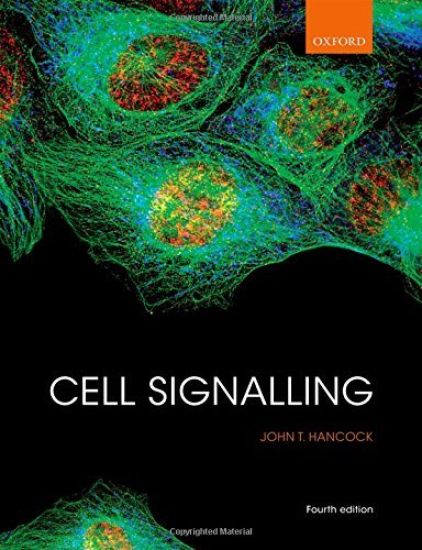
Cell Signalling

Cell Signalling

John T. Hancock

Oxford University Press
2021
nidottu
Written primarily for students embarking on an undergraduate bioscience degree, this primer provides a clear introduction to the main aspects of cell signalling in biological systems, demystifying the subject for those new to the field. The primer provides an overview of cell signalling and highlights its importance in all organisms, before going on to describe the main components of cell signalling and examples of signal transduction pathways. The discussion then progresses on to key physiological conditions in which cell signalling has an instrumental role: cancer, apoptosis and diabetes. After getting to grips with the fundamentals of the subject, Cell Signalling opens a discussion on the future of the discipline, including how manipulation of cell signalling pathways is seen as the biggest target for the pharmaceutical industry, and how crop diseases, plant survival during stress, and post-harvest storage are all influenced by cell signalling pathways. Cell Signalling is supported by online resources and is available for students and institutions to purchase in a variety of formats. The e-book offers a mobile experience and convenient access along with functionality tools, navigation features and links that offer extra learning support: www.oxfordtextbooks.co.uk/ebooks The online resources include: For students: - Self-test questions For registered adopters of the book: · Figures from the book, available to download
Cell Signalling

Cell Signalling

John T. Hancock

Oxford University Press
2016
nidottu
Signalling within and between cells is one of the most important aspects of modern biochemistry and cell biology. An understanding of signalling pathways is vital to a wide range of biologists, from those who are investigating the causes of cancer, to those who are concerned about the impact of environmental pollutants on the ecosystem. The way cells adapt to changing environments, and the way cell dysfunction causes disease, is underpinned by cell signalling events. Cell Signalling presents a carefully structured and highly accessible introduction to this intricate and rapidly growing field. Starting with an overview of cell signalling and highlighting its importance in many biological systems, the book goes on to explore the key components of extracellular and intracellular signalling mechanisms, before examining how these components come together to create signalling pathways. A focus on common components and concepts, rather than mechanistic detail, allows the reader to gain a thorough understanding of the principles that underpin cell signalling. Online Resource Centre The Online Resource Centre to accompany Cell Signalling features: For students: - Links to useful websites For registered adopters of the text: - Journal Clubs: suggested research papers and discussion questions linked to topics featured in the book - Figures from the book in electronic format for use in lectures