![Benjamin Franklin (1889). By: John T. (Torrey) Morse: Benjamin Franklin (January 17, 1706 [O.S. January 6, 1705] - April 17, 1790) was one of the Fo](/covers/9781540823199.jpg)
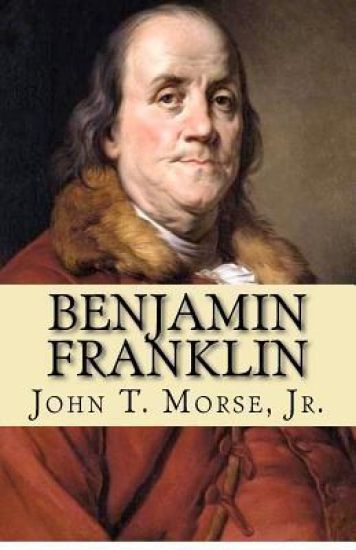
Benjamin Franklin (1889). By: John T. (Torrey) Morse: Benjamin Franklin (January 17, 1706 [O.S. January 6, 1705] - April 17, 1790) was one of the Fo
John T. Morse
Createspace Independent Publishing Platform
2016
nidottu
John Torrey Morse (1840-1937) was an American historian and biographer. He was born in Boston, Massachusetts on Jan. 9, 1840, and lived in that city as a lawyer. Morse was the editor of the 'American Statesmen Series, ' and published biographies of Alexander Hamilton in two volumes, considered his most significant work, He also wrote biographies on John and J. Q. Adams, Jefferson, Lincoln, Franklin, and Dr. Holmes. Morse also authored Banks and Banking, Arbitration and Award and Famous Trials....... Benjamin Franklin (January 17, 1706 O.S. January 6, 1705] - April 17, 1790) was one of the Founding Fathers of the United States. Franklin was a renowned polymath and a leading author, printer, political theorist, politician, freemason, postmaster, scientist, inventor, civic activist, statesman, and diplomat. As a scientist, he was a major figure in the American Enlightenment and the history of physics for his discoveries and theories regarding electricity. As an inventor, he is known for the lightning rod, bifocals, and the Franklin stove, among other inventions.He facilitated many civic organizations, including Philadelphia's fire department and The University of Pennsylvania, an Ivy League institution. Franklin earned the title of "The First American" for his early and indefatigable campaigning for colonial unity, initially as an author and spokesman in London for several colonies. As the first United States Ambassador to France, he exemplified the emerging American nation.Franklin was foundational in defining the American ethos as a marriage of the practical values of thrift, hard work, education, community spirit, self-governing institutions, and opposition to authoritarianism both political and religious, with the scientific and tolerant values of the Enlightenment. In the words of historian Henry Steele Commager, "In a Franklin could be merged the virtues of Puritanism without its defects, the illumination of the Enlightenment without its heat."To Walter Isaacson, this makes Franklin "the most accomplished American of his age and the most influential in inventing the type of society America would become." Franklin became a successful newspaper editor and printer in Philadelphia, the leading city in the colonies, publishing the Pennsylvania Gazette at the age of 23.He became wealthy publishing this and Poor Richard's Almanack, which he authored under the pseudonym "Richard Saunders". After 1767, he was associated with the Pennsylvania Chronicle, a newspaper that was known for its revolutionary sentiments and criticisms of the British policies. He pioneered and was first president of the The Academy and College of Philadelphia which opened in 1751 and later became the University of Pennsylvania. He organised and was the first secretary of the American Philosophical Society and was elected president in 1769. Franklin became a national hero in America as an agent for several colonies when he spearheaded an effort in London to have the Parliament of Great Britain repeal the unpopular Stamp Act. An accomplished diplomat, he was widely admired among the French as American minister to Paris and was a major figure in the development of positive Franco-American relations. His efforts proved vital for the American Revolution in securing shipments of crucial munitions from France. He was promoted to deputy postmaster-general for the British colonies in 1753, having been Philadelphia postmaster for many years, and this enabled him to set up the first national communications network. After the Revolution, he became the first US Postmaster General. He was active in community affairs and colonial and state politics, as well as national and international affairs. From 1785 to 1788, he served as governor of Pennsylvania. He initially owned and dealt in slaves but, by the 1750s, he argued against slavery from an economic perspective and became one of the most prominent abolitionists....