
Kirjojen hintavertailu. Mukana 12 390 323 kirjaa ja 12 kauppaa.

Kirjailija

John T Paoletti

Kirjat ja teokset yhdessä paikassa: 2 kirjaa, julkaisuja vuosilta 2011-2015, suosituimpien joukossa Art in Renaissance Italy, 4th edition. Vertaile teosten hintoja ja tarkista saatavuus suomalaisista kirjakaupoista.

Mukana myös kirjoitusasut: John T. Paoletti

2 kirjaa

Kirjojen julkaisuhaarukka 2011-2015.

Art in Renaissance Italy, 4th edition

Art in Renaissance Italy, 4th edition

John T Paoletti; Gary M Radke

Laurence King Publishing
2011
nidottu
With a freshness and breadth of approach that sets the art in its context, this book explores why works were created and who commissioned the palaces, cathedrals, paintings, and sculptures. It covers Rome and Florence, Venice and the Veneto, Assisi, Siena, Milan, Pavia, Genoa, Padua, Mantua, Verona, Ferrara, Urbino, and Naples. Chapters are grouped into four chronological parts, allowing for a sustained examination of individual cities in different periods. "Contemporary Scene" boxes provide fascinating glimpses of daily life and "Contemporary Voice" boxes quote from painters and writers of the time. Innovative and scholarly, yet accessible and beautifully presented, this book is a definitive work on the Italian Renaissance. This revised edition contains around 200 new pictures and nearly all colour images. The chapter structure has also been improved for yet greater geographic and chronological clarity, and a new page size makes the volume more user-friendly.
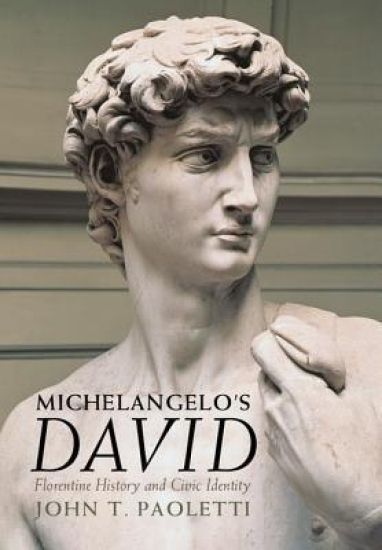
Michelangelo's David

Michelangelo's David

John T. Paoletti

Cambridge University Press
2015
sidottu
This book takes a new look at the interpretations of, and the historical information surrounding, Michelangelo's David. New documentary materials discovered by Rolf Bagemihl add to the early history of the stone block that became the David and provide an identity for the painted terracotta colossus that stood on the cathedral buttresses for which Michelangelo's statue was to be a companion. The David, with its placement at the Palazzo della Signoria, was deeply implicated in the civic history of Florence, where public nakedness played a ritual role in the military and in the political lives of its people. This book, then, places the David not only within the artistic history of Florence and its monuments but also within the popular culture of the period as well.