Kirjojen hintavertailu. Mukana 12 595 353 kirjaa ja 12 kauppaa.

Kirjailija

John T. Scott

Kirjat ja teokset yhdessä paikassa: 18 kirjaa, julkaisuja vuosilta 1980-2023, suosituimpien joukossa The Economic Impacts of the Advanced Encryption Standard, 1996–2017. Vertaile teosten hintoja ja tarkista saatavuus suomalaisista kirjakaupoista.

Mukana myös kirjoitusasut: John T Scott

18 kirjaa

Kirjojen julkaisuhaarukka 1980-2023.

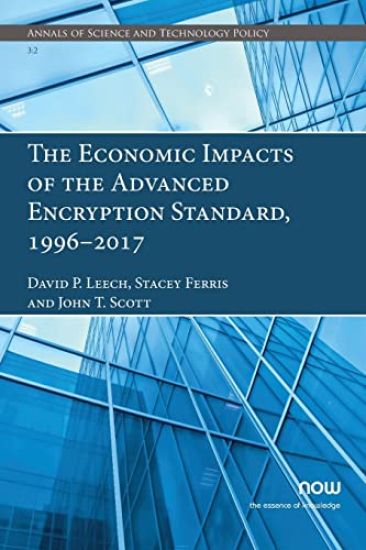
The Economic Impacts of the Advanced Encryption Standard, 1996–2017

The Economic Impacts of the Advanced Encryption Standard, 1996–2017

David P. Leech; Stacey Ferris; John T. Scott

now publishers Inc
2019
nidottu
The Economic Impacts of the Advanced Encryption Standard, 1996-2017 evaluates the net social benefits of advanced encryption standards (AES). This is one of many areas where the National Institute for Standards and Technology (NIST) has promoted innovation and industrial competitiveness to ensure that public and private computer systems can protect the confidentiality, availability, and integrity of digital information in the face of ever more powerful computers and developments in the field of cryptography.After an introductory chapter, Chapter 2 provides the ABCs of cryptography as it applies to the AES and an introduction to the computer networks that employ encryption systems. It further delves into the evolution of NIST's role as the Federal Government's authority on the computer security of civilian-focused agencies, the AES competition (1997-2000), and subsequent cryptographic validation programs including what these validation programs reveal about the composition of the encryption product market. Chapter 3 characterizes how the AES program and subsequent dependent industry standards have functioned as economic policy tools that reduced the economic barriers of the 1990s to the development, commercialization, and application of cryptographic technologies, as well as their continuing indirect role in supporting the quality of encryption systems, reducing encryption system risks, and facilitating the growth of related industries. This chapter also places the AES program in an industrial organizational context by describing the economic value chain of which the AES program is a part. Chapter 4 discusses the selection of pre-survey interviews with subject matter experts, the design of the survey instrument, and survey execution. Chapter 5 describes survey results, compares selected qualitative survey findings to pre-survey expectations, describes the three-tiered approach to estimating economic impact in context of actual survey results, and reports the costs of NIST's AES program for 1996-2017. Chapter 6 presents the results of the three-tiered approach to estimating the overall economic impacts of the AES program. Chapter 7 provides a summary and conclusion of the analysis.
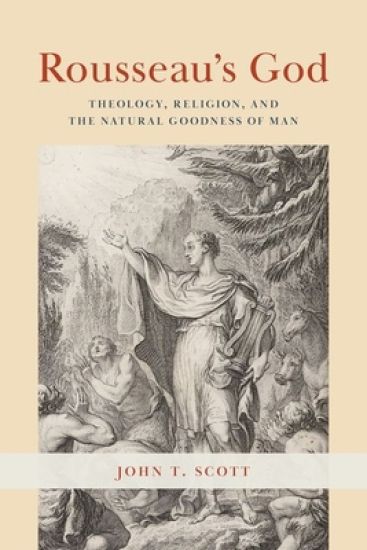
Rousseau's God

Rousseau's God

John T. Scott

THE UNIVERSITY OF CHICAGO PRESS
2023
sidottu
A landmark study of Rousseau’s theological and religious thought. John T. Scott offers a comprehensive interpretation of Rousseau’s theological and religious thought, both in its own right and in relation to Rousseau’s broader oeuvre. In chapters focused on different key writings, Scott reveals recurrent themes in Rousseau’s views on the subject and traces their evolution over time. He shows that two concepts—truth and utility—are integral to Rousseau’s writings on religion. Doing so helps to explain some of Rousseau’s disagreements with his contemporaries: their different views on religion and theology stem from different understandings of human nature and the proper role of science in human life. Rousseau emphasizes not just what is true, but also what is useful—psychologically, morally, and politically—for human beings. Comprehensive and nuanced, Rousseau’s God is vital to understanding key categories of Rousseau’s thought.
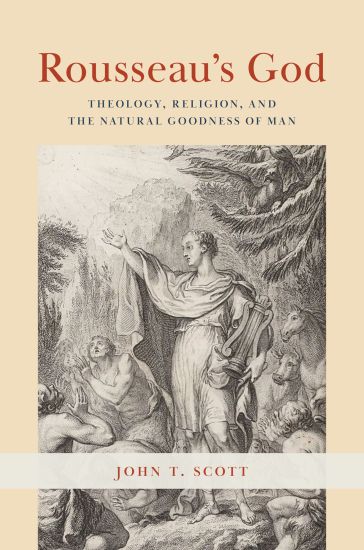
Rousseau's God

Rousseau's God

John T. Scott

THE UNIVERSITY OF CHICAGO PRESS
2023
nidottu
A landmark study of Rousseau’s theological and religious thought. John T. Scott offers a comprehensive interpretation of Rousseau’s theological and religious thought, both in its own right and in relation to Rousseau’s broader oeuvre. In chapters focused on different key writings, Scott reveals recurrent themes in Rousseau’s views on the subject and traces their evolution over time. He shows that two concepts—truth and utility—are integral to Rousseau’s writings on religion. Doing so helps to explain some of Rousseau’s disagreements with his contemporaries: their different views on religion and theology stem from different understandings of human nature and the proper role of science in human life. Rousseau emphasizes not just what is true, but also what is useful—psychologically, morally, and politically—for human beings. Comprehensive and nuanced, Rousseau’s God is vital to understanding key categories of Rousseau’s thought.
Government Royalties on Sales of Pharmaceutical and Other Biomedical Products Developed with Substantial Public Funding
This study develops a detailed description of the successful technology transfer of an invention — the drug-eluting coronary stent — originating in intramural research within the US National Institutes of Health. The history of the commercialization of the invention is used to illustrate a new policy, proposed and explained in this study, for the payment to the government of royalties on the sales of biomedical products developed with substantial public funding provided through indirect as well as direct funding avenues. The proposed policy addresses concerns about the high prices that taxpayers as consumers pay for biomedical products that were developed with funding from the taxpayers as investors. The study explains the theoretical circumstances in which the policy would not adversely affect the appropriate level of R&D investment, and then uses the history of the drug-eluting coronary stent as an example where biomedical R&D is consistent with those circumstances.
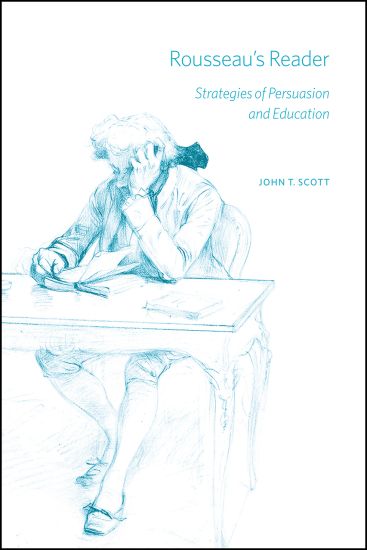
Rousseau's Reader

Rousseau's Reader

John T. Scott

University of Chicago Press
2020
sidottu
On his famous walk to Vincennes to visit the imprisoned Diderot, Rousseau had what he called an “illumination”—the realization that man was naturally good but becomes corrupted by the influence of society—a fundamental change in Rousseau’s perspective that would animate all of his subsequent works. At that moment, Rousseau “saw” something he had hitherto not seen, and he made it his mission to help his readers share that vision through an array of rhetorical and literary techniques. In Rousseau’s Reader, John T. Scott looks at the different strategies Rousseau used to engage and persuade the readers of his major philosophical works, including the Social Contract, Discourse on Inequality, and Emile. Considering choice of genre; textual structure; frontispieces and illustrations; shifting authorial and narrative voice; addresses to readers that alternately invite and challenge; apostrophe, metaphor, and other literary devices; and, of course, paradox, Scott explores how the form of Rousseau’s writing relates to the content of his thought and vice versa. Through this skillful interplay of form and content, Rousseau engages in a profoundly transformative dialogue with his readers. While most political philosophers have focused, understandably, on Rousseau’s ideas, Scott shows convincingly that the way he conveyed them is also of vital importance, especially given Rousseau’s enduring interest in education. Giving readers the key to Rousseau’s style, Scott offers fresh and original insights into the relationship between the substance of his thought and his literary and rhetorical techniques, which enhance our understanding of Rousseau’s project and the audiences he intended to reach.
The Routledge Guidebook to Machiavelli's The Prince
Niccolò Machiavelli’s The Prince is one of the most influential works in the history of political thought and the adjective Machiavellian is well-known and perhaps even over-used. So why does the meaning of the text continue to be debated to the present day? And how does a contemporary reader get to grips with a book full of references to the politics of the early 16th Century? The Routledge Guidebook to Machiavelli’s The Prince provides readers with the historical background, textual analysis, and other relevant information needed for a greater understanding and appreciation of this classic text. This guidebook introduces: the historical, political and intellectual context in which Machiavelli was workingthe key ideas developed by Machiavelli throughout the text and the examples he uses to illustrate themthe relationship of The Prince to The Discourses and Machiavelli’s other worksFeaturing a timeline, maps and suggestions for further reading throughout, this book is an invaluable guide for anyone who wants to be able to engage more fully with The Prince.
The Routledge Guidebook to Machiavelli's The Prince
Niccolò Machiavelli’s The Prince is one of the most influential works in the history of political thought and the adjective Machiavellian is well-known and perhaps even over-used. So why does the meaning of the text continue to be debated to the present day? And how does a contemporary reader get to grips with a book full of references to the politics of the early 16th Century? The Routledge Guidebook to Machiavelli’s The Prince provides readers with the historical background, textual analysis, and other relevant information needed for a greater understanding and appreciation of this classic text. This guidebook introduces: the historical, political and intellectual context in which Machiavelli was workingthe key ideas developed by Machiavelli throughout the text and the examples he uses to illustrate themthe relationship of The Prince to The Discourses and Machiavelli’s other worksFeaturing a timeline, maps and suggestions for further reading throughout, this book is an invaluable guide for anyone who wants to be able to engage more fully with The Prince.
Public Accountability

Public Accountability

Albert N. Link; John T. Scott

Springer-Verlag New York Inc.
2012
nidottu
Public Accountability: Evaluating Technology-Based Institutions presents guidelines for evaluating the research performance of technology-based public institutions, and illustrates these guidelines through case studies conducted at one technology-based public institution, the National Institute of Standards and Technology (NIST). The aim of this book is to demonstrate that a clear, more precise response to the question of performance accountability is possible through the systematic application of evaluation methods to document value. The authors begin with a review of the legislative history of fiscal accountability beginning with the Budget and Accounting Act of 1921, and ending with the Government Performance and Results Act of 1993. A discussion of existing applicable economic models, methods, and associated metrics follows. The book concludes with evaluation case studies.
Public Goods, Public Gains

Public Goods, Public Gains

Albert N. Link; John T. Scott

Oxford University Press Inc
2011
sidottu
In Public Goods, Public Gains, Link and Scott discuss the systematic application of alternative evaluation methods to estimate the social benefits of publicly-financed research and development (R&D). The authors argue that economic theory should be the guiding criterion for any method of program evaluation because it focuses attention on the value and the opportunity costs of the program. The evaluation methods discussed and illustrated are both economics and, for comparison, non-economics based. The book is motivated by four foundation chapters that discuss government's role in innovation from the perspective of economic theory, review public accountability issues from both a constitutional and an historical perspective, overview systematic approaches to program evaluation, and describe the evaluation metrics typically used. Four case studies illustrate the four alternative evaluation approached discussed. These case studies are for the U.S. Advanced Technology Program's intramural research awards program, the U.S. National Institute of Standards and Technology's research on wavelength references for optical fiber communications, the U.S. Malcolm Balridge National Quality Award, and the Advanced Technology Program's focused program on the integration of manufacturing applications.
The Philosophers' Quarrel

The Philosophers' Quarrel

Robert Zaretsky; John T. Scott

Yale University Press
2010
pokkari
The dramatic collapse of the friendship between Rousseau and Hume, in the context of their grand intellectual quest to conquer the limits of human understanding. The rise and spectacular fall of the friendship between the two great philosophers of the eighteenth century, barely six months after they first met, reverberated on both sides of the Channel. As the relationship between Jean-Jacques Rousseau and David Hume unraveled, a volley of rancorous letters was fired off, then quickly published and devoured by aristocrats, intellectuals, and common readers alike. Everyone took sides in this momentous dispute between the greatest of Enlightenment thinkers. In this lively and revealing book, Robert Zaretsky and John T. Scott explore the unfolding rift between Rousseau and Hume. The authors are particularly fascinated by the connection between the thinkers’ lives and thought, especially the way that the failure of each to understand the other—and himself—illuminates the limits of human understanding. In addition, they situate the philosophers’ quarrel in the social, political, and intellectual milieu that informed their actions, as well as the actions of the other participants in the dispute, such as James Boswell, Adam Smith, and Voltaire. By examining the conflict through the prism of each philosopher’s contribution to Western thought, Zaretsky and Scott reveal the implications for the two men as individuals and philosophers as well as for the contemporary world.
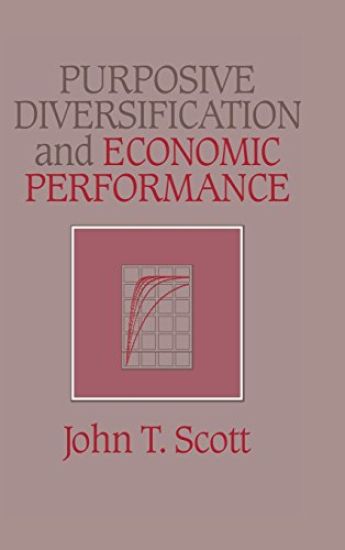
Purposive Diversification and Economic Performance

Purposive Diversification and Economic Performance

John T. Scott

Cambridge University Press
2005
pokkari
This book examines product-line diversification in large manufacturing firms. It introduces and applies a methodology that discerns groups of manufacturing industries related by complementarities in production, marketing, distribution, and research and development (R&D) activities. Manufacturing firms intentionally vary production to exploit these complementarities, and Professor Scott uses evidence from US manufacturing to explore hypotheses about such purposive diversification and ensuing economic performance, including product diversification's effects on both static efficiency and the optimality of R&D investment. The study offers insights into the policy debate about cooperation versus competition among firms: will industrial performance be better if leading firms cooperate on research, production, and marketing? Professor Scott shows that the answers depend on circumstances that vary with different industrial environments. His analysis offers insights about business strategy and public policy toward business combinations in conglomerate, vertical, and horizontal mergers and in cooperative R&D ventures.
Environmental Research and Development

Environmental Research and Development

John T. Scott

Edward Elgar Publishing Ltd
2003
sidottu
John Scott develops, describes, and uses new primary data about US industrial firms' research and development (R&D) investments to create innovative products and processes that provide goods and services without the by-product of pollution. New knowledge about environmental R&D is provided by original surveys of industry from 1993 and 2001. The R&D and other firm data are juxtaposed with US Census industry data and with US Environmental Protection Agency data about industrial toxic releases. This book presents hypothesis tests that provide evidence supporting the use of public policies - described in the book - to stimulate industry to use its creative powers to improve environmental performance.Economists and policy makers in the areas of industrial organization, technological change, the economics of R&D and the environment including policy toward R&D and technology; as well as corporate officers of R&D and environmental affairs will find this volume indispensable.
Public Accountability

Public Accountability

Albert N. Link; John T. Scott

Springer
1998
sidottu
Public Accountability: Evaluating Technology-Based Institutions presents guidelines for evaluating the research performance of technology-based public institutions, and illustrates these guidelines through case studies conducted at one technology-based public institution, the National Institute of Standards and Technology (NIST). The aim of this book is to demonstrate that a clear, more precise response to the question of performance accountability is possible through the systematic application of evaluation methods to document value. The authors begin with a review of the legislative history of fiscal accountability beginning with the Budget and Accounting Act of 1921, and ending with the Government Performance and Results Act of 1993. A discussion of existing applicable economic models, methods, and associated metrics follows. The book concludes with evaluation case studies.
Purposive Diversification and Economic Performance

Purposive Diversification and Economic Performance

John T. Scott

Cambridge University Press
1993
sidottu
This book examines product-line diversification in large manufacturing firms. It introduces and applies a methodology that discerns groups of manufacturing industries related by complementarities in production, marketing, distribution, and research and development (R&D) activities. Manufacturing firms intentionally vary production to exploit these complementarities, and Professor Scott uses evidence from US manufacturing to explore hypotheses about such purposive diversification and ensuing economic performance, including product diversification's effects on both static efficiency and the optimality of R&D investment. The study offers insights into the policy debate about cooperation versus competition among firms: will industrial performance be better if leading firms cooperate on research, production, and marketing? Professor Scott shows that the answers depend on circumstances that vary with different industrial environments. His analysis offers insights about business strategy and public policy toward business combinations in conglomerate, vertical, and horizontal mergers and in cooperative R&D ventures.
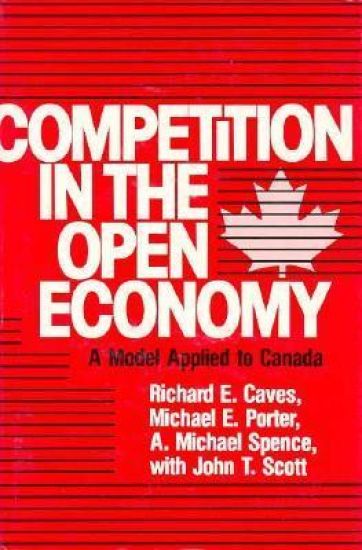
Competition in an Open Economy

Competition in an Open Economy

Richard E. Caves; Michael E. Porter; A. Michael Spence; John T. Scott

Harvard University Press
1980
sidottu
With the nations of the world becoming more interdependent, it is imperative to take international influences into account in understanding the organization of industry within a country. This book extends the structure/conduct/performance framework of analysis to present a fully specified simultaneous equation model of an open economy—Canada.By estimating a system of equations of all the major variables, the authors can identify which variables are dependent and which are independent. They are thus able to assess the relative importance of such factors as seller concentration, import competition, retailing structure, advertising expenditure, research and development spending, and technical and allocative efficiency in shaping the organization of industry in Canada. In addition, using both industry-level and firm-level data, the authors develop methods for assessing the effect of structural variables on diversification strategies and the consequences for market performance. They also study the effects of such variables on firms’ access to capital markets. The book concludes with a discussion of the implications of the findings for government policy.