Kirjojen hintavertailu. Mukana 12 530 613 kirjaa ja 12 kauppaa.

Kirjailija

John T. Slotemaker

Kirjat ja teokset yhdessä paikassa: 4 kirjaa, julkaisuja vuosilta 2016-2020, suosituimpien joukossa Robert Holcot. Vertaile teosten hintoja ja tarkista saatavuus suomalaisista kirjakaupoista.

4 kirjaa

Kirjojen julkaisuhaarukka 2016-2020.

Robert Holcot

Robert Holcot

John T. Slotemaker; Jeffrey C. Witt

Oxford University Press Inc
2016
sidottu
This is an introduction the thought of Robert Holcot, a great and influential but often underappreciated medieval thinker. Holcot was a Dominican friar who flourished in the 1330's and produced a diverse body of work including scholastic treatises, biblical commentaries, and sermons. By viewing the whole of Holcot's corpus, this book provides a comprehensive account of his thought. Challenging established characterizations of him as a skeptic or radical, this book shows Holcot to be primarily concerned with affirming and supporting the faith of the pious believer. At times, this manifests itself as a cautious attitude toward absolutists' claims about the power of natural reason. At other times, Holcot reaffirms, in Anselmian fashion, the importance of rational effort in the attempt to understand and live out one's faith. Over the course of this introduction the authors unpack Holcot's views on faith and heresy, the divine nature and divine foreknowledge, the sacraments, Christ, and political philosophy. Likewise, they examine Holcot's approach to several important medieval literary genres, including the development of his unique "picture method," biblical commentaries, and sermons. In so doing, John Slotemaker and Jeffrey Witt restore Holcot to his rightful place as one of the most important thinkers of his time.
Robert Holcot

Robert Holcot

John T. Slotemaker; Jeffrey C. Witt

Oxford University Press Inc
2016
nidottu
This is an introduction the thought of Robert Holcot, a great and influential but often underappreciated medieval thinker. Holcot was a Dominican friar who flourished in the 1330s and produced a diverse body of work including scholastic treatises, biblical commentaries, and sermons. By viewing the whole of Holcot's corpus, this book provides a comprehensive account of his thought. Challenging established characterizations of him as a skeptic or radical, this book shows Holcot to be primarily concerned with affirming and supporting the faith of the pious believer. At times, this manifests itself as a cautious attitude toward absolutists' claims about the power of natural reason. At other times, Holcot reaffirms, in Anselmian fashion, the importance of rational effort in the attempt to understand and live out one's faith. Over the course of this introduction the authors unpack Holcot's views on faith and heresy, the divine nature and divine foreknowledge, the sacraments, Christ, and political philosophy. Likewise, they examine Holcot's approach to several important medieval literary genres, including the development of his unique "picture method," biblical commentaries, and sermons. In so doing, John Slotemaker and Jeffrey Witt restore Holcot to his rightful place as one of the most important thinkers of his time.
Trinitarian Theology in Medieval and Reformation Thought

Trinitarian Theology in Medieval and Reformation Thought

John T. Slotemaker

Springer Nature Switzerland AG
2020
sidottu
This book is an introduction to trinitarian theology as it developed from the late medieval period. John T. Slotemaker presents an overview of the central aspects of trinitarian theology by focusing on four themes: theological epistemology, the emanations in God, the divine relations, and the Trinity of persons. He does so by exploring a broad range of theological opinions on each subject and delineating the options that existed for medieval theologians from the early thirteenth century through the sixteenth. He argues that despite the diversity of opinion on a given subject, there is a normative theological center that grounds late medieval trinitarian theology. This center consists of theological developments involving the adoption of Peter Lombard’s Sentences as a theological textbook, the conciliar decisions of Lateran IV, and a shared Aristotelian philosophical background of Western trinitarian theology.
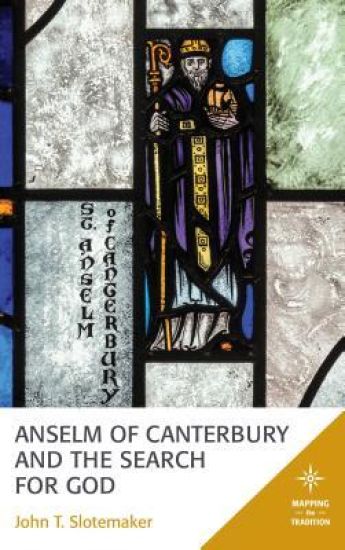
Anselm of Canterbury and the Search for God

Anselm of Canterbury and the Search for God

John T. Slotemaker

Lexington Books/Fortress Academic
2018
sidottu
This volume provides a broad interpretation of Anselm’s theological method through a study of his Monologion. The Monologion has been chosen specifically because of its rich and nuanced account of the search for the one God. Through a careful analysis of this text what becomes evident is that Anselm’s theological project is much broader than a single argument or a simple account of how divine justice and honor are appeased. What one encounters is a theology informed by the notion of the human desire for God and the honest search to come to know God in an intimate way. The Monologion, therefore, will present an entry point into Anselm’s theological project. The second half of the volume will examine the reception history of Anselm’s two most famous philosophical and theological contributions (i.e., the “ontological argument” and the “satisfaction theory”). Anselm is often misunderstood because his approach to theology is reduced to the “one argument” or a carefully construed calculus of human redemption—such readings of Anselm abound and often obscure the Benedictine context within which his thought developed—and so a careful reading of Anselm’s texts and the history of reception and interpretation will offer a counter narrative to the standard perception of one of the greatest thinkers of Christian history.