Kirjojen hintavertailu. Mukana 12 595 353 kirjaa ja 12 kauppaa.

Kirjailija

John Tirman

Kirjat ja teokset yhdessä paikassa: 5 kirjaa, julkaisuja vuosilta 2006-2022, suosituimpien joukossa Becoming Enemies. Vertaile teosten hintoja ja tarkista saatavuus suomalaisista kirjakaupoista.

5 kirjaa

Kirjojen julkaisuhaarukka 2006-2022.

Republics of Myth

Republics of Myth

Hussein Banai; Malcolm Byrne; John Tirman

Johns Hopkins University Press
2022
sidottu
Why does the rift between the US and Iran persist?Iran and the United States have been at odds for forty years, locked in a cold war that has run the gamut from harsh rhetoric to hostage-taking, from crippling sanctions to targeted killings. In Republics of Myth, Hussein Banai, Malcolm Byrne, and John Tirman argue that a major contributing factor to this tenacious enmity is how each nation views itself. The two nations have differing interests and grievances about each other, but their often-deadly confrontation derives from the very different national narratives that shape their politics, actions, and vision of their own destiny in the world.The dominant American narrative is the myth of the frontier—that the US can tame it, tame its inhabitants, and nurture democracy as well. Iran, conversely, can claim two dominant myths: the first, an unbroken (but not for lack of trying) lineage back to Cyrus the Great, and the second, the betrayal of Imam Hussein, the Prophet's grandson. Both Iranian myths feature a detestable outsider as an enemy of the Iranian state and source of the nation's ills and misfortune. The two countries have clashed so severely in part, the authors argue, because their national narratives constantly drive them to do so. Drawing on newly declassified documents and discussions with policymakers, the authors analyze an array of missed opportunities over several decades to improve the US-Iran relationship.From the coup d'état that overthrew Iran's legitimate premier Mohammad Mosaddeq to the hostage crisis, the Iran-Iraq War, the 1996 Khobar Towers bombing, post-9/11 antagonisms, and other points of conflict, each episode illustrates anew the weight of historical narratives on present circumstances. Finally, Barack Obama's diplomacy and Donald Trump's determination to undo the 2015 nuclear accord are explored—both examples of the enduring power of America's frontier narrative. Introducing new insights and knowledge in a highly readable narrative, Republics of Myth makes a major contribution to understanding this vital conflict.
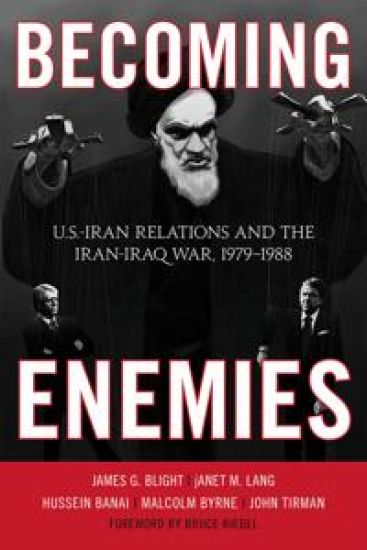
Becoming Enemies

Becoming Enemies

James G. Blight; janet M. Lang; Hussein Banai; Malcolm Byrne; John Tirman; Bruce Riedel

Rowman Littlefield Publishers
2014
nidottu
Becoming Enemies brings the unique methods of critical oral history, developed to study flashpoints from the Cold War such as the Cuban Missile Crisis, to understand U.S. and Iranian relations from the fall of the Shah in 1978 through the Iranian hostage crisis and the Iran-Iraq war. Scholars and former officials involved with U.S. and UN policy take a fresh look at U.S and Iranian relations during this time, with special emphasis on the U.S. role in the Iran-Iraq War. With its remarkable declassified documentation and oral testimony that bear directly on questions of U.S. policymaking with regard to the Iran-Iraq War, Becoming Enemies reveals much that was previously unknown about U.S. policy before, during, and after the war. They go beyond mere reportage to offer lessons regarding fundamental foreign policy challenges to the U.S. that transcend time and place.
The Deaths of Others

The Deaths of Others

John Tirman

Oxford University Press Inc
2012
nidottu
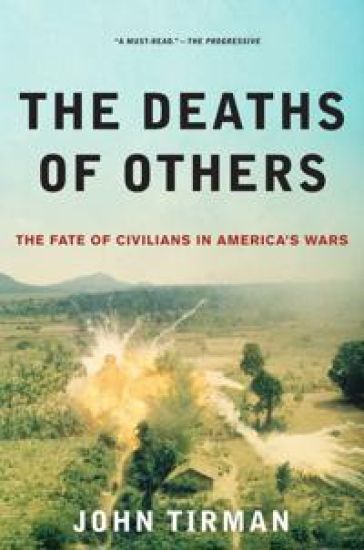
Americans are greatly concerned about the number of our troops killed in battle--100,000 dead in World War I; 300,000 in World War II; 33,000 in the Korean War; 58,000 in Vietnam; 4,500 in Iraq; over 1,000 in Afghanistan--and rightly so. But why are we so indifferent, often oblivious, to the far greater number of casualties suffered by those we fight and those we fight for? This is the compelling, largely unasked question John Tirman answers in The Deaths of Others. Between six and seven million people died in Korea, Vietnam, and Iraq alone, the majority of them civilians. And yet Americans devote little attention to these deaths. Other countries, however, do pay attention, and Tirman argues that if we want to understand why there is so much anti-Americanism around the world, the first place to look is how we conduct war. We understandably strive to protect our own troops, but our rules of engagement with the enemy are another matter. From atomic weapons and carpet bombing in World War II to napalm and daisy cutters in Vietnam and beyond, we have used our weapons intentionally to kill large numbers of civilians and terrorize our adversaries into surrender. Americans, however, are mostly ignorant of these facts, believing that American wars are essentially just, necessary, and "good." Tirman investigates the history of casualties caused by American forces in order to explain why America remains so unpopular and why US armed forces operate the way they do. Trenchant and passionate, The Deaths of Others forces readers to consider the tragic consequences of American military action not just for Americans, but especially for those we fight.
The Deaths of Others

The Deaths of Others

John Tirman

Oxford University Press Inc
2011
sidottu
Americans are greatly concerned about the number of our troops killed in battle--100,000 dead in World War I; 300,000 in World War II; 33,000 in the Korean War; 58,000 in Vietnam; 4,500 in Iraq; over 1,000 in Afghanistan--and rightly so. But why are we so indifferent, often oblivious, to the far greater number of casualties suffered by those we fight and those we fight for? This is the compelling, largely unasked question John Tirman answers in The Deaths of Others. Between six and seven million people died in Korea, Vietnam, and Iraq alone, the majority of them civilians. And yet Americans devote little attention to these deaths. Other countries, however, do pay attention, and Tirman argues that if we want to understand why there is so much anti-Americanism around the world, the first place to look is how we conduct war. We understandably strive to protect our own troops, but our rules of engagement with the enemy are another matter. From atomic weapons and carpet bombing in World War II to napalm and daisy cutters in Vietnam and beyond, we have used our weapons intentionally to kill large numbers of civilians and terrorize our adversaries into surrender. Americans, however, are mostly ignorant of these facts, believing that American wars are essentially just, necessary, and "good." Tirman investigates the history of casualties caused by American forces in order to explain why America remains so unpopular and why US armed forces operate the way they do. Trenchant and passionate, The Deaths of Others forces readers to consider the tragic consequences of American military action not just for Americans, but especially for those we fight.
100 Ways America Is Screwing Up The World
What do George W. Bush, Wal-Mart, Halliburton, gangsta rap, and SUVs have in common? They're all among the hundred ways in which America is screwing up the world. The country that was responsible for many, if not most, of the twentieth century's most important scientific and technological advancements now demonizes its scientists and thinkers in the twenty-first, while dumbing down its youth with anti-Darwin/pro-"Intelligent Design" propaganda. The longtime paragon of personal freedoms now supports torture and illegal wiretapping&#8212spreading its principles and policies at gunpoint while ruthlessly bombing the world with Big Macs and Mickey Mouse ears.At once serious-minded and satirical, John Tirman's 100 Ways America Is Screwing Up the World is an insightful, unabashed, entertaining, and distressing look at where we've gone terribly wrong&#8212from the destruction of the environment to the promotion of abhorrent personal health and eating habits to the "wussification" of the free press&#8212an alternately admonishing and amusing call to arms for patriotic Blue America.