Kirjojen hintavertailu. Mukana 12 595 353 kirjaa ja 12 kauppaa.

Kirjailija

John Tolan

Kirjat ja teokset yhdessä paikassa: 8 kirjaa, julkaisuja vuosilta 2009-2026, suosituimpien joukossa Islam. Vertaile teosten hintoja ja tarkista saatavuus suomalaisista kirjakaupoista.

8 kirjaa

Kirjojen julkaisuhaarukka 2009-2026.

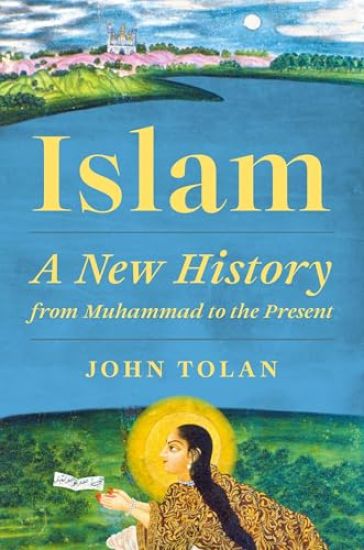
Islam

Islam

John Tolan

PRINCETON UNIVERSITY PRESS
2026
pokkari
A concise new narrative history of Islam that draws on the transformative insights of recent research to emphasize the diversity and dynamism of the tradition Today’s Muslim world is in upheaval: legalists and mystics engage in intense debates, radical groups invoke Sharia, Muslim immigrants in the West face prejudice and discrimination, and Muslim feminists advocate new interpretations of the Koran. At the same time, Islam is mischaracterized as unitary and unchanging by people ranging from right-wing Western politicians claiming that Islam is incompatible with democracy to conservative Muslims dreaming of returning to the golden age of the prophet. Against this contentious backdrop, this book provides an essential and timely new history of the religion in all its astonishing richness and diversity as it has been practiced by Muslims around the world, from seventh-century Mecca to today. Most popular histories of Islam continue to repeat conventional pietistic accounts. In contrast, John Tolan draws on decades of new historical research that has transformed knowledge of the origins and development of the Muslim faith. He shows how the youngest of the three great monotheisms arose in close contact with Jewish, Christian, and other religious traditions in a mixture of cultures, including Arab, Greek, Persian, and Turkish; how Islam spread across an enormous territory encompassing hundreds of languages and cultures; how Muslims have forged widely different beliefs and practices over fourteen centuries; and how Islamic history provides crucial context for understanding contemporary debates in the Muslim world. At a time when much talk about Islam is filled with misunderstanding, stereotypes, and bias, this book provides a fresh and lucid portrait of the continuous and ongoing transformations of a religion of tremendous variety and complexity.
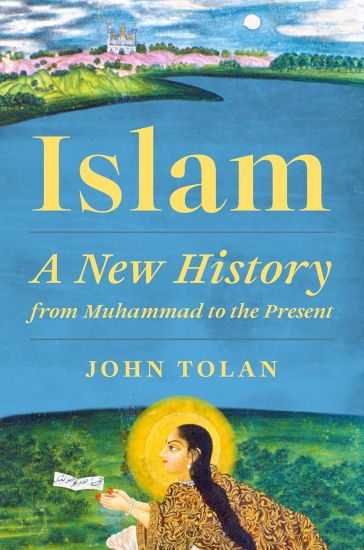
Islam

Islam

John Tolan

PRINCETON UNIVERSITY PRESS
2025
sidottu
A concise new narrative history of Islam that draws on the transformative insights of recent research to emphasize the diversity and dynamism of the traditionToday’s Muslim world is in upheaval: legalists and mystics engage in intense debates, radical groups invoke Sharia, Muslim immigrants in the West face prejudice and discrimination, and Muslim feminists advocate new interpretations of the Koran. At the same time, Islam is mischaracterized as unitary and unchanging by people ranging from right-wing Western politicians claiming that Islam is incompatible with democracy to conservative Muslims dreaming of returning to the golden age of the prophet. Against this contentious backdrop, this book provides an essential and timely new history of the religion in all its astonishing richness and diversity as it has been practiced by Muslims around the world, from seventh-century Mecca to today.Most popular histories of Islam continue to repeat conventional pietistic accounts. In contrast, John Tolan draws on decades of new historical research that has transformed knowledge of the origins and development of the Muslim faith. He shows how the youngest of the three great monotheisms arose in close contact with Jewish, Christian, and other religious traditions in a mixture of cultures, including Arab, Greek, Persian, and Turkish; how Islam spread across an enormous territory encompassing hundreds of languages and cultures; how Muslims have forged widely different beliefs and practices over fourteen centuries; and how Islamic history provides crucial context for understanding contemporary debates in the Muslim world.At a time when much talk about Islam is filled with misunderstanding, stereotypes, and bias, this book provides a fresh and lucid portrait of the continuous and ongoing transformations of a religion of tremendous variety and complexity.
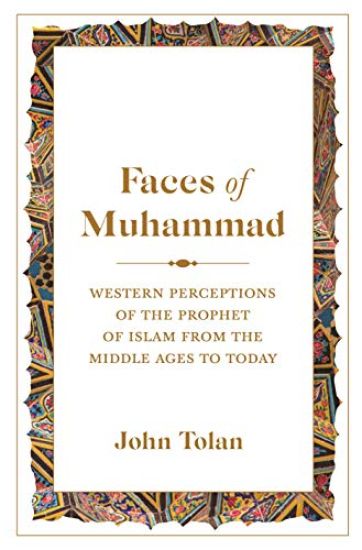
Faces of Muhammad

Faces of Muhammad

John Tolan

PRINCETON UNIVERSITY PRESS
2025
pokkari
Heretic and impostor or reformer and statesman? The contradictory Western visions of MuhammadIn European culture, Muhammad has been vilified as a heretic, an impostor, and a pagan idol. But these aren’t the only images of the Prophet of Islam that emerge from Western history. Commentators have also portrayed Muhammad as a visionary reformer and an inspirational leader, statesman, and lawgiver. In Faces of Muhammad, John Tolan provides a comprehensive history of these changing, complex, and contradictory visions. Starting from the earliest calls to the faithful to join the Crusades against the “Saracens,” he traces the evolution of Western conceptions of Muhammad through the Reformation, the Enlightenment, and the nineteenth and twentieth centuries, and up to the present day.Faces of Muhammad reveals a lengthy tradition of positive portrayals of Muhammad that many will find surprising. To Reformation polemicists, the spread of Islam attested to the corruption of the established Church, and prompted them to depict Muhammad as a champion of reform. In revolutionary England, writers on both sides of the conflict drew parallels between Muhammad and Oliver Cromwell, asking whether the prophet was a rebel against legitimate authority or the bringer of a new and just order. Voltaire first saw Muhammad as an archetypal religious fanatic but later claimed him as an enemy of superstition. To Napoleon, he was simply a role model: a brilliant general, orator, and leader.The book shows that Muhammad wears so many faces in the West because he has always acted as a mirror for its writers, their portrayals revealing more about their own concerns than the historical realities of the founder of Islam.
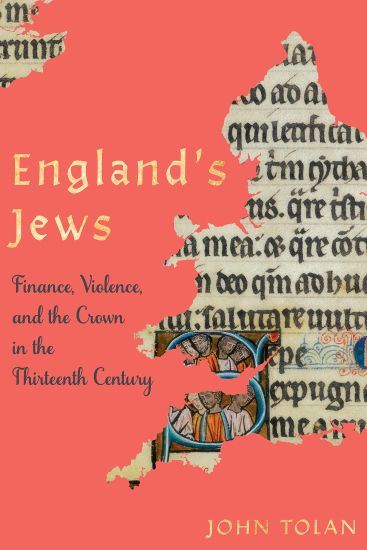
England's Jews

England's Jews

John Tolan

UNIVERSITY OF PENNSYLVANIA PRESS
2023
sidottu
In 1290, Jews were expelled from England and subsequently largely expunged from English historical memory. Yet for two centuries they occupied important roles in medieval English society. England's Jews revisits this neglected chapter of English history—one whose remembrance is more important than ever today, as antisemitism and other forms of racism are on the rise. Historian John Tolan tells the story of the thousands of Jews who lived in medieval England. Protected by the Crown and granted the exclusive right to loan money with interest, Jews financed building projects, provided loans to students, and bought and rented out housing. Historical texts show that they shared meals and beer, celebrated at weddings, and sometimes even ended up in bed with Christians. Yet Church authorities feared the consequences of Jewish contact with Christians and tried to limit it, though to little avail. Royal protection also proved to be a double-edged sword: when revolts broke out against the unpopular king Henry III, some of the rebels, in debt to Jewish creditors, killed Jews and destroyed loan records. Vicious rumors circulated that Jews secretly plotted against Christians and crucified Christian children. All of these factors led Edward I to expel the Jews from England in 1290. Paradoxically, Tolan shows, thirteenth-century England was both the theatre of fruitful interreligious exchange and a crucible of European antisemitism.
Faces of Muhammad

Faces of Muhammad

John Tolan

PRINCETON UNIVERSITY PRESS
2019
sidottu
Heretic and impostor or reformer and statesman? The contradictory Western visions of MuhammadIn European culture, Muhammad has been vilified as a heretic, an impostor, and a pagan idol. But these aren’t the only images of the Prophet of Islam that emerge from Western history. Commentators have also portrayed Muhammad as a visionary reformer and an inspirational leader, statesman, and lawgiver. In Faces of Muhammad, John Tolan provides a comprehensive history of these changing, complex, and contradictory visions. Starting from the earliest calls to the faithful to join the Crusades against the “Saracens,” he traces the evolution of Western conceptions of Muhammad through the Reformation, the Enlightenment, and the nineteenth and twentieth centuries, and up to the present day.Faces of Muhammad reveals a lengthy tradition of positive portrayals of Muhammad that many will find surprising. To Reformation polemicists, the spread of Islam attested to the corruption of the established Church, and prompted them to depict Muhammad as a champion of reform. In revolutionary England, writers on both sides of the conflict drew parallels between Muhammad and Oliver Cromwell, asking whether the prophet was a rebel against legitimate authority or the bringer of a new and just order. Voltaire first saw Muhammad as an archetypal religious fanatic but later claimed him as an enemy of superstition. To Napoleon, he was simply a role model: a brilliant general, orator, and leader.The book shows that Muhammad wears so many faces in the West because he has always acted as a mirror for its writers, their portrayals revealing more about their own concerns than the historical realities of the founder of Islam.
Europe and the Islamic World

Europe and the Islamic World

John Tolan; Henry Laurens; Gilles Veinstein; John L. Esposito

Princeton University Press
2015
pokkari
Europe and the Islamic World sheds much-needed light on the shared roots of Islamic and Western cultures and on the richness of their inextricably intertwined histories, refuting once and for all the misguided notion of a "clash of civilizations" between the Muslim world and Europe. In this landmark book, three eminent historians bring to life the complex and tumultuous relations between Genoans and Tunisians, Alexandrians and the people of Constantinople, Catalans and Maghrebis--the myriad groups and individuals whose stories reflect the common cultural, intellectual, and religious heritage of Europe and Islam. Since the seventh century, when the armies of Constantinople and Medina fought for control of Syria and Palestine, there has been ongoing contact between the Muslim world and the West. This sweeping history vividly recounts the wars and the crusades, the alliances and diplomacy, commerce and the slave trade, technology transfers, and the intellectual and artistic exchanges. Here readers are given an unparalleled introduction to key periods and events, including the Muslim conquests, the collapse of the Byzantine Empire, the commercial revolution of the medieval Mediterranean, the intellectual and cultural achievements of Muslim Spain, the crusades and Spanish reconquest, the rise of the Ottomans and their conquest of a third of Europe, European colonization and decolonization, and the challenges and promise of this entwined legacy today. As provocative as it is groundbreaking, this book describes this shared history in all its richness and diversity, revealing how ongoing encounters between Europe and Islam have profoundly shaped both.
Europe and the Islamic World

Europe and the Islamic World

John Tolan; Henry Laurens; Gilles Veinstein; John L. Esposito

Princeton University Press
2012
sidottu
Europe and the Islamic World sheds much-needed light on the shared roots of Islamic and Western cultures and on the richness of their inextricably intertwined histories, refuting once and for all the misguided notion of a "clash of civilizations" between the Muslim world and Europe. In this landmark book, three eminent historians bring to life the complex and tumultuous relations between Genoans and Tunisians, Alexandrians and the people of Constantinople, Catalans and Maghrebis--the myriad groups and individuals whose stories reflect the common cultural, intellectual, and religious heritage of Europe and Islam. Since the seventh century, when the armies of Constantinople and Medina fought for control of Syria and Palestine, there has been ongoing contact between the Muslim world and the West. This sweeping history vividly recounts the wars and the crusades, the alliances and diplomacy, commerce and the slave trade, technology transfers, and the intellectual and artistic exchanges. Here readers are given an unparalleled introduction to key periods and events, including the Muslim conquests, the collapse of the Byzantine Empire, the commercial revolution of the medieval Mediterranean, the intellectual and cultural achievements of Muslim Spain, the crusades and Spanish reconquest, the rise of the Ottomans and their conquest of a third of Europe, European colonization and decolonization, and the challenges and promise of this entwined legacy today. As provocative as it is groundbreaking, this book describes this shared history in all its richness and diversity, revealing how ongoing encounters between Europe and Islam have profoundly shaped both.
Islam and Europe, From the Origins to the Present / L'Europe et l'Islam: Quinze siècles d'histoire
Relations between Europe and the Muslim world are central to current affairs, and the following issues are likely to remain dominant throughout the twenty-first century and well beyond: European diplomacy and Iran, against the backdrop of the Israeli-Palestinian conflict; Muslim I'migration; the role of European oil companies in the economies of Arab nations; economic agreements between the European Union and the Maghreb; and negotiations on Turkish entry into the EU. This book recounts the long and complex history of European-Islamic relations, beginning in the 630s when the armies of Constantinople and of Medina were fighting over Syria-Palestine. Wars, conquest and re-conquest, diplomacy, alliances, commercial relations, marriages, the slave trade, translations, the transfer of technology, and artistic and cultural imitation: all these forms of contact left their mark on the history of the people of Europe and of the Muslim world. Rejecting the simplistic thesis of a clash between two homogenous blocs, the authors, who are experts in their respective fields, offer a synthesis of relations between, for example, Genoa and Tunisia, Constantinople and Alexandria, Catalonia and the Maghreb - i.e. between the numerous groups and iedividuals who created what we now call Europe and the Muslim world.A real tour de force, this book covers fourteen centuries of wars and interlocking influences and exchanges throughout the Mediterranean world. It is an ambitious work, based on recent research, which illuminates a number of key periods and events that frequently rouse controversy, such as the Arab conquest, the collapse of the Byzantine Empire, the Crusades, Arab Spain and the Reconquista, eighteenth-century exchanges and conflicts, the Ottoman Empire, European colonisation and decolonisation. It is an essential work that'should be read by anyone wishing to understand the complex issues at stake, the challenges that must be faced, and the different heritages that weigh on contemporary events. Henry Laurens, a specialist in the Arab-Muslim world, is a professor at the Coll ge de France and at the Institut National des Langues et Civilisations Orientales (INALCO). He is the author of Paix et guerre au Moyen-Orient (1999), La Question de Palestine I, II and III (1999-2007), L'Orient arabe l'heure am ricaine (2004) and Orientales I, II and III (2004). John Tolan, a medievalist, is a professor at the University of Nantes (France). He is the author of Les Sarrasins (2003) and Le Saint chez le Sultan (2007). Gilles Veinstein, a specialist in Turkish and Ottoman history, is a professor at the Coll ge de France. He is the author of Le S rail branl (2003).