Kirjojen hintavertailu. Mukana 12 265 395 kirjaa ja 12 kauppaa.

Kirjailija

John Updike

Kirjat ja teokset yhdessä paikassa: 111 kirjaa, julkaisuja vuosilta 1973-2026, suosituimpien joukossa Roger's Version. Vertaile teosten hintoja ja tarkista saatavuus suomalaisista kirjakaupoista.

111 kirjaa

Kirjojen julkaisuhaarukka 1973-2026.

Basic Bech

Basic Bech

John Updike

Penguin Books Ltd
1999
pokkari
Basic Bech combines two classic titles -- Bech: A Book and Bech is Back -- from one of John Updike's most beloved characters.Henry Bech, the celebrated author of Travel Light, has been scrutinized, canonized and vilified by reviewers, academics, critics and readers across the world. Suffering from temporary impotence and not-so-temporary writer's block, Bech finds renewed fame when he returns to his native America and Think Big, his all-time blockbuster, hits the shops . . . In these classic novels by John Updike, we return to a character as compelling and timeless as Rabbit Angstrom: the inimitable Henry Bech. Famous for his writer's block, Bech is a Jew adrift in a world of Gentiles. As he roams from one adventure to the next, he views life with a blend of wonder and cynicism that will make you laugh with delight and wince in recognition.Praise for John Updike:'Our time's greatest man of letters - as brilliant a literary critic and essayist as he was a novelist and short-story writer. His death constitutes a loss to our literature that is immeasurable' Philip Roth'Alert, funny, sensuous. Here is a writer who can do more or less as he likes' Martin Amis'One of the most protean of American writers . . . For a writer whose prose can be so lush and hyper-charged, he has always been in contact with the material detritus of everyday life' The Times'He was the ideal son of a platonic union between John Cheever and J.D. Salinger, with Nabokov attending the christening as fairy godfather' James WoodJohn Updike was born in 1932 in Shillington, Pennsylvania. He graduated from Harvard College in 1954, and spent a year in Oxford, at the Ruskin School of Drawing and Fine Art. His novels, stories, and nonfiction collections have won numerous awards, including the Pulitzer Prize, the National Book Award, the National Book Critics Circle Award, the PEN/Faulkner Award and the Howells Medal of the American Academy of Arts and Letters. He died in January 2009.
Bech at Bay

Bech at Bay

John Updike

Random House Group
1999
nidottu
In this, the final volume in John Updike's mock-heroic trilogy about the Jewish American writer Henry Bech, our hero is older but scarcely wiser. Now in his seventies, he remains competitive, lecherous, and self-absorbed, lost in a brave new literary world where his books are hyped by Swiss-owned conglomerates, showcased in chain stores attached to espresso bars, and returned to warehouses three weeks after publication. In five chapters more startling and surreal than any that have come before, Bech presides over the American literary scene, enacts bloody revenge on his critics, and wins the world's most coveted writing prize. It's not easy being Henry Bech in the post-Gutenbergian world, but somebody has to do it, and he brings to the task his signature mixture of grit, spit, and ennui.
On Literary Biography

On Literary Biography

John Updike

University of South Carolina Press
1999
sidottu
In ""On Literary Biography"", John Updike lays out his skeptical, yet generous, reflections on reading and writing about the lives of literary figures. Asking what satisfactions literary biography may offer readers, he decides that ""the first and perhaps the most worthy"" is in allowing us to continue and expand our acquaintance with an author who interests us, so that we may ""partake again, from another angle, of the joys we have experienced within the author's oeuvre"". He tells of finding in a biography of Proust the solid details of what he had previously encountered through that writer's subjective sensibility, but he acknowledges that there can be other reasons for attending to the genre. If the reader is also a writer, a desire to learn the details of a fellow's craft may come into play. Or ""in a diagnostic mood"", readers may seek to relate features of a writer's achievement to the psychological and physical circumstances in which it occurred. Some of us, some of the time, may also take pleasure in seeing the human flaws of writers exposed and in watching as the literary mentality is turned to show an unsavoury side. Updike calls one variant of the biography that uncovers person Declaring his own disinclinations to be the subject of biographical treatment, he imagines a biographer ""disturbing my children, quizzing my wife, seeking for Judases among my friends, rummaging through yellowing old clippings, quoting ""in extenso"" bad reviews I would rather forget, and getting everything slightly wrong"". A particular apprehension he mentions is the frequency with which those who write about others misstate basic facts - an apprehension justified by the errors he is aware of in published assertions about his own life and background. Still, Updike's alertness to the risks of literary biography is yoked with the recognition that the genre can lead readers back to an author's works, if at times by a ""nether route"", and that in improving our access to literature, it ""does perform useful work"".
Couples

Couples

John Updike

Fawcett
1998
nidottu
One of the signature novels of the American 1960s, "Couples" is a book that, when it debuted, scandalized the public with prose pictures of the way people live, and that today provides an engrossing epitaph to the short, happy life of the "post-Pill paradise." It chronicles the interactions of ten young married couples in a seaside New England community who make a cult of sex and of themselves. The group of acquaintances form a magical circle, complete with ritualistic games, religious substitutions, a priest (Freddy Thorne), and a scapegoat (Piet Hanema). As with most American utopias, this one's existence is brief and unsustainable, but the "imaginative quest" that inspires its creation is eternal.
Bech: A Book

Bech: A Book

John Updike

Random House Trade
1998
nidottu
The Jewish American novelist Henry Bech--procrastinating, libidinous, and tart-tongued, his reputation growing while his powers decline--made his first appearance in 1965, in John Updike's "The Bulgarian Poetess." That story won the O. Henry First Prize, and it and the six Bech adventures that followed make up this collection. "Bech is the writer in me," Updike once said, "creaking but lusty, battered but undiscourageable, fed on the blood of ink and the bread of white paper." As he trots the globe, promotes himself, and lurches from one woman's bed to another's, Bech views life with a blend of wonder and cynicism that will make followers of the lit-biz smile with delight and wince in recognition.
Golf Dreams

Golf Dreams

John Updike

Penguin Books Ltd
1998
pokkari
As a golfer for almost forty years, John Updike has written frequently about the game. This gathering of his pieces covers everything from the peculiar charms of bad golf and the satisfactions of an essentially losing struggle to the camaraderie of good golf and its own attendant perils.
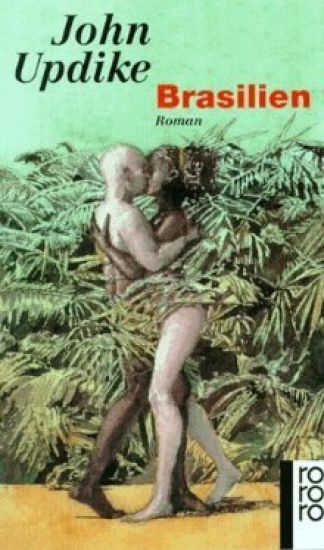
Brasilien

Brasilien

John Updike

Rowohlt Taschenbuch
1997
pokkari
Tristao, ein schwarzer Junge aus den Slums, und die weiße Diplomatentochter Isabel verlieben sich am Strand von Copacabana. Auf der Flucht vor ihren entsetzten Familien stürzen sie sich in immer exotischere und sinnlichere Abenteuer. Eine beunruhigende Liebesgeschichte, ein Abenteuerroman mit magischen Zügen und bisweilen auch ein ironisch gebrochener Kolportageroman. Aber vor allem: eine Feier der Liebe, der Unschuld, der Treue. Also - ein Märchen ?
Golf Dreams: Writings on Golf

Golf Dreams: Writings on Golf

John Updike

Random House Group
1997
nidottu
John Updike wrote about the lure of golf for five decades, from the first time he teed off at the age of twenty-five until his final rounds at the age of seventy-six. Golf Dreams collects the most memorable of his golf pieces, high-spirited evidence of his learning, playing, and living for the game. The camaraderie of golf, the perils of its present boom, how to relate to caddies, and how to manage short putts are among the topics he addresses, sometimes in lyrical essays, sometimes in light verse, sometimes in wickedly comic fiction. All thirty pieces have the lilt of a love song, and the crispness of a firm chip stiff to the pin.
In the Beauty of the Lilies

In the Beauty of the Lilies

John Updike

Penguin Books Ltd
1997
pokkari
One hot afternoon in 1910, the Reverend Clarence Wilmot, standing in the rectory of the Fourth Presbyterian Church, experiences the last vestiges of his faith departing. True to this revelation, Clarence abandons the pulpit and becomes an encyclopedia salesman. What follows is the saga of the Wilmot family, one wandering tapestry thread within the American century. This is the story of Clarence's postman son, of his granddaughter, Esther, whose prayers are always answered and who becomes a twentieth century goddess, and of her son, in whom the passion that has long simmered, hidden in the corners of American life, comes to a boil.
In the Beauty of the Lilies

In the Beauty of the Lilies

John Updike

Random House Trade
1997
nidottu
In the Beauty of the Lilies begins in 1910 and traces God's relation to four generations of American seekers, beginning with Clarence Wilmot, a clergyman in Paterson, New Jersey. He loses his faith but finds solace at the movies, respite from "the bleak facts of life, his life, gutted by God's withdrawal." His son, Teddy, becomes a mailman who retreats from American exceptionalism, religious and otherwise, into a life of studied ordinariness. Teddy has a daughter, Esther, who becomes a movie star, an object of worship, an All-American goddess. Her neglected son, Clark, is possessed of a native Christian fervor that brings the story full circle: in the late 1980s he joins a Colorado sect called the Temple, a handful of "God's elect" hastening the day of reckoning. In following the Wilmots' collective search for transcendence, John Updike pulls one wandering thread from the tapestry of the American Century and writes perhaps the greatest of his later novels.
A Month of Sundays

A Month of Sundays

John Updike

Random House Trade
1996
nidottu
An antic riff on Hawthorne's Scarlet Letter, in which a latter-day Arthur Dimmesdale is sent west from his Midwestern parish in sexual disgrace--from one of the most gifted American writers of the twentieth century and the author of the acclaimed Rabbit series. "Updike may be America's finest novelist and this] is quintessential Updike."--The Washington Post At a desert retreat dedicated to rest, recreation, and spiritual renewal, this fortyish serial fornicator is required to keep a journal whose thirty-one weekly entries constitute the book you now hold in your hand. In his wonderfully overwrought style he lays bare his soul and his past--his marriage to the daughter of his ethics professor, his affair with his organist, his antipathetic conversations with his senile father and his bisexual curate, his golf scores, his poker hands, his Biblical exegeses, and his smoldering desire for the directress of the retreat, the impregnable Ms. Prynne. A testament for our times.
Trust Me: Short Stories

Trust Me: Short Stories

John Updike

Random House Trade
1996
nidottu
John Updike's short story collections are occasions for celebration -- the pleasures to be found in them are great indeed. This marvelous volume contains one gem after another, stories to be savored one at a time and returned to again and again. Here is trust betrayed -- and fulfilled. Here are parents struggling to maintain that fragile claim on their offspring's childish awe....Here are husbands and wives as only Updike knows them, leaving each other, loving each other, often at the same time. Here are passion ignited and quenched, absurd hope, regret at the last minute. Here is life as we live in it, in twenty-two stories of uncommon beauty and pathos from a master storyteller at the peak of his brilliant career. "Dazzling...We certainly can trust him -- we are in very good hands." -- The New York Times "It is in his short stories that we find Updike's most assured work...and almost without fail they give pleasure, a quality not to be taken lightly." -- The Washington Post Book World "For thirty years, John Updike has been among our most clearsighted, hard-working, emotionally courageous, technically adept, playful, serious, and productive artists....Read him." -- USA Today
Rabbit Redux

Rabbit Redux

John Updike

Random House Trade
1996
nidottu
In this sequel to Rabbit, Run, John Updike resumes the spiritual quest of his anxious Everyman, Harry "Rabbit" Angstrom. Ten years have passed; the impulsive former athlete has become a paunchy thirty-six-year-old conservative, and Eisenhower's becalmed America has become 1969's lurid turmoil of technology, fantasy, drugs, and violence. Rabbit is abandoned by his family, his home invaded by a runaway and a radical, his past reduced to a ruined inner landscape; still he clings to semblances of decency and responsibility, and yearns to belong and to believe.
Rabbit Is Rich

Rabbit Is Rich

John Updike

Random House Trade
1996
nidottu
PULITZER PRIZE WINNER - The middle-aged hero of Rabbit, Run, returns--from one of the most gifted American writers of the twentieth century. The hero of John Updike's Rabbit, Run, ten years after the hectic events described in Rabbit Redux, has come to enjoy considerable prosperity as Chief Sales Representative of Springer Motors, a Toyota agency in Brewer, Pennsylvania. The time is 1979: Skylab is falling, gas lines are lengthening, the President collapses while running in a marathon, and double-digit inflation coincides with a deflation of national confidence. Nevertheless, Harry Angstrom feels in good shape, ready to enjoy life at last--until his son, Nelson, returns from the West, and the image of an old love pays a visit to his lot. New characters and old populate these scenes from Rabbit's middle age, as he continues to pursue, in his erratic fashion, the rainbow of happiness.
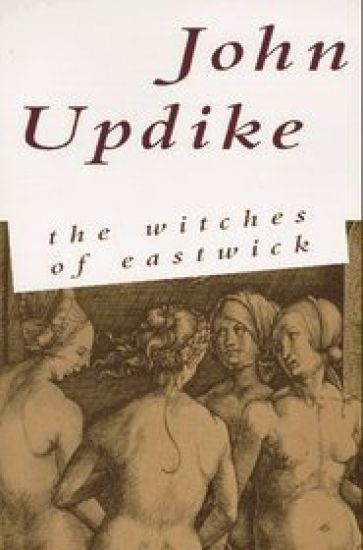
The Witches of Eastwick

The Witches of Eastwick

John Updike

Random House Trade
1996
nidottu
"John Updike is the great genial sorcerer of American letters and] The Witches of Eastwick is one of his] most ambitious works. . . . A] comedy of the blackest sort."--The New York Times Book Review Toward the end of the Vietnam era, in a snug little Rhode Island seacoast town, wonderful powers have descended upon Alexandra, Jane, and Sukie, bewitching divorc es with sudden access to all that is female, fecund, and mysterious. Alexandra, a sculptor, summons thunderstorms; Jane, a cellist, floats on the air; and Sukie, the local gossip columnist, turns milk into cream. Their happy little coven takes on new, malignant life when a dark and moneyed stranger, Darryl Van Horne, refurbishes the long-derelict Lenox mansion and invites them in to play. Thenceforth scandal flits through the darkening, crooked streets of Eastwick--and through the even darker fantasies of the town's collective psyche. "A great deal of fun to read . . . fresh, constantly entertaining . . . John Updike is] a wizard of language and observation."--The Philadelphia Inquirer "Vintage Updike, which is to say among the best fiction we have."--Newsday
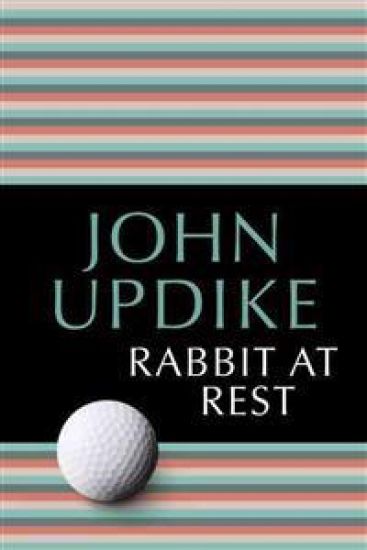
Rabbit at Rest

Rabbit at Rest

John Updike

Random House Publishing Group
1996
nidottu
PULITZER PRIZE WINNER - One of the most gifted American writers of the twentieth century brings back ex-basketball player Harry "Rabbit" Angstrom, the late middle-aged hero of Rabbit, Run, who has acquired heart trouble, a Florida condo, and a second grandchild, and is looking for reasons to live. "Brilliant . . . the best novel about America to come out of America for a very, very long time."--The Washington Post Book World Rabbit's son, Nelson, is behaving erratically; his daughter-in-law, Pru, is sending out mixed signals; and his wife, Janice, decides in midlife to become a working girl. As, through the winter, spring, and summer of 1989, Reagan's debt-ridden, AIDS-plagued America yields to that of George Bush, Rabbit explores the bleak terrain of late middle age, looking for reasons to live. The geographical locale is divided between Brewer, in southestern Pennyslvania, and Deleon, in southwestern Florida.
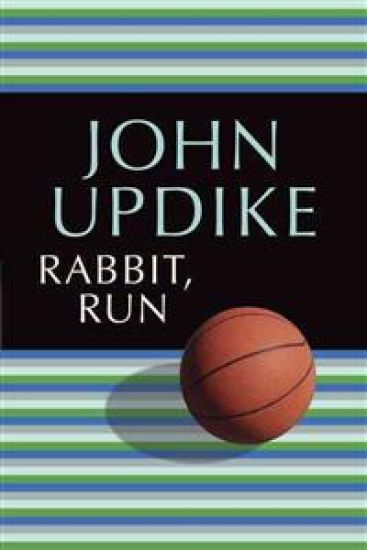
Rabbit, Run

Rabbit, Run

John Updike

Random House Trade
1996
nidottu
"A lacerating story of loss and of seeking, written in prose that is charged with emotion but is always held under impeccable control."--Kansas City Star Rabbit, Run is the book that established John Updike as one of the major American novelists of his--or any other--generation. Its hero is Harry "Rabbit" Angstrom, a onetime high-school basketball star who on an impulse deserts his wife and son. He is twenty-six years old, a man-child caught in a struggle between instinct and thought, self and society, sexual gratification and family duty--even, in a sense, human hard-heartedness and divine Grace. Though his flight from home traces a zigzag of evasion, he holds to the faith that he is on the right path, an invisible line toward his own salvation as straight as a ruler's edge.
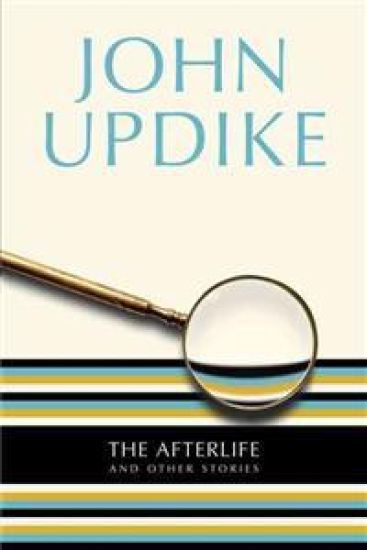
The Afterlife: And Other Stories

The Afterlife: And Other Stories

John Updike

Random House Group
1996
nidottu
"Marvelously moving . . . These tales evoke a certain peace and a definite wonder at what an astonishingly graceful writer Updike is."--USA Today To the hero of the title story of this collection, all of England has the glow of an afterlife: "A miraculous lacquer lay upon everything, beading each roadside twig . . . each reed of thatch, each tiny daisy trembling in the grass." All of these stories, each in its own way, partake of this glow, as life beyond middle age is explored and found to have its own exquisite dearness. As death approaches, existence takes on, for some of Updike's aging characters, a translucence, a magical fragility; vivid memory and casual misperception lend the mundane an antic texture, and the backward view, lengthening, acquires a certain grandeur. Here is a world where wonder stubbornly persists, and fresh beginnings almost outnumber losses.
Rabbit Angstrom: The Four Novels: Rabbit, Run, Rabbit Redux, Rabbit Is Rich, and Rabbit at Rest
The four novels in the acclaimed Rabbit series--including the Pulitzer Prize winners Rabbit is Rich and Rabbit at Rest--brought together in a single volume, from one of the most gifted American writers of the twentieth century. When we first met him in Rabbit, Run (1960), the book that established John Updike as a major novelist, Harry (Rabbit) Angstrom is playing basketball with some boys in an alley in Pennsylvania during the tail end of the Eisenhower era, reliving for a moment his past as a star high school athlete. Athleticism of a different sort is on display throughout these four magnificent novels--the athleticism of an imagination possessed of the ability to lay bare, with a seemingly effortless animal grace, the enchantments and disenchantments of life. Updike revisited his hero toward the end of each of the following decades in the second half of this American century; and in each of the subsequent novels, as Rabbit, his wife, Janice, his son, Nelson, and the people around them grow, these characters take on the lineaments of our common existence. In prose that is one of the glories of contemporary literature, Updike has chronicled the frustrations and ambiguous triumphs, the longuers, the loves and frenzies, the betrayals and reconciliations of our era. He has given us our representative American story. This Rabbit Angstrom volume is composed of the following novels: Rabbit, Run; Rabbit Redux; Rabbit is Rich; and Rabbit at Rest.
Rabbit Angstrom A Tetralogy

Rabbit Angstrom A Tetralogy

John Updike

Everyman's Library
1995
sidottu
Newly revised by the author for this edition, and printed together in one volume for the first time, Updike's four Rabbit novels chronicle the history of a man and a nation from the 1950s to the 1980s. Harry 'Rabbit' Angstrom, athlete, is Mr Middle America. Dazzling in style, tender in feeling, often erotic in description and coruscating with realistic details which recreate a world in each novel, these books give a complete picture of their age.