Kirjojen hintavertailu. Mukana 12 595 353 kirjaa ja 12 kauppaa.

Kirjailija

John Urry

Kirjat ja teokset yhdessä paikassa: 42 kirjaa, julkaisuja vuosilta 1987-2017, suosituimpien joukossa Social Theory as Science (Routledge Revivals). Vertaile teosten hintoja ja tarkista saatavuus suomalaisista kirjakaupoista.

42 kirjaa

Kirjojen julkaisuhaarukka 1987-2017.

Performing Tourist Places

Performing Tourist Places

Jørgen Ole Bærenholdt; Michael Haldrup; John Urry

Routledge
2017
nidottu
This book looks at the making and the consuming of places in the contemporary world. Illustrated through various case-studies from Denmark, it considers how places, performances and peoples intersect. It examines the fascinating circumstances through which visitors to a place, in part, produce that place through their performances. Places are intertwined with people through various systems that generate and reproduce performances in and of that place. These systems comprise networks of ’hosts, guests, buildings, objects and machines’ that contingently realize particular performances of specific places. The studies featured here develop an exciting ’new mobility’ paradigm emerging within the social sciences.
Mobilities, Networks, Geographies

Mobilities, Networks, Geographies

Jonas Larsen; John Urry

Routledge
2016
nidottu
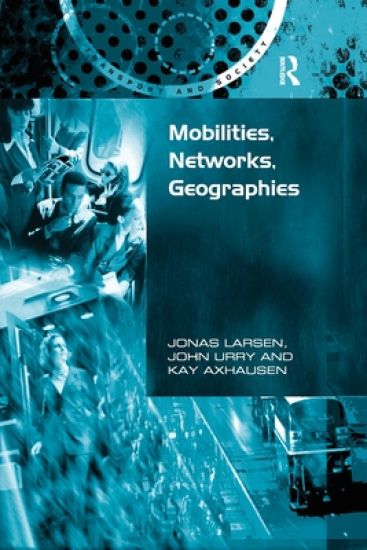
There have been striking increases in both long-distance travel and in communications through mobile phones, text messaging, emailing and videoconferencing. Such developments in communication, along with a similar increase in physical travel and movement of goods around the globe, reconfigure social networks by disconnecting and reconnecting people in new ways. This original book puts forward one of the first social science studies of the geographies of social networks and related mobilities of travel, communications and face-to-face meetings. The book examines five interdependent mobilities that form and reform these geographies of networks and travel in the contemporary world. These are: physical travel of people for work, leisure, pleasure, migration and escape; physical movement of objects delivered to producers, consumers and retailers; imaginative travel elsewhere through images and memories seen on texts, TV, computer screens and film; virtual travel on the internet; and communicative travel through letters, cards, telegrams, telephones, faxes, text messages and videoconferences. In the book the authors examine the interconnections between these different mobilities. They research how travel and social meetings require systems of coordination using virtual and communicative travel in-between physical travel and meetings. They argue that, while it might be imagined that there would be less need of physical meetings with improved technology, on the contrary, scheduled visits and meetings have become highly significant. The research shows that they are necessary to social life in the contemporary world, both within business and, especially, within families and friendships which are increasingly conducted at a distance.
Mobilities: New Perspectives on Transport and Society
Bringing together the leading authors currently working at the intersection of social science and transport science, this volume provides a companion to the well-established and extensive international Transport and Society series. Each chapter, and the volume as a whole, offers closer and richer consideration of the issues, practices and structures of multiple mobilities which shape the current world but which have typically been overlooked or minimised. What this approach seeks to do is not only draw attention to many new areas of research and investigation relating to mobile lives, but also to point to new theories and methods by which such lives have to be researched and examined. Such new theories and methods are relevant both to rethinking 'transport' studies as such but are also recasting 'societal' studies as 'transport' so that it comes out of the ghetto and enters mainstream social science.
A New Industrial Future?

A New Industrial Future?

Thomas Birtchnell; John Urry

Routledge
2016
nidottu
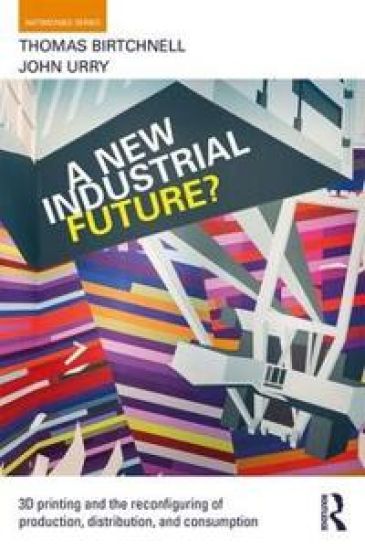
A New Industrial Future? examines whether a further industrial revolution is taking place around the world. In this compelling book Birtchnell and Urry examine such a new possible future involving the mass adoption of 3D printing. The locating of 3D printers in homes, offices, stores and workshops would disrupt existing systems and pose novel challenges for incumbents. The book drawing upon expert interviews, scenario workshops and various case studies assesses the potential future of global manufacturing, freight transport, world trade and land use. It offers the first book-length social scientific analysis of the character and impacts of a new system of manufacturing that is in formation. The book will be of interest to urban planners, policy makers, social scientists, futurologists, economists, as well as general readers by offering inquiry on this future upheaval in the means of production.
A New Industrial Future?

A New Industrial Future?

Thomas Birtchnell; John Urry

Routledge
2016
sidottu
A New Industrial Future? examines whether a further industrial revolution is taking place around the world. In this compelling book Birtchnell and Urry examine such a new possible future involving the mass adoption of 3D printing. The locating of 3D printers in homes, offices, stores and workshops would disrupt existing systems and pose novel challenges for incumbents. The book drawing upon expert interviews, scenario workshops and various case studies assesses the potential future of global manufacturing, freight transport, world trade and land use. It offers the first book-length social scientific analysis of the character and impacts of a new system of manufacturing that is in formation. The book will be of interest to urban planners, policy makers, social scientists, futurologists, economists, as well as general readers by offering inquiry on this future upheaval in the means of production.
What is the Future?

What is the Future?

John Urry

Polity Press
2016
nidottu
Thinking about the future is essential for almost all organizations and societies. States, corporations, universities, cities, NGOs and individuals believe they cannot miss the future. But what exactly is the future? It remains a mystery ? perhaps the greatest mystery, especially because futures are unpredictable and often unknowable, the outcome of many factors, known and unknown. The future is rarely a simple extrapolation from the present. In this important book, John Urry seeks to capture the many efforts that have been made to anticipate, visualize and elaborate the future. This includes examining the methods used to model the future, from those of the RAND Corporation to imagined future worlds in philosophy, literature, art, film, TV and computer games. He shows that futures are often contested and saturated with different interests, especially in relation to future generations. He also shows how analyses of social institutions, practices and lives should be central to examining potential futures, and issues such as who owns the future. The future seems to be characterized by ?wicked problems?. There are multiple ?causes? and ?solutions?, long-term lock-ins and complex interdependencies, and different social groups have radically different frames for understanding what is at stake. Urry explores these issues through case-studies of 3D printing and the future of manufacturing, mobilities in the city, and the futures of energy and climate change.
What is the Future?

What is the Future?

John Urry

Polity Press
2016
sidottu
Thinking about the future is essential for almost all organizations and societies. States, corporations, universities, cities, NGOs and individuals believe they cannot miss the future. But what exactly is the future? It remains a mystery ? perhaps the greatest mystery, especially because futures are unpredictable and often unknowable, the outcome of many factors, known and unknown. The future is rarely a simple extrapolation from the present. In this important book, John Urry seeks to capture the many efforts that have been made to anticipate, visualize and elaborate the future. This includes examining the methods used to model the future, from those of the RAND Corporation to imagined future worlds in philosophy, literature, art, film, TV and computer games. He shows that futures are often contested and saturated with different interests, especially in relation to future generations. He also shows how analyses of social institutions, practices and lives should be central to examining potential futures, and issues such as who owns the future. The future seems to be characterized by ?wicked problems?. There are multiple ?causes? and ?solutions?, long-term lock-ins and complex interdependencies, and different social groups have radically different frames for understanding what is at stake. Urry explores these issues through case-studies of 3D printing and the future of manufacturing, mobilities in the city, and the futures of energy and climate change.
Capital, Labour and the Middle Classes (RLE Social Theory)

Capital, Labour and the Middle Classes (RLE Social Theory)

John Urry; Nicholas Abercrombie

Routledge
2015
nidottu
Most recent sociological work on the theory of class is based on a distinction between Weberian and Marxist approaches. For the first part of this volume, the authors use this distinction to review the literature on the middle class, concentrating particularly on the traditions of Marxist theory and of the more empirical work inspired by Max Weber. They show, however, that this distinction is of limited utility in reconstructing a theory of the middle class.
Capital, Labour and the Middle Classes (RLE Social Theory)

Capital, Labour and the Middle Classes (RLE Social Theory)

John Urry; Nicholas Abercrombie

Routledge
2014
sidottu
Most recent sociological work on the theory of class is based on a distinction between Weberian and Marxist approaches. For the first part of this volume, the authors use this distinction to review the literature on the middle class, concentrating particularly on the traditions of Marxist theory and of the more empirical work inspired by Max Weber. They show, however, that this distinction is of limited utility in reconstructing a theory of the middle class.
Offshoring

Offshoring

John Urry

Polity Press
2014
sidottu
The concealment of income, wealth and profits in tax havens has brought the topic of offshoring into public debate, but as John Urry shows in this important new book offshoring is a much more pervasive feature of contemporary societies. These often secretive activities offshore also involve relations of work, finance, pleasure, waste, energy and security. Powerful and pervasive offshore worlds have been generated, posing huge challenges both for governments and for citizens. This book documents the various patterns of offshoring Ð of the economy, sociability, politics and the environment. In each case, offshoring generates new patterns of power, reduces the responsibilities of the powerful 'offshore class', and limits the conditions for democratic governance. Offshore, out of sight, over the horizon are some of the troubling processes and metaphors by which much life has been rendered opaque and dependent upon secrets and lies. By analysing these patterns and processes, Urry sheds fresh light on the hidden worlds of offshoring and exposes the dark side of globalization. The book concludes by considering whether offshoring can be reversed Ð whether it is possible to bring about the systematic ‘reshoring’ of relations that would be good for democracy and for developing low-carbon futures. Urry portrays the coming century as being poised between even more extreme offshoring and various endeavours to bring back 'home' that which has currently escaped 'over the horizon'.
Offshoring

Offshoring

John Urry

Polity Press
2014
nidottu
The concealment of income, wealth and profits in tax havens has brought the topic of offshoring into public debate, but as John Urry shows in this important new book offshoring is a much more pervasive feature of contemporary societies. These often secretive activities offshore also involve relations of work, finance, pleasure, waste, energy and security. Powerful and pervasive offshore worlds have been generated, posing huge challenges both for governments and for citizens. This book documents the various patterns of offshoring Ð of the economy, sociability, politics and the environment. In each case, offshoring generates new patterns of power, reduces the responsibilities of the powerful 'offshore class', and limits the conditions for democratic governance. Offshore, out of sight, over the horizon are some of the troubling processes and metaphors by which much life has been rendered opaque and dependent upon secrets and lies. By analysing these patterns and processes, Urry sheds fresh light on the hidden worlds of offshoring and exposes the dark side of globalization. The book concludes by considering whether offshoring can be reversed Ð whether it is possible to bring about the systematic ‘reshoring’ of relations that would be good for democracy and for developing low-carbon futures. Urry portrays the coming century as being poised between even more extreme offshoring and various endeavours to bring back 'home' that which has currently escaped 'over the horizon'.
Societies beyond Oil

Societies beyond Oil

John Urry

Zed Books Ltd
2013
nidottu
What would a de-carbonised society be like? What are the implications of a general de-globalisation for our social futures? How will our high-carbon patterns of life be restructured in a de-energized world? As global society gradually wakes up to the new reality of peak oil, these questions remain unanswered. For the last hundred years oil made the world go round, and as we move into the century of 'tough oil' this book examines some profound consequences. It considers what societies would be like that are powering down; what lessons can be learned from the past about de-energized societies; will there be rationing systems or just the market to allocate scarce energy? Can virtual worlds solve energy problems? What levels of income and wellbeing would be likely? In this groundbreaking book, John Urry analyzes how the twentieth century created a kind of mirage of the future that is unsustainable into even the medium term and envisions the future of an oil-dependent world facing energy descent. Without a large-scale plan B, how can the energizing of society possibly be going into reverse?
Societies beyond Oil

Societies beyond Oil

John Urry

Zed Books Ltd
2013
sidottu
What would a de-carbonised society be like? What are the implications of a general de-globalisation for our social futures? How will our high-carbon patterns of life be restructured in a de-energized world? As global society gradually wakes up to the new reality of peak oil, these questions remain unanswered. For the last hundred years oil made the world go round, and as we move into the century of 'tough oil' this book examines some profound consequences. It considers what societies would be like that are powering down; what lessons can be learned from the past about de-energized societies; will there be rationing systems or just the market to allocate scarce energy? Can virtual worlds solve energy problems? What levels of income and wellbeing would be likely? In this groundbreaking book, John Urry analyzes how the twentieth century created a kind of mirage of the future that is unsustainable into even the medium term and envisions the future of an oil-dependent world facing energy descent. Without a large-scale plan B, how can the energizing of society possibly be going into reverse?
Reference Groups and the Theory of Revolution (Routledge Revivals)
First published in 1973, this is a reissue of John Urry's important and influential study of the theory of revolution. Part 1 offers a detailed discussion of the concept of the reference group, tracing its development from the symbolic interactionist tradition and then showing how it came to be used in ways which emasculated some of the suppositions of that tradition. Part 2 sets out a theory of revolutionary dissent, in which Dr Urry emphasizes the interconnection between analyses on the level of the social structure and the social actor. The final section demonstrates the value of this theory by using it to account for the varying patterns of action and revolutionary thought and action in the Dutch East Indies in the first half of this century.
Social Theory as Science (Routledge Revivals)

Social Theory as Science (Routledge Revivals)

Russell Keat; John Urry

Routledge
2012
nidottu
This book, written by a philosopher interested in the problems of social science and scientific method, and a sociologist interested in the philosophy of science, presents a novel conception of how we should think about and carry out the scientific study of social life. This book combines an evaluation of different conceptions of the nature of science with an examination of important sociological theorists and frameworks. Originally published in 1975.
Mobilities: New Perspectives on Transport and Society

Mobilities: New Perspectives on Transport and Society

John Urry

Ashgate Publishing Limited
2011
sidottu
Bringing together the leading authors currently working at the intersection of social science and transport science, this volume provides a companion to the well-established and extensive international Transport and Society series. Each chapter, and the volume as a whole, offers closer and richer consideration of the issues, practices and structures of multiple mobilities which shape the current world but which have typically been overlooked or minimised. What this approach seeks to do is not only draw attention to many new areas of research and investigation relating to mobile lives, but also to point to new theories and methods by which such lives have to be researched and examined. Such new theories and methods are relevant both to rethinking 'transport' studies as such but are also recasting 'societal' studies as 'transport' so that it comes out of the ghetto and enters mainstream social science.
The Tourist Gaze 3.0

The Tourist Gaze 3.0

John Urry; Jonas Larsen

SAGE Publications Ltd
2011
nidottu
"The original Tourist Gaze was a classic, marking out a new land to study and appreciate. This new edition extends into fresh areas with the same passion and insight of the object. Even more essential reading!" - Nigel Thrift, Vice-Chancellor, Warwick University This new edition of a seminal text restructures, reworks and remakes the groundbreaking previous versions making this book even more relevant for tourism students, researchers and designers. 'The tourist gaze' remains an agenda setting theory. Packed full of fascinating insights this major new edition intelligently broadens its theoretical and geographical scope to provide an account which responds to various critiques. All chapters have been significantly revised to include up-to-date empirical data, many new case studies and fresh concepts. Three new chapters have been added which explore: photography and digitizationembodied performancesrisks and alternative futures This book is essential reading for all involved in contemporary tourism, leisure, cultural policy, design, economic regeneration, heritage and the arts.
The Tourist Gaze 3.0

The Tourist Gaze 3.0

John Urry; Jonas Larsen

SAGE Publications Ltd
2011
sidottu
"The original Tourist Gaze was a classic, marking out a new land to study and appreciate. This new edition extends into fresh areas with the same passion and insight of the object. Even more essential reading!" - Nigel Thrift, Vice-Chancellor, Warwick University This new edition of a seminal text restructures, reworks and remakes the groundbreaking previous versions making this book even more relevant for tourism students, researchers and designers. 'The tourist gaze' remains an agenda setting theory. Packed full of fascinating insights this major new edition intelligently broadens its theoretical and geographical scope to provide an account which responds to various critiques. All chapters have been significantly revised to include up-to-date empirical data, many new case studies and fresh concepts. Three new chapters have been added which explore: photography and digitizationembodied performancesrisks and alternative futures This book is essential reading for all involved in contemporary tourism, leisure, cultural policy, design, economic regeneration, heritage and the arts.
Climate Change and Society

Climate Change and Society

John Urry

Polity Press
2011
nidottu
This book explores the significance of human behaviour to understanding the causes and impacts of changing climates and to assessing varied ways of responding to such changes. So far the discipline that has represented and modelled such human behaviour is economics. By contrast Climate Change and Society tries to place the ‘social’ at the heart of both the analysis of climates and of the assessment of alternative futures. It demonstrates the importance of social practices organised into systems. In the fateful twentieth century various interlocking high carbon systems were established. This sedimented high carbon social practices, engendering huge population growth, increasing greenhouse gas emissions and the potentially declining availability of oil that made this world go round. Especially important in stabilising this pattern was the ‘carbon military-industrial complex’ around the world. The book goes on to examine how in this new century it is systems that have to change, to move from growing high carbon systems to those that are low carbon. Many suggestions are made as to how to innovate such low carbon systems. It is shown that such a transition has to happen fast so as to create positive feedbacks of each low carbon system upon each other. Various scenarios are elaborated of differing futures for the middle of this century, futures that all contain significant costs for the scale, extent and richness of social life. Climate Change and Society thus attempts to replace economics with sociology as the dominant discipline in climate change analysis. Sociology has spent much time examining the nature of modern societies, of modernity, but mostly failed to analyse the carbon resource base of such societies. This book seeks to remedy that failing. It should appeal to teachers and students in sociology, economics, environmental studies, geography, planning, politics and science studies, as well as to the public concerned with the long term future of carbon and society.
Climate Change and Society

Climate Change and Society

John Urry

Polity Press
2011
sidottu
This book explores the significance of human behaviour to understanding the causes and impacts of changing climates and to assessing varied ways of responding to such changes. So far the discipline that has represented and modelled such human behaviour is economics. By contrast Climate Change and Society tries to place the ‘social’ at the heart of both the analysis of climates and of the assessment of alternative futures. It demonstrates the importance of social practices organised into systems. In the fateful twentieth century various interlocking high carbon systems were established. This sedimented high carbon social practices, engendering huge population growth, increasing greenhouse gas emissions and the potentially declining availability of oil that made this world go round. Especially important in stabilising this pattern was the ‘carbon military-industrial complex’ around the world. The book goes on to examine how in this new century it is systems that have to change, to move from growing high carbon systems to those that are low carbon. Many suggestions are made as to how to innovate such low carbon systems. It is shown that such a transition has to happen fast so as to create positive feedbacks of each low carbon system upon each other. Various scenarios are elaborated of differing futures for the middle of this century, futures that all contain significant costs for the scale, extent and richness of social life. Climate Change and Society thus attempts to replace economics with sociology as the dominant discipline in climate change analysis. Sociology has spent much time examining the nature of modern societies, of modernity, but mostly failed to analyse the carbon resource base of such societies. This book seeks to remedy that failing. It should appeal to teachers and students in sociology, economics, environmental studies, geography, planning, politics and science studies, as well as to the public concerned with the long term future of carbon and society.