Kirjojen hintavertailu. Mukana 12 254 539 kirjaa ja 12 kauppaa.

Kirjailija

John Vandewalle

Kirjat ja teokset yhdessä paikassa: 4 kirjaa, julkaisuja vuosilta 2003-2026, suosituimpien joukossa Beneath Flanders Fields. Vertaile teosten hintoja ja tarkista saatavuus suomalaisista kirjakaupoista.

4 kirjaa

Kirjojen julkaisuhaarukka 2003-2026.

Beneath Flanders Fields

Beneath Flanders Fields

Peter Barton; John Vandewalle; Peter Doyle

THE HISTORY PRESS LTD
2026
nidottu
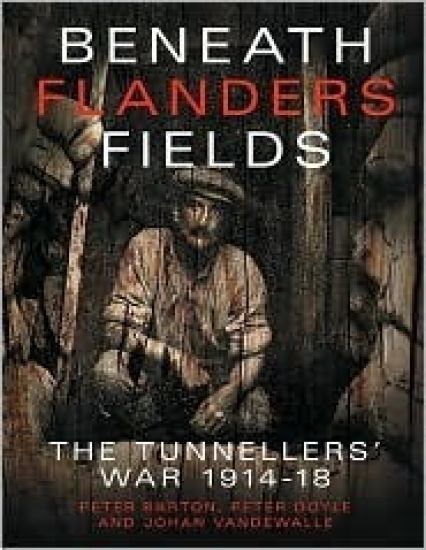
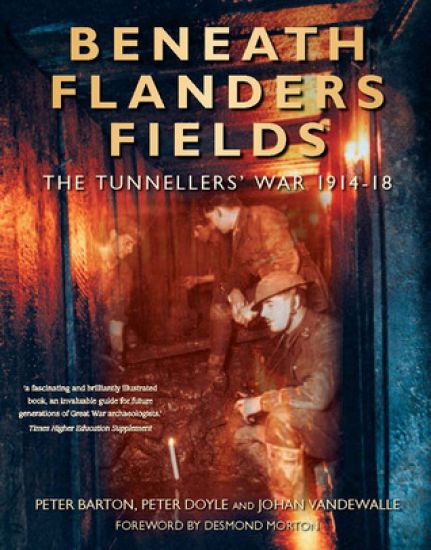
Whilst the war raged across Flanders fields, an equally horrifying and sometimes more dangerous battle took place underground. Beneath Flanders Fields tells the story of the tunnellers’ war, which still remains one of the most misunderstood, misrepresented and mystifying conflicts of the Great War. A wealth of personal testimonies reveal the engineering, technology and science behind how this most intense of battles was fought – and won. They speak of how the tunnellers lived a relentless existence in the depths of the battlefield for almost two and a half years, enduring physical and mental stresses that were often more extreme than their infantry counterparts. Their lives were reduced to a complex war of silence, tension and claustrophobia, leading up to the most dramatic mine offensive in history launched on 7 June 1917 at Messines Ridge. Yet, Messines was not the end of their story, which continued with the crafting of a whole underground world of headquarters, cookhouses and hospitals, housing the innumerable troops who passed through this part of the Western Front. Here, this extraordinary, hidden world is revealed and the fragile legacy it has left behind on Flanders fields is brought to light.
Beneath Flanders Fields

Beneath Flanders Fields

Peter Barton; Peter Doyle; John Vandewalle

McGill-Queen's University Press
2014
nidottu
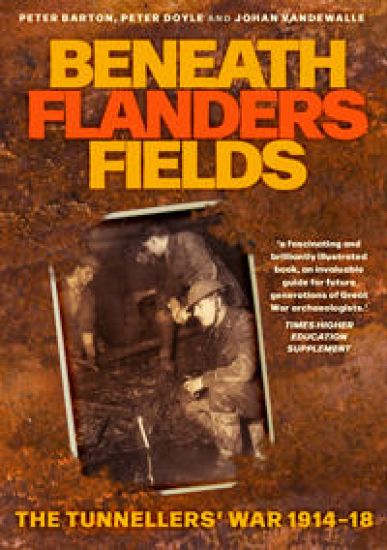
The result of over twenty-five years of research, Beneath Flanders Fields reveals how this intense underground battle was fought and won. The authors give the first full account of mine warfare in World War I through the words of the tunnellers themselves as well as plans, drawings, and previously unpublished archive photographs, many in colour. Beneath Flanders Fields also shows how military mining evolved. The tunnellers constructed hundreds of deep dugouts that housed tens of thousands of troops. Often electrically lit and ventilated, these tunnels incorporated headquarters, cookhouses, soup kitchens, hospitals, drying rooms, and workshops. A few dugouts survive today, a final physical legacy of the Great War, and are presented for the first time in photographs in Beneath Flanders Fields.
Beneath Flanders Fields

Beneath Flanders Fields

Peter Barton; John Vandewalle; Peter Doyle

Spellmount Publishers Ltd
2007
nidottu
Whilst the war raged across Flanders fields, an equally horrifying and sometimes more dangerous battle took place underground. Beneath Flanders Fields tells the story of the tunnellers’ war, which still remains one of the most misunderstood, misrepresented and mystifying conflicts of the Great War.A wealth of personal testimonies reveal the engineering, technology and science behind how this most intense of battles was fought – and won. They speak of how the tunnellers lived a relentless existence in the depths of the battlefield for almost two and a half years, enduring physical and mental stresses that were often more extreme than their infantry counterparts. Their lives were reduced to a complex war of silence, tension and claustrophobia, leading up to the most dramatic mine offensive in history launched on 7 June 1917 at Messines Ridge. Yet, Messines was not the end of their story, which continued with the crafting of a whole underground world of headquarters, cookhouses and hospitals, housing the innumerable troops who passed through this part of the Western Front.Here, this extraordinary, hidden world is revealed and the fragile legacy it has left behind on Flanders fields is brought to light.Peter Barton, like so many others, derived his passion for the Great War from his grandfather, who served in a veterinary unit near Ypres, and from veteran friends like Bert Fearns, to whom this book is dedicated. He is a filmmaker and writer, and secretary of the All Party Parliamentary War Graves and Battlefields Heritage Group.Peter Doyle is a geologist – and latterly an archaeologist – with a special interest in the role of geology and terrain in the outcome of battles. Amongst others, he has made studies of the Great War battlefields of the Western Front, Gallipoli and Salonika. With Peter Barton, he is co-secretary of the All Parliamentary War Graves and Battlefields Heritage Group.Johan Vandewalle was born and bred in Zonnebeke. He grew up surrounded by the legacy of the Great War, and many childhood adventures involved things subterranean. Although today a skilled carpenter, his working life began as a professional civil engineer tunneller, and the combined knowledge of both disciplines has created a passion and technical understanding of the underground war which has made him the foremost explorer of the tunnels and dugouts in Flanders. Johan can be found on most evenings at his other business, the Café De Dreve on the corner of Polygon Wood, the home of the underground war in the Ypres Salient.
Beneath Flanders Fields

Beneath Flanders Fields

Peter Barton; John Vandewalle; Peter Doyle

Spellmount Publishers Ltd
2003
sidottu
This highly illustrated, definitive, important, book is the first full account of the British and German mine warfare of the Ypres Salient combining personal testimonies of the tunnellers themselves with details of the workings, giving the reader a new insight into this most secret of all Great War battles and incorporating a host of previously unpublished archive photographs.