Kirjojen hintavertailu. Mukana 12 493 365 kirjaa ja 12 kauppaa.

Kirjailija

John W. Dardess

Kirjat ja teokset yhdessä paikassa: 14 kirjaa, julkaisuja vuosilta 2002-2022, suosituimpien joukossa A Political Life in Ming China. Vertaile teosten hintoja ja tarkista saatavuus suomalaisista kirjakaupoista.

14 kirjaa

Kirjojen julkaisuhaarukka 2002-2022.

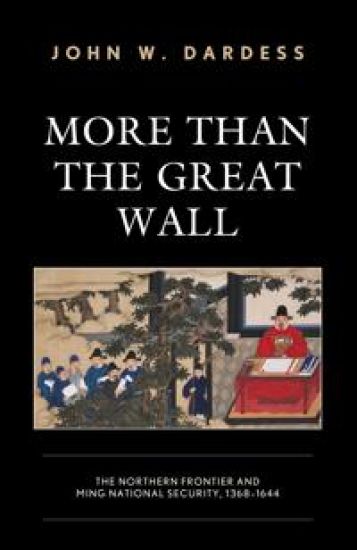
More Than the Great Wall

More Than the Great Wall

John W. Dardess

BLOOMSBURY PUBLISHING PLC
2022
nidottu
This groundbreaking book provides the first comprehensive analysis of Ming China’s pursuit of national security along its 1,700 miles of northern frontier. Drawing on a wealth of original sources, John Dardess vividly portrays how Ming China’s emperors, officials, and commanders in the field thought, argued, and made decisions in real time as they worked to defend their country. Despite common perceptions of the central role of the so-called Great Wall of China, Dardess convincingly shows that the wall was but a minor piece in a much bigger effort to battle Tatar looting. Dardess immerses readers in the day-to-day world of the Ming as he explores the question of how leaders kept their country safe over the 276 years the dynasty ruled.
A Ming Society

A Ming Society

John W. Dardess

University of California Press
2022
sidottu
John Dardess has selected a region of great political and intellectual importance, but one which local history has left almost untouched, for this detailed social history of T'ai-ho county during the Ming dynasty. Rather than making a sweeping, general survey of the region, he follows the careers of a large number of native sons and their relationship to Ming imperial politics. Using previously unexplored primary sources, Dardess details the rise and development of T'ai-ho village kinship, family lineage, landscape, agriculture, and economy. He follows its literati to positions of prominence in imperial government. This concentration on the history of one county over almost three centuries gives rise to an unusually sound and immediate understanding of how Ming society functioned and changed over time. This title is part of UC Press's Voices Revived program, which commemorates University of California Press’s mission to seek out and cultivate the brightest minds and give them voice, reach, and impact. Drawing on a backlist dating to 1893, Voices Revived makes high-quality, peer-reviewed scholarship accessible once again using print-on-demand technology. This title was originally published in 1996.
A Ming Society

A Ming Society

John W. Dardess

University of California Press
2022
pokkari
John Dardess has selected a region of great political and intellectual importance, but one which local history has left almost untouched, for this detailed social history of T'ai-ho county during the Ming dynasty. Rather than making a sweeping, general survey of the region, he follows the careers of a large number of native sons and their relationship to Ming imperial politics. Using previously unexplored primary sources, Dardess details the rise and development of T'ai-ho village kinship, family lineage, landscape, agriculture, and economy. He follows its literati to positions of prominence in imperial government. This concentration on the history of one county over almost three centuries gives rise to an unusually sound and immediate understanding of how Ming society functioned and changed over time. This title is part of UC Press's Voices Revived program, which commemorates University of California Press’s mission to seek out and cultivate the brightest minds and give them voice, reach, and impact. Drawing on a backlist dating to 1893, Voices Revived makes high-quality, peer-reviewed scholarship accessible once again using print-on-demand technology. This title was originally published in 1996.
Confucianism and Autocracy

Confucianism and Autocracy

John W. Dardess

University of California Press
2021
pokkari
Confucianism and Autocracy: Professional Elitesin the Founding of the Ming Dynasty explores the profound social and political transformations that shaped China during the collapse of the Yuan dynasty and the establishment of the Ming dynasty (1368-1644). This pivotal era marked the rise of an unprecedented level of imperial autocracy, a system that defined China's political landscape for centuries. The book delves into the complex interplay between Confucian professional elites, their sociopolitical philosophies, and the structural centralization that underpinned Ming governance. Rejecting notions of the Ming state as either a military dictatorship or a peasant-driven revolution, it positions the Confucian literati as central agents in constructing the autocratic framework, motivated by their vision of societal reform and moral regeneration. Drawing on extensive primary sources, including 128 collected works from 1340 to 1400, the author examines how Confucian professionals navigated the national crises of the 1350s, offering theoretical and practical responses that laid the groundwork for the Ming's authoritarian structure. The text analyzes the philosophical underpinnings of early Ming autocracy and the Confucian emphasis on ethical governance, revealing how the pursuit of professional ideals intertwined with the brutal centralization of power. From the socio-moral reforms of the dynasty's founder to the eventual ideological shifts within Confucianism, this book offers a nuanced perspective on how Confucian elites shaped the Ming dynasty and China's broader historical trajectory. This title is part of UC Press's Voices Revived program, which commemorates University of California Press’s mission to seek out and cultivate the brightest minds and give them voice, reach, and impact. Drawing on a backlist dating to 1893, Voices Revived makes high-quality, peer-reviewed scholarship accessible once again using print-on-demand technology. This title was originally published in 1983.
Confucianism and Autocracy

Confucianism and Autocracy

John W. Dardess

University of California Press
2021
sidottu
Confucianism and Autocracy: Professional Elitesin the Founding of the Ming Dynasty explores the profound social and political transformations that shaped China during the collapse of the Yuan dynasty and the establishment of the Ming dynasty (1368-1644). This pivotal era marked the rise of an unprecedented level of imperial autocracy, a system that defined China's political landscape for centuries. The book delves into the complex interplay between Confucian professional elites, their sociopolitical philosophies, and the structural centralization that underpinned Ming governance. Rejecting notions of the Ming state as either a military dictatorship or a peasant-driven revolution, it positions the Confucian literati as central agents in constructing the autocratic framework, motivated by their vision of societal reform and moral regeneration. Drawing on extensive primary sources, including 128 collected works from 1340 to 1400, the author examines how Confucian professionals navigated the national crises of the 1350s, offering theoretical and practical responses that laid the groundwork for the Ming's authoritarian structure. The text analyzes the philosophical underpinnings of early Ming autocracy and the Confucian emphasis on ethical governance, revealing how the pursuit of professional ideals intertwined with the brutal centralization of power. From the socio-moral reforms of the dynasty's founder to the eventual ideological shifts within Confucianism, this book offers a nuanced perspective on how Confucian elites shaped the Ming dynasty and China's broader historical trajectory. This title is part of UC Press's Voices Revived program, which commemorates University of California Press’s mission to seek out and cultivate the brightest minds and give them voice, reach, and impact. Drawing on a backlist dating to 1893, Voices Revived makes high-quality, peer-reviewed scholarship accessible once again using print-on-demand technology. This title was originally published in 1983.
More Than the Great Wall

More Than the Great Wall

John W. Dardess

Rowman Littlefield
2019
sidottu
This groundbreaking book provides the first comprehensive analysis of Ming China’s pursuit of national security along its 1,700 miles of northern frontier. Drawing on a wealth of original sources, John Dardess vividly portrays how Ming China’s emperors, officials, and commanders in the field thought, argued, and made decisions in real time as they worked to defend their country. Despite common perceptions of the central role of the so-called Great Wall of China, Dardess convincingly shows that the wall was but a minor piece in a much bigger effort to battle Tatar looting. Dardess immerses readers in the day-to-day world of the Ming as he explores the question of how leaders kept their country safe over the 276 years the dynasty ruled.
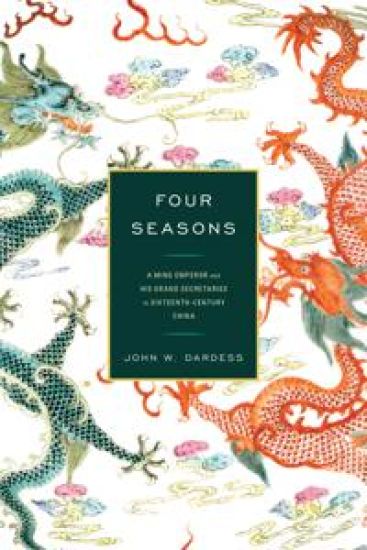
Four Seasons

Four Seasons

John W. Dardess

Rowman Littlefield
2016
sidottu
This important contribution to imperial Chinese history illuminates the basic concerns of the Ming state. Eminent scholar John W. Dardess shows in fascinating detail how Emperor Jiajing and his grand secretaries managed affairs of state and how personal ambition and policy differences combined to animate imperial political life. At the top sat Jiajing, industrious, religious, knowledgeable, ritually pious, but short-tempered and cruel. His chief assistants during his forty-six-year reign were his four successive grand secretaries. First was Zhang Fujing, a hard-minded bureaucratic fighter and ideologue, life coach to Jiajing during his youth. Then came Xia Yan, a superb technocrat who was executed for his part in a major policy dispute. He was followed by Yan Song, a colossally corrupt machine politician who knew how to please his ruler. Finally was Xu Jie, a liberal-minded reformer who put a benign edge on the regime’s final years. Drawing on a treasure trove of the grand secretaries’ personal writings, his narrative brings to life the inner workings of imperial governance, providing detailed descriptions of the challenging problems and crises faced by the largest polity on the face of the earth. Richly researched and engagingly written, this book will be essential reading for scholars and students of Ming China.
Four Seasons

Four Seasons

John W. Dardess

Rowman Littlefield
2016
nidottu
This important contribution to imperial Chinese history illuminates the basic concerns of the Ming state. Eminent scholar John W. Dardess shows in fascinating detail how Emperor Jiajing and his grand secretaries managed affairs of state and how personal ambition and policy differences combined to animate imperial political life. At the top sat Jiajing, industrious, religious, knowledgeable, ritually pious, but short-tempered and cruel. His chief assistants during his forty-six-year reign were his four successive grand secretaries. First was Zhang Fujing, a hard-minded bureaucratic fighter and ideologue, life coach to Jiajing during his youth. Then came Xia Yan, a superb technocrat who was executed for his part in a major policy dispute. He was followed by Yan Song, a colossally corrupt machine politician who knew how to please his ruler. Finally was Xu Jie, a liberal-minded reformer who put a benign edge on the regime’s final years. Drawing on a treasure trove of the grand secretaries’ personal writings, his narrative brings to life the inner workings of imperial governance, providing detailed descriptions of the challenging problems and crises faced by the largest polity on the face of the earth. Richly researched and engagingly written, this book will be essential reading for scholars and students of Ming China.
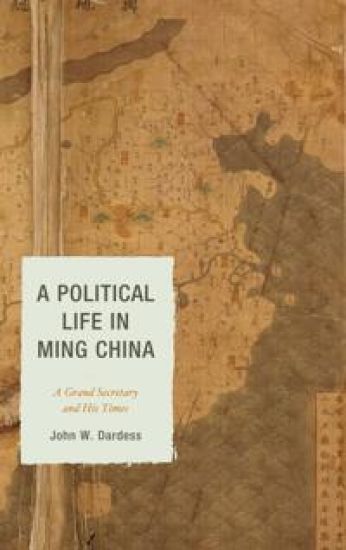
A Political Life in Ming China

A Political Life in Ming China

John W. Dardess

Rowman Littlefield
2013
sidottu
This fascinating history uncovers the hidden political world of Ming China, exploring how the most powerful man in mid-sixteenth-century China steered the empire through the worst crises it had ever faced. Distinguished scholar John W. Dardess traces the life of Chief Grand Secretary Xu Jie (1503–1583), the leading politician-statesman in the China of his time. Drawing on years of research, Dardess uses Xu Jie’s extensive letters to officials in the field and reports of conversations with the emperors he served to show just how difficult it was to defend the empire. His correspondence vividly shows how he organized its defenses and shepherded it through the twin crises of raids along the thousands of miles of continental and maritime frontiers in the 1550s and 1560s. The book traces his origins, his rise to power, and his engagement with the leading Confucian school of his time, that of Wang Yangming and his electrifying ethical teachings. Dardess describes how Xu used those teachings to build a following and leverage his way up the Ming bureaucracy. He shows how Xu was able both to suppress corruption and liberalize bureaucratic procedures. At the same time, the book highlights the psychological strain Xu suffered as a result and the vindictive and nearly lethal attacks directed at him after his retirement. Arguing that Xu was instrumental to the survival of the Ming dynasty through a long period of severe stress, Dardess tells his long-neglected story in rich and engrossing detail.
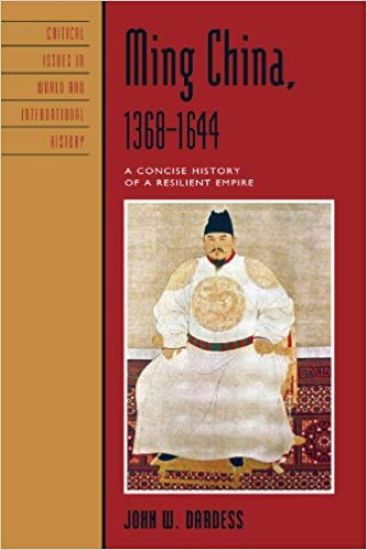
Ming China, 1368–1644

Ming China, 1368–1644

John W. Dardess

Rowman Littlefield
2011
sidottu
This engaging, deeply informed book provides the first concise history of one of China's most important eras. Leading scholar John W. Dardess offers a thematically organized political, social, and economic exploration of China from 1368 to 1644. He examines how the Ming dynasty was able to endure for 276 years, illuminating Ming foreign relations and border control, the lives and careers of its sixteen emperors, its system of governance and the kinds of people who served it, its great class of literati, and finally the mass outlawry that, in unhappy conjunction with the Manchu invasions from outside, ended the once-mighty dynasty in the mid-seventeenth century. The Ming witnessed the beginning of China's contact with the West, and its story will fascinate all readers interested in global as well as Asian history.
Ming China, 1368–1644

Ming China, 1368–1644

John W. Dardess

Rowman Littlefield
2011
nidottu
This engaging, deeply informed book provides the first concise history of one of China’s most important eras. Leading scholar John W. Dardess offers a thematically organized political, social, and economic exploration of China from 1368 to 1644. He examines how the Ming dynasty was able to endure for 276 years, illuminating Ming foreign relations and border control, the lives and careers of its sixteen emperors, its system of governance and the kinds of people who served it, its great class of literati, and finally the mass outlawry that, in unhappy conjunction with the Manchu invasions from outside, ended the once-mighty dynasty in the mid-seventeenth century. The Ming dynasty witnessed the beginning of China's contact with the West, and its story will fascinate all readers interested in global as well as Asian history.
Blood and History in China

Blood and History in China

John W. Dardess

University of Hawai'i Press
2002
nidottu
From 1625 to 1627 scholar-officials belonging to a militant Confucianist group known as the ""Donglin Faction"" suffered one of the most gruesome political repressions in China's history. Many were purged from key positions in the central government for their relentless push for a national moral rearmament under the Tianqi emperor. While their martyrs' deaths won them a lasting reputation for heroism and steadfastness, their opponents are remembered for fatally degrading the quality of Ming political life with their arrests and tortures of Donglin partisans. John Dardess employs a wide range of little-used primary sources (letters, diaries, eyewitness accounts, memorials, imperial edicts) to provide a remarkably detailed narrative of the inner workings of Ming government and of this dramatic period as a whole. Comparing the repression with the Tiananmen demonstrations of 1989, he argues that Tiananmen offers compelling clues to a rereading of the events of the 1620s. Leaders of both movements were less interested in practical reform than in communicating sincere moral feelings to rulers and the public. In the end the protesters succeeded in commemorating their dead and imprisoned and in disgracing those responsible for the violence. A work of unprecedented depth skillfully told, Blood and History in China will be appreciated by specialists in intellectual history and Ming and early Qing studies.