Kirjojen hintavertailu. Mukana 12 493 234 kirjaa ja 12 kauppaa.

Kirjailija

John W. Fitzpatrick

Kirjat ja teokset yhdessä paikassa: 5 kirjaa, julkaisuja vuosilta 1985-2015, suosituimpien joukossa Neotropical Birds. Vertaile teosten hintoja ja tarkista saatavuus suomalaisista kirjakaupoista.

5 kirjaa

Kirjojen julkaisuhaarukka 1985-2015.

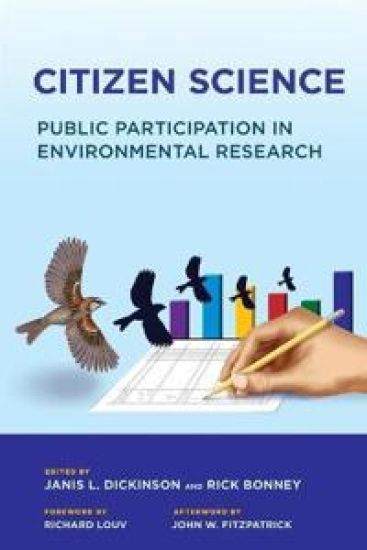
Citizen Science

Citizen Science

Richard Louv; John W. Fitzpatrick

Comstock Publishing Associates
2015
pokkari
Citizen science enlists members of the public to make and record useful observations, such as counting birds in their backyards, watching for the first budding leaf in spring, or measuring local snowfall. The large numbers of volunteers who participate in projects such as Project FeederWatch or Project BudBurst collect valuable research data, which, when pooled together, create an enormous body of scientific data on a vast geographic scale. In return, such projects aim to increase participants' connections to science, place, and nature, while supporting science literacy and environmental stewardship. In Citizen Science, experts from a variety of disciplines—including scientists and education specialists working at the Cornell Lab of Ornithology, where many large citizen science programs use birds as proxies for biodiversity—share their experiences of creating and implementing successful citizen science projects, primarily those that use massive data sets gathered by citizen scientists to better understand the impact of environmental change. This first and foundational book for this developing field of inquiry addresses basic aspects of how to conduct citizen science projects, including goal-setting, program design, and evaluation, as well as the nuances of creating a robust digital infrastructure and recruiting a large participant base through communications and marketing. An overview of the types of research approaches and techniques demonstrates how to make use of large data sets arising from citizen science projects. A final section focuses on citizen science's impacts and its broad connections to understanding the human dimensions and educational aspects of participation. Citizen Science teaches teams of program developers and researchers how to cross the bridge from success at public engagement to using citizen science data to understand patterns and trends or to test hypotheses about how ecological processes respond to change at large geographic scales. Intended as a resource for a broad audience of experts and practitioners in natural sciences, information science, and social sciences, this book can be used to better understand how to improve existing programs, develop new ones, and make better use of the data resources that have accumulated from citizen science efforts. Its focus on harnessing the impact of "crowdsourcing" for scientific and educational endeavors is applicable to a wide range of fields, especially those that touch on the importance of massive collaboration aimed at understanding and conserving what we can of the natural world.
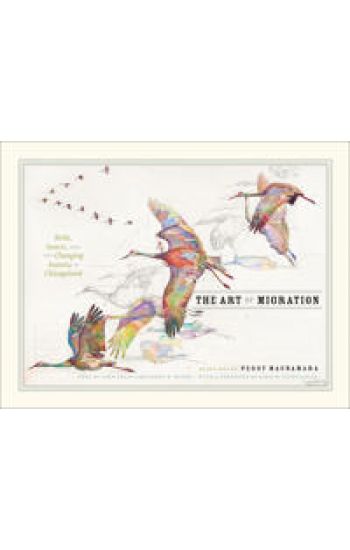
The Art of Migration

The Art of Migration

John W. Fitzpatrick

University of Chicago Press
2013
sidottu
Tiny ruby-throated hummingbirds weighing less than a nickel fly from the upper Midwest to Costa Rica every fall, crossing the six-hundred-mile Gulf of Mexico without a single stop. One of the many creatures that commute on the Mississippi Flyway as part of an annual migration, they pass along Chicago's lakefront and through midwestern backyards on a path used by their species for millennia. This magnificent migrational dance takes place every year in Chicagoland, yet it is often missed by the region's two-legged residents. "The Art of Migration" uncovers these extraordinary patterns that play out over the seasons. Readers are introduced to over two hundred of the birds and insects that traverse regions from the edge of Lake Superior to Lake Michigan and to the rivers that flow into the Mississippi. As the only artist in residence at the Field Museum, Peggy Macnamara has a unique vantage point for studying these patterns and capturing their distinctive traits. Her magnificent watercolor illustrations capture flocks, movement, and species-specific details. The illustrations are accompanied by text from museum staff and include details such as natural histories, notable features for identification, behavior, and how species have adapted to environmental changes. The book follows a gentle seasonal sequence and includes chapters on studying migration, artist's notes on illustrating wildlife, and tips on the best ways to watch for birds and insects in the Chicago area. A perfect balance of science and art, "The Art of Migration" will prompt us to marvel anew at the remarkable spectacle going on around us.
Citizen Science

Citizen Science

Richard Louv; John W. Fitzpatrick

Comstock Publishing Associates
2012
sidottu
Citizen science enlists members of the public to make and record useful observations, such as counting birds in their backyards, watching for the first budding leaf in spring, or measuring local snowfall. The large numbers of volunteers who participate in projects such as Project FeederWatch or Project BudBurst collect valuable research data, which, when pooled together, create an enormous body of scientific data on a vast geographic scale. In return, such projects aim to increase participants' connections to science, place, and nature, while supporting science literacy and environmental stewardship. In Citizen Science, experts from a variety of disciplines—including scientists and education specialists working at the Cornell Lab of Ornithology, where many large citizen science programs use birds as proxies for biodiversity—share their experiences of creating and implementing successful citizen science projects, primarily those that use massive data sets gathered by citizen scientists to better understand the impact of environmental change. This first and foundational book for this developing field of inquiry addresses basic aspects of how to conduct citizen science projects, including goal-setting, program design, and evaluation, as well as the nuances of creating a robust digital infrastructure and recruiting a large participant base through communications and marketing. An overview of the types of research approaches and techniques demonstrates how to make use of large data sets arising from citizen science projects. A final section focuses on citizen science's impacts and its broad connections to understanding the human dimensions and educational aspects of participation. Citizen Science teaches teams of program developers and researchers how to cross the bridge from success at public engagement to using citizen science data to understand patterns and trends or to test hypotheses about how ecological processes respond to change at large geographic scales. Intended as a resource for a broad audience of experts and practitioners in natural sciences, information science, and social sciences, this book can be used to better understand how to improve existing programs, develop new ones, and make better use of the data resources that have accumulated from citizen science efforts. Its focus on harnessing the impact of "crowdsourcing" for scientific and educational endeavors is applicable to a wide range of fields, especially those that touch on the importance of massive collaboration aimed at understanding and conserving what we can of the natural world.
Neotropical Birds

Neotropical Birds

Douglas F. Stotz; John W. Fitzpatrick; Theodore A. Parker III; Debra K. Moskovits

University of Chicago Press
1996
sidottu
A synthesis of the ecological information on 4037 species of birds found from Mexico south to Tierra del Fuego. This work summarizes details on 40 key ecological parameters for each bird species. Additional data and further analyses are provided for migratory species. Because bird communities are good indicators of habitat type and condition, and because extensive bird surveys can be done quickly, bird communities are critical to rapid evaluations of an ecosystem's biological value and integrity. The authors analyze the bird species of major habitats from a conservation perspective, and develop specific guidelines to illustrate how governments, conservation organizations, and wildlife managers can use this ecological information to anchor conservation strategies on sound biological reality.
The Florida Scrub Jay

The Florida Scrub Jay

Glen Everett Woolfenden; John W. Fitzpatrick

Princeton University Press
1985
pokkari
Florida Scrub Jays are an excellent example of a cooperative-breeding species, in which adult birds often help raise offspring not their own. For more than a decade Glen E. Woolfenden and John W. Fitzpatrick studied a marked population of these birds in an attempt to establish a demographic base for understanding the phenomenon of "helping at the nest." By studying both population biology and behavior, the authors found that habitat restraints, rather than kin selection, are the main source of the behavior of Florida Scrub Jays: the goal of increasing the number of close relatives other than descendants in future generations is of relatively minor importance in their cooperative-breeding behavior. The Florida Scrub Jay lives only in the Florida oak scrub. All acceptable habitat is constantly filled with breeders. Each year about half of the pairs are assisted by one to several nonbreeding helpers. This book provides extensive data on fecundity, survivorship, relatedness, and dispersal to establish the demographic milieu and to address questions arising out of observed helping behavior--whom, how, when, and why the helpers help.