Kirjojen hintavertailu. Mukana 12 390 323 kirjaa ja 12 kauppaa.

Kirjailija

John Waller

Kirjat ja teokset yhdessä paikassa: 17 kirjaa, julkaisuja vuosilta 2003-2024, suosituimpien joukossa A Treatise on the Incubus or Night Mare. Vertaile teosten hintoja ja tarkista saatavuus suomalaisista kirjakaupoista.

17 kirjaa

Kirjojen julkaisuhaarukka 2003-2024.

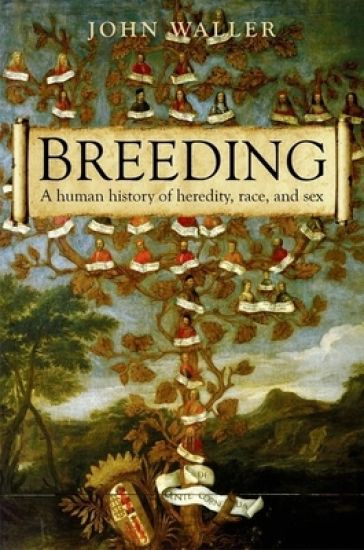
Breeding

Breeding

John Waller

Oxford University Press
2024
sidottu
Breeding charts more than two thousand years of ideas about the nature of sex and heredity. From the speculations of the ancient, medieval and early modern worlds to the birth of genetics in the modern age, John Waller examines how we came to solve one of the greatest of enigmas: why offspring tend to look like their parents. But this book goes further than telling a story of scientific advance. It also explores the social and political realities which often determined how people used the concept of heredity. It reveals how, from Plato's Republic to the modern IQ and race debate, the notion that some qualities of body and mind are inborn has been used to justify the supremacy of social elites and the racist ideologies of those who have profited from slavery and colonial expansion. This is a history of scientific developments, ideological inventions, and how the two have changed one another.

An Appeal to the Nobility and Gentry, in Regard to the Gold and Silver Lace, Brocades, Embroidery, and Gold and Silver Ribbon of This Kingdom.
The 18th century was a wealth of knowledge, exploration and rapidly growing technology and expanding record-keeping made possible by advances in the printing press. In its determination to preserve the century of revolution, Gale initiated a revolution of its own: digitization of epic proportions to preserve these invaluable works in the largest archive of its kind. Now for the first time these high-quality digital copies of original 18th century manuscripts are available in print, making them highly accessible to libraries, undergraduate students, and independent scholars.Delve into what it was like to live during the eighteenth century by reading the first-hand accounts of everyday people, including city dwellers and farmers, businessmen and bankers, artisans and merchants, artists and their patrons, politicians and their constituents. Original texts make the American, French, and Industrial revolutions vividly contemporary.++++The below data was compiled from various identification fields in the bibliographic record of this title. This data is provided as an additional tool in helping to insure edition identification: ++++British LibraryT145135The Appendix consists of a petition to the Treasury by John Waller, the author.London: printed for R. Griffiths, 1755. 2],24p.; 8
Heredity

Heredity

John Waller

Oxford University Press
2017
nidottu
The concept of heredity is fundamental to how we see ourselves and others. It goes far beyond the obvious continuity of physical traits across generations. We routinely ascribe similarities in personality, intellect, outlook, and aptitude between family members to what's passed down in sperm and eggs. The simple idea that children take after their ancestors has long been central to science and medicine and to the breeding of plants and animals. It has also been used for ideological purposes to impute innate differences in character and rationality between males and females and among different ethnicities and social classes. Slavery, colonialism, and genocide, the unequal treatment of women, and the concentration of power and wealth in the hands of the few have been consistently rationalized in the language of heredity and 'natural' hierarchy. In this Very Short Introduction John Waller traces the diverse ideas about biological inheritance expressed by Europeans and their colonial descendants during two millennia of human history. He charts the changing ways in which scholars and laypersons have believed heredity to work, the development of spurious and self-serving beliefs about heredity by dominant groups, the recent revolution in our ability to understand the mechanics of heredity, and the difficult dilemmas our species is likely to face as we gain increasing mastery over the contents of our own genomes. ABOUT THE SERIES: The Very Short Introductions series from Oxford University Press contains hundreds of titles in almost every subject area. These pocket-sized books are the perfect way to get ahead in a new subject quickly. Our expert authors combine facts, analysis, perspective, new ideas, and enthusiasm to make interesting and challenging topics highly readable.
Hitchhiking to India in 1962

Hitchhiking to India in 1962

John Waller

Yiannis Books
2016
pokkari
Two Cambridge students hitchhike to India in 1962. Andrew writes a diary. They visit Yugoslavia, Greece and Turkey. In Iran John faces a mob after the CIA coup. In Amritsar there is anger over the partition. In Delhi they have tea with Indira Gandhi. John now returns to India, Yugoslavia with its refugee crisis and Greece in economic collapse.
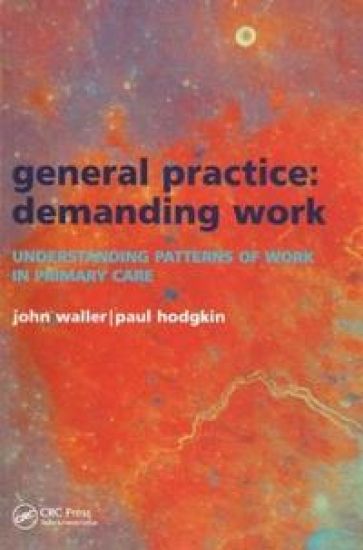
General Practice--Demanding Work

General Practice--Demanding Work

John Waller; Paul Hodgkin

Radcliffe Publishing Ltd
2015
nidottu
General practitioners are moving into a more central and accountable role in managing NHS resources. To achieve this they need to monitor, understand and plan the everyday services they offer. This book shows the reader how. It provides insights and practical suggestions on how demand can be met effectively and efficiently. It shows how to improve service provision and guidance is given on how to reduce the stressful working conditions of GPs, nurses and other practice staff. Illustrated with charts and graphs and tips, it provides new and relevant data in an easy to understand and accessible format. All members of the practice team, especially GPs, GP registrars and NHS managers, and those undertaking research in or about primary care, will find it essential reading.
The Works of Oliver Goldsmith ... with Introductions, Notes, and a Life of Oliver Goldsmith, by John Francis Waller.
Title: The works of Oliver Goldsmith ... With introductions, notes, and a life of Oliver Goldsmith, by John Francis Waller.Publisher: British Library, Historical Print EditionsThe British Library is the national library of the United Kingdom. It is one of the world's largest research libraries holding over 150 million items in all known languages and formats: books, journals, newspapers, sound recordings, patents, maps, stamps, prints and much more. Its collections include around 14 million books, along with substantial additional collections of manuscripts and historical items dating back as far as 300 BC.The FICTION & PROSE LITERATURE collection includes books from the British Library digitised by Microsoft. The collection provides readers with a perspective of the world from some of the 18th and 19th century's most talented writers. Written for a range of audiences, these works are a treasure for any curious reader looking to see the world through the eyes of ages past. Beyond the main body of works the collection also includes song-books, comedy, and works of satire. ++++The below data was compiled from various identification fields in the bibliographic record of this title. This data is provided as an additional tool in helping to insure edition identification: ++++ British Library Goldsmith, Oliver; Waller, John; 1872]. pp. xliv, 369; illus., port. 27 cm. 12270.k.1.
The Dancing Plague: The Strange, True Story of an Extraordinary Illness
A gripping tale of one of history's most bizarre events, and what it reveals about the strange possibilities of human natureIn the searing July heat of 1518, Frau Troffea stepped into the streets of Strasbourg and began to dance. Bathed in sweat, she continued to dance. Overcome with exhaustion, she stopped, and then resumed her solitary jig a few hours later. Over the next two months, roughly four hundred people succumbed to the same agonizing compulsion. At its peak, the epidemic claimed the lives of fifteen men, women, and children a day. Possibly 100 people danced to their deaths in one of the most bizarre and terrifying plagues in history.John Waller compellingly evokes the sights, sounds, and aromas; the diseases and hardships; the fervent supernaturalism and the desperate hedonism of the late medieval world. Based on new evidence, he explains why the plague occurred and how it came to an end. In doing so, he sheds light on the strangest capabilities of the human mind and on our own susceptibility to mass hysteria.
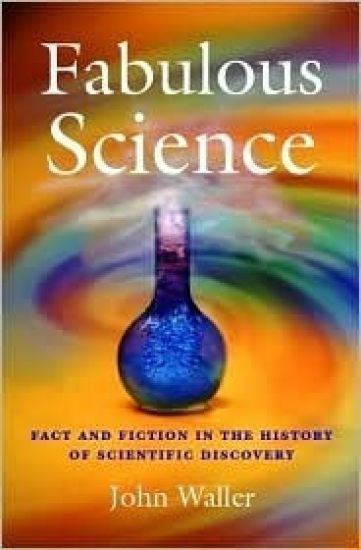
Fabulous Science

Fabulous Science

John Waller

Oxford University Press
2004
nidottu
The great biologist Louis Pasteur suppressed 'awkward' data because it didn't support the case he was making. John Snow, the 'first epidemiologist' was doing nothing others had not done before. Gregor Mendel, the supposed 'founder of genetics' never grasped the fundamental principles of 'Mendelian' genetics. Joseph Lister's famously clean hospital wards were actually notorious dirty. And Einstein's general relativity was only 'confirmed' in 1919 because an eminent British scientist cooked his figures. These are just some of the revelations explored in this book. Drawing on current history of science scholarship, Fabulous Science shows that many of our greatest heroes of science were less than honest about their experimental data and not above using friends in high places to help get their ideas accepted. It also reveals that the alleged revolutionaries of the history of science were often nothing of the sort. Prodigiously able they may have been, but the epithet of the 'man before his time' usually obscures vital contributions made their unsung contemporaries and the intrinsic merits of ideas they overturned. These distortions of the historical record mostly arise from our tendency to read the present back into the past. But in many cases, scientists owe their immortality to a combination of astonishing effrontery and their skills as self-promoters.
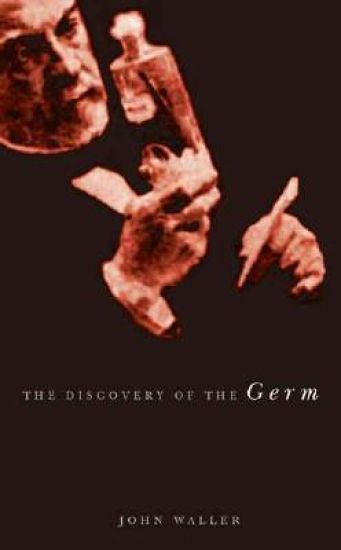
The Discovery of the Germ

The Discovery of the Germ

John Waller

Columbia University Press
2003
sidottu
From the time of Hippocrates to that of Louis Pasteur, the medical profession relied on plausible but almost wholly mistaken ideas about the causes of and best treatments for infectious illness. Bleeding, purging, and mysterious nostrums remained staple remedies, and surgeons, often wearing filthy butcher's aprons, blithely spread infection from patient to patient. Then between 1879 and 1900 came the germ revolution. After two decades of scientific virtuosity, outstanding feats of intellectual courage, bitter personal rivalries, and a large dose of good fortune, doctors came to realize infectious diseases are caused by microscopic organisms. The discovery of the germ led to safe surgery, large-scale vaccination programs, dramatic improvements in hygiene and sanitation, and the pasteurization of dairy products. Above all, it set the stage for the emergence of antibiotic medicine. John Waller provides insight into twenty years in the history of medicine that profoundly changed the way we view disease. He shows how the germ revolution was made possible not only by the risk taking and raw ambition of several brilliant late-century pioneers, but also by the groundwork-including mistakes and near misses-of earlier generations of scientists. Rich in human drama, The Discovery of the Germ charts how, why, and by whom germ theory was transformed from a hotly disputed speculation to a central tenet of modern medicine. It examines the ideas and experiments of the giants of microbiology, Louis Pasteur and Robert Koch, as well as less well known figures such as Casimir-Joseph Davaine, Waldemar Haffkine, and Almroth Wright.