Kirjojen hintavertailu. Mukana 12 595 353 kirjaa ja 12 kauppaa.

Kirjailija

John Walton

Kirjat ja teokset yhdessä paikassa: 32 kirjaa, julkaisuja vuosilta 1976-2025, suosituimpien joukossa Acts. Vertaile teosten hintoja ja tarkista saatavuus suomalaisista kirjakaupoista.

32 kirjaa

Kirjojen julkaisuhaarukka 1976-2025.

The Legendary Detective

The Legendary Detective

John Walton

University of Chicago Press
2015
sidottu
I'm in a business where people come to me with troubles. Big troubles, little troubles, but always troubles they don't want to take to the cops. That's Raymond Chandler's Philip Marlowe, succinctly setting out our image of the private eye. A no-nonsense loner, working on the margins of society, working in the darkness to shine a little light. The reality is a little different-but no less fascinating. In The Legendary Detective, John Walton offers a sweeping history of the American private detective in reality and myth, from the earliest agencies to the hard-boiled heights of the 1930s and '40s. Drawing on previously untapped archival accounts of actual detective work, Walton traces both the growth of major private detective agencies like Pinkerton, which became powerful bulwarks against social and labor unrest, and the motley, unglamorous work of small-time operatives. He then goes on to show us how writers like Dashiell Hammett and editors of sensational pulp magazines like Black Mask embellished on actual experiences and fashioned an image of the PI as a compelling, even admirable, necessary evil, doing society's dirty work while adhering to a self-imposed moral code. Scandals, public investigations, and regulations brought the boom years of private agencies to an end in the late 1930s, Walton explains, in the process fully cementing the shift from reality to fantasy. Today, as the private detective has long since given way to security services and armed guards, the myth of the lone PI remains as potent as ever. No fan of crime fiction or American history will want to miss The Legendary Detective.
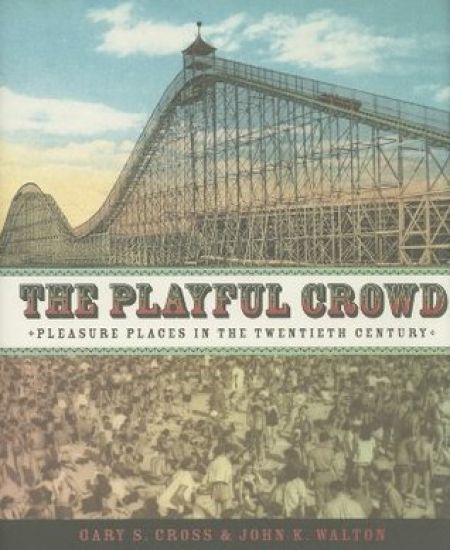
The Playful Crowd

The Playful Crowd

Gary Cross; John Walton

Columbia University Press
2005
sidottu
During the first part of the twentieth century thousands of working-class New Yorkers flocked to Coney Island in search of a release from their workaday lives and the values of bourgeois society. On the other side of the Atlantic, British workers headed off to the beach resort of Blackpool for entertainment and relaxation. However, by the middle of the century, a new type of park began to emerge, providing well-ordered, squeaky-clean, and carefully orchestrated corporate entertainment. Contrasting the experiences of Coney Island and Blackpool with those of Disneyland and Beamish, Gary S. Cross and John K. Walton explore playful crowds and the pursuit of pleasure in the twentieth century to offer a transatlantic perspective on changing ideas about leisure, class, and mass culture. Blackpool and Coney Island were the definitive playgrounds of the industrial working class. Teeming crowds partook of a gritty vulgarity that offered a variety of pleasures and thrills from roller coaster rides and freak shows to dance halls and dioramas of exotic locales. Responding to the new money and mobility of the working class, the purveyors of Coney Island and Blackpool offered the playful crowd an "industrial saturnalia."Cross and Walton capture the sights and sounds of Blackpool and Coney Island and consider how these "Sodoms by the sea" flouted the social and cultural status quo. The authors also examine the resorts' very different fates as Coney Island has now become a mere shadow of its former self while Blackpool continues to lure visitors and offer new attractions. The authors also explore the experiences offered at Disneyland and Beamish, a heritage park that celebrates Britain's industrial and social history. While both parks borrowed elements from their predecessors, they also adapted to the longings and concerns of postwar consumer culture. Appealing to middle-class families, Disney provided crowds a chance to indulge in child-like innocence and a nostalgia for a simpler time. At Beamish, crowds gathered to find an escape from the fragmented and hedonistic life of modern society in a reconstructed realm of the past where local traditions and nature prevail.
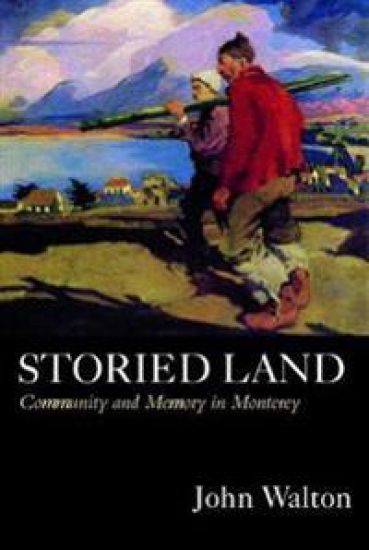
Storied Land

Storied Land

John Walton

University of California Press
2003
pokkari
Storied Land is not only an important record of events--it is also a powerful and innovative investigation of how historical narratives are produced. Walton looks at how Franciscan missionaries and military governors created competing historical narratives of "civilizing" the Native American population. He explores changing historical conditions that generate successive narratives of Yankee progress, Spanish romance, and working-class Cannery Row. Today the nostalgic story of early California competes with political activists' conceptions of environmental protection and ethnic diversity. Walton uses these historical examples to examine the larger issues of collective memory, arguing that history is a product of the interplay of events and narratives.
Chartism

Chartism

John Walton

Routledge
1999
nidottu
Chartism is an essential introduction to the movement, and examines the controversial debates surrounding the topic. As well as providing a concise period background, the author includes discussion of:* the Chartists' economic, legislative and political goals* patterns of regional and local support* reasons for the Chartist decline* the success of Chartism in the light of its goals and its influence over the Poor Law, Corn Laws, trade unions and factory reform* the languages of Chartism - songs, gesture and propaganda.
The Ford

The Ford

Mary Austin; John Walton

University of California Press
1997
pokkari
Mary Austin's 1917 novel illuminates one of the crucial issues in California history--the usurpation of water from the Owens Valley. Ranging from the eastern Sierra to the financial district in San Francisco, the plot portrays the frenzied speculation in land and resources, labor protests, and feminist organizing of the time, exemplified in the successful efforts of an independent young woman to buy back her family's Owens Valley ranch.
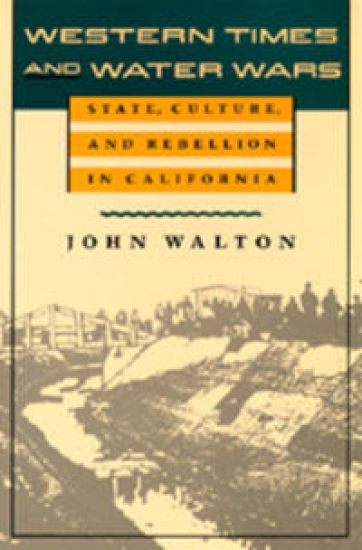
Western Times and Water Wars

Western Times and Water Wars

John Walton

University of California Press
1993
pokkari
"Western Times and Water Wars" chronicles more than a hundred years of tumultuous events in the history of California's Owens Valley. From the pioneer conquest of the native inhabitants to the infamous destruction of the valley's agrarian economy by water-hungry Los Angeles, this legendary setting is a microcosm of the development of the American West.
Elites and Economic Development

Elites and Economic Development

John Walton

University of Texas Press
1977
nidottu
This book is a detailed comparative analysis of development politics in four urban regions of Latin America, two in Mexico and two in Colombia. John Walton has based his studies on the assumption that the problems of economic growth are essentially political, that is, are problems of choice, decision-making, and the exercise of power. His fundamental purpose has been to discover how elites of different kinds are more and less successful in the promotion of economic development, which he defines as a process in the organization of a society leading not only to higher levels of efficient output but also to a more equitable distribution of benefits. At the time, the four cities compared were the second- and third-largest metropolitan areas in each country, Guadalajara and Monterrey in Mexico, Medellín and Cali in Colombia. This selection allows the author to pair, across countries, cases of early and large-scale industrialization (Monterrey and Medellín) with cases of more recent industrial growth in agricultural-commercial centers (Guadalajara and Cali). Walton presents historical introductions to each of the regions and integrates these with original fieldwork and interviews with more than three hundred members of the political and economic elites. The findings are extensive, but in general they demonstrate that where political and economic power is more broadly distributed, where elites are more open and accessible, and where organizational life is more active and coordinated, regions tend to develop qualitatively as well as quantitatively, showing increases both in productivity and in such benefits as public services, housing, education, and a more balanced distribution of income. If these characteristics are absent, regions may be industrialized but do not provide a broad sharing of the benefits. Walton places a good deal of emphasis on the role of foreign investments, demonstrating that the more penetrated regions are also the less developed. Finally, the results of these studies are used to evaluate and advance theories of underdevelopment and particularly of economic dependency.
Urban Latin America

Urban Latin America

Alejandro Portes; John Walton

University of Texas Press
1976
pokkari
Much research on the city in developing societies has focused mainly on one of three areas-planning, demography, or economics-and has emphasized either power elites or the masses, but not both. The published literature on Latin America has reflected these interests and has so far failed to provide a comprehensive view of Latin American urbanization. Urban Latin America is an attempt to integrate research on Latin American social organization within a single theoretical framework: development as fundamentally a political problem. Alejandro Portes and John Walton have included material on both elites and marginal populations and on the three major areas of research in order to formulate and address some of the key questions about the structure of urban politics in Latin America. Following an introduction that delineates the scope of Latin American urban studies, Portes discusses the Latin American city as a creation of European colonialism. He goes on to examine political behavior among the poor, with central reference to system support and countersystem potential. Walton provides material for a comparative study of four cities: Monterrey and Guadalajara in Mexico and MedellÍn and Cali in Colombia. He also summarizes a large number of urban elite studies and develops a theoretical interpretation of their collective results, based on class structure and vertical integration. Material in each chapter is cross-referenced to other chapters, and the authors have used a common methodological approach in synthesizing and interpreting the research literature. In the final chapter they generalize current findings, elaborating on the interface between elite and mass politics in the urban situation. They make some observations on approaching changes and pinpoint possible research strategies for the future.