Kirjojen hintavertailu. Mukana 12 595 353 kirjaa ja 12 kauppaa.

Kirjailija

John Wargo

Kirjat ja teokset yhdessä paikassa: 6 kirjaa, julkaisuja vuosilta 1996-2020, suosituimpien joukossa Ecosystems. Vertaile teosten hintoja ja tarkista saatavuus suomalaisista kirjakaupoista.

6 kirjaa

Kirjojen julkaisuhaarukka 1996-2020.

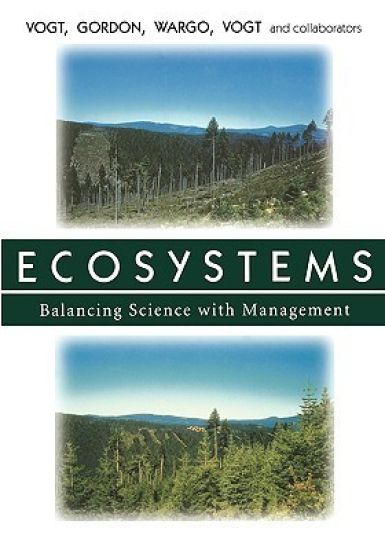
Ecosystems

Ecosystems

Kristiina Vogt; John Gordon; John Wargo; Daniel Vogt; Heidi Asbjornsen; Peter A. Palmiotto; Heidi J. Clark; Jennifer L. O'Hara; William S. Keeton; Toral Patel-Weynand; Evie Witten

Springer-Verlag New York Inc.
1996
nidottu
Ecosystem management has gained widespread visibility as an approach to the management of land to achieve sustainable natural resource use. Despite widespread interest in this emerging management paradigm, Ecosystems: Balancing Science with Management is the first book to directly propose approaches for implementing ecosystem management, give examples of viable tools, and discuss the potential implications of implementing an ecosystem approach. These ideas are framed in a historical context that examines the disjunction between ecological theory, environmental legislation and natural resources management.
Ecosystems

Ecosystems

Kristiina Vogt; John Gordon; John Wargo; Daniel Vogt; Heidi Asbjornsen; Peter A. Palmiotto; Heidi J. Clark; Jennifer L. O'Hara; William S. Keeton; Toral Patel-Weynand; Evie Witten

Springer-Verlag New York Inc.
1996
sidottu
Ecosystem management has gained widespread visibility as an approach to the management of land to achieve sustainable natural resource use. Despite widespread interest in this emerging management paradigm, Ecosystems: Balancing Science with Management is the first book to directly propose approaches for implementing ecosystem management, give examples of viable tools, and discuss the potential implications of implementing an ecosystem approach. These ideas are framed in a historical context that examines the disjunction between ecological theory, environmental legislation and natural resources management.
Learning Progressive Web Apps

Learning Progressive Web Apps

John Wargo

Addison Wesley
2020
nidottu
Use Service Workers to Turbocharge Your Web Apps“You have made an excellent decision in picking up this book. If I was just starting on my learning path to mastery of Progressive Web Apps, there are not many folks I would trust more to get me there than John.”—Simon MacDonald, Developer Advocate, AdobeSoftware developers have two options for the apps they build: native apps targeting a specific device or web apps that run on any device. Building native apps is challenging, especially when your app targets multiple system types—i.e., desktop computers, smartphones, televisions—because user experience varies dramatically across devices.Service Workers—a relatively new technology—make it easier for web apps to bridge the gap between native and web capabilities. In Learning Progressive Web Apps, author John M. Wargo demonstrates how to use Service Workers to enhance the capabilities of a web app to create Progressive Web Apps (PWA). He focuses on the technologies that enable PWAs and how to use those technologies to enhance your web apps to deliver a more native-like experience. Build web apps a user can easily install on their local system and that work offline or on low-quality networksUtilize caching strategies that give you control over which app resources are cached and whenDeliver background processing in a web applicationImplement push notifications that enable an app to easily engage with users or trigger action from a remote serverThroughout the book, Wargo introduces each core concept and illustrates the implementation of each capability through several complete, operational examples. You’ll start with simple web apps, then incrementally expand and extend them with state-of-the-art features. All example source code is available on GitHub, and additional resources are available on the author’s companion site, learningpwa.com. Register your book for convenient access to downloads, updates, and/or corrections as they become available. See inside book for details.
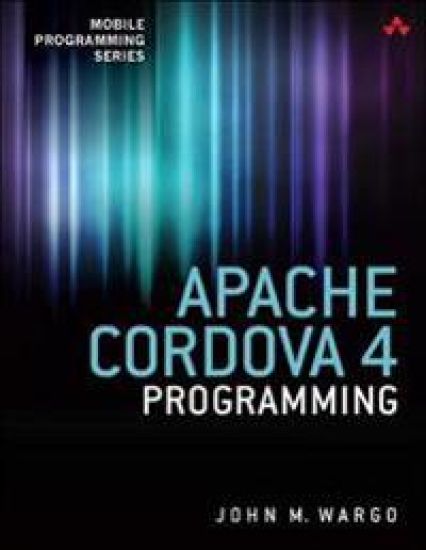
Apache Cordova 4 Programming

Apache Cordova 4 Programming

John Wargo

Addison Wesley
2015
nidottu
Using Apache Cordova 4, you can leverage native technologies and web standards to quickly build cross-platform apps for most mobile devices. You can deliver a high-end user experience where it matters, while radically simplifying code maintenance and reuse. Apache Cordova 4 Programming is the most concise, accessible introduction to this remarkable technology. In this essential guide, expert mobile developer John Wargo quickly gets you up to speed with all the essentials, from installation, configuration, and tools, to building plugins and using Cordova's powerful APIs. Wargo helps you make the most of Cordova 4's major enhancements, while offering practical guidance for all versions, including Adobe PhoneGap. Full chapters are dedicated to five major mobile platforms: Android, iOS, Windows Phone, Firefox OS, and Ubuntu. Using rich, relevant examples, Wargo guides you through both the anatomy of a Cordova app and its entire lifecycle, including cross-platform testing and debugging. Throughout, he illuminates Cordova development best practices, streamlining your development process and helping you write high-quality apps right from the start. Topics include Installing and configuring Cordova's development environment Working with the Cordova command line interfaces Creating Cordova plugins, using Plugman and the PhoneGap CLI Cordova's support for Firefox OS and Ubuntu devices Automation (Grunt and Gulp) and Cordova CLI hooks Microsoft's hybrid toolkit for Visual Studio Third-party tools, such as AppGyver, GapDebug, THyM, and more Beautifying Cordova apps with third-party HTML frameworks, such as Bootstrap, OpenUI5, Ionic, and Onsen UI Running, testing, and debugging Cordova apps on each major mobile platform Access the full code examples at cordova4programming.com, where you'll also find updates reflecting Cordova's continuing evolution. This book is an ideal companion to Wargo's authoritative collection of Apache Cordova code recipes for each Cordova API, Apache Cordova API Cookbook (Addison-Wesley, 2015).
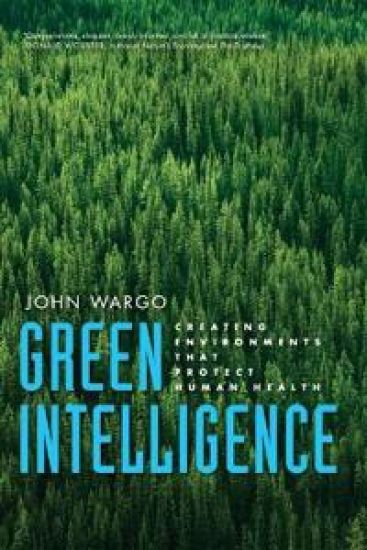
Green Intelligence

Green Intelligence

John Wargo

Yale University Press
2010
pokkari
An environmental expert offers sound advice on the world’s growing chemical dangers We live in a world awash in manmade chemicals, from the pesticides on our front lawns to the diesel exhaust in the air we breathe. Although experts are beginning to understand the potential dangers of these substances, there are still more than 80,000 synthetic compounds that have not been sufficiently tested to interpret their effects on human health. Yale University professor John Wargo has spent much of his career researching the impact of chemical exposures on women and children. In this book, he explains the origins of society’s profound misunderstanding of everyday chemical hazards and offers a practical path toward developing greater “green intelligence.”Despite the rising trend in environmental awareness, information about synthetic substances is often unavailable, distorted, kept secret, or presented in a way that prevents citizens from acting to reduce threats to their health and the environment. By examining the histories of five hazardous technologies and practices, Wargo finds remarkable patterns in the delayed discovery of dangers and explains the governments’ failures to manage them effectively. Sobering yet eminently readable, Wargo’s book ultimately offers a clear vision for a safer future through prevention, transparency, and awareness.
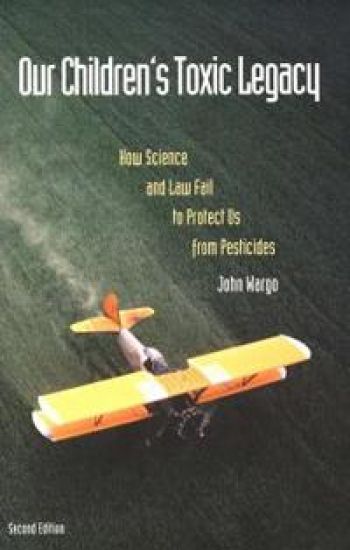
Our Children's Toxic Legacy

Our Children's Toxic Legacy

John Wargo

Yale University Press
1998
pokkari
During this century, hundreds of billions of pounds of pesticides have been released to the global environment. How are we exposed to them? What can we do to protect ourselves? In this extraordinary analysis, John Wargo, one of the nation's leading experts in pesticide policy, traces the history of pesticide law and science, with a focus on the special hazards faced by children. By 1969, nearly 60,000 separate pesticide products were registered for use by the U.S. government, each with the expectation that pesticides could be used safely, that they quickly broke down into harmless substances, or that dangerous levels of exposure could be accurately predicted and somehow avoided. Faith in these assumptions was gradually eroded as experts grew to understand the persistence, movement, and toxicity of the chemicals involved. Nevertheless, government continues to hold the discretion to balance risks against economic benefits in its licensing decisions. The underlying legal strategy, Wargo claims, has been one that places extraordinary faith in government's ability to somehow ensure that only safe levels of contamination and exposure occur. And the effect has been systematic neglect of those exposures and risks faced by children.Wargo presents a compelling case that children are more heavily exposed to some pesticides than adults and are especially vulnerable to some adverse effects. How should the fractured body of environmental law be repaired to manage the distribution of risk? This is the central question Wargo addresses as he suggests fundamental reforms of science and law necessary to understand and contain the health risks faced by children.