

Kirjailija
John Webster
Kirjat ja teokset yhdessä paikassa: 180 kirjaa, julkaisuja vuosilta 1975-2027, suosituimpien joukossa The Works of John Webster. Vertaile teosten hintoja ja tarkista saatavuus suomalaisista kirjakaupoista.
180 kirjaa
Kirjojen julkaisuhaarukka 1975-2027.

This new edition of the universally acclaimed and widely-used textbook on fungal biology has been completely re-written, drawing directly on the authors' research and teaching experience. The text takes account of the rapid and exciting progress that has been made in the taxonomy, cell and molecular biology, biochemistry, pathology and ecology of the fungi. Features of taxonomic relevance are integrated with natural functions, including their relevance to human affairs. Special emphasis is placed on the biology and control of human and plant pathogens, providing a vital link between fundamental and applied mycology. The book is richly illustrated throughout with specially prepared drawings and photographs, based on living material. Illustrated life-cycles are provided, and technical terms are clearly explained. Extensive reference is made to recent literature and developments, and the emphasis throughout is on whole-organism biology from an integrated, multidisciplinary perspective.

A tribute to Eberhard Jungel, one of the world's foremost Christian thinkers, and an interpretation and evaluation of his work. These essays are by leading British and North American theologians. The contributors' own creative work has been influenced by their engagement with Jungel's thought in constructive contemporary theology.



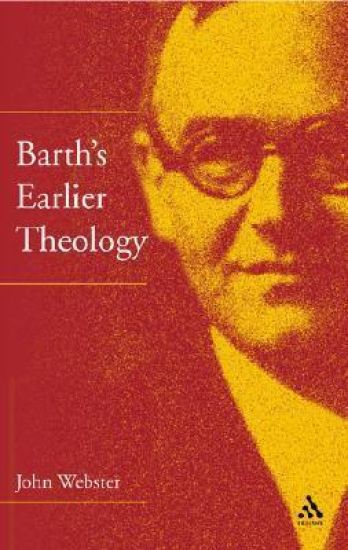
John Webster interprets Barth's earlier work in exegetical and historical theology, particularly focusing on the work of the 1920s. In this new study of Barth's earlier theology, John Webster looks at the significance of historical theology and biblical exegesis in the formative years when Barth began his work as theological professor. Though this period of Barth's work has been the subject of much recent reinterpretation, little attention has been given to Barth's discovery of the classical Reformed tradition or to his intensive engagement with the theological interpretation of Scripture. The publication of many of Barth's lecture texts from the 1920s now makes it possible to present a rather different picture of Barth from that which has become conventional. The four studies in the book offer detailed readings of neglected texts: Barth's lectures on the Reformed Confessions and on Zwingli, his history of modern Protestant theology, and his exegesis of 1 Corinthians. They draw out the importance of Barth as Reformed theologian, his commitment to the Scripture principle and to the ethical character of Christian faith, and his constant work on biblical exegesis. They also suggest that these texts show that many of the theological convictions which Barth expresses in his mature work were formed in his early years.

Animal Welfare: Limping Towards Eden
John Webster
Wiley-Blackwell (an imprint of John Wiley Sons Ltd)
2005
nidottu
There has been a recent explosion of active concern in matters of animal welfare. The science behind animal welfare has progressed significantly, new codes of practice and legislation have come into to being, and innovative methods to assess welfare schemes for food production have emerged. Part of a major animal welfare series, Animal Welfare: Limping Towards Eden is John Webster's new and groundbreaking work on animal welfare. Building on his first book, the highly acclaimed Animal Welfare: A Cool Eye Towards Eden, it not only critically reviews areas of development, but looks to how animal welfare can be improved in the future. Special consideration is given to: Defining animal welfare ('fit and happy') and establishing a systematic approach for its evaluation (the 'five freedoms');Providing a sound ethical framework that affords proper respect to animals within the broader context of our duties as citizens to the welfare of society;Developing comprehensive, robust protocols for assessing animal welfare and the provisions that constitute good husbandry;Introducing an education policy that will increase human awareness of animal welfare problems and promote action to reduce suffering. This book is part of the UFAW/Wiley-Blackwell Animal Welfare Book Series. This major series of books produced in collaboration between UFAW (The Universities Federation for Animal Welfare), and Wiley-Blackwell provides an authoritative source of information on worldwide developments, current thinking and best practice in the field of animal welfare science and technology. For details of all of the titles in the series see www.wiley.com/go/ufaw.

Karl Barth (1886-1968) has been called the most important Protestant theologian since Schleiermacher. A lifetime of work produced a huge and complex body of writings that emerged from both his theological teaching and from his engagement in church life. The publication of some of his work posthumously has invited fresh and attentive interpretations of his thought.This book draws together these readings to provide a clear and authoritative introduction to the main themes in Barth's theology. In an accessible way, it shows the continuity and coherence of Barth's work and stresses the importance of his biblical and ethical writings alongside his systematic theology. The book focuses on Barth's response to modernity, postmodernity and the tasks of theology, presenting him as an outstanding resource for constructive theology in our age.
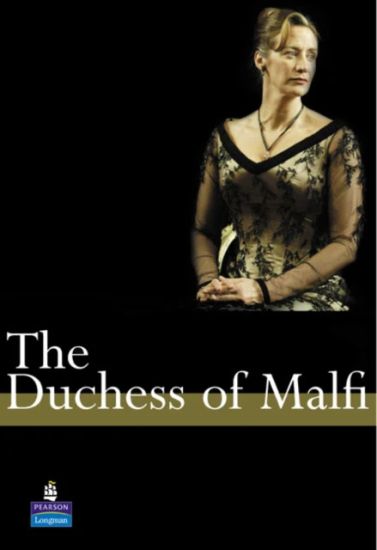
Duchess of Malfi A Level Edition
John Webster; Monica Kendall
Pearson Education Limited
2004
pokkari
Classic drama from Longman Literature

May we speak, in the present age, of holy scripture? And what validation of that claim can be offered, robust enough to hold good for both religious practice and intellectual enquiry? John Webster argues that while any understanding of scripture must subject it to proper textual and historical interrogation, it is necessary at the same time to acknowledge the special character of scriptural writing. His 2003 book is an exercise in Christian dogmatics, a loud reaffirmation of the triune God at the heart of a scripture-based Christianity. But it is written with intellectual rigour by a theologian who understands the currents of modern secular thought and is able to work from them towards a constructive position on biblical authority. It will resonate with anyone who has wondered or worried about the grounds on which we may validly regard the Bible as God's direct communication with humanity.

May we speak, in the present age, of holy scripture? And what validation of that claim can be offered, robust enough to hold good for both religious practice and intellectual enquiry? John Webster argues that while any understanding of scripture must subject it to proper textual and historical interrogation, it is necessary at the same time to acknowledge the special character of scriptural writing. His book is an exercise in Christian dogmatics, a loud reaffirmation of the triune God at the heart of a scripture-based Christianity. But it is written with intellectual rigour by a theologian who understands the currents of modern secular thought and is able to work from them towards a constructive position on biblical authority. It will resonate with anyone who has wondered or worried about the grounds on which we may validly regard the Bible as God’s direct communication with humanity.
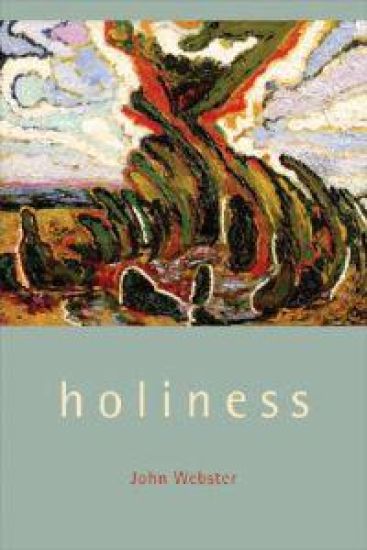
Integrating biblical studies, theology, and practical application, John Webster provides a thoroughgoing trinitarian understanding of God's holiness with highly relevant results. According to Webster, God's holiness is known not in his simple transcendence but in his gracious and free relationship to his people. Such holiness finds an echo in the holiness of the Christian community, especially in worship and witness, and in the life of the individual disciple. Profound yet readily accessible to a wide range of readers, Webster's Holiness offers an ideal entry into reflection on the Christian God.
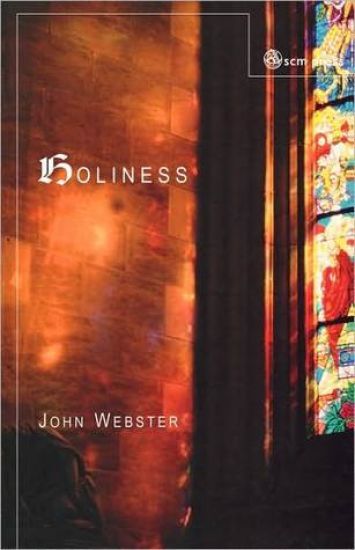
Here, John Webster presents a trinitarian theology of holiness, which is aimed at a wide range of audiences, including ordinands, students of theology and interested laypeople. According to this account, God's holiness is known not in his simple transcendence but in his gracious and free relationship to his creatures. That holiness finds an echo in the holiness of the Christian community, especially in worship and witness, and in the life of the individual disciple. Integrating biblical, dogmatic and practical theology, the book - which is based on the Day-Higginbotham lectures delivered in the University of Toronto in 2002 - offers a succinct account of a central theme in Christian teaching and practice.
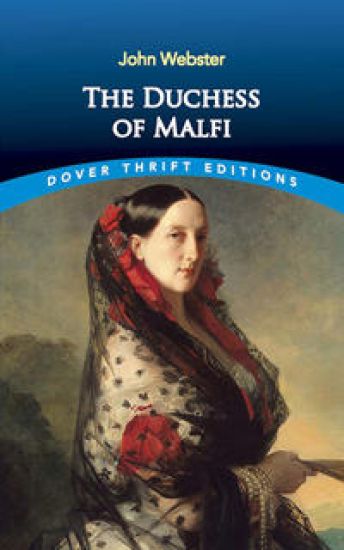
The evils of greed and ambition overwhelm love, innocence, and the bonds of kinship in this dark tragedy concerning the secret marriage of a noblewoman and a commoner. John Webster's great Jacobean drama detailing the fiendish schemes of two brothers who desire their wealthy sister's title and estates ends with a bloody and horrifying climax.
Drama Classics: The World's Great Plays at a Great Little Price The Italian Court is riddled with corruption in this classic Jacobean tragedy. The Duke Brascino is openly seducing a married woman, Vittoria, while plotting the murder of his own wife. Vittoria's brother Flamineo, a cold-blooded murderer, tries to exploit his position as Brascino's servant and pander. Finally Brascino's enemies, outraged by his perversions, seek a vicious revenge. John Webster's play The White Devil was first performed at the Red Bull Theatre, London, by Queen Anne's Men in 1612. This edition, in the Nick Hern Books Drama Classics series, is edited by J.R. Brown, with an introduction from Simon Trussler.
Drama Classics: The World's Great Plays at a Great Little Price A macabre Jacobean tragedy, loosely based on true events. John Webster's play The Duchess of Malfi begins as a love story, with a Duchess who marries beneath her class, and ends as a nightmarish tragedy as her two brothers exact their revenge, destroying themselves in the process. This edition of The Duchess of Malfi, in the Nick Hern Books Drama Classics series, is edited by J.R. Brown and introduced by Trevor R. Griffiths. Set Text: The Duchess of Malfi is a set text for EdExcel Drama GCSE and English Literature A/AS-Level; and WJEC English Language and Literature A/AS Level.
Man controls and dominates the habitat of most animals, both domestic and wild and there is a need for a pragmatic, workable approach to the problem of reconciling animal welfare with economic forces and the needs of man. It is the author's contention that much of the current philosophical discussion of animal welfare is misdirected now that it is possible to measure to some extent what animals think and feel and how much they can appreciate their quality of life. The book deals with farm animals, pets, wild animals and laboratory animals and dicusses their environmental requirements, fear and stress, their response to pain, injury, disease and death, behaviour and aggression, and the implications of biotechnology and genetic engineering. Finally, the book tries to reconcile reverence for life with the inescapability of killing and reviews the prospects of preserving and enhancing quality of life for animals through legislations, education, economic and moral incentives.
The plays of Jacobean dramatist John Webster are masterpieces of early seventeenth-century English theatre. ‘The White Devil’ depicts a dark, sinister world of duplicity, intrigue and murderous infidelity, while ‘The Duchess of Malfi’ tells the macabre story of a woman who marries beneath herself and sets in motion a terrible cycle of violence. Unlike these revenge tragedies, ‘The Devil’s Law-Case’ asserts social order in a plot filled with twists of fate. Written at a time when the court of King James was rife with instability and corruption, Webster’s disturbing plays reflect this abuse of power and are known for their horrific vision of humanity – yet they are also some of the most rich, sophisticated dramas ever composed.